

Wild Card Weekend isn’t over yet. Tonight, the Houston Texans face the Pittsburgh Steelers. It’ll be one of Aaron Rodgers’ most daunting challenges yet.
Go Long recently flew to Houston to bring the rabid personalities on this Texans defense to life.
Miss our two-part series last week? You can read in full below.
The Texans defense can appeal to any fan of any era.
Other links:
It’s Year 9. The Bills (again) have the talent to reach the Super Bowl, but will they?
Q&A: Dawson Knox freed his mind... and knows his Buffalo Bills can, too
Part I: ‘We want you to remember when you played the Texans’
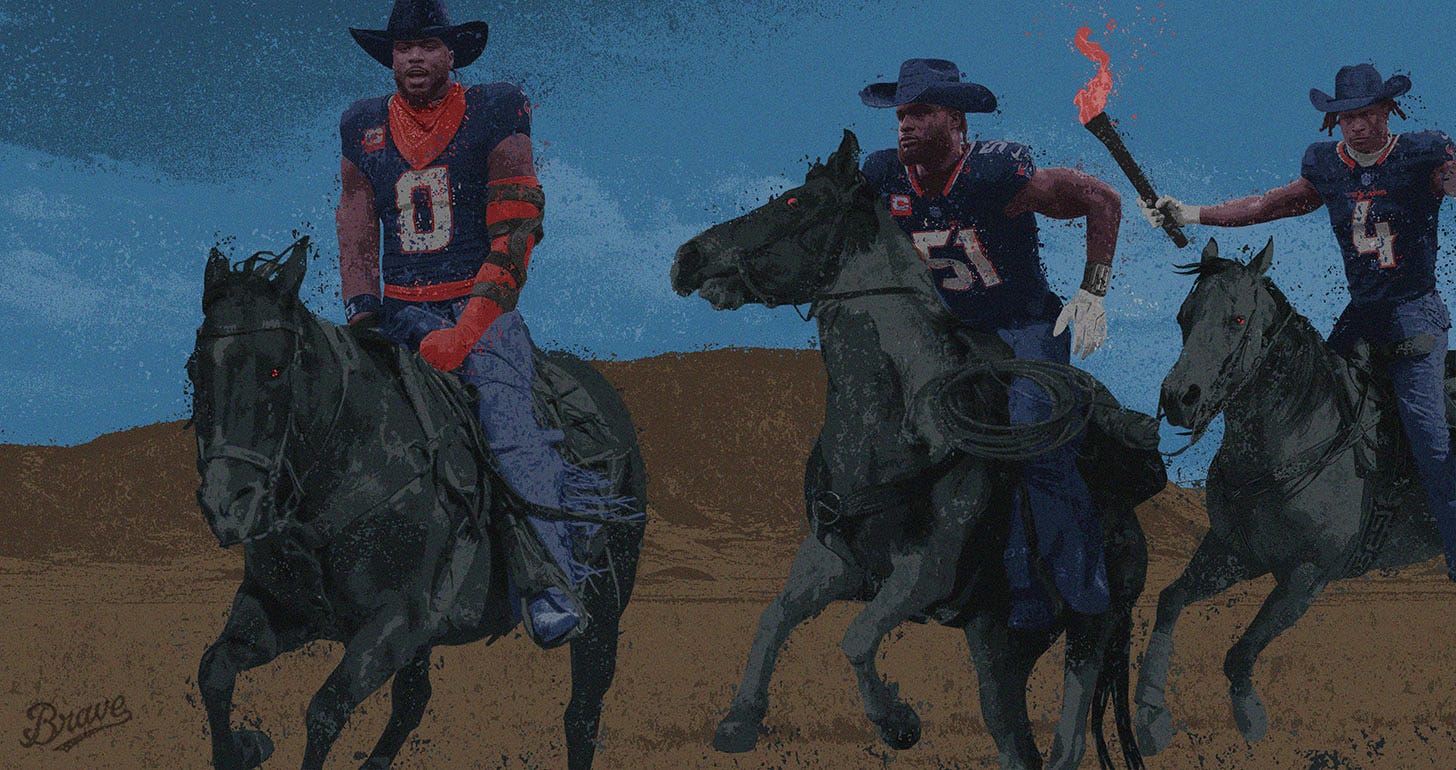
HOUSTON — This Houston Texans defense was born in fire.
When Azeez Al-Shaair closes his eyes, he can still picture the flames, smell the smoke, feel the panic torpedo his nervous system.
He was 12 years old. His entire family lived inside his grandmother’s home in Tampa. At approximately 5 a.m., Al-Shaair’s older sister cooked breakfast and forgot to turn off the stove before heading to work. In his half-asleep, half-awake haze, Al-Shaair didn’t think much of the smoke alarm bleeping. This was common. All three of his older sisters were terrible cooks, so he figured something was burning. “I’m not thinking,” he adds, “that they’re burning the house down.”
The beeping wouldn’t stop. Sleeping on the floor — there was no furniture in the house at all — Al-Shaair finally opened his eyes, and… oh no.
Peering down the hallway, all he saw was a glowing amber and smoke. So much black smoke rising to the ceiling. He dropped to all fours, crawled through the narrow hallway and identified the source. The entire kitchen was on fire. In real time, one fear served as a shock to his system: We’re about to be on the street. I can’t believe this. Al-Shaair tried pouring water on the flames, but all that did was make everything worse. Ten times worse because this was a grease fire.
Water made it pop. And grow. He noticed flames were approaching the front door.
His heart pounded. He shifted all attention to survival, tucking his sleeping seven- and eight-year-old brothers under his arms and sprinting to safety.
And yet, once he was outside, he felt nothing but dread in the pit of his stomach. Something told him to run back into the house. Terrified as he was to storm through those flames, part of Al-Shaair knew he should’ve checked one particular bedroom. He ran back into the burning home and, this time, the hallway was pitch black. He crawled into that bedroom and right there on a makeshift pallet of blankets was his one-year-old niece. Fast asleep.
Al-Shaair scooped her up, held her tight and safely escaped the flames. By the time the fire department arrived, the house burnt to the ground. To this day, the sight of a fire gives Al-Shaair anxiety.
But he survived.
His family survived.
All 11 of ‘em — Mom, eight kids, two grandkids — were now officially homeless. They stuffed into a motel. Hope was in short supply.
Go Long is your home for longform journalism in pro football.
The best way to support our work is with a paid subscription.
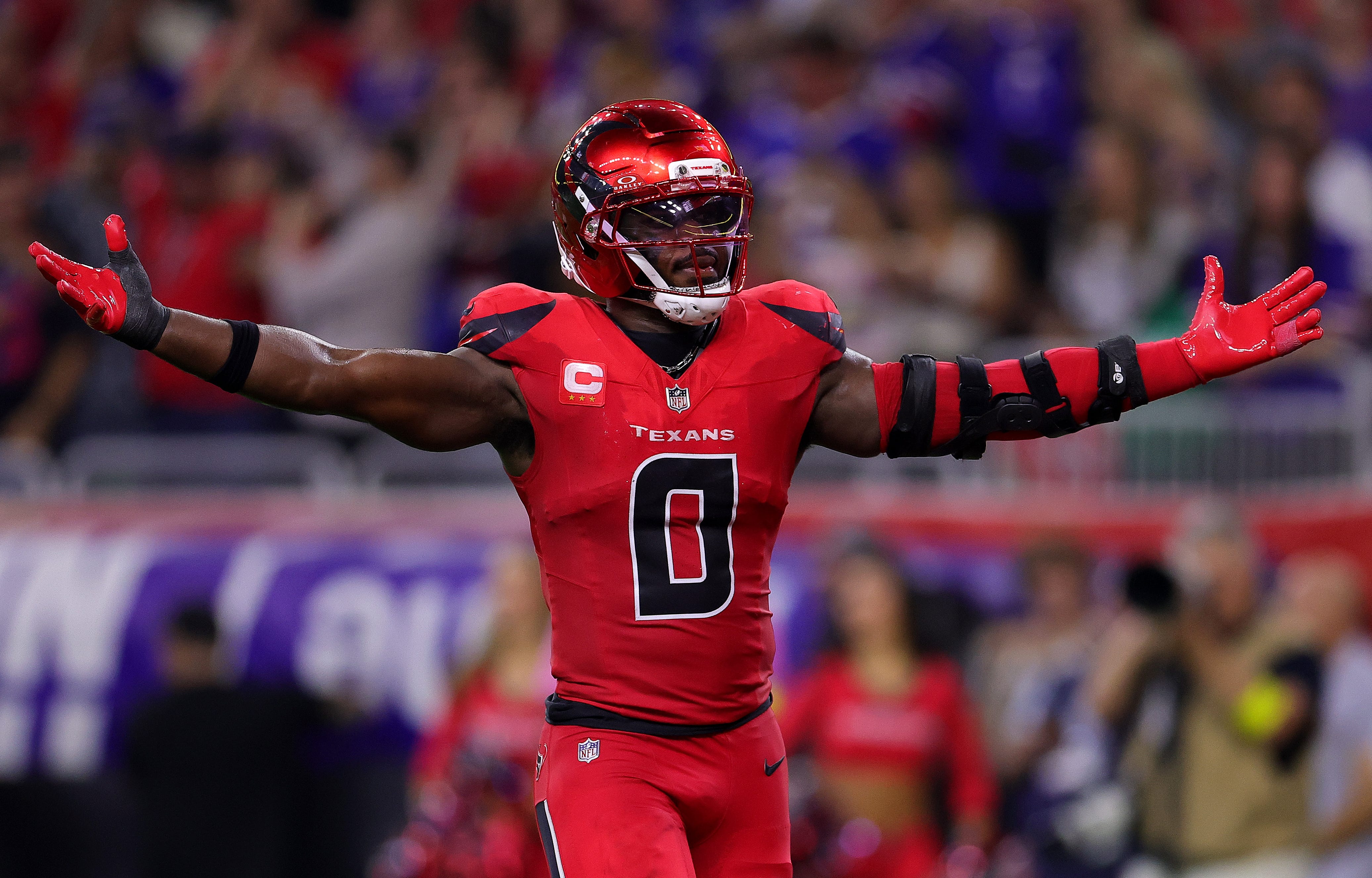
Walk past statues of three stampeding bulls, into NRG Stadium, and it instantly feels as if NASA has directed us to another planet. This team should not exist in 2025. Not in a league that siphons violence out of its sport under the harebrained guise of player safety. Certainly not in a society full of sensitive scrollers offended by their own shadow. All the Houston Texans did was build the league’s most malevolent defense since the “Legion of Boom.”
Al-Shaair puts it this way. There are more 7,000 spoken languages around the world.
Everyone understands the same two emotions: love and violence.
“A hug is a hug,” he says, “and a punch is a punch. Violence, you don’t have to know anything I’m saying. When I hit you, you know what that means.”
Metrics can explain the dominance. The Texans entered the final week first in points, yards and EPA. They totaled 47 sacks, 95 QB hits, created 33 turnovers and scored five defensive touchdowns in all. There’s nothing magical to their formula. They do not disguise or deceive or disorient QBs with a cryptic blitz package. They play a handful of coverages. The playbook is more brochure than hard drive. Opposing quarterbacks know what’s coming — an uppercut to the jaw — and are usually powerless to stop it. These Texans devoured the sport’s elites down the stretch. Josh Allen, the reigning MVP, was sacked eight times. Patrick Mahomes, the three-time Super Bowl MVP, had a career-low 19.8 rating. Justin Herbert stood no chance.
After getting the JV team some reps vs. Indianapolis in Week 18, the Texans finished 12-5 and will now play the Pittsburgh Steelers Monday night at Acrisure Stadium on Wild Card Weekend.
This defense’s greatest strength isn’t explained in numbers.
Rather, the twitching eyeballs of offensive players a millisecond before contact.
Intimidation.
These Texans are a salvo of nostalgia for any fan from any era. Grow up on Jack Lambert leering over offenses with those missing front teeth, the ’85 Bears suffocating offenses and Ronnie Lott amputating the tip of his pinkie? You’ll have flashbacks. Live for Reggie White clubbing 320-pound tackles with one arm, Greg Lloyd petrifying opponents with one death stare, the ‘00 Ravens, ‘02 Bucs or a possessed Brian Dawkins (a.k.a “The Wolverine”) speaking in tongues? These Texans are equally mesmerizing.
Replay the night they took the Kansas City Chiefs out to pasture. What we see is destructive. With 35 seconds left in the third quarter, safety Jalen Pitre tattoos Rashee Rice with so much blunt force that the Chiefs receiver nearly flips over. The ball trickles out of his limp hands. What we don’t see with the naked eye is why the 2025 Texans have a chance to carve out their own bloody chapter in NFL history. After that hit? Texans players are convinced Rice was afraid to venture over the middle of the field the rest of the game. It’s a look in the eye, a hesitation. And on fourth-and-4, game on the line, Rice’s drop sealed defeat.
“How many more times do you think he wants to come across the middle?” linebacker E.J. Speed says. “That’s in his head. You’re not going to be perfect. But if you can instill fear, it’s going to give you an edge.”
These Texans sense fear on a weekly basis. Take the offenses that run Point A-to-Point B gap running schemes. As opposed to zone schemes, these backs must blast ahead with decisiveness. Against Houston, they make subtle business decisions. Linebackers see backs hiding behind a lineman an extra split-second to avoid the 1-on-1, Oklahoma Drill-like explosion in the hole. They’ll sacrifice two or three yards.
“They know if they come through a hole, it’s going to be trouble,” Speed says. “It’s not safe out there. It ain’t safe! Especially when you’re up two scores? People are like, ‘Man, I’m not going to put my body on the line.’ That’s what makes a dominant defense.”
Can’t blame them. Everyone wants to tee off.
This locker room is teeming with outlaws.
Until flags are stuffed into belts, physicality reigns. Safety Calen Bullock doesn’t think their mentality is anything complicated.
“We don’t hold back anything,” he says. “Those guys on the other side of the ball are still trying to take our heads off so we’re going to make you hurt after the game. When you play us, you’re going to walk off the field like, ‘Oh yeah, that defense is serious.’”
I relay this comment to Speed.
He loves it. He agrees.
“We want you to hurt,” Speed says. “We want you to remember when you played the Texans. You might have to play us again in the playoffs. You’ll be like, ‘Man, last time we played these boys? I came out with an elbow, a knee, all type of stuff!’”
Speed pauses a half-second as if acknowledging how this sounds.
“We’re not trying to intentionally hurt anybody. It’s our brand football that we play.”
10-4. This is how everyone thinks.
Kamari Lassiter, the team’s snarling cornerback, believes the Texans can go down as one of the greatest defenses ever. (“The point that we’re at right now? It’s good, but we can be so much greater.”) Henry To’oto’o praises the team’s unbreakable bond with head coach DeMeco Ryans. (“When you have a leader who’ll literally go out and die for you, you would do the same for him.”) Which, uh, come again? Give To’oto’o the chance to sanitize this outlandish claim and he doubles down. “One hundred percent” he’d die on the field. To’oto’o knows that he’s not alone.
“You’re going to have to cart us off,” To’oto’o adds. “We are going to do everything we can to get a win.”
Football is different in Houston, Texas. Go Long spent a week inside the belly of the beast to learn just how different.
In Part I, we’ll examine the philosophy behind the team’s SWARM battle cry.
In Part II, it’s onto the wild personalities who bring this to life, the self-described “savages.”
Patrolling the sideline, eyes piercing, you’ll also spot a bearded badass of a defensive coordinator signaling plays in. Matt Burke has a message for opposing offenses, too. He wants everyone to know this defense will never take a play off. Not one. These Texans are obsessed with sustaining the same rabid intensity all 1,000+ snaps this 2025- ‘26 NFL season.
Burke doesn’t want quarterbacks, linemen, backs, receivers, anyone breathing a sigh of relief. At any point.
“If you’re coming to beat us,” Burke says, “you’re going to have to do it for 60 minutes and you’re going to have to do it play-in and play-out. We’re not going to stop.”
Attack the profession this way and you’re bound to piss people off.
No defense can live in Ambush Mode, nonstop, and expect no consequences. Late last season, the Texans’ ethos was put on trial. Their leader who escaped the flames, Al-Shaair, was the most wanted man in football. With one hit on Jacksonville quarterback Trevor Lawrence, No. 0 was universally dubbed the dirtiest player in the sport. Not only by fans. The NFL propped up Al-Shaair as a pariah. The NFL declared the sport should never, ever resemble this in a billion years.
The Texans could’ve said their yes-sirs, no m’ams and acquiesced to authority.
Cool the rhetoric. Tap the brakes between whistles. All in all, calm the hell down because that’s what the NFL instructed.
They did not.
They’ll play with fire.
This could backfire or this could lead the Houston Texans to their first Super Bowl in franchise history.
One by one, these jackals bring up the “Legion of Boom” as a north star. This is what the Houston Texans grew up on as 12-, 13- and 14-year-olds. Richard Sherman talking smack. Kam Chancellor emasculating grown men. Earl Thomas soaring in for interceptions. This defense helped preserve the sport’s roots amid an offensive revolution and, now, kids that watched the Seattle Seahawks reach a pair of Super Bowls star in the NFL themselves.
Many coaches view such comparisons as taboo.
Their cliched, one-day-at-a-time speeches are derived from a Bill Lumbergh TPS report.
In Houston, at the beginning of this 2025 season, Matt Burke plastered the top scoring defenses in NFL history up on the board and discussed legends of the sport: the Steel Curtain, ’85 Bears, ’00 Ravens and, yes, those Seahawks. He’s 49. I’m 38. We both feel ancient discussing the LOB as if its a page out of a history book. It still blows his mind that Seattle’s D surrendered less than 16 points per game in three straight seasons.
There was nothing subliminal about this meeting. Burke wanted players to know they don’t care what any defenses today are up to.
“Let’s aim for real stuff,” Burke says. “Doesn’t matter what other people outside the building say. It’s what our standard is. Our dreams, our goals, what we’re shooting for.”
Into Week 18, Houston’s defense was allowing an NFL-low 16.6 ppg.
Super Bowl glory set those four defenses apart. Visions of a title are real here, too.
Inconceivable considering what DeMeco Ryans inherited as head coach. Houston had gone 11-38-1 the previous three seasons. This defense was rudderless.
Ryans and Burke didn’t know each other before joining forces. Quickly, the DC could tell all culture talk was not bureaucratic bluster. The “mold” and “mindset” Houston desired on defense was clearly defined. This is Burke’s eighth NFL team. More than any club he’s seen, the Texans seek a very specific temperament — the top 1 percentile of competitors who play with toughness, passion, an absurd supply of energy. In Derek Stingley Jr. and Pitre, the duo inherited two pillars in the secondary. Mostly, the canvas was blank.
Ohio State quarterback C.J. Stroud was the pick at No. 2 overall and then the Texans shocked the football world. Ryans and GM Nick Caserio dealt the 12th overall pick, the No. 33 pick and first- and third-rounders in ’24 (with a fourth kicked back) for the rights to select Alabama edge rusher Will Anderson Jr. at No. 3 overall, a “terminator” we got to know at length a year ago.
The trade was impaled as shortsighted, as a new regime foolishly microwaving a rebuild. They knew better.
Anderson embodied everything coaches and execs could possibly write down on a notepad.
“What makes me different is my mentality,” Anderson told us in ‘24. “I’m going to strike you in your shoulder pads and your helmet and your chest every time I line up across from you. I’m going to keep going — 24/7, all… game… long.”
“Football is about that greedy, gritty, sticking your nose in the honey, man. It’s got to be physical. That’s what it’s all about.”
Practice. Meetings. Lifts. From Day 1, Burke says this is what Anderson brought… “nonstop.” Then, the games began and everyone saw his relentlessness firsthand. He’s stranded in the desert and the quarterback’s a jug of water.
“Getting to the quarterback every play,” Burke says. “Crawling on the ground to finish a play. Running to the ball. That’s how he is. Play-in and play-out.”
Every vet signed in free agency. Every prospect selected in the draft.
This is the mold.
This takes precedence over every other section on the scouting report.
Kamari Lassiter’s 40-yard dash was a disaster. At his pro day, in Athens, the cornerback clocked in at 4.64 and 4.65. Scouts were aghast. His stock unequivocally dropped. The Texans, however, did not care because the Texans, by then, were already infatuated with the Georgia corner’s greatest weapon: his mentality. Burke first met Lassiter at the NFL Combine in February. He couldn’t get enough. “This dude’s frickin’ our type,” he said then. “This guy is real.” It didn’t matter that the Texans lost draft capital in that ’23 Anderson trade. The next spring, they mined for jewels at No. 42 overall (Lassiter) and No. 78 (Bullock).
During the Texans-Ravens broadcast this season, commentator J.J. Watt relayed a telling conversation he had with Burke.
The coordinator described Lassiter to him as a “card-carrying psychopath.”
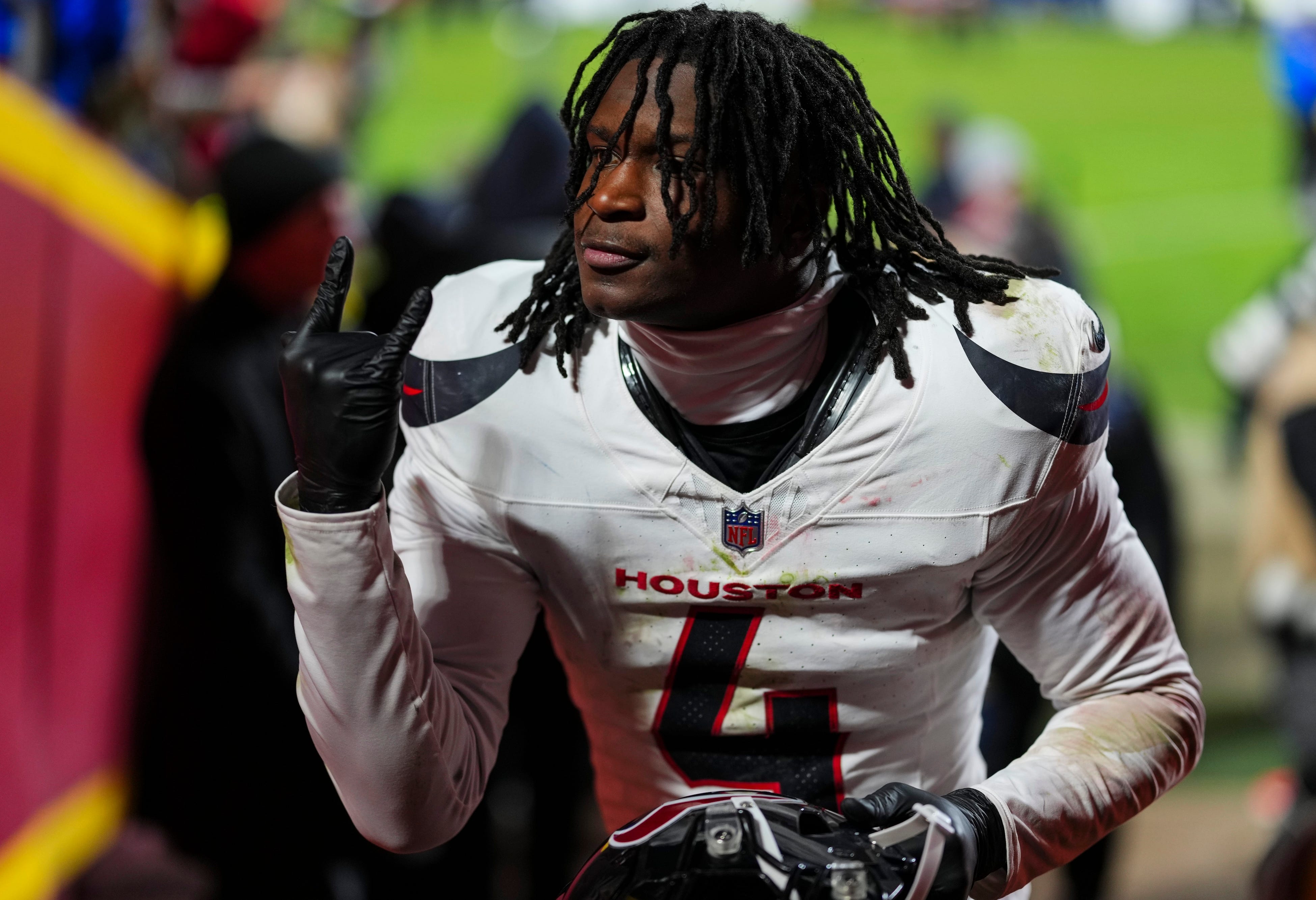
Precisely the personality Houston seeks across its entire defense because if the foundational players are sickos, it’s contagious. Players teetering on the fringe of PG-13 and Rated-R fall exactly where you want.
“That’s our standard,” Burke explains. “You’re going into a room with Will Anderson and Danielle Hunter and that whole crew? You ain’t going to last if you don’t do it the way that those guys are doing it. And Azeez. And Henry. And everybody on the whole back end. You stick out like a sore thumb if you’re not like that.
“Hey, Will Anderson’s doing it. Will Anderson’s turning and running to the ball in practice. What are you doing? You don’t even have to say that anymore because no one wants to be the guy not doing it.”
Hence, the essence of the word echoed to cultish extremes in Houston: “SWARM.” The acronym is admittedly a tad ham-fisted: “Special Work ethic And Relentless Mindset.” These letters have become a lifestyle. The Texans do not mind missing out on the cornerback with 4.2 speed… or the linebacker with a 40-inch vertical… or the pass rusher who might’ve only registered 3.5 sacks but could moonlight as a bodybuilder. They’ll let the sport’s largest egos topple over each other for these projections. These coaches assume that whole toughness thing will come ‘round.
Here? Houston can look past a physical or athletic flaw but will never whiff on mindset.
If they can tell a player merely likes football — doesn’t love it — that player is not considered.
“The SWARM part of it — the relentlessness — we’re not stopping,” Burke says. “We’re throwing waves and waves at you. The attack mentality.
“Everyone’s running and hitting. You’re not getting a play off.”
That’s why Burke constantly rotates through different D-linemen on gameday. He’d rather his rushers throw a fastball for 40 snaps a game than hold something back a handful of plays. Those five offensive linemen aren’t subbing in and out. Those linemen are dying for you to half-ass a rep, so they can breathe. On Houston’s D-Line, if you’re tired, you’re out. Next man in.
Bringing this to life requires more the other six days of the week. Practices are longer and more physical than players have experienced anywhere else. Fresh off completing a grueling 17-game regular season in 2024 — on a short week! — coaches made guys strap on pads ahead of a wild card matchup with the L.A. Chargers. Burke understands the counterargument. Houston runs the risk of wearing guys out. Ideally, they’ve acquired players who won’t wilt.
Pads aren’t for show, either.
Defenders do everything but literally bring a ball carrier to the ground.
“Boom! We get a pop in to stop,” Burke says. “That mindset of ‘We’re stopping the ball. That’s our thud tempo. I want the ball stopped.’ Psychologically, the ball is never running through our defense. We’re stopping the ball. So now we’re in the playoffs? That hasn’t changed. We stop the ball.”
A more laissez-faire approach no doubt scores coaches points in the locker room. It’s also no coincidence those teams are often the ones steamrolled in the playoffs who still manage to suffer their share of injuries. Houston, conversely, armors the body for combat. Those who do not finish plays in practice run the risk of getting their ass chewed out in a team meeting. Ryans strikes a kind, gentle tone at the podium.
He can be kind.
He can also be harsh.
In team meetings, he’ll replay a lackadaisical rep for all to see and declare that nonsense like this is not what the Texans are about. “If you are,” he’ll say, “that’s fine. But you don’t have to be here.” That player just may be shown the door, too. Attrition weeds out players who might cost Houston a game down the line, sharpening the roster into exactly what Ryans and Burke envision. The Texans do not want feeble players who wait for a loose fumble to bounce their way.
In New England, Mike Vrabel held the same point-blank conversations.
And when 11 players go this hard within the 120-yard length and 53 1/3-yard width of a football field, violence is inevitable. Burke wants the Texans to be “smart bullies.” Annual legislation could be maddening for this team. As far as the Texans are concerned? There is no gray area. Mahomes can attempt to tap dance along the sideline for an extra two yards at his own peril. Coaches command their players to hit any quarterback conducting himself as a runner.
Littering the field with virtual red tape and caution signs is idiotic with this group. Akin to instructing an abstract artist to color between the lines or banning swear words from a comic.
“Guess what? It’s a run-and-hit game,” Burke says. “That’s what defense is about. Those quarterbacks want to toe the line? We want to get right up to the line. We want to get to the edge of clean, hard, physical football.”
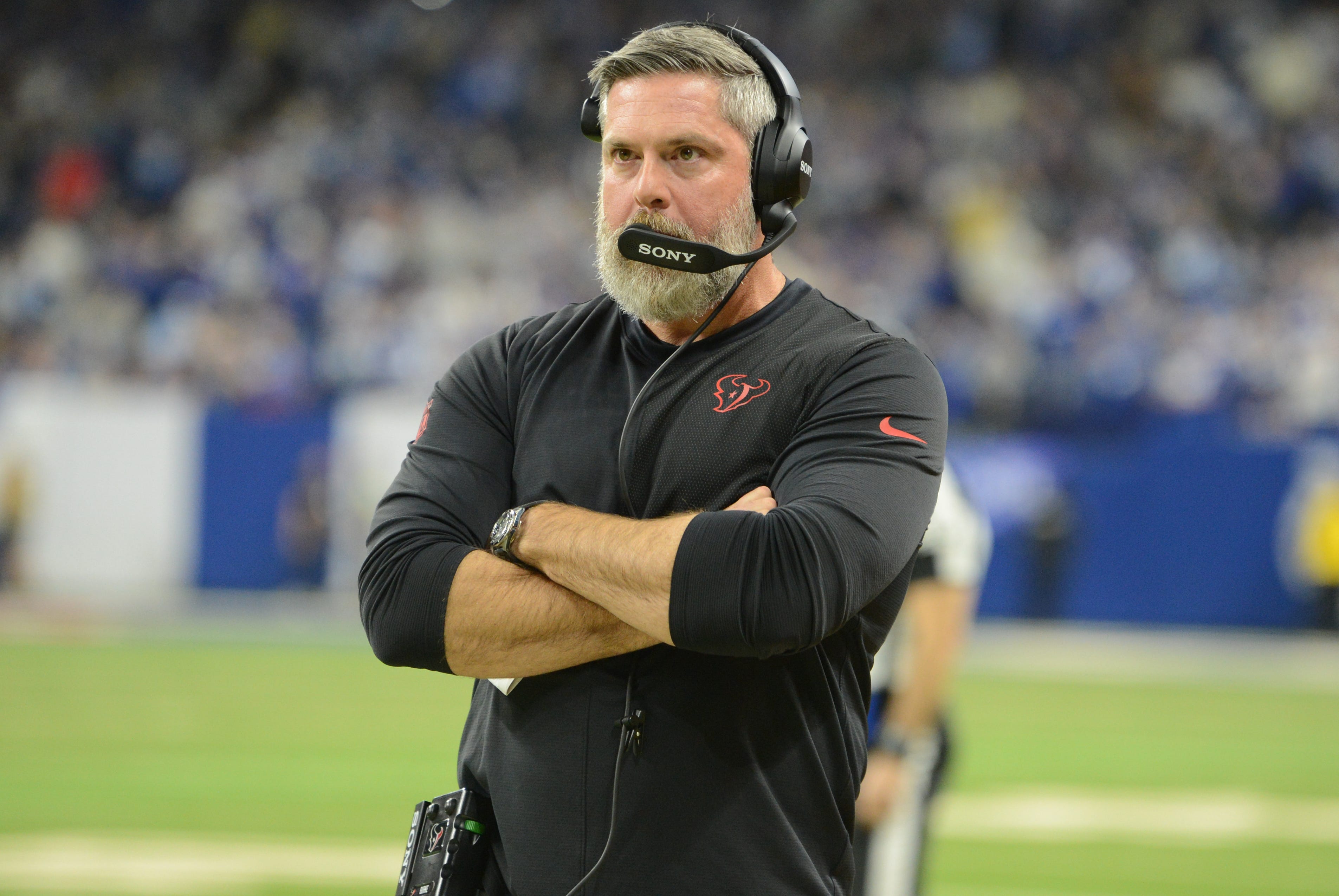
There are essentially two species of defensive coaches in the NFL.
1. The X ‘n O wizard who tries to confuse the hell out of quarterbacks. 2. The coach who prefers a room full of natural-born killers playing 100 mph in a simplified defense. Both can be wildly effective but, this day, my mind races back to the Rex Ryan’s batshit two years in Buffalo. He treasured a playbook loaded with checks on checks on checks for every conceivable formation presented presnap… and it drove players insane. They didn’t even try to hide their frustration in ‘15 and ‘16. Talent was wasted. Mario Williams, the team’s $100 million dollar man, openly criticized the system. He and Marcell Dareus did not enjoy dropping into coverage. As the play clock ticked, chaos reigned. Players frantically ran on and off the field. All camp, linebacker Preston Brown stayed up past midnight trying to master calls. (He relived the madness on our pod.)
All of it was infuriating because — one year prior? — the Bills excelled under a coach who wanted killers: Jim Schwartz.
Surprise, surprise. Burke spent his first decade in the NFL under Schwartz.
With a laugh, he admits Houston isn’t doing anything exotic. Coaches want players to master the handful of plays they do call.
“On Sundays, I try to be as unobtrusive as possible,” Burke says. “That’s their day. That’s the player’s day. That’s how I was raised in this league. DeMeco is a former player. We prep ‘em all week, but that’s your time to shine.
“They can go play fast. We try not to burden them or bog them down with a bunch of craziness.”
Coaches do not ask players to juggle 874 different permutations pre-snap.
Coaches do, however, demand perfect technique. Doesn’t matter if the Texans are fresh off an uplifting win. Bullock says they pay zero attention to anything good in film review. “It’s always the bad plays they’re showing us,” he says. “We’re trying to chase excellence.” It’s temping for coaches to skim past mistakes. Veteran D-tackle Harrison Phillips admitted to us that his 2022 Vikings (under DC Ed Donatell) failed to address mistakes head-on because they were winning in such thrilling fashion week to week. Bullock shakes his head as if he cannot fathom such a film room.
Even after wins over Mahomes and Allen, the Texans unearthed errors. Nothing is glossed over.
In that 20-10 win over the Chiefs, one wide receiver managed to leak free downfield because DBs failed to communicate on the back end. Ryans did not mince words.
Of course, it didn’t cost them. Defensive tackle Tommy Togiai wasted guard Mike Caliendo off the line and wrangled Mahomes to the grass before the Chiefs QB could load up.
Such is the beauty of this defense.
The front is the foundation.
Schwartz is the godfather who ruled out this attacking front back as the Tennessee Titans’ DC (2001- ‘08). He started lining up defensive ends in a nine technique and let everyone explode out of virtual sprinter’s blocks. Schwartz then took this scheme to Detroit as a head coach (2009- ’13). That Ndamukong Suh-infused crew were habitual line-steppers. (Packers offensive linemen used to call their D-Linemen “dirtbags” and “nut jobs.”) In ’14, Schwartz’s Bills led the NFL with 54 sacks. When he was fired to make way for Rexmania, the DC morphed a sagging Philadelphia Eagles defense into Super Bowl champs. And when that staff was canned? All he did was turn the Cleveland Browns defense into the league’s No. 1 unit (‘23) and coach the NFL’s new sack king in Myles Garrett this season.
His teachings are now flourishing under an old discipline. Houston’s D-Linemen aren’t asked to grab ahold of linemen and read plays or drop into coverage. They charge upfield. Many coaches try to implement this front, Burke explains, but retreat to playing “over” when they’re unable to marry it up with the coverage. That is, they go back to shifting a 3-tech “over” the guard on the tight end side to free up a strong-side linebacker. That’s the Texans’ schematic edge. Back as co-workers in San Francisco, Robert Saleh and Ryans merged Schwartz’s front with the Legion of Boom Cover 3 system — and stayed committed to it.
When Ryans and Burke teamed up, they had a shared belief system.
“We’re going to do what we do,” Burke says, “and we’re going to be better at it than you are what you do. That’s the starting point. The scheme lends itself back to the other stuff that we’re talking about. We’re attacking up front. We’re run and hit. We’re tackling checkdowns. If we’re in zone coverage, the ball’s going to go down here and we’re going to go freakin’ hit it. Our D-Line is going to penetrate, cause chaos, wreak havoc, rushing every play, all that. The style you’re playing is feeding into the mentality, the mindset of the players that you’re acquiring.”
Adds Lassiter: “Football boils down to 1 on 1s. It’s DYJ: Do Your Job. Because there’s 10 other guys who are going to do their job. The plays find you.”
Pressure is organic. If the Texans do blitz, it’s because they want to attack a specific weakness or force the quarterback to spit the ball out to a specific spot. Not desperation.
All while one word stays on everyone’s mind. After Houston smashed the Chargers in Week 17, Anderson said the team’s been “brainwashed in SWARM.” To Al-Shaair, all the word means is “effort” and “mindset.” He’s never been the biggest or strongest or fastest athlete himself. Al-Shaair entered the NFL as an undrafted free agent, out of Florida Atlantic, fresh off a torn ACL.
He points to his head, then his heart.
That’s what Ryans value most. That’s why he loves playing for him.
“He’s not asking you to be this unicorn athlete,” Al-Shaair says. “He’s just asking you to go as hard as you possibly can. I’ve seen some of the prettiest-looking unicorn athletes and they get on that football field and they just soften up. I’ll take a guy with the mindset over the body type. Because you can work on your body type. I’ve gotten way stronger and faster since I’ve been in the NFL. But my mindset’s always been the same.”
Dream world, you’re both. The Texans do possess such creatures screaming off the edge. Anderson and Hunter are both sculpted like Marvel characters and card-carrying psychopaths.
We see the inverse each Sunday. We see players shrivel up in critical moments. No coach can make a player tough. Not Belichick, not Lombardi. It’s woven into DNA. I ask Burke how he finds this player. After all, there’s no Combine to measure toughness. Hunting down the best mindsets cannot be easy. Tape helps. And interviews. And conversations with the college coaches who choose to be honest. Houston also values in-house visits. When Anderson stepped into the building, Burke knew the Texans needed to draft him.
“You’ve got to love ball,” Burke says. “You’ve got to love being physical and you’ve got to love playing on the edge.”
Scouts and coaches eliminate those who tend to close their eyes and brace for contact, instead of em-bracing it.
Attitude matters most.
“We’re savages,” Bullock says. “The scheme? The coaches let us go out there and play fast. They don’t anything confusing. Because they know the group we have. Our mindset is we’re going to go out here and we going to hit. We’re going to get to the ball, play fast. In the back end, our mindset is we’re going to stay sticky.”
Three years in, the Texans have successfully loaded their roster with this specific personality.
Let’s meet the savages.
Subscribers can access every column, player profile, team deep dive and podcast.
Part II: Why Azeez Al-Shaair and these Houston Texans seek and destroy
His home destroyed, Azeez Al-Shaair had no clue where he’d sleep the next night.
The only item he rescued? A pair of Nike slides.
Officially homeless, his family jammed into an extended-stay motel on the fringes of Tampa at $370 per week. Considering Dad left two years prior, Mom was on her own. All 11 shared one bed, one pullout couch and whatever floor space remained. Al-Shaair, of course, slept on the floor — if he was able to sleep at all — and then took the city bus 2 ½ hours to school. It took so long because he needed to drop his two little brothers off at elementary school along the way. He wore the same clothes, couldn’t help but doze off in class and tried his best not to eat his lunch because he knew the little ones back home needed food more than him.
Al-Shaair struck up a relationship with the lunch lady. Thankfully, “Ms. B” would hook him up. He stuffed his backpack with whatever he could to tote home. (Chocolate milks were a go-to.)
Joy came in watching his mother’s favorite team: the Baltimore Ravens. His eyes were naturally fixed on menacing, Canton-bound linebacker Ray Lewis.
Football was his release because, on a field, nothing else mattered.
Everybody wore the same helmet, same pads. Al-Shaair always had time to think those long bus rides.
He vividly remembers closing his eyes and dreaming of better days.
“Being in the NFL,” Al-Shaair says. “Making it. I didn’t know how I was going to do it. I just believed.”
College ball became a real possibility. He chose Florida Atlantic. Everyone soon realized Al-Shaair had zero off switch, which fueled both fights with teammates at practice and 3 a.m. film sessions on his own. His intensity never waned. Two hundred miles across the state, cockroaches scurrying across the floor, his family’s poverty never improved. Al-Shaair feared those two brothers he saved from the flames would go down the wrong path, so he had them move into his off-campus apartment and basically juggled D-I athletics, schoolwork and fatherhood all at once.
He led the Conference USA in tackles as a junior, tore his ACL as a senior, underwent surgery on Nov. 6, 2018 and — to the shock of NFL teams — performed in linebacker drills at his pro day 140 days later.
Hell no, he wasn’t going to waste this opportunity.
Each snap is a gift.
Hostility must be inside of you. When ink’s put to paper on that first NFL contract, it’s too late. This cannot be coached. This cannot be purchased. The only way a defense enters an all-time-great stratosphere is if it can effectively find players who were baptized in everything that makes football football long ago.
A prerequisite to call this cathedral off Kirby Drive home.
Head coach DeMeco Ryans, DC Matt Burke and GM Nick Caserio all agreed on a specific template, as detailed in Part 1. But such a blueprint only works if they’re able can find authentic desperados. (Spoiler: They have in spades.) Houston (12-5) now storms into the playoffs off nine straight wins. First up, Aaron Rodgers and the Pittsburgh Steelers (10-7) on Monday night. Very good teams across the league struggle with their identity — not here. The Texans stare into the mirror and know exactly who they are as a team.
For better or worse.
All of this could’ve taken a (very) hard turn a (very) different direction late last season.
Al-Shaair and this entire defense reached a boiling point. He felt like that 12-year-old kid all over again, staring at a fire, wondering what was next. He was declared the sport’s villain. He’s still considered that villain in many eyes. If Al-Shaair walks down the street anywhere in Duval County, he may want to bring a bodyguard or two.
Tears. Depression. Excruciating pain. The last month of last season pushed his sanity to the brink.
“Anything you experience in your life,” Al-Shaair says, “while it might be tough, you know that there’s a way out. There’s another side to it.”
Now, he’s back in the playoffs with a chance to script his legacy and, most importantly, this defense’s legacy.
We’re about to see if an approach unlike any other in the NFL can pay off.
No sixth sense is required to find true “savages” in this building. They’re everywhere. Extend a hand, introduce yourself and — within seconds — players share an origin story that explains exactly why they’ve been chosen.
Go Long is your home for independent longform journalism in pro football. We are fueled 100 percent by our readers.
Join us through Super Bowl LX in Santa Clara.
Kamari Lassiter started playing tackle football at four years old.
Yes, four.
Houston’s scowling 6-foot, 200-pound corner first strapped on pads for the local “Savannah Stars” in Georgia. It was love at first crash vs. 5- and 6-year-olds. And the temperament we see today — a mentality “to kill” — is a direct reflection of watching his mother juggle multiple jobs as a kid. She worked nonstop, so he felt the intrinsic need to pour himself into something. That something was football.
“Every emotion, every bit of energy,” Lassiter adds, “I put it all on the field.”
Into middle school, the blunt force behind his tackling style was so jarring he gave it a nickname: The Kamari Crack. “Every time I used to hit someone,” Lassiter says, “it used to be like a big ‘Pow!’” He smacks his hands together and the noise echoes. When Mom got a promotion, they moved to Tuscaloosa, Ala., and he developed a new signature move: a WWE-style suplex. Lassiter enjoyed wrapping both arms around ball-carriers, lifting their body high into the sky and crashing them into the turf. “Pick ‘em up, dump ‘em,” he says with a grin. “That’s how we were taught to play the game.”
Through high school, he’d never get flagged for going full Brock Lesnar. His first collegiate game at Georgia was another story. In the second quarter of a 49-3 massacre of the Oregon Ducks, Lassiter suplexed a running back and was called for unnecessary roughness the second tackle of his college career. An infraction that easily could’ve banished him to his head coach’s doghouse. It did not. Kirby Smart loved this. Lassiter developed into one of the best defensive players in the SEC — totaling 86 tackles (8 ½ for loss), one pick and 15 PBUs — and, yes, it’s easy to see how Cupid’s arrow struck the Texans through those pre-draft interviews.
“I give my life to football,” Lassiter says. “Day-in, day-out, football is always on my mind. Whenever I get on the field, I’m finally at peace. Even though it’s a chaotic game, I can be myself. I can yell as loud as I want to. I can talk how I want to. I can hit somebody as hard as I need to. I can celebrate with my teammates. Talk trash. There’s just so many things that you can do.”
Rule to rule, he sees a league trying to sell its product as “safe.” It is not, and that’s OK.
His voice speeds up.
Lassiter drops a truth bomb of a PSA that won’t be rolled out during a Super Bowl commercial break. It should.
“Football is a violent game,” Lassiter says. “That was the way it was intended to be played. I grew up hitting hard and playing the game in a violent manner. Doing everything to the fullest. There’s going to be full-speed collisions. There are ways to hit correctly, but it was always intended to be violent.”
He knows opposing quarterbacks will avoid All-Pro, lockdown No. 1 CB Derek Stingley like the plague, and that creates opportunity. This season, Lassiter responded with four interceptions, 17 pass breakups and a team-high 91 tackles (seven for loss) all while gritting through pain that’d shelf others. When we chatted, his foot was in a walking boot. Ryans has called him one of the toughest players he’s ever encountered, period. A player he wants to build this whole team around.

There’s a chance you saw E.J. Speed’s hit stick on Monday Night Football vs. Tampa Bay in September.
There’s a better chance you heard it from two bedrooms over during the nightly witching hour. A textbook “tackle,” this is not. The Texans linebacker more so trucks directly through poor 170-pound Kameron Johnson with a vicious shoulder. Three distinct sounds then air on the ESPN broadcast: the loud pop of plastic, a roaring “Whoaaa!” from the home crowd and astonishment from Hall of Famer Troy Aikman.
Four-year-olds aren’t lining up for hitting drills nationwide and even us purists must agree that’s for the best. But when I tell Speed that my 4-year-old enjoys playing with the Nerf football in the basement to the tune of Sam Spence’s NFL Films classics, his eyes light up. He leans in as if prepared to reveal the sport’s greatest secret.
“I’m going to tell you the crazy part about hitting,” Speed says. “It’s not the actual contact. It’s the pop.”
Speed smacks his hands together.
“The hit doesn’t hurt,” he says. “It’s the pop that shifts you into a shock.”
At the pop of a collision, most young players close their eyes. Force yourself to keep your eyes open through the pop and you quickly realize hits do not hurt at all. That’s why Speed insists all fathers should invest in a blocking pad and take their rambunctious 4- and 5-year-olds into the backyard. Far back as he can recall in Fort Worth, Texas, he crashed into one. Eyes wide open, he learned to blast through the fear of a hit and own that glorious pop.
At home, like Al-Shaair, his eyes were then glued to Ray Lewis, Ed Reed and the Ravens the 2000s.
On the field, at age 8, whoever had the biggest hit on his youth team received $20. His team was full of fearless hitters. Speed took that $20 bill home three times. But his brother, a beast, was stiff competition. The collision he remembers most occurred in a scrimmage against the older kids. He missed a tackle, Dad got on him and Speed started crying. (“I was like, ‘Bro, the next person who runs through this joint…’”) When he met the kid in the hole next time? “POW!” says Speed, smacking his hands again. “We dang near knocked each other out. I felt the vibration through my helmet. It was dope.”
He also has “Arthur” and “Fubu” to thank. In one angle tackling drill, an 8-year-old Speed faced 12-year-olds. Dad was his coach and Dad knew intermingling teams from different age brackets would toughen up his boy. On his first rep, EJ was scared. EJ sheepishly stepped outside of the cones. Dad called him out. (Again.) Son lined back up. (Again.) Seated here in his Texans locker, Speed recreates the scene with his two arms pointing different directions. A kid named “Arthur” approached him from one angle and a kid wearing a Fubu shirt over his pads approached from another to tackle him.
This time, Speed held his ground and kept his eyes open through the pop.
“When I tell you they killed me, bro? They smashed me,” Speed says. “Boom, boom! It was a hit. But I got up. And after that, I didn’t care about contact. … I was like, ‘It don’t hurt?!’”
Speed hasn’t looked back. He developed into a college prospect and decided to go the D-II route at nearby Tarleton State because his brother was battling cancer. One month after Signing Day, his brother passed away. Paul’s memory stays on his mind to this day. (“He’s with me all the time.”)

All defensive players were selected for a reason. Linebacker Henry To’oto’o looks around the locker room and sees characters “all over the damn place.” Playing movie director, he gives everyone a role. Anderson is the emotional leader. Stingley and Jalen Pitre are quiet leaders. Tim Settle loves to talk. There’s a player on the practice squad whose jokes are A+. He supplies comic relief.
Finally, there is no disputing who runs the show.
“Azeez is the captain,” To’oto’o says. “He’s the leader of the ship. He’s the father of everybody who keeps everybody in line.”
For years, whenever he relived his upbringing to friends, Azeez Al-Shaair could detect ghostly Shit, I could never be YOU horror written across their faces. Into his first NFL training camp, in 2019, something changed. He bonded with rookie Dre Greenlaw and the more he heard this linebacker’s stories about growing up in foster care, the more Azeez started to look at him this way. (“I realized, ‘Dang, my life was fucked up and I made it this far. But his was fucked up, too!’”) All valuable perspective.
It’s hard to imagine a more disposable player on the 49ers’ 90-man roster than a small-school, undersized linebacker off a torn ACL pedaling a bike to practice.
No way would he splurge those NFL checks on a new car. He was used to riding a bike.
No way would he waste one precious 11-on-11 practice rep. He still lived as if tomorrow’s meal was not promised.
The practice week of San Francisco’s first exhibition game, Al-Shaair couldn’t stop tackling his own teammates. He didn’t know any other way. Finally, Kyle Shanahan lost his mind. During a team meeting — in front of everyone — the 49ers head coach went off. “You keep doing this shit, Azeez, and you’re going to get your ass cut!” The threat felt real. One more tackle of a teammate and he could fly 3,000 miles east to Florida. DeMeco Ryans was his linebackers coach then. “I told you!” Ryans said privately. “You’ve got to calm your ass down.”
His head coach was pissed. His position coach was pissed. Al-Shaair fumed. The rest of the week, he admits he was an “asshole.” He refused to thud up players on defense, putting his arms up as if to sarcastically plead, I don’t want to get in trouble! That moment? Al-Shaair could’ve diluted his game for good, gotten cut, vanished from the NFL completely. His employers thought he was just trying to be a tough guy. They didn’t get him.
Another opponent arrived in Santa Clara that weekend and, with one collision, his life changed forever.
On third and 10 with 3:10 left in the third quarter vs. the Dallas Cowboys — precisely when it’s time for even the bravest preseason consumers to go to bed — Al-Shaair sniffed out a screen pass to running back Mike Weber and… triggered. He drilled the Ohio State back for a five-yard loss, the stadium erupted. Vets half-asleep on the sideline erupted. Al-Shaair jolted to his feet and sprinted down the boundary, pointing at his coaches all the way.
“Pointing,” Al-Shaair specifies, “at Kyle and DeMeco. I’m like, ‘I told you motherfuckers!’”
When the 49ers reviewed film as a team the next day, Shanahan showed every play but this one. Skipped right past it. Al-Shaair started to seethe again. (“These motherfuckers,” he told himself. “They still don’t respect me. He doesn’t respect me.”) Right when it appeared the head coach was going to shut off the projector, he had one final message. “I have said a lot of shit about this guy,” Shanahan said. “But man, you’re a fucking baller!” Then, he played the clip. Coaches loved it. Players loved it. After roster cutdown day a few weeks later, defensive coordinator Robert Saleh told the UDFA Al-Shaair that this play secured his spot on this team.
Al-Shaair spent the next four seasons in San Francisco, one in Tennessee and inked a three-year, $34 million deal with Houston in 2024 to run Ryans’ defense in Houston.
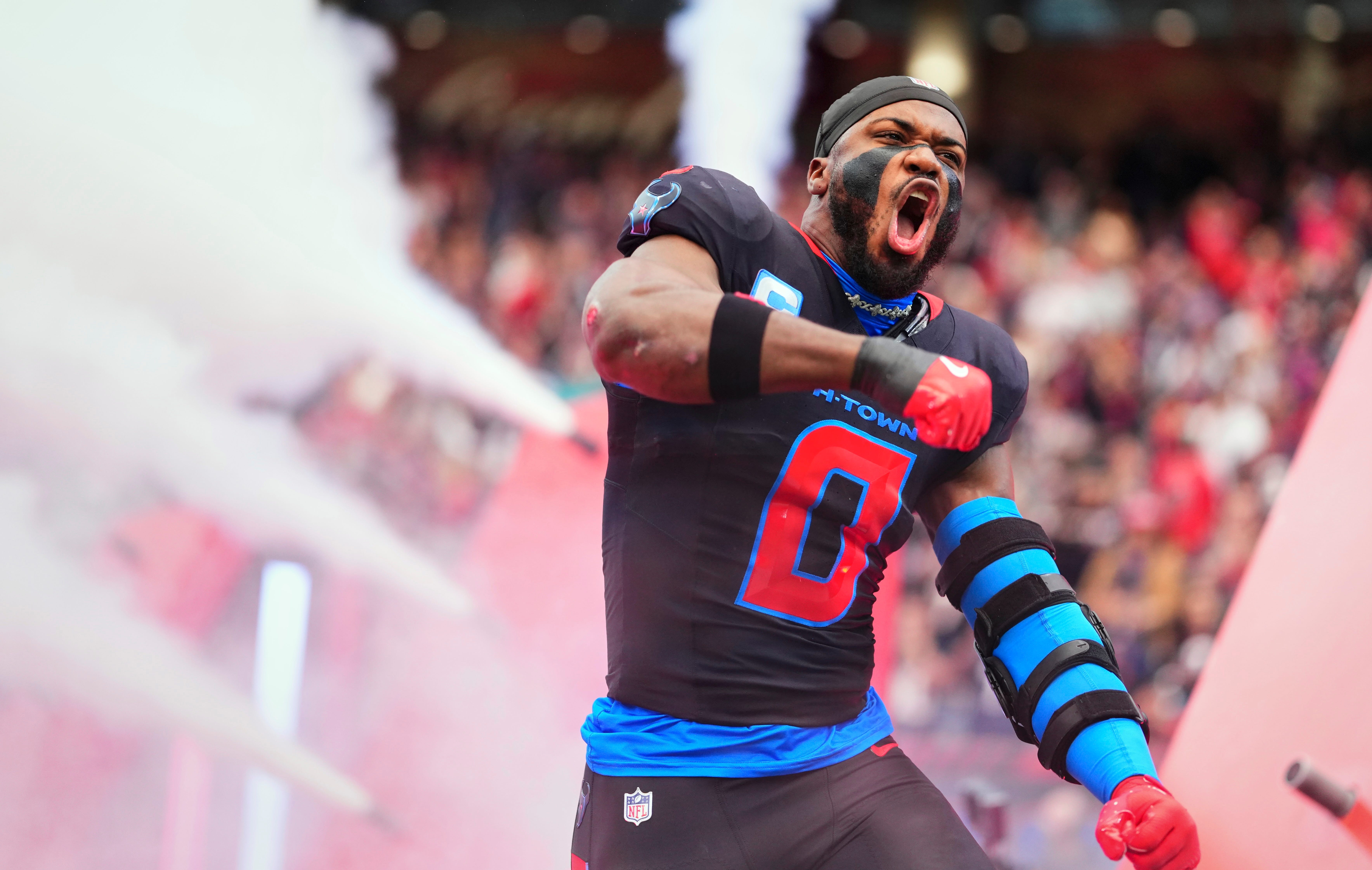
Everyone now feeds off this 6-foot-2, 228-pound linebacker. Ahead of Houston’s Week 18 win, there’s Al-Shaair head-butting, smacking hands, losing his voice in pregame.
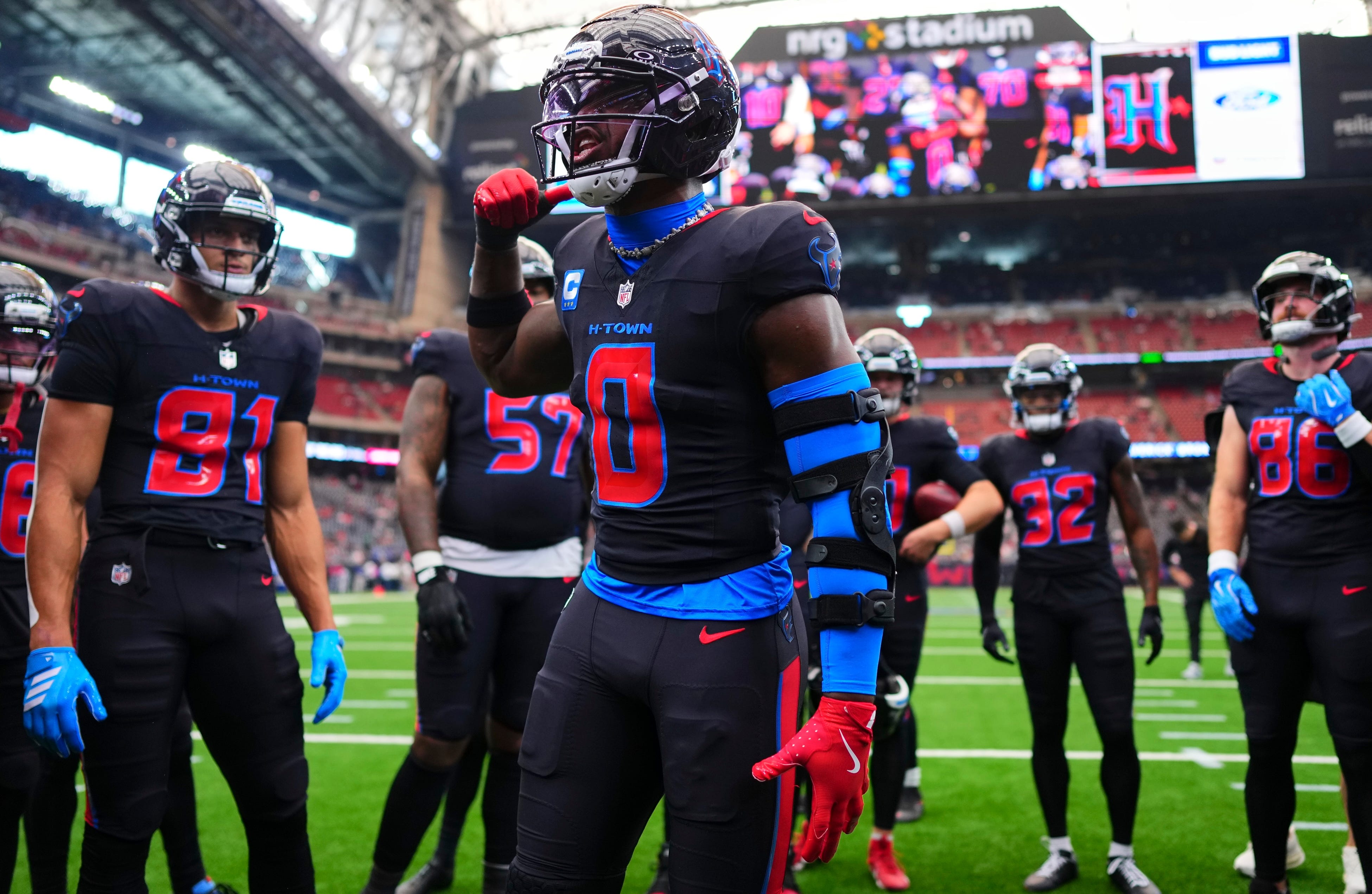
To’oto’o traces this deep connection to players spending a week and a half of training camp together at The Greenbrier in West Virginia. Distractions were eliminated. There’s nothing to do but hang out in each other’s rooms and engage in deep conversations beyond football.
All while the speed and violence required to operate within this Texans defense is made clear to new faces.
“We have a standard,” To’oto’o says, “and if you don’t play that way? You don’t belong here. When we watch film, there’s a way it’s supposed to look. And if it doesn’t look like that? It’s simple. You’re not supposed to be out there.”
Ryans draws this line. Those who don’t belong are removed from the roster. Yet, Ryans also has a “brotherly love” side that players appreciate, To’oto’o adds. We see Ryans threading this needle in all postgame speeches. From ’23 to ’24 to ’25, Houston keeps inching closer to bringing the coach’s vision to life. Speed doesn’t think Caserio would ever draft or sign a player who shies from contact and the second you walk through the door. The edict is simple: “Be you.”
You’re encouraged to hit, and talk, and hit some more with unbridled emotion. Lassiter isn’t the one who starts the trash-talk in the secondary. But he assures he finishes it.
“We embody the old school, smashmouth football mindset,” Lassiter adds.
All bloody good fun… until it isn’t. Until that police officer hiding behind the bushes pulls you over. Play this hard, this fast for 60+ snaps a game — attacking all with the ball — and a player is bound to cross a line.
On Dec. 1, 2024, everything these Houston Texans were trying to build could’ve come to a screeching halt. Quarterback Trevor Lawrence scrambled left, decided to slide and Al-Shaair failed to pull up at the last second. Instead, he drove his forearm through the Jacksonville quarterback’s head.
In fairness, this is a penalty. A melee broke out. He was flagged, fined, absorbed all ritualistic social-media scorn. But then something strange happened. NFL VP of Football Operations Jon Runyan wrote a letter that was disseminated to the media.
A public scolding that did not sit well with Al-Shaair.
He fell into a very dark place.
A black hole darker, he assures, than anything we can possibly imagine.
First, came the three-game suspension.
Next, came the letter.
In this letter, Jon Runyan stated that Al-Shaair had ample time to avoid such contact, was responsible for escalating the brawl that ensued, and then came the words that infuriated him most: “Your lack of sportsmanship and respect for the game of football and all those who play, coach, and enjoy watching it, is troubling and does not reflect the core values of the NFL. ... Your continued disregard for NFL playing rules puts the health and safety of both you and your opponents in jeopardy and will not be tolerated.”
Media power players slammed that RT button. He was the No. 1 story in sports for all of the wrong reasons.
This branding as the NFL’s villain hurt most. Al-Shaair had never met Runyan, commissioner Roger Goodell, any of the league’s power brokers before in his life.
“He wrote the letter,” Al-Shaair says, “as if I personally slapped him in the face. I don’t even know you. You don’t know me. But you’re talking about me as if you know my character. You’re speaking in a very personal manner for somebody you’ve never personally met.
“That is insane. I’ve never had so much to say about anybody that I’ve never met before.”
Al-Shaair told Runyan they needed to chat face to face.
The VP played in the NFL himself from 1996 to 2009. His son is a guard for the New York Giants. In person, Al-Shaair asked Runyan if he’d use the same language if his son was involved in a similar collision and said they both had a responsibility to uphold the shield. “When you wrote that letter,” he told Runyan, “you didn’t care about what it was going to do to me or my character or anything I built up to this point.” Runyan countered that Al-Shaair knew exactly what he was doing, knew he was trying to take a shot at the QB. Al-Shaair pushed back and said he was not. “That’s not the character I have as a human being,” he told him.
Al-Shaair doesn’t dispute the flag. But to him, these are split-second decisions. To him, some of the most prestigious defensive players in the history of the game have been flagged for unnecessary roughness and facemask penalties, and the plays aren’t treated as DEFCON 1. Playing on the edge and, yes, crossing that line doesn’t mean he outright disrespects the sport. And if anyone understands that, shouldn’t it be Runyan? Ahead of their meeting, Al-Shaair learned about the VP’s own feral play style. In 2006, players voted Runyan the second-dirtiest player in the NFL, behind Rodney Harrison and ahead of Warren Sapp, Kyle Turley and Sean Taylor. This ex-Eagle went airborne to spear opponents in the chest.
“So, it’s even more irony that you’re this person writing up this stuff so offended by one play that I made,” Al-Shaair says. “And now apparently I’m this ‘dirty player’ when you literally are the epitome of that. That’s why I sat with him.”
Vitriol elevated to extremes typically reserved for players arrested for crimes.
Publicly, Al-Shaair leaned into it. Went heel. His post stating “IF YOU WANT ME TO BE YOUR VILLAIN, I’LL BE YOUR VILLAIN!” (with a picture of The Joker) generated 7.7 million views. Masses piled on. He tried to lean into his Muslim faith, specifically the virtues of “intent” because he knew his intentions aren’t to injure players.
He gives an example. If Al-Shaair were to give you $100 but he’s recording the video for social media, obviously the intent is self-gratification. A public pat on the back. The sum could’ve been a million bucks and meant nothing in the eyes of God.
“But if I gave somebody the last dollar I had with the intent to truly help this person,” he continues, “that’s worth a value in gold. I’m trying to play as hard as I can and I have to just be true to that regardless of what’s said about me.”

The meeting didn’t bring any peace. His season descended into chaos.
“I dealt with anxiety and doubts and fears and everything,” Al-Shaair says. “I dealt with so much mentally, more than physically. And I was dealing with a lot physically.”
Into the Texans’ divisional playoff game in Kansas City, Al-Shaair’s injured knee throbbed. He couldn’t practice. He couldn’t even participate in walkthroughs. To relieve pressure before kickoff, the linebacker had it drained 200 cubic centimeters — an excessive amount. Once the game began, Al-Shaair then hurt his other knee during a screen play. He visited the medical tent twice. “It was terrible,” he adds. “I literally felt it every time I took a step. The sharpest pain.”
All game, he screamed in agony. He cursed. His football soul left his body.
Al-Shaair never wants the Texans to tell him when he’s going to be mic’d up because it’d feel too weird. So when he found out after this KC game that he was wired for sound, a shiver went up his spine. This footage never saw the light of day, obviously, but he knows a handful of Texans staffers heard “all the fucked-up things” he was saying to himself those three hours.
“I’m pleading: ‘Why me?!’” Al-Shaair recalls. “I was in such a shitty place. And to know other people were hearing my darkest, deepest thoughts? On top of having the shittiest game in your career?”
The previous month, he tried to put on a good face for teammates. It was a lie.
After this 23-14 loss in Kansas City, all emotions poured out of Al-Shaair.
Inside the visitor’s locker room, he sobbed uncontrollably.
“I’m sitting there thinking I let the whole team down,” Al-Shaair says. “If I played how the team expected me to play, there’s no doubt we win that game. But there were plays where I personally knew I couldn’t make with what I was dealing with. And instead of pulling myself out, I tried to push through it.”
Right into the 2025 season, Runyan’s words lingered in his head.
He was terrified of becoming Public Enemy No. 1 again.
In Houston’s 26-0 win over Tennessee on Sept. 28 — rushing rookie Cam Ward — Al-Shaair put his hands up to block a pass and dinged the Titans quarterback in the head/neck area. The play was not flagged. Al-Shaair was fined $17,389 and another rush of anxiety returned. Here, Al-Shaair vows he was only trying to swat the ball. There was no ill will. Either way, the clip went viral because it looks bad in slow motion. He was again labeled dirty and it took until Houston’s bye two weeks later to get to a good place mentally.
Al-Shaair took time for introspection. He thought hard about specific plays.
Against Seattle, he hit quarterback Sam Darnold inbounds, slammed him out of bounds, received a flag… but no fine. NFL Code for admitting officials screwed up. (“I got to the point where I’m like, ‘OK, I don’t give a fuck.’”) Two weeks later, Broncos cornerback Kris Abrams-Draine concussed Texans QB C.J. Stroud mid-slide in a play similar to the Lawrence hit. Officials picked up the flag and did not fine Abrams-Draine. This time, they gave the defenders grace in ruling this as a bang-bang play. (“This kid does literally the same thing damn near verbatim. Craziest shit I’ve ever seen in my life. I’m like, ‘Bro, are you fucking kidding me?’”)
So, why change at all?
He’s not looking back. He’ll play fast and worry about the consequences later.
A hold in the first quarter miraculously isn’t a hold in the fourth. A personal foul on this slide isn’t a foul on that slide. The NFL is destined to be inconsistent, so F it. These Texans aren’t going to obsess over how to act crew to crew, play to play. They’ll churn at one hellbent speed. Most importantly, Al-Shaair — and all players here — have the license from their employer to churn at one speed.
The correct voices are in their ears. This is the Texans Difference.
You’re chosen because you’re willing to play on the edge.
You are not asked to shape-shift into a gentle herbivore.
When 99.9 percent of the football world was trying cancel Al-Shaair, the Texans never flinched. The GM, Caserio, called the wording of Runyan’s letter “bullshit” and said Al-Shaair “represents everything we want this program to be about.” The head coach, Ryans, noted that too many quarterbacks try to slide late to gain an extra yard, which puts too much of an onus on defenders to figure out what the quarterback’s even thinking. “You don’t know if a guy’s staying up and continuing to run,” he said. “We hope Trevor’s OK. But also, if we’re sliding, you have to get down.”
The team’s DC, Burke, says coaches educate everyone on the rules and differentiate legal hits vs. illegal ones. But the last thing they ever want to do is stunt instincts and see anyone turn into a video-game glitch the second they’ve arrived at the quarterback. (Think: Mathias Kiwanuka infamously giving up on a fourth-and-10 sack of Vince Young.)
These Texans refused to lose focus.
The plan never changed: implant fear in opponents’ minds. Attack.
Truth is, if any coach inside this building tried to convince any player to slow down in light of a flag or fine, it’d be disingenuous.
“The fastest thing people see around here is fakes,” Burke says. “I tell everyone, ‘Be yourself. Be your own personality. Be who you are.’ I’m going to be me. I cuss a lot. I’m sorry. That’s just me. But if I wasn’t me, y’all would fucking sniff it out in two seconds. So everyone be themselves and we’ll just keep working to be better.”
Anyone in any industry can relate. When your name is dragged through the muck — when you’re painted as something you are not — it’s easy to succumb, to go on a national apology tour and believe what the world’s saying is true. Al-Shaair will be your villain, your Joker. But in his head? Al-Shaair knows he’s that 12-year-old running through flames to save his brothers and his niece. A kid who rose from homelessness and poverty for this NFL opportunity.
His intent is not sinister. Rather, his logic is simple.
Linemen and receivers and backs and QBs are all trying to make plays on him.
“You’re trying to embarrass me,” he says. “I’m trying to embarrass you.”
When Houston started this season 0-3, and then 3-5, coaches did not see players waver at all. DeMeco Ryans masterfully commanded the room. “One of the best I’ve been around,” Burke adds. Lassiter agrees that Ryans “brings the juice.” But no magical pep talk was required. Nor was there any reason to panic. The Texans had the ball with a chance to win late in these games. On defense, there was no need to spend all night in the lab. Lassiter knew this team was special early as OTAs in May.
“He’s bringing in guys who don’t need that,” Lassiter says, “who are already wired to be ready to go at any time.”
Finally, the dam broke.
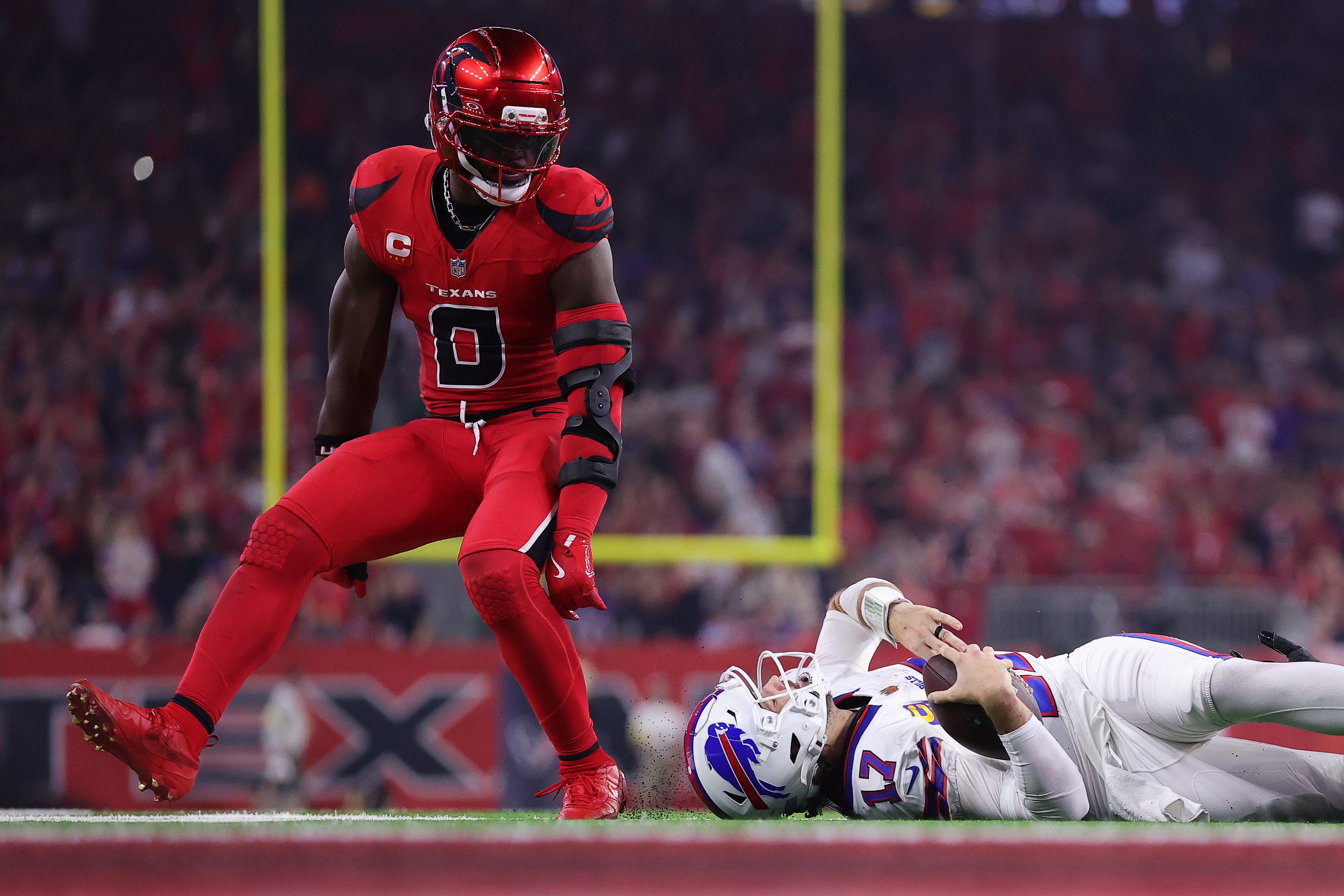
No defense has brutalized Josh Allen quite like the Texans did in their 23-19 win. At 6 foot 5, 240 pounds, the Bills’ unicorn of a reigning MVP is the most difficult quarterback in the league to get on the ground. There was no place to hide vs. this SWARM. Allen skittered left… right… forward… backward… and was sacked eight times. In all, he was hit (legally!) 12 times. A number that deeply unsettled Sean McDermott afterward. Two weeks later, the Texans all but eliminated Patrick Mahomes from playoff contention. Safety Jalen Pitre toppled wideout Rashee Rice with a monster hit, flexed toward the Chiefs sideline and — at that exact moment? — Texans safety Calen Bullock believes a message was sent to the entire NFL.
For Al-Shaair, the symmetry was sweet.
A year ago, this was a personal house of horrors. This night? His interception sealed a win. He dropped to his knees to thank God. The antagonist cast as Voldemort, Hannibal Lecter and Darth Vader rolled up into one has since been nominated this team’s representative for the Walter Payton Man of the Year Award and also received the Good Guy Award by Texans’ PWFA chapter.
I ask Al-Shaair if he’s seeing himself in others on this roster. He thinks about the question for a moment and looks around the locker room.
His willingness to play through an excruciating amount of pain in 2024 wasn’t smart, but it did establish a precedent. This season, he’s seeing the same fight inside of everyone. Nodding toward Lassiter’s locker, Al-Shaair points out that the team’s old-school cornerback has barely been practicing due to that nagging foot injury.
The game arrives and he’s locked in. He doesn’t think twice.
“You’re willing to do that,” Al-Shaair says, “for this group.”
Two minutes to go. Down three. Season on the line. All momentum and all rules are on the quarterback’s side. In today’s NFL, the quarterback is the greatest source of fear. Mahomes, 13 seconds to go, zips a pair of completions to force OT in one playoff game. Mahomes, on one good leg, seizes the gap to pick up 25 yards with 2:55 to go in the Super Bowl. Defenders subconsciously brace for catastrophe against the elites.
But, again, look back to the Boom. Richard Sherman and co. refused to elevate Tom Brady, Peyton Manning and Aaron Rodgers onto virtual pedestals. I spent a full week around those Seattle Seahawks for the Milwaukee Journal Sentinel ahead of both their Week 1 and NFC title wins over the Green Bay Packers in 2014. Rap blared. Players danced. All swagger from all corners of the room was unapologetic.
They didn’t bitch about the sport going soft. They simply kicked your ass and flipped the psychological script: this Seahawks defense got inside of the quarterback’s head. One game, Sherman famously yelled “U Mad Bro?” into Brady’s ear before proclaiming afterward that the Patriots quarterback was just one man. Another, Rodgers outright refused to throw a pass toward Sherman’s half of the field all 60 minutes.
After posting the greatest statistical season in NFL history, in 2013, Peyton Manning produced all of one garbage-time TD in a 43-8 Super Bowl drubbing vs. Seattle.

Step One to becoming an all-time defense? Refusing to participate in the coronation of quarterback deities.
Lassiter, a man who grew up idolizing this Seahawks D, sounds like Sherman’s long-lost nephew.
Wrecking Mahomes and Allen this past regular season is a perfect place to start.
“They’re phenomenal players,” Lassiter says. “But at the same time? It’s just the game of football. Football boils down to a bunch of 1 on 1’s. If I take care of my 1 on 1? The guys around me, I know they’re going to take care of their 1 on 1’s. I like our chances all the time.”
Sherman ran the 36th-fastest time amongst DBs in his draft. Lassiter was also near the bottom. Stopwatches take on the significance of a piss-filled bucket inside the blue tent when the Texans’ 22-year-old corner lines up for this “psychological warfare.” One on one, he knows each week’s combatant will try something new. His goal is to stay one chess move ahead and seek utter domination.
“Who wants it more?” Lassiter says. “You have to dive in mentally. Understanding tendencies. Understanding OCs. Understanding your strengths and weaknesses and seeing how people would attack you or how you would attack yourself.”
All of which feeds into Burke’s goal to make Sunday the “player’s day.”
Here’s what that looks like.
From the right slot, the ball is snapped and Lassiter reads Mahomes’ eyes. He’s able to stick with Hollywood Brown’s 4.2 speed stride-for-stride because he knows the Chiefs burner is going to take his route to the corner. Lassiter flips his hips, intercepts Mahomes and — on his way to the sideline — takes a moment to stare into the NBC camera lens with an index finger to his lips.
He calls this his flow state. Everything slows down.
“I knew he was coming back out,” Lassiter says. “I’m looking at the quarterback the entire time. If he’s going to launch it, I’m ready to run. And if he underthrows it, then I’m ready to gauge down. And I flipped, found the ball and it’s like backyard football. Back to when we’d play Jackpot.”
Ah, yes. Jackpot brings Lassiter back to childhood again. He started playing this childhood classic at age 4, too. Known up north as “500,” a kid chucks the ball into the sky and calls out a point total. Of course, in Savannah, it’d get physical. Fights broke out often. Two-hand touch was never an option and Lassiter assures he was the one doling out the pain. Never the other way around.
Step Two in becoming an all-time defense: Win in the playoffs. Nobody remembers dominant defenses that are one and done. Coaches and players are supremely confident they’ll be able lock down any offense in the AFC. The unknown is their own offense. In funding this hellish defense, Houston didn’t have the resources to pay up for new offensive linemen last spring. Like, say, Chicago. It shows. At 3.9 yards per carry, the rushing attack finished 29th. There’s room to blame both coordinator and quarterback, too.
The good news is C.J. Stroud can hit the big play. Teammates are keeping the faith. If he’s able to get these Texans out to a 14-0 lead — as he did vs. the Chargers in Week 17 — this defense should do the rest.
Expectations are high, but expectations were always high.
Once again, a player says a few words that’d warrant a trip to the principal’s office in other buildings.
“Super Bowl,” Speed says. “We have a lot of obstacles to cross to get there. But we’re capable. Especially behind C.J.”
Step Three: Find a nickname. This is how you’re remembered forever. S.W.A.R.M. is… fine. Probably a smidge too forced, too tame. The word “savages” comes up often. Bullock isn’t sure if that’s punchy enough. “Yeah, we’re savages,” he says. “But we know that already.” Honestly, it’s up to all of you. As ex-Seahawks safety Kam Chancellor once explained, Seattle DBs saw a bunch of submissions on Twitter. None were catchy. But the second they saw “Legion of Boom,” they were sold. A legion, to them, sounded like a vast army.
“It ain’t even about what they say,” Speed adds. “It’s about what we do.”
A sharp moniker will surface organically when Will Anderson Jr. inevitably chases down another quarterback, Speed supplies another “POP!” audible over the broadcast, Lassiter struts toward a camera after another pick and a hoarse Azeez Al-Shaair sets the fiery tone in the middle of all mayhem. It’s fitting. This year’s Super Bowl will be played exactly where his career began 2,374 days prior: Levi’s Stadium.
Like that exhibition game long ago, Al-Shaair will read the offense’s movements, sniff out a screen and slam the gas pedal.
He’ll wreck whatever’s in his path.
He’ll point to the sideline. And if he hoists a Lombardi Trophy, he’ll undoubtedly think back to when all he held in his hands were a pair of Nike slides outside of a burning house.
Damn, it feels good to have a home.
“This,” he says, “is everything my whole life’s been about.”
This just makes me think about roster construction. Feels like you can build a defense like this without sacrificing the other side of the ball which doesn’t seem to fit sustained greatness in the NFL. I wanted Will Anderson in the draft that year. Love watching that unicorn play.
For the defense nickname, I like Doomsday.