


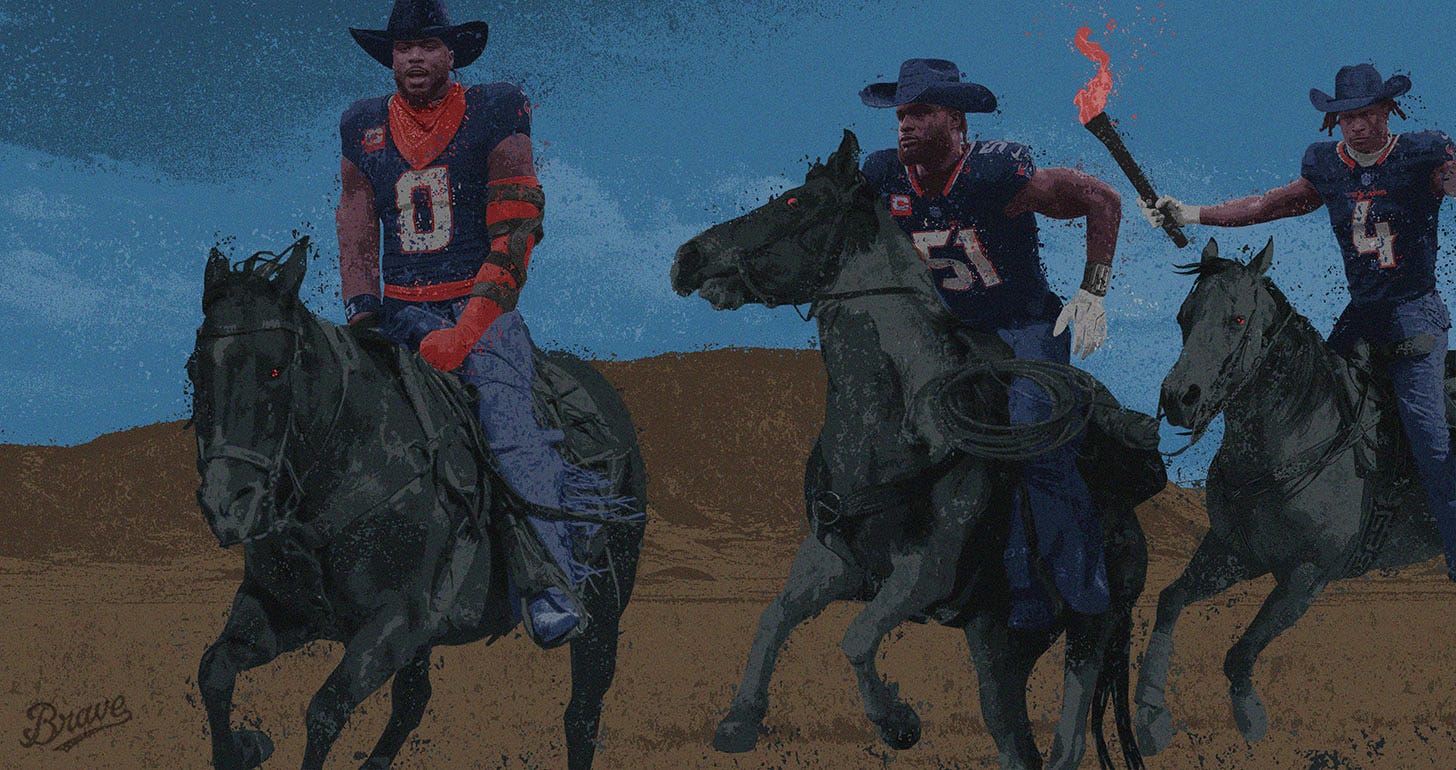
HOUSTON — This Houston Texans defense was born in fire.
When Azeez Al-Shaair closes his eyes, he can still picture the flames, smell the smoke, feel the panic torpedo his nervous system.
He was 12 years old. His entire family lived inside his grandmother’s home in Tampa. At approximately 5 a.m., Al-Shaair’s older sister cooked breakfast and forgot to turn off the stove before heading to work. In his half-asleep, half-awake haze, Al-Shaair didn’t think much of the smoke alarm bleeping. This was common. All three of his older sisters were terrible cooks, so he figured something was burning. “I’m not thinking,” he adds, “that they’re burning the house down.”
The beeping wouldn’t stop. Sleeping on the floor — there was no furniture in the house at all — Al-Shaair finally opened his eyes, and… oh no.
Peering down the hallway, all he saw was a glowing amber and smoke. So much black smoke rising to the ceiling. He dropped to all fours, crawled through the narrow hallway and identified the source. The entire kitchen was on fire. In real time, one fear served as a shock to his system: We’re about to be on the street. I can’t believe this. Al-Shaair tried pouring water on the flames, but all that did was make everything worse. Ten times worse because this was a grease fire.
Water made it pop. And grow. He noticed flames were approaching the front door.
His heart pounded. He shifted all attention to survival, tucking his sleeping seven- and eight-year-old brothers under his arms and sprinting to safety.
And yet, once he was outside, he felt nothing but dread in the pit of his stomach. Something told him to run back into the house. Terrified as he was to storm through those flames, part of Al-Shaair knew he should’ve checked one particular bedroom. He ran back into the burning home and, this time, the hallway was pitch black. He crawled into that bedroom and right there on a makeshift pallet of blankets was his one-year-old niece. Fast asleep.
Al-Shaair scooped her up, held her tight and safely escaped the flames. By the time the fire department arrived, the house burnt to the ground. To this day, the sight of a fire gives Al-Shaair anxiety.
But he survived.
His family survived.
All 11 of ‘em — Mom, eight kids, two grandkids — were now officially homeless. They stuffed into a motel. Hope was in short supply.
Go Long is your home for longform journalism in pro football.
The best way to support our work is with a paid subscription.
Walk past statues of three stampeding bulls, into NRG Stadium, and it instantly feels as if NASA has directed us to another planet. This team should not exist in 2025. Not in a league that siphons violence out of its sport under the harebrained guise of player safety. Certainly not in a society full of sensitive scrollers offended by their own shadow. All the Houston Texans did was build the league’s most malevolent defense since the “Legion of Boom.”
Al-Shaair puts it this way. There are more 7,000 spoken languages around the world.
Everyone understands the same two emotions: love and violence.
“A hug is a hug,” he says, “and a punch is a punch. Violence, you don’t have to know anything I’m saying. When I hit you, you know what that means.”
Metrics can explain the dominance. The Texans entered the final week first in points, yards and EPA. They totaled 47 sacks, 95 QB hits, created 33 turnovers and scored five defensive touchdowns in all. There’s nothing magical to their formula. They do not disguise or deceive or disorient QBs with a cryptic blitz package. They play a handful of coverages. The playbook is more brochure than hard drive. Opposing quarterbacks know what’s coming — an uppercut to the jaw — and are usually powerless to stop it. These Texans devoured the sport’s elites down the stretch. Josh Allen, the reigning MVP, was sacked eight times. Patrick Mahomes, the three-time Super Bowl MVP, had a career-low 19.8 rating. Justin Herbert stood no chance.
After getting the JV team some reps vs. Indianapolis in Week 18, the Texans finished 12-5 and will now play the Pittsburgh Steelers Monday night at Acrisure Stadium on Wild Card Weekend.
This defense’s greatest strength isn’t explained in numbers.
Rather, the twitching eyeballs of offensive players a millisecond before contact.
Intimidation.
These Texans are a salvo of nostalgia for any fan from any era. Grow up on Jack Lambert leering over offenses with those missing front teeth, the ’85 Bears suffocating offenses and Ronnie Lott amputating the tip of his pinkie? You’ll have flashbacks. Live for Reggie White clubbing 320-pound tackles with one arm, Greg Lloyd petrifying opponents with one death stare, the ‘00 Ravens, ‘02 Bucs or a possessed Brian Dawkins (a.k.a “The Wolverine”) speaking in tongues? These Texans are equally mesmerizing.
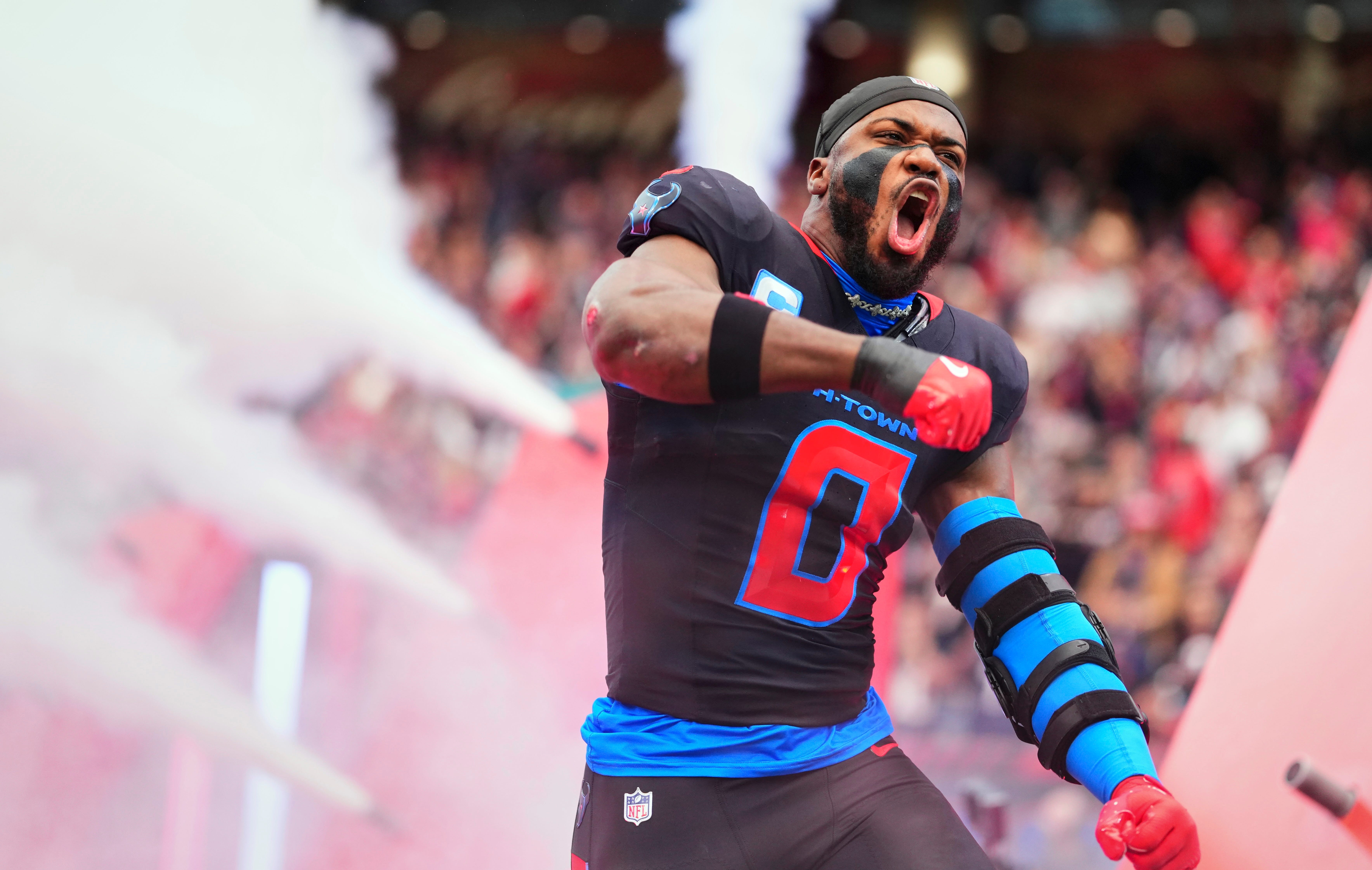
Replay the night they took the Kansas City Chiefs out to pasture. What we see is destructive. With 35 seconds left in the third quarter, safety Jalen Pitre tattoos Rashee Rice with so much blunt force that the Chiefs receiver nearly flips over. The ball trickles out of his limp hands. What we don’t see with the naked eye is why the 2025 Texans have a chance to carve out their own bloody chapter in NFL history. After that hit? Texans players are convinced Rice was afraid to venture over the middle of the field the rest of the game. It’s a look in the eye, a hesitation. And on fourth-and-4, game on the line, Rice’s drop sealed defeat.
“How many more times do you think he wants to come across the middle?” linebacker E.J. Speed says. “That’s in his head. You’re not going to be perfect. But if you can instill fear, it’s going to give you an edge.”
These Texans sense fear on a weekly basis. Take the offenses that run Point A-to-Point B gap running schemes. As opposed to zone schemes, these backs must blast ahead with decisiveness. Against Houston, they make subtle business decisions. Linebackers see backs hiding behind a lineman an extra split-second to avoid the 1-on-1, Oklahoma Drill-like explosion in the hole. They’ll sacrifice two or three yards.
“They know if they come through a hole, it’s going to be trouble,” Speed says. “It’s not safe out there. It ain’t safe! Especially when you’re up two scores? People are like, ‘Man, I’m not going to put my body on the line.’ That’s what makes a dominant defense.”
Can’t blame them. Everyone wants to tee off.
This locker room is teeming with outlaws.
Until flags are stuffed into belts, physicality reigns. Safety Calen Bullock doesn’t think their mentality is anything complicated.
“We don’t hold back anything,” he says. “Those guys on the other side of the ball are still trying to take our heads off so we’re going to make you hurt after the game. When you play us, you’re going to walk off the field like, ‘Oh yeah, that defense is serious.’”
I relay this comment to Speed.
He loves it. He agrees.
“We want you to hurt,” Speed says. “We want you to remember when you played the Texans. You might have to play us again in the playoffs. You’ll be like, ‘Man, last time we played these boys? I came out with an elbow, a knee, all type of stuff!’”
Speed pauses a half-second as if acknowledging how this sounds.
“We’re not trying to intentionally hurt anybody. It’s our brand football that we play.”
10-4. This is how everyone thinks.
Kamari Lassiter, the team’s snarling cornerback, believes the Texans can go down as one of the greatest defenses ever. (“The point that we’re at right now? It’s good, but we can be so much greater.”) Henry To’oto’o praises the team’s unbreakable bond with head coach DeMeco Ryans. (“When you have a leader who’ll literally go out and die for you, you would do the same for him.”) Which, uh, come again? Give To’oto’o the chance to sanitize this outlandish claim and he doubles down. “One hundred percent” he’d die on the field. To’oto’o knows that he’s not alone.
“You’re going to have to cart us off,” To’oto’o adds. “We are going to do everything we can to get a win.”
Football is different in Houston, Texas. Go Long spent a week inside the belly of the beast to learn just how different.
In Part I, we’ll examine the philosophy behind the team’s SWARM battle cry.
In Part II, it’s onto the wild personalities who bring this to life, the self-described “savages.”
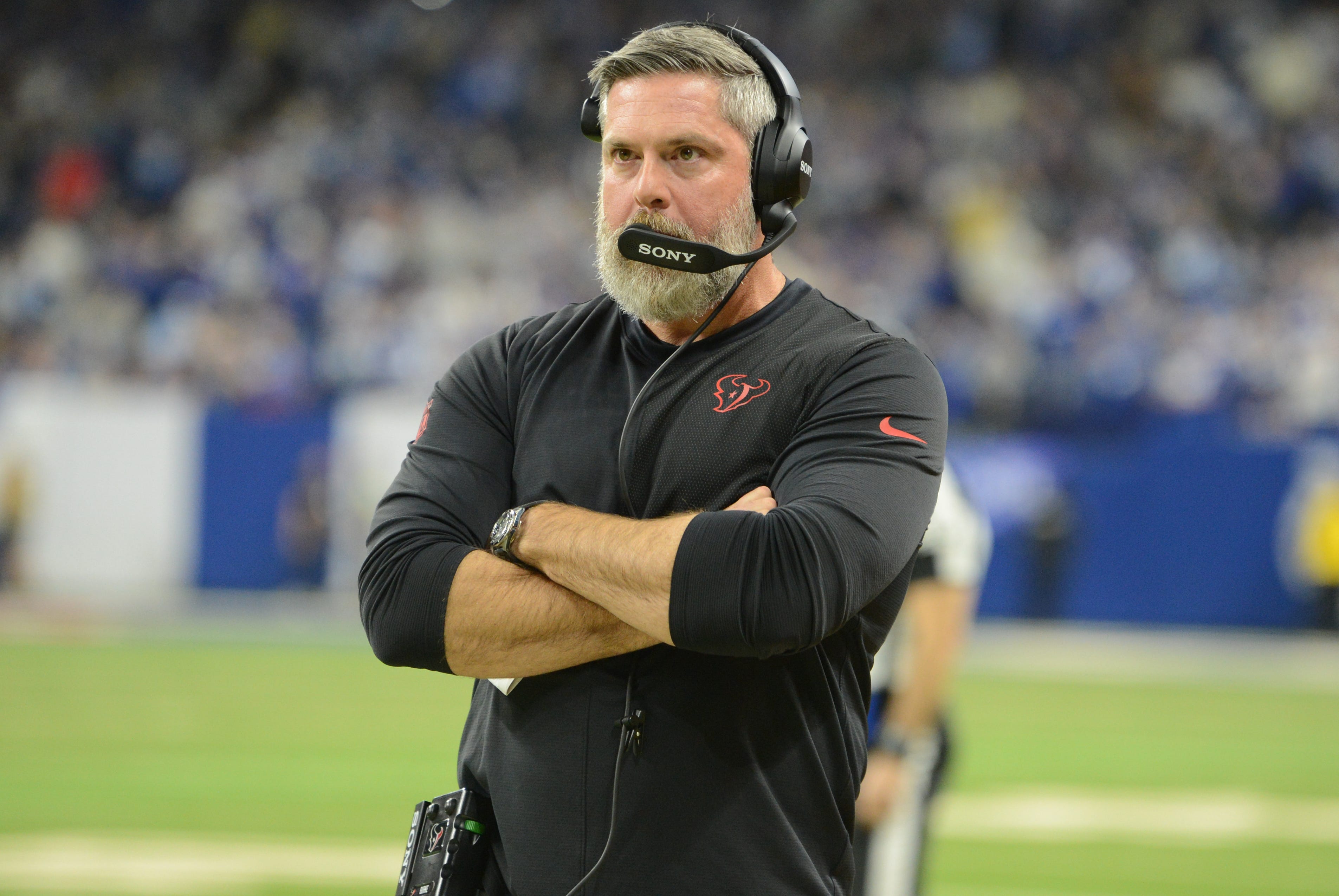
Patrolling the sideline, eyes piercing, you’ll also spot a bearded badass of a defensive coordinator signaling plays in. Matt Burke has a message for opposing offenses, too. He wants everyone to know this defense will never take a play off. Not one. These Texans are obsessed with sustaining the same rabid intensity all 1,000+ snaps this 2025- ‘26 NFL season.
Burke doesn’t want quarterbacks, linemen, backs, receivers, anyone breathing a sigh of relief. At any point.
“If you’re coming to beat us,” Burke says, “you’re going to have to do it for 60 minutes and you’re going to have to do it play-in and play-out. We’re not going to stop.”
Attack the profession this way and you’re bound to piss people off.
No defense can live in Ambush Mode, nonstop, and expect no consequences. Late last season, the Texans’ ethos was put on trial. Their leader who escaped the flames, Al-Shaair, was the most wanted man in football. With one hit on Jacksonville quarterback Trevor Lawrence, No. 0 was universally dubbed the dirtiest player in the sport. Not only by fans. The NFL propped up Al-Shaair as a pariah. The NFL declared the sport should never, ever resemble this in a billion years.
The Texans could’ve said their yes-sirs, no m’ams and acquiesced to authority.
Cool the rhetoric. Tap the brakes between whistles. All in all, calm the hell down because that’s what the NFL instructed.
They did not.
They’ll play with fire.
This could backfire or this could lead the Houston Texans to their first Super Bowl in franchise history.
One by one, these jackals bring up the “Legion of Boom” as a north star. This is what the Houston Texans grew up on as 12-, 13- and 14-year-olds. Richard Sherman talking smack. Kam Chancellor emasculating grown men. Earl Thomas soaring in for interceptions. This defense helped preserve the sport’s roots amid an offensive revolution and, now, kids that watched the Seattle Seahawks reach a pair of Super Bowls star in the NFL themselves.
Many coaches view such comparisons as taboo.
Their cliched, one-day-at-a-time speeches are derived from a Bill Lumbergh TPS report.
In Houston, at the beginning of this 2025 season, Matt Burke plastered the top scoring defenses in NFL history up on the board and discussed legends of the sport: the Steel Curtain, ’85 Bears, ’00 Ravens and, yes, those Seahawks. He’s 49. I’m 38. We both feel ancient discussing the LOB as if its a page out of a history book. It still blows his mind that Seattle’s D surrendered less than 16 points per game in three straight seasons.
There was nothing subliminal about this meeting. Burke wanted players to know they don’t care what any defenses today are up to.
“Let’s aim for real stuff,” Burke says. “Doesn’t matter what other people outside the building say. It’s what our standard is. Our dreams, our goals, what we’re shooting for.”
Into Week 18, Houston’s defense was allowing an NFL-low 16.6 ppg.
Super Bowl glory set those four defenses apart. Visions of a title are real here, too.
Inconceivable considering what DeMeco Ryans inherited as head coach. Houston had gone 11-38-1 the previous three seasons. This defense was rudderless.
Ryans and Burke didn’t know each other before joining forces. Quickly, the DC could tell all culture talk was not bureaucratic bluster. The “mold” and “mindset” Houston desired on defense was clearly defined. This is Burke’s eighth NFL team. More than any club he’s seen, the Texans seek a very specific temperament — the top 1 percentile of competitors who play with toughness, passion, an absurd supply of energy. In Derek Stingley Jr. and Pitre, the duo inherited two pillars in the secondary. Mostly, the canvas was blank.
Ohio State quarterback C.J. Stroud was the pick at No. 2 overall and then the Texans shocked the football world. Ryans and GM Nick Caserio dealt the 12th overall pick, the No. 33 pick and first- and third-rounders in ’24 (with a fourth kicked back) for the rights to select Alabama edge rusher Will Anderson Jr. at No. 3 overall, a “terminator” we got to know at length a year ago.
The trade was impaled as shortsighted, as a new regime foolishly microwaving a rebuild. They knew better.
Anderson embodied everything coaches and execs could possibly write down on a notepad.
“What makes me different is my mentality,” Anderson told us in ‘24. “I’m going to strike you in your shoulder pads and your helmet and your chest every time I line up across from you. I’m going to keep going — 24/7, all… game… long.”
“Football is about that greedy, gritty, sticking your nose in the honey, man. It’s got to be physical. That’s what it’s all about.”

Practice. Meetings. Lifts. From Day 1, Burke says this is what Anderson brought… “nonstop.” Then, the games began and everyone saw his relentlessness firsthand. He’s stranded in the desert and the quarterback’s a jug of water.
“Getting to the quarterback every play,” Burke says. “Crawling on the ground to finish a play. Running to the ball. That’s how he is. Play-in and play-out.”
Every vet signed in free agency. Every prospect selected in the draft.
This is the mold.
This takes precedence over every other section on the scouting report.
Kamari Lassiter’s 40-yard dash was a disaster. At his pro day, in Athens, the cornerback clocked in at 4.64 and 4.65. Scouts were aghast. His stock unequivocally dropped. The Texans, however, did not care because the Texans, by then, were already infatuated with the Georgia corner’s greatest weapon: his mentality. Burke first met Lassiter at the NFL Combine in February. He couldn’t get enough. “This dude’s frickin’ our type,” he said then. “This guy is real.” It didn’t matter that the Texans lost draft capital in that ’23 Anderson trade. The next spring, they mined for jewels at No. 42 overall (Lassiter) and No. 78 (Bullock).
During the Texans-Ravens broadcast this season, commentator J.J. Watt relayed a telling conversation he had with Burke.
The coordinator described Lassiter to him as a “card-carrying psychopath.”
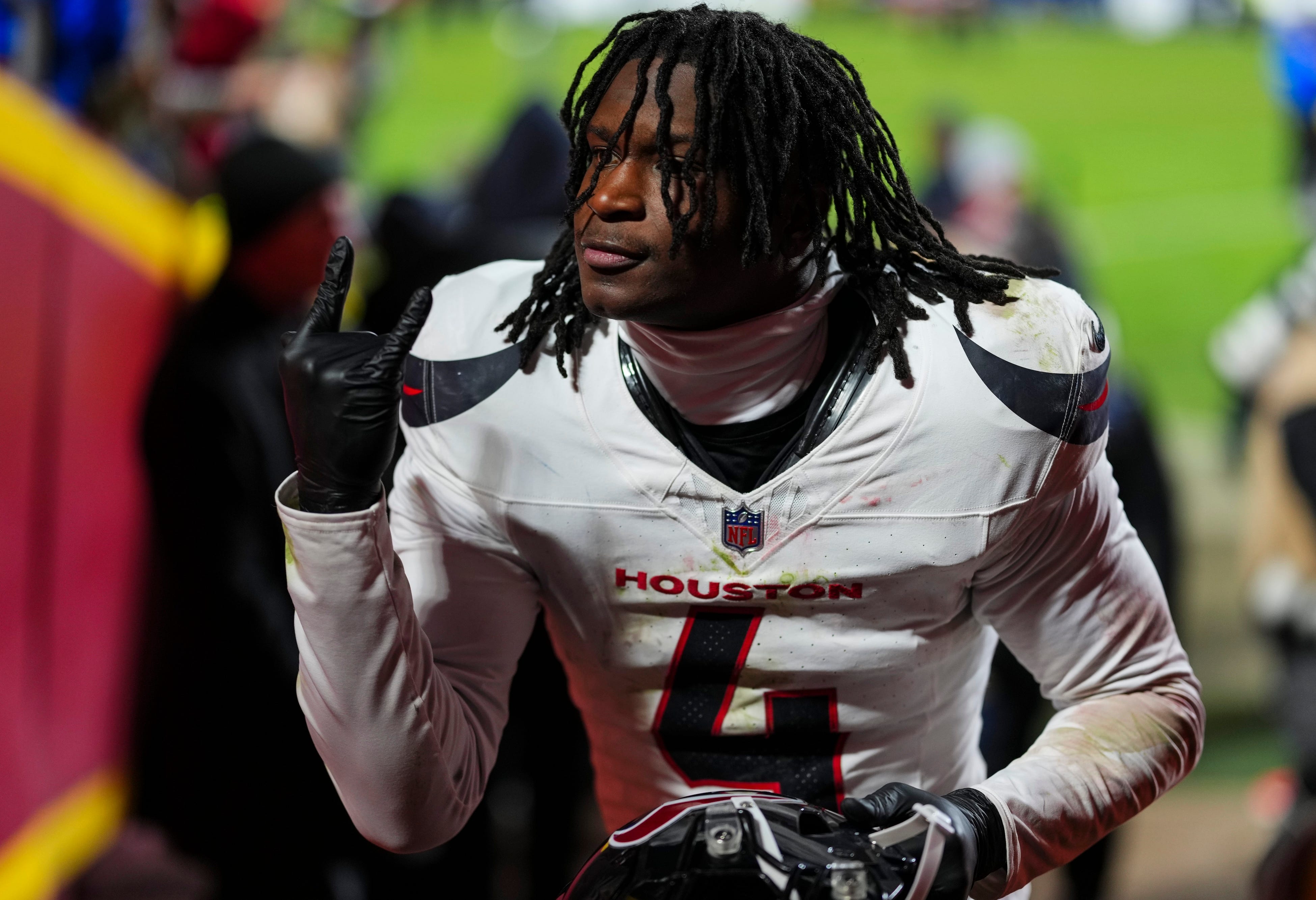
Precisely the personality Houston seeks across its entire defense because if the foundational players are sickos, it’s contagious. Players teetering on the fringe of PG-13 and Rated-R fall exactly where you want.
“That’s our standard,” Burke explains. “You’re going into a room with Will Anderson and Danielle Hunter and that whole crew? You ain’t going to last if you don’t do it the way that those guys are doing it. And Azeez. And Henry. And everybody on the whole back end. You stick out like a sore thumb if you’re not like that.
“Hey, Will Anderson’s doing it. Will Anderson’s turning and running to the ball in practice. What are you doing? You don’t even have to say that anymore because no one wants to be the guy not doing it.”
Hence, the essence of the word echoed to cultish extremes in Houston: “SWARM.” The acronym is admittedly a tad ham-fisted: “Special Work ethic And Relentless Mindset.” These letters have become a lifestyle. The Texans do not mind missing out on the cornerback with 4.2 speed… or the linebacker with a 40-inch vertical… or the pass rusher who might’ve only registered 3.5 sacks but could moonlight as a bodybuilder. They’ll let the sport’s largest egos topple over each other for these projections. These coaches assume that whole toughness thing will come ‘round.
Here? Houston can look past a physical or athletic flaw but will never whiff on mindset.
If they can tell a player merely likes football — doesn’t love it — that player is not considered.
“The SWARM part of it — the relentlessness — we’re not stopping,” Burke says. “We’re throwing waves and waves at you. The attack mentality.
“Everyone’s running and hitting. You’re not getting a play off.”
That’s why Burke constantly rotates through different D-linemen on gameday. He’d rather his rushers throw a fastball for 40 snaps a game than hold something back a handful of plays. Those five offensive linemen aren’t subbing in and out. Those linemen are dying for you to half-ass a rep, so they can breathe. On Houston’s D-Line, if you’re tired, you’re out. Next man in.
Bringing this to life requires more the other six days of the week. Practices are longer and more physical than players have experienced anywhere else. Fresh off completing a grueling 17-game regular season in 2024 — on a short week! — coaches made guys strap on pads ahead of a wild card matchup with the L.A. Chargers. Burke understands the counterargument. Houston runs the risk of wearing guys out. Ideally, they’ve acquired players who won’t wilt.
Pads aren’t for show, either.
Defenders do everything but literally bring a ball carrier to the ground.
“Boom! We get a pop in to stop,” Burke says. “That mindset of ‘We’re stopping the ball. That’s our thud tempo. I want the ball stopped.’ Psychologically, the ball is never running through our defense. We’re stopping the ball. So now we’re in the playoffs? That hasn’t changed. We stop the ball.”
A more laissez-faire approach no doubt scores coaches points in the locker room. It’s also no coincidence those teams are often the ones steamrolled in the playoffs who still manage to suffer their share of injuries. Houston, conversely, armors the body for combat. Those who do not finish plays in practice run the risk of getting their ass chewed out in a team meeting. Ryans strikes a kind, gentle tone at the podium.
He can be kind.
He can also be harsh.
In team meetings, he’ll replay a lackadaisical rep for all to see and declare that nonsense like this is not what the Texans are about. “If you are,” he’ll say, “that’s fine. But you don’t have to be here.” That player just may be shown the door, too. Attrition weeds out players who might cost Houston a game down the line, sharpening the roster into exactly what Ryans and Burke envision. The Texans do not want feeble players who wait for a loose fumble to bounce their way.
In New England, Mike Vrabel held the same point-blank conversations.
And when 11 players go this hard within the 120-yard length and 53 1/3-yard width of a football field, violence is inevitable. Burke wants the Texans to be “smart bullies.” Annual legislation could be maddening for this team. As far as the Texans are concerned? There is no gray area. Mahomes can attempt to tap dance along the sideline for an extra two yards at his own peril. Coaches command their players to hit any quarterback conducting himself as a runner.
Littering the field with virtual red tape and caution signs is idiotic with this group. Akin to instructing an abstract artist to color between the lines or banning swear words from a comic.
“Guess what? It’s a run-and-hit game,” Burke says. “That’s what defense is about. Those quarterbacks want to toe the line? We want to get right up to the line. We want to get to the edge of clean, hard, physical football.”
There are essentially two species of defensive coaches in the NFL.
1. The X ‘n O wizard who tries to confuse the hell out of quarterbacks. 2. The coach who prefers a room full of natural-born killers playing 100 mph in a simplified defense. Both can be wildly effective but, this day, my mind races back to the Rex Ryan’s batshit two years in Buffalo. He treasured a playbook loaded with checks on checks on checks for every conceivable formation presented presnap… and it drove players insane. They didn’t even try to hide their frustration in ‘15 and ‘16. Talent was wasted. Mario Williams, the team’s $100 million dollar man, openly criticized the system. He and Marcell Dareus did not enjoy dropping into coverage. As the play clock ticked, chaos reigned. Players frantically ran on and off the field. All camp, linebacker Preston Brown stayed up past midnight trying to master calls. (He relived the madness on our pod.)
All of it was infuriating because — one year prior? — the Bills excelled under a coach who wanted killers: Jim Schwartz.
Surprise, surprise. Burke spent his first decade in the NFL under Schwartz.
With a laugh, he admits Houston isn’t doing anything exotic. Coaches want players to master the handful of plays they do call.
“On Sundays, I try to be as unobtrusive as possible,” Burke says. “That’s their day. That’s the player’s day. That’s how I was raised in this league. DeMeco is a former player. We prep ‘em all week, but that’s your time to shine.
“They can go play fast. We try not to burden them or bog them down with a bunch of craziness.”
Coaches do not ask players to juggle 874 different permutations pre-snap.
Coaches do, however, demand perfect technique. Doesn’t matter if the Texans are fresh off an uplifting win. Bullock says they pay zero attention to anything good in film review. “It’s always the bad plays they’re showing us,” he says. “We’re trying to chase excellence.” It’s temping for coaches to skim past mistakes. Veteran D-tackle Harrison Phillips admitted to us that his 2022 Vikings (under DC Ed Donatell) failed to address mistakes head-on because they were winning in such thrilling fashion week to week. Bullock shakes his head as if he cannot fathom such a film room.
Even after wins over Mahomes and Allen, the Texans unearthed errors. Nothing is glossed over.
In that 20-10 win over the Chiefs, one wide receiver managed to leak free downfield because DBs failed to communicate on the back end. Ryans did not mince words.
Of course, it didn’t cost them. Defensive tackle Tommy Togiai wasted guard Mike Caliendo off the line and wrangled Mahomes to the grass before the Chiefs QB could load up.
Such is the beauty of this defense.
The front is the foundation.
Schwartz is the godfather who ruled out this attacking front back as the Tennessee Titans’ DC (2001- ‘08). He started lining up defensive ends in a nine technique and let everyone explode out of virtual sprinter’s blocks. Schwartz then took this scheme to Detroit as a head coach (2009- ’13). That Ndamukong Suh-infused crew were habitual line-steppers. (Packers offensive linemen used to call their D-Linemen “dirtbags” and “nut jobs.”) In ’14, Schwartz’s Bills led the NFL with 54 sacks. When he was fired to make way for Rexmania, the DC morphed a sagging Philadelphia Eagles defense into Super Bowl champs. And when that staff was canned? All he did was turn the Cleveland Browns defense into the league’s No. 1 unit (‘23) and coach the NFL’s new sack king in Myles Garrett this season.
His teachings are now flourishing under an old discipline. Houston’s D-Linemen aren’t asked to grab ahold of linemen and read plays or drop into coverage. They charge upfield. Many coaches try to implement this front, Burke explains, but retreat to playing “over” when they’re unable to marry it up with the coverage. That is, they go back to shifting a 3-tech “over” the guard on the tight end side to free up a strong-side linebacker. That’s the Texans’ schematic edge. Back as co-workers in San Francisco, Robert Saleh and Ryans merged Schwartz’s front with the Legion of Boom Cover 3 system — and stayed committed to it.
When Ryans and Burke teamed up, they had a shared belief system.
“We’re going to do what we do,” Burke says, “and we’re going to be better at it than you are what you do. That’s the starting point. The scheme lends itself back to the other stuff that we’re talking about. We’re attacking up front. We’re run and hit. We’re tackling checkdowns. If we’re in zone coverage, the ball’s going to go down here and we’re going to go freakin’ hit it. Our D-Line is going to penetrate, cause chaos, wreak havoc, rushing every play, all that. The style you’re playing is feeding into the mentality, the mindset of the players that you’re acquiring.”
Adds Lassiter: “Football boils down to 1 on 1s. It’s DYJ: Do Your Job. Because there’s 10 other guys who are going to do their job. The plays find you.”
Pressure is organic. If the Texans do blitz, it’s because they want to attack a specific weakness or force the quarterback to spit the ball out to a specific spot. Not desperation.
All while one word stays on everyone’s mind. After Houston smashed the Chargers in Week 17, Anderson said the team’s been “brainwashed in SWARM.” To Al-Shaair, all the word means is “effort” and “mindset.” He’s never been the biggest or strongest or fastest athlete himself. Al-Shaair entered the NFL as an undrafted free agent, out of Florida Atlantic, fresh off a torn ACL.
He points to his head, then his heart.
That’s what Ryans value most. That’s why he loves playing for him.
“He’s not asking you to be this unicorn athlete,” Al-Shaair says. “He’s just asking you to go as hard as you possibly can. I’ve seen some of the prettiest-looking unicorn athletes and they get on that football field and they just soften up. I’ll take a guy with the mindset over the body type. Because you can work on your body type. I’ve gotten way stronger and faster since I’ve been in the NFL. But my mindset’s always been the same.”
Dream world, you’re both. The Texans do possess such creatures screaming off the edge. Anderson and Hunter are both sculpted like Marvel characters and card-carrying psychopaths.
We see the inverse each Sunday. We see players shrivel up in critical moments. No coach can make a player tough. Not Belichick, not Lombardi. It’s woven into DNA. I ask Burke how he finds this player. After all, there’s no Combine to measure toughness. Hunting down the best mindsets cannot be easy. Tape helps. And interviews. And conversations with the college coaches who choose to be honest. Houston also values in-house visits. When Anderson stepped into the building, Burke knew the Texans needed to draft him.
“You’ve got to love ball,” Burke says. “You’ve got to love being physical and you’ve got to love playing on the edge.”
Scouts and coaches eliminate those who tend to close their eyes and brace for contact, instead of em-bracing it.
Attitude matters most.
“We’re savages,” Bullock says. “The scheme? The coaches let us go out there and play fast. They don’t anything confusing. Because they know the group we have. Our mindset is we’re going to go out here and we going to hit. We’re going to get to the ball, play fast. In the back end, our mindset is we’re going to stay sticky.”
Three years in, the Texans have successfully loaded their roster with this specific personality.
Let’s meet the savages.
Read Part II here.
We’ve got you covered through Super Bowl LX in Santa Clara, Calif.
Thank you for fueling independent pro football journalism.
Texans Features past:
The CJ Stroud Question: How far can he lead the Houston Texans?
‘All game long:’ Will Anderson Jr., The Terminator, is the Houston Texans’ foundation
ICYMI:
Jordan Poyer's Last Stand

ORCHARD PARK, NY — Spend two hours with Jordan Poyer in such tranquility and you’re overwhelmed with the urge to book a trip to Costa Rica to sip ayahuasca. Or give holotropic breathwork a try. Or meet the chief of the indigenous Yawanawá in Brazil. But be careful. We can’t wander deep into the forest because —