


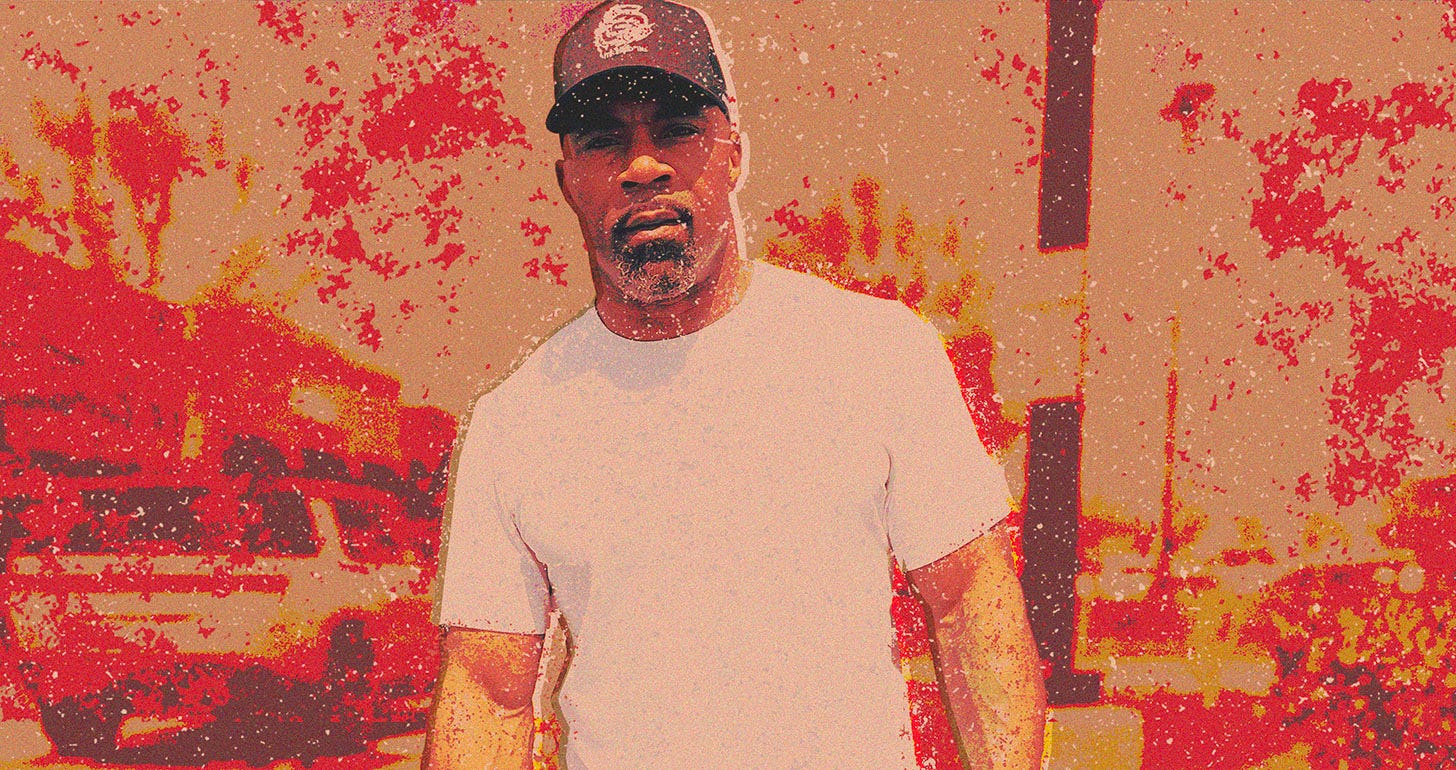
ATLANTA — Life was spiraling. Most days, he was paralyzed by darkness. Lost. Depressed. Contemplating suicide. Jamal Lewis was in a scary place mentally the last time we hung out.
In all, he suffered at least 10 concussions and went unconscious “two or three” times as a battering ram NFL running back. All of it triggered the same chilling sequence we see play out for so many retirees. Lewis was remarkably candid in this 2018 story.
Since then? Too many ex-NFL players have died far too soon.
A short list…
Vincent Jackson was found dead on Feb. 15, 2021 after his family reported him missing five days earlier. It was revealed later that he suffered from Stage 2 chronic traumatic encephalopathy (CTE). Shortly after, ex-QB Ryan Leaf joined Go Long for an emotional conversation. Further, the Hillsborough Country (Fla.) medical examiner determined Jackson’s death was caused by alcohol abuse.
Marion Barber III died one year later. Authorities administered a wellness check at the 38-year-old’s Frisco, Texas apartment and found the former Cowboys running back deceased from an accidental heat stroke. Barber had several bizarre run-ins with the law leading up to his death and was reportedly hospitalized twice for mental health evaluations. Terence Newman shared one chilling tale with us. He spotted his ex-teammate walking through the pouring rain one day, stopped and the encounter was chilling. Part of Newman thought Barber might start swinging at him. (“He looked like he wasn’t there, like he was a different person, like he couldn’t function.”)
Rondale Moore died this past February from a suspected self-inflicted gunshot wound. He was 25.
Doug Martin died in the custody of Oakland police last April. His parents had his brain sent to the Boston University CTE center to be studied for the brain disease and say their son was experiencing a mental health crisis when police held him down. They’re alleging restraint asphyxia in a lawsuit. He was 36.
Aldon Smith passed away at the age of 36, shortly after delivering pizzas to a charity that supports the homeless. In an interview published days before his death, Smith admitted he’s “definitely seen better days.” The family is having Smith’s brain examined for CTE.
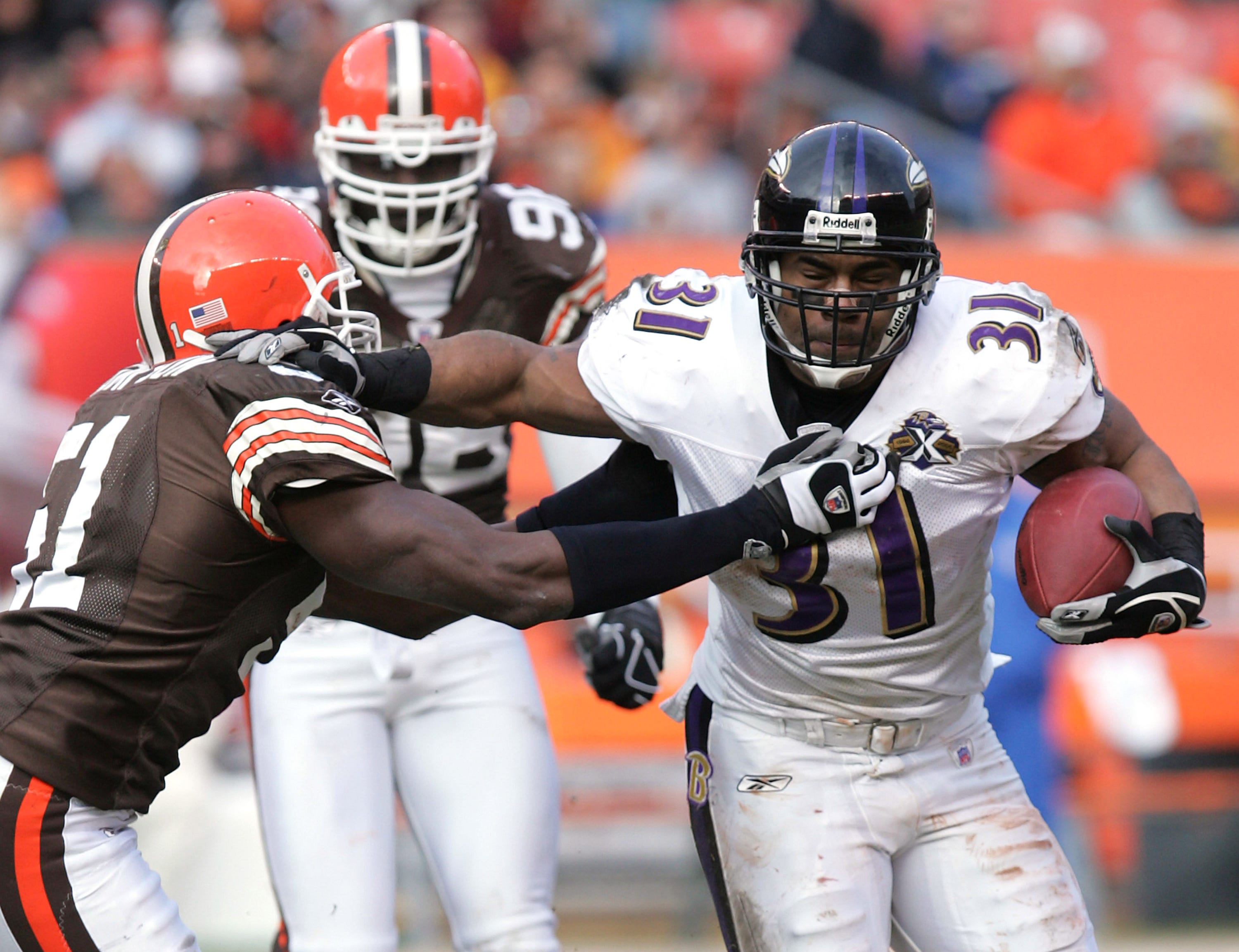
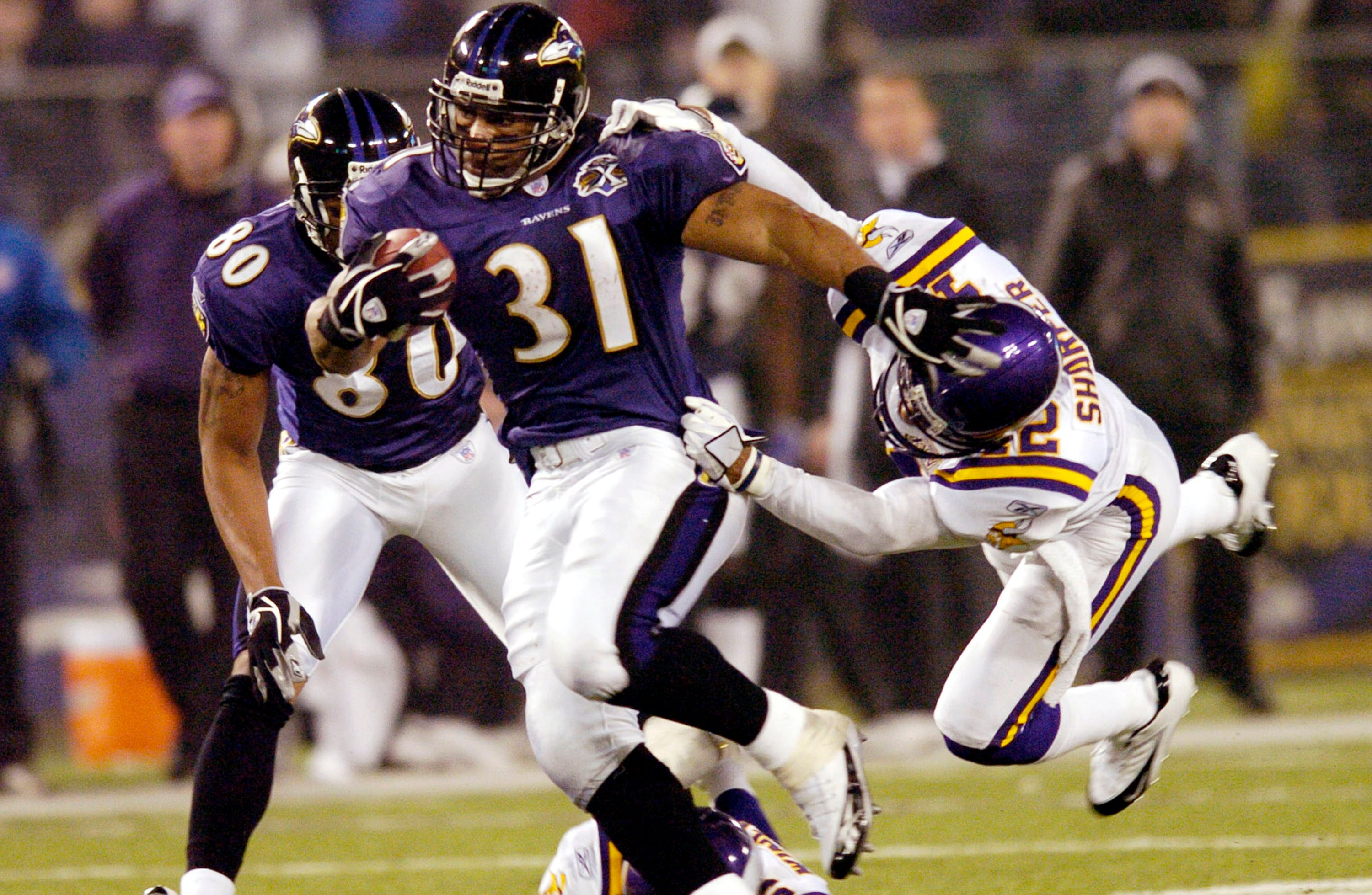
No two cases are the same. There are typically many factors at play, as all families are left to piece together maddening puzzles. But however you try putting that puzzle together, it’s clear players struggle to adjust when ejected back into public life. Lewis was one of the best running backs of the 2000s. He rushed for 10,607 career yards, 58 touchdowns, won a Super Bowl as a rookie and his 2,066-yard season in ‘03 still ranks No. 3 all-time. I reconnected with the Baltimore Ravens great on one of our Happy Hour podcasts with subscribers in 2023 and he didn’t hesitate in stating he’d do it all again.
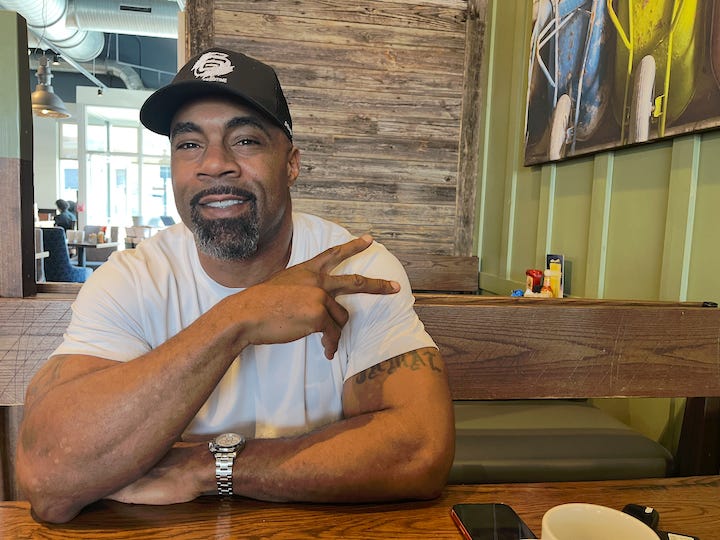
This offseason, we met up again in Georgia for lunch.
The 46-year-old looks, sounds and moves like a new man.
Back in 2018, he was doughy. Out of shape. Today, he’s 40 pounds lighter and jacked. Back then, his kids were young and navigating life as a father was not easy. Today, we’re discussing Javen’s life as a rising actor and Jazz’s potential as a Division I slot receiver. That’s right. Despite his own post-NFL troubles, Jamal is all for his son embarking on his own career.
Effects of concussions were rocking Lewis’ world in ‘18. His temper could spike any moment. His memory flickered. Sometimes, he’d turn the key of his car and totally forget where he was going. He kept sunglasses on top of his head at all times because he was so sensitive to light. Headaches were brutal.
Today? Lewis is all smiles. Today? Lewis is enjoying immense success in business, co-hosts the “2 Livewell” podcast with Dr. Jeff Collier and there’s a good chance you saw his name in the news last February. Lewis was one of five former players to receive a pardon from President Donald Trump. Twenty-two years ago, he pleaded guilty to using a cell phone to set up a drug deal. As he explains here, there was always much more to that story. Now, his record is clean.
So, here’s some needed good news in the Former NFL Player department.
Jamal Lewis is doing great and represents real hope for all players in a rut.
Players can find purpose… but how?
Pull up a seat inside our booth at First Watch on Peachtree Boulevard.
Here is how Lewis fought back.
Go Long is your home for real, raw football.
Thank you for building our community.
You look amazing. You sound different just talking to you. So, you’ve really gotten into working out?
Lewis: I started hitting it and got back in the gym, man. And I think starting that regimen, taking testosterone. My levels went up. My doctor said, “Your level’s at like 200. That’s what a girl’s should be.” And he’s like, “You probably have no energy.” I’m like, “I really don’t.” Just mentally, I wasn’t in the gym, wasn’t doing anything. And my asthma was bad. I was in the hospital for like five, seven days. You remember that, right? And I just took it serious, man, and started hitting it. Next thing you know, I started shedding the weight and I started experimenting with more of the peptides for inflammation. I got off the medication. I started losing. I lost like 20 something pounds, then it went to 30. And it just started working. Shoot, it probably took like a year and a half, two years to get to where I’m at now. But it got my energy up. It got my head straight. It got me more motivated. In a better mental space and everything else. So that’s why we’re doing this Live Well piece because I’ve seen how it changed my life. Just having more energy and being able to hit the gym and go work out and do stuff like that, it just did so much for my mental.
We got together eight years ago. And then you came on our podcast three years ago. You looked happier, in a good mental space. So far here, it seems like another level. Mind, body, soul, spirit, how are you doing?
Lewis: Doing great, man. Transitioning and making that curve into getting out of that depressive state — not working out, not hitting the gym — made things a lot better. Things calmed down. The kids are growing up. Jazz started playing football in seventh, eighth grade. That put me in a different state, too. He basically just said, “Hey, look, I want to do this. I really want to do this.” And he asked for my help. That got me really focused. So I’m like, “If you want to do it, then you’ve got to put in the work. And I can’t be driving you to put in the work. You’ve got to want to put in the work yourself because that’s what you really want.” So he showed me that and I bought in and laid out the resources. So that kept me going and gives me like a mission. He keeps me busy. My other kids, too. But he’s the one, I’ve got to take him here to practice. He’s about to get his license, too. I take him to Florida. We go train with my old trainer down there. I got him with Gold Feet down in Florida. XPE, which is my guy. He’s in Lauderdale. So when he’s got a dead period, we go down and I’ll work with some of the running backs that are either going to the Combine or going to the pros. Usually January, February, March is when a lot of the players are down there working out and training. Even the former guys. That keeps you active, keeps you going.
Business is good. I’ve started a couple companies that’ve been doing their thing and working. So it’s pursuing life — whatever comes my way — and taking it head-on. I even started writing a book called, “Still Running.” And I did that because I was trying to get the attention of the President or somebody’s ear about my case because I just want to tell my story so people could hear my side of the story vs. the ESPNs, the news and all of that. And it was crazy because I’ve been writing it for about eight months now. What really happened vs. what the government said happened. And I was just doing that because I’ve tried to approach Congress. I’ve tried to approach the Senate. I’ve tried to approach people under different administrations to try to get a pardon. But it costs. It’s like $75,000, $25,000 to try to get campaign money or donations. And the crazy part about it, I just said, “Hey, I’m going to write a book” and hope somebody hears it.
All of a sudden, I get a call from the White House. Alice Johnson, she’s like, “I just met with the President and he signed off on your full pardon.” I was like, “What?”
Where were you? When did you find out?
Lewis: I was at a cigar spot waiting for Jazz to finish training. So I’m waiting and I was leaving to go pick him up and I saw her number come through at 202 and I was like, “I don’t know who that is.” I didn’t answer. Next thing you know, I checked the message and this lady, she was like, “I’m Alice Johnson, the White House Pardon Czar. Call me back. I’ve got some good news for you.” So I called her back, that’s when she said, “I just met with the President.” I was like, “Wow. How? What?” She said, “I’ve been advocating for you for a while. I know your story. I looked at your case and I believe in second chances and I feel like you should get a second chance.” She also got a second chance from the president. So that was it. It came out of the blue. I didn’t even apply. They did everything. This lady, Alice, she did everything. She just advocated and said, “I wanted to do something for some football players.” So that’s why there were like five of us. Nate Newton and then Travis Henry and Klecko and (Billy Cannon).
Did you start celebrating? What’s the next move?
Lewis: I was in awe, first of all. The first person I called my Mom. And then of course the next day it exploded. That Friday. And, man, it was just a sigh of relief. Really. That’s really what it was. Like, “finally.” And it’s great, but at the same time, I’m writing this book and it still needs to be told. What really happened. Because it was bogus. It was BS.
There’s probably a deeper problem rooted there?
Lewis: Oh, there’s a lot of guys got railroaded and just set up whatever by informants and this, that and the other and people trying to get out of their own trouble. And it’s crazy because the government sent somebody — at me — to set me up. That’s really what the story is about. How the government really set me up.
What do you mean by that? Like something we’d see on The Wire?
Lewis: A confidential informant. It was a girl. It was a confidential informant. She was working for the feds because she got in trouble. So since that was the case, because of where I was from, there was a big sting that was going on. From where I was from. You’ve been in my neighborhood. There was a lot of that and I knew a lot of people. So I guess they knew that I knew these people. So they sent this girl to me to talk about drugs (in April 2000). I didn’t bring up drugs to her. She bought up drugs to me that was planted from the government. And then the phone call — the phone count that I’m charged with — I wasn’t even on the phone. She said she turned the microphone around the wrong way, so therefore all you heard was her talking. So you didn’t even hear me talking on the recording that I actually went to jail for.
What? You weren’t even on the call?
Lewis: Wasn’t even on the call.
So you’re not doing this cocaine deal?
Lewis: Yeah, I’m not talking to her. She’s talking about cocaine, talking about what, where, blah, blah, blah. It’s a whole 30-minute conversation. But I didn’t hear it until I got indicted and I was able to listen to the discovery. But basically you either go to trial and you get a 50-50 chance or you take this 4-to-6 months (in prison) and Paul Tagliabue and Ozzie Newsome and Art Modell, they already told me I’ve got my job, I’m good because they knew who I really was. So I was like, “I’ll go do this 4-to-6 months” versus…
But then it’s like you’re admitting guilt to it even though you did nothing wrong.
Lewis: Did nothing wrong. Because of my job and everything else, you get forced into pleading to say, “Yeah, OK. Four to 6 months, I’ll take it. Give it to me.” Versus going to trial. A lot of the detail will be in the book as far as where it started, growing up, my neighborhood, the people I associated myself with, which was, you want to say “my fault,” but these are your friends, these are your neighbors, these are your people you went to school with that you’re around. So you can’t say, “Oh, hang around better people.”
That’s all there is.
Lewis: That’s all there is in the area. I didn’t do anything wrong. But that’s what I’m hitting on — the backstory, where it started, how it happened, all the detail as far as who, what, where. And all the accounts that happened because I had got a chance to sit in my lawyer’s office every Monday after a football game. When we played on Sunday, if we were away or at home, I flew out after the game to Atlanta because I had to meet with my lawyers Monday and Tuesday, and then fly back to Baltimore. I had to fly back that Tuesday night to be at practice Wednesday.
Your mental, how do you stay sane when you’re getting set up like this — and then need to go play a football game?
Lewis: It was crazy. It was a tough time. But it taught me a lot about how strong I was as a person. And hey, God’s got something in store for you because he’s putting you through this for a reason. So it was one of those things where it’s like a Come to Jesus meeting with yourself. So it really prepared me a lot for life after. But the crazy part is the contract negotiations because it all happened after my 2,000-yard season. I got indicted two weeks after the Pro Bowl (in 2004).
Of that season?
Lewis: Yeah. That’s why it even came out.
So you believe you were targeted because of who you are and that they wanted a big name?
Lewis: Exactly.
Who’s behind all this then?
Lewis: So Mike Brown was the prosecutor. He’s now a federal judge. They just had this sting and took down probably 18, 19, maybe 20 guys. So therefore, there were dudes trying to jump on my case to try to get their time down. So that’s what the government was using, too.
Meanwhile, you’re not involved in any of this?
Lewis: I just got drafted into the NFL. I just signed a $35 million deal.
That’s why the book piece of it is good. I’m pardoned. I had to add that to the book because of the way it happened out of the blue. And I had been trying for years and I just gave up. I was like, “Forget this.”
Who wasn’t listening before?
Lewis: The Obama administration first and then it was the Biden administration. They weren’t listening because, first of all, you’re not talking to a Pardon Czar. You’re talking to a senator, a congressman, somebody like that that is supposed to help lift you to and get it in front of the sitting president. Well, you’ve got to file an application. You file an application and it’s probably 30 pages of shit that you need to put in there, whatever about your case, this and that. So hopefully it gets in front of somebody. But I was just trying to meet with people to say, “OK, this ain’t brain surgery. The case is the case.” But it’s campaign contributions, and it’s not even guaranteed.
I didn’t take it on. I didn’t do it because it was $75,000, $25,000.
And it’s just this wink-wink with a politician?
Lewis: Yeah. So you either take it or you don’t.
So here you are, believing you’re totally innocent. And the way the system’s set up is an innocent person has to spend tens of thousand dollars just to get eyeballs on your case?
Lewis: Yeah, yeah. Because you’ve got to get somebody that’s going to get it in front of him. Trump brought in somebody to handle that. And I think that’s what really helped accelerate the process. He bought Alice Johnson in. He gave her a pardon and then he brought her in as the Pardon Czar for the White House. So she handles all of the pardons and looks into the cases. That’s how they brought us five into the equation because she was like, “I think you guys have done your time, you lived under that rock for so long. It’s time. The President heard it through and put pen to paper.” Shit, you can’t complain. I was happy.
I’m just happy it happened and now it’s behind me. It’s hard to get business capital as a convicted felon. They turn you down immediately or they charge you a high interest rate. … People see through it sometimes because of who you are. Still, it comes up. So now I’ve got my pardon papers and it’s in the system that I’m clean.
How much time did you do in prison?
Lewis: It was six months. But I did it in the offseason. Four months in and two months halfway house.
What was life like behind bars?
Lewis: It was different. You’ve got to read that in the book.
When I do get it finished, I want to exclusively speak to kids at colleges and universities — the NIL kids, the high-profile kids that are basically going to have to deal with some of this stuff in the future. And making better decisions. Consequences that do happen, things that come up that you just don’t even think about and just like what happened with me. I want to be able to share that with these guys and tour some schools for that first year. And then drop the book after that. Because I think that’s who it’s for. They’re in the same boat that I was in. I got caught up right before the draft. And then I didn’t get indicted until four years later. It was about to go into the statute of limitations. It was almost at the five-year mark.
What do you regret then? Were you using drugs?
Lewis: No, I just regret being young and naive at the time to even letting this girl in my world.
She said she knew Michael Vick’s family, and Michael Vick wanted to talk to me about leaving school earlier. And it came through my marketing agent. So my marketing agent, of course, was probably trying to get Michael Vick in some kind of way. So doing them a favor then turned into this girl who was really bullshitting. She was really sent by the government.
That’s the only thing I regret. That’s one of the things that these kids need to watch out for. Don’t let everybody in your world. Especially when you’re who you are.
I was just reading a story by Dan Wetzel. A lot of high school athletes that are high profile D-1 athlete prospects are getting targeted by people overseas posing as females and they’ll ask for nudes. Then somebody in Nigeria tries to extort them and send the pictures to all their friends, all their family through the school and these boys are killing themselves.
Lewis: Wow. That’s crazy. That’s the mission with the book — to help somebody else. Because like I said, I was doing it to try to get a pardon. That’s done. So, now what?
Let people hear my story and hear from my side vs. what they read back then in 2005.
How about all the other stuff that we got into back in 2018? All the concussions you suffered in the pros did a number on you. And, mentally, do you finally feel fulfilled in life after football? Depression probably isn’t something you simply defeat completely.
Lewis: The depression was there. It was gaining the weight and feeling down on yourself. We talked about it. Not having the crowd. Not having that around anymore and getting adjusted. Now, I’m adjusted. I’m adjusted to civilian lifestyle. I learned how to deal with and cope with problems that might exist. At the time, I was either in a business or trying to start something and get something going. But with time, things developed and business started going good. Things started looking up and that kind of helped. And even like I said, losing the weight, working out, getting back active. That really helped, too.
Are you running the same businesses as before? Have things changed?
Lewis: I’ve sold out of some of them. But right now, I’ve got a company where we run underground fiber. Underground construction. So I’ve got a partner in that and we’ve been tyring to build that up for three or four years. Mainly running fiber for Telecom companies. And then since Jazz was doing his thing, I got involved in his sports. That’s why I started “Shōcase” brands with him and my older son. It’s more youth apparel type stuff. I designed this shoe bag. Because I was buying these cleats for $200, $300. Right? And then you go to basketball and shoes are, shit, even more than that. Because if you don’t get them when they first come out, you won’t find them. So I basically designed this bag where the kids can carry their shoes in them since they cost so much. A Shōcase bag. I started going to these 7-on-7 camps, all these camps that I’m taking Jazz to and I’m seeing the money grab and what they’re doing. That’s why you’ve got to go to the right camps and be at the right places where it’s not money grabs.
So many of them seem like a Ponzi scheme.
Lewis: Yeah! So basically I did my first showcase this past Saturday. So I had some of the top players in the country. I had some of the top players in the country come in and we did 1 v 1’s. Competed. Quarterbacks. Running backs. Linebackers. Receivers. DBs. We had probably about 100 kids in downtown Atlanta. I did it at Grady Stadium.
And you’re not charging an arm and a leg.
Lewis: I didn’t charge at all. It was an invite only. You know Quincy Carter. So he did all my quarterbacks. (Note: We did a 1 on 1 with Carter on the QB’s addiction battle, icymi.) Another guy here did DB training. Another guy did wide receiver training. So we basically pulled it together because they know a lot of kids that they train or they come across. I called up some coaches around the area that I knew in-state, out of state. I was like, “Hey man, I’ve got this showcase. If you’ve got some kids you want to invite, let me know their name and stuff like that.” So we evaluated them before they came just to make sure the competition was there. But it was good.
I just got my bags into the PGA Tour Superstore. It’s a big golf store. Retail. All they do is buy golf stuff. So they just brought my bags in.
And you’ve got these superstar children doing big things. That’s got to give you so much happiness. You talk about waking up in the morning and filling out the calendar to keep you busy. Now you’re waking up in the morning and one of your kids is acting in a movie?
Lewis: Javen has been staying active and doing his thing. And then he did an audition for this movie (“Undercard”) and he ended up getting it. And then he got a TV show coming out too called Route 187 (on Paramount). A Tyler Perry show. So he’s been doing his thing, man. Staying active and just staying at it. He’s 22. I think we went to his basketball game (in 2018).
Jazz was just a little guy playing baseball at the park back then.
Lewis: Now, he’s 170 pounds and has 10 football offers.
Where to?
Lewis: Memphis, Oregon State, Colorado State. UMass just offered him. You’ve got to check out his Instagram. We moved up to Milton. They’ve got a real good program. He’s put on 10 pounds since he’s been there. He’s a slot receiver. About 5-9 right now.
What traits do you think he got from Dad when you watch him out there?
Lewis: I think his feet and vision. I would say hands, but a lot of people would be like, “Nah, that’s bullshit. But I just needed the opportunity to catch balls. I had some good hands!
Once upon a time, I had you on my fantasy team in fourth grade. It was my Dad’s league. All the adults let me in it. You carried the “Crushers” to a title, rushing for over 2K in that last game. You’re right — you could catch it.
Lewis: He’s got some big hands and he can catch it, man. That’s the only reason I let him play it. But I started him at running back. You don’t know how big a kid is going to be. Let him play everywhere. But then he ended up going to this school up here and they moved him straight to wide receiver because he was a better athlete than a lot of other kids. So he started as a freshman on varsity. So that kind of got him kicked off with experience and stuff like that. That’s one of the reasons I sent him there. Because I knew he would start. Going to a big school he’s just going to sit on the bench.
He’s a junior next year. And being a slot receiver — vs. a running back — who in the hell knows what the running back position looks like in five years?
Lewis: But when you play running back, it gives you vision. It also teaches you instinct — to be able to run between people vs. just being out on the island where you just have one person in front of you. But being able to carry the ball and use that pad level. There’s certain athletic movements. Now, if he catches the ball and gets upfield, he’s hard to tackle. But I think a lot of that comes from playing that running back position because he was running scared as hell.
You could run away from people, but you were running through people.
Lewis: But I was scared, too. Back when I was young? Run scared. If you run scared, you’ll be alright.
Does he pull up your old games at all to watch you?
Lewis: He did back in the day. He was like me. He watched football. But now he watches Ja’Marr Chase and Justin Jefferson. He watches those guys. And then we go train. He sees all these guys that are in the league.
I’ve got a place down in Delray Beach. So we’ll try to get down there and actually train when you’ve got a dead period. Because the schools, they lock ‘em down. They’d have ‘em year ‘round if they could. … Now they’ve got agents in high school. I deal with a couple agents here because with my company, we like to do deals with the kids and some of them have the kids. So it’s like, “Hey, we want to get our product on these kids.” That’s one of the reasons I did the showcase. I had probably two of the top wide receivers in the country from high school that are juniors. I had the No. 1 wide receiver out of South Carolina: Amare Patterson. Then, Braylon Calais. He’s from Louisiana. It’s a chance to get around these kids and talk to them and mentor them a little bit. It’s a different landscape now.
Would you still play football all over again? And encourage people to play the sport?
Lewis: Oh yeah.
To you, why does the reward outweigh the risk now that you have a son rising up in the sport?
Lewis: He loves it. You just need to keep them safe and keep them up on the knowledge of the game and knowing the game and working out and training and tell them the ins and outs. And I’ve got stories, too. So don’t make the same mistakes I made. You confront them with that.
The good that the game has. Why does that outweigh the bad — the depression, the suicidal thoughts you’ve had since you retired?
Lewis: Because these dudes are not getting hit anymore. They’re not getting hit like that. So I think that the risk of a kid having depression at 30 years old or having suicidal thoughts, stuff like that — in their 30s — it’s not going to be that. Because these kids are not as physical, first of all. Well, it’s the rules. It’s not that they’re not physical. The rules make the game not as physical, which makes it safer. So you’re not getting killed going across the middle. You’re not able to lower your head. You’re not able to get into the habits that we had. So it’s been constantly evolving over time. The helmets are a little different, too. The protocols are different. Even with 7 on 7, they’ve got to wear the guardian caps. Even in the game now, they’ve got the guardian caps.
How much can those guardian caps actually help? The brain is still within the skull sloshing around on impact.
Lewis: I’m not an expert, but I’ve heard this enough that honestly, it’s like it’s not. It’s the second impact. The second impact is what hurts you. It’s when you go down and your head bounces off the ground. So it’s really a lot of that. It softens the blow. Even though your brain moves in your head, it’s that second impact. So you get hit, boom, and then you go down to the ground, boom. That’s the second impact. A lot of times, it’s the second impact that knocks you out and makes you unconscious.
The helmets are a little different, too. I look at old pictures of a Ridell bowl on my head. Now they got all kinds of slits and shit and it makes it a little different. You’re not getting hit. They’re tackling. We got hit. They tackle now.
I think of your time with the Cleveland Browns and that SI cover of James Harrison taking out Mohamed Massaquoi’s head (in 2010) with his forearm. We’re not going to see stuff like that again.
Lewis: Massaquoi lives around here. He’s good, man. You know he had an accident, but he’s good. He was riding the ATV and had an accident. He fucked up his arm. So now he has a (prosthetic). I think that he had an accident flipping, but he ended up putting his arm, trying to catch himself. But he’s got two kids. I see him at Whole Foods right here. Just in line. He’s got two or three kids.
The running backs of your era were different.
Lewis: It was hard competition, man. Every year, you’re like “Am I going to the Pro Bowl or am I not? You’ve got this guy over here and this guy over here. A ton of featured backs that were running.
You got a Super Bowl ring your rookie year, but could’ve gotten more if you had better quarterback play in Baltimore.
Lewis: If I could’ve come back that next year (in 2001), I think I could’ve helped them because they did go deep. That was with Elvis Grbac and Randall Cunningham. I got hurt that next year after the Super Bowl. They brought in three different running backs: Terry Allen, Moe Williams and they had a guy who was the same age I was: Jason Brookins. They had a rotation and ended up going (to the divisional round). We still had a good defense.
Even after those Ravens days, when you went to Cleveland (in 2007), you actually had a good season. Won 10 games.
Lewis: We were pretty good. That first year. We were just young and guys didn’t know how to come back the next year and how to work. They just didn’t know and it showed because we had a real young team. When we came back the next year, it was shitshow.
Did you have other options? I’m guessing Cleveland offered the most money.
Lewis: Cleveland locked me in a room. Phil Savage was there. He was with the Ravens before. I’m happy I was there.
That’s right — Phil Savage was the man who helped get you to Baltimore.
Lewis: He brought me in. Phil’s got an interesting story. He told me this when I got to Cleveland. He said he came to Tennessee and I think he was looking at an offensive lineman. So I think we were at the end of the season, going to bowl game. And he said he came down to see this kid and when he got there, we weren’t practicing. So he asked the GA to walk him around the facility. So they did that and I never did squats and shit. I always worked out in the sand pit. So Johnny Long, who was a trainer, that’s where we got our legs in. In the sand. I didn’t go home. I didn’t leave. I just stayed to work out and get ready for the bowl game. So I was back there training in the sandpit. Phil saw me working out in the sandpit and said, “Who is that?” The dude said, “Oh, that’s our freshman running back, Jamal Lewis.” And he said he immediately called Ozzie (Newsome) and was like, “You’ve got to see this kid.” The next year they came down to the Alabama game and I closed it out. I was on their radar ever since. That’s all I used to do. Work out in that damn sand pit.
That’s all it takes — one moment. You never know who’s watching.
Lewis: You never know who’s watching. We used to practice on a hill. You’ve got to work. Work. At full speed, let’s go. Never know who’s watching. That’s one thing we told the kids at our showcase. You never know who’s watching.
You’ve come a long way from those streets of Adamsville, right? Back when you practiced on a field full of glass.
Lewis: We practiced on that shit.
You got scraped up pretty good from those days. Arms, legs?
Lewis: Tried to stay off the ground, bro. That’s why I had those choppy steps. You’re trying to stay off the ground — not being hit.
Is all that stuff in your past then — those suicidal thoughts? Or do they creep up at all?
Lewis: It’s always finding a way to channel. The working out. The training. I’ll go ride the bike. I’ll go and lift. I’ve got a lifting guy I got to work out with. Do that a couple times a week and stuff like that. So any time I go into a state of depression or it creeps in, I get on the bike. I go work out and find a way to just channel that. Before, I wasn’t working out. So I wasn’t able to channel that energy. All I did was just get fat and gain a bunch of weight.
Something as simple as that — working out.
Lewis: Working out, man. Because I worked out all the time. Growing up, that’s what we did. That’s what we did. Worked out. Trained. My brother — trained.
That helps out guys more than anything. Even the old-timers. Jackie Smith, a tight end for the St. Louis Cardinals, spent a year with the Cowboys and had one of the biggest drops in Super Bowl history. One of the greatest players ever and not a lot of people know about him.
Lewis: Like Earnest Byner. He dealt with that for a while.
You’ve probably seen the iconic picture of a Cowboys player in the 1970s on his back. It looks like he’s levitating. That’s him. We hung out in St. Louis for my tight ends book and he’s in his mid-80s at this point. And he went through depression for years, closed himself off from family, he wouldn’t even open up to his own kids. It was that simple for him, too. Even at his age, he works out all the time.
Lewis: Being able to work out, being able to hit it. And when I started doing testosterone treatment, started doing the HRT (Hormone Replacement Therapy), everything changed. I changed mentally. I was in another place. And thank God I was able to do that. Accomplishing my goals, losing weight, getting back in shape, it just makes everything better.
Sixty pounds you lost?
Lewis: Yeah. I always say I was 295. But I’m sure I was tipping 300. Now, I’m 240.
And it’s muscle. (Note: Lewis posts workout videos on his IG.)
Lewis: Yeah, 240. I work out with Jazz sometimes. I get to the gym because I take him to work out on Saturdays. So we’ll hit the gym and it got me going.
Staying busy. That’s another thing — staying busy. With Shōcase brands, it’s trying to help these kids put the best product on the field. Which is themselves. I’m learning in the process too, because I’ve got a son that’s 16 years old going through the same thing. So me knowing the industry, me knowing what it really takes and having the resources, I ask trainers: “Hey, my son’s turning 14, turning 15. What do we need to do? How do we need to train right now?” He needs to get faster. He needs to get bigger. So I got all these resources. A lot of parents don’t have resources.
You’re such a success story here — how an ex-pro can get to this other side.
Lewis: Last time you saw me, I was down in the dumps. Mentally, I was trying to find a way. 2020 hit and I think things turned. My Dad died from COVID and, boom, things just changed and started going up. … He died on July 27. I think a little time after they came out with the shot. He was on the ventilator. He was one of the ventilator guys.
And that’s when you kind of got into working out?
Lewis: That’s when I really got into the TRT (Testosterone Replacement Therapy) treatment and stuff like that. So really it was starting in 2020. But then I probably didn’t go serious until about ’21, ‘22, and I really started getting into it. Doc would just give me the knowledge of, “This is why you take the TRT testosterone with the CJC, which is a human hormone, and why you do that.”
HGH has a bad wrap. Back in 2013, I did a story at the Journal Sentinel. One of the players I talked to was one of your old contemporaries: Ahman Green. He noted how our body already produces HGH and putting more of it back in your body is like putting motor oil back in a car.
Lewis: It helps from a healing standpoint. Because at night when you go to sleep, that’s when your HGH kicks in. So that’s when the healing start. But some of us, how often do we sleep? What time do we go to sleep? So by taking a CJC, which is not like HGH, a compound. When you take CJC, it goes in and it chases down your natural. That’s why it’ll put you to sleep quicker. Basically, it heightens your own HGH. So take it. Just like testosterone. Your body naturally produces testosterone, too. But after 40 years old, it ain’t kicking. That’s why your energy level goes down. So now by taking more of it, it heightens it and gets it up.
HGH is from a healing standpoint, like inflammation. But you’ve got VPC157, TB500, which is like “wolverine,” that’s what they call it because it’s combined. But it’s for inflammation. So a lot of people out here, a lot of illnesses, a lot of stuff that happens to you comes from inflammation. A lot of people that died with COVID, it’s because of inflammation. Inflammation jumps up and it grabs certain diseases and shit like that. It pollinates that disease. That’s what inflammation does, the mucus and stuff like that. So you want to keep that down. So that’s why these peptides keep that stuff calmed down.
What got you interested in all this? Because when we last hung out, you weren’t into health and fitness at all.
Lewis: Seeing my body. Now, I look like I did when I was toting the rock.
You’re in the best shape since when, would you say?
Lewis: I’m back. Since 2010 when I retired.
Let’s announce a comeback. Think you could give a team a dozen snaps?
Lewis: As soft as they are right now? I can get you a fourth and one. I might pull a hamstring getting there. It’s going to be a hamstring or an Achilles tendon. One of them is going. I’ll be done after that.
Related…
The Fight For Erik Kramer’s Life
Part I: A miracle
Part II: Victimized
Part III: A new man

The Majik Man’s final comeback
Part I
Part II
Q&A: Darren Woodson opens up on avoiding gangs, his wild Cowboys days, depression, finding purpose
Alex Green escapes the abyss
Ryan Leaf wants to save NFL players’ lives: ‘You’re not alone’
Q&A: Ryan Leaf is the ‘lighthouse’ for NFL retirees
The tenacity of Terence Newman
‘I would’ve played for nothing:’ Joe DeLamielleure, Bills & Browns HOF’er, relives a charmed football life
‘Game on:’ The unique rise of Joe Theismann
‘Whatever doesn’t kill us, right?’ A chat with Drew Bledsoe
Important and very well written story. Once again you nailed a tough subject!