


This is the 40th year that Bob McGinn has written his NFL Draft Series. Previously, it appeared in the Green Bay Press-Gazette (1985-’91), the Milwaukee Journal Sentinel (1992-’17), BobMcGinnFootball (2018-’19), The Athletic (2020-’21) and GoLongTD.com (2022-’24). Until 2014, many personnel people were quoted by name. The series reluctantly adopted an all-anonymous format in 2015 at the request of most scouts.
By Bob McGinn
It will take at least the first month of the regular season before the effects of the new NFL hybrid kickoff rule can be ascertained.
But it should be obvious that the creative juices of the league’s special-teams coordinators and assistants have been flowing since the measure was passed on March 26.
In interviews with three seasoned special-teams coaches, change appears inevitable when it comes to requirements for kickoff returners and kickers.
“It will be a big deal,” an AFC coach said. “A year ago, there were 1,900 touchbacks and 90 fair catches. Almost 2,000 plays that didn’t matter. With the new rule, the return rate will pop up. It was at 20%; it’ll pop up somewhere in the high 60s to low 70s.”
In 2023, the touchback rate on kickoffs was 74.6%. The majority of the touchbacks came on booming kicks that went through the end zone.
Under the NFL rules, the offense will take over at its 35 yard-line rather than the 30 on boots that travel into the end zone on the fly. Kickoffs will be booted from the 35 but only the kicker and the two allowable returners are allowed to move before the ball is touched or hits the ground.
“Hang time doesn’t mean anything anymore,” the coach said. “I’ve seen many kickers who, and there are several this year, that have really good field-goal range but they can’t kick off. In the past, that obviously was a big negative. I don’t think it’s as big a negative this year as it once was.”
Instead, kickers will be asked to land the ball between the 20 and the goal line with whatever height they choose.
“It will all be about placement now, about distance control,” said the coach. “For some of these kickers it will be like a punter hitting a punt from the 50. They still have to hit the ball pretty hard but they really need to control the distance.
“They’ll try to work the ball inside the 5. Maybe some guys hang it up a little bit different. Maybe some guys just pop it up down there to the 5.”
If the ball lands short of the 20 it’s treated like a ball kicked out of bounds and the offense starts from the 40.
“They’re still going to need the ability to kick off (deep),” he said. “Let’s face it. The kickoff touchback line was moved up five yards to the 30 (from the discussed 35). So there will be times we elect to hit a touchback.”
The elimination of fair catches on kickoff returns also will factor in the dramatic increase of runbacks. Last season, just two players — Green Bay’s Keisean Nixon (30) and the New York Jets’ Xavier Gipson (22) — met the minimum qualifying standard for kickoff returns. Ten years ago, there were 23 specialists who hit the qualifying standard.
One was Cordarrelle Patterson, who at the time was a rookie wide receiver for the Minnesota Vikings. One of the greatest kickoff return men in NFL history, Patterson had been out of work since Feb. 19 after being cut by the Atlanta Falcons. On the same day the radical kickoff change was enacted the Pittsburgh Steelers signed Patterson to a two-year, $6 million deal ($1.9M guaranteed).
“They were trying to get out in front of it,” said one coach.
Patterson (6-2, 232) almost always has been the brawniest practitioner of kickoff returning. Now, with the changes, there is speculation that heavier players, specifically running backs, might be more in demand.
“I do think you want physical size to be able to run through some arm tackles,” said one coach. “What’s going to make it difficult for returners is every ball that goes in the end zone must be downed. Back to the way it used to be. You have to catch the ball and down the ball for it to be a touchback.”
With 10 defenders lined up at the opposing 40, the so-called “landing zone” will become crowded fast once the ball hits down or is fielded.
“They have to handle the ball, pick it up and go,” another AFC coach said. “You’re going to have a lot of bodies in a very short area not far from where you handle the ball. I could envision line-drive type kicks, kind of a dirty ball, but you need a kick that has to be fielded. I’m thinking the guy that can field it and explode is the guy you want.”
A third AFC coach said the value of having a capable kickoff returner certainly has risen.
“What you look for in a kickoff returner won’t change a whole lot,” he said. “You still look for that player that has the skill set to make plays on his own and doesn’t need a lot of help to do it.
“The critical factors for a kickoff returner might vary based on the schemes a team uses. I believe the key to a returner’s success is going to be the techniques his blockers are taught in their new alignment.”
Scouts across the NFL break down the kickers, punters, returners and, yes, even the long-snappers below.
Subscribers can access everything.
Part 1, WR/TE: Hall of Fame talent at the top, then (many) questions
Part 2, OL: Can this 'long-armed Tyrannosaurus Rex' brawl?
Part 3, QB: Gap between Caleb Williams & Jayden Daniels? Closer than you think...
Part 4, RB: Like father, like son?
Part 5, DL: Tale of two very different Texas big men
Part 6, Edge: Choose your fighter
Part 7, LB: Save the Linebackers
Part 8, DB: Film vs. 40 debate rages
KICKERS
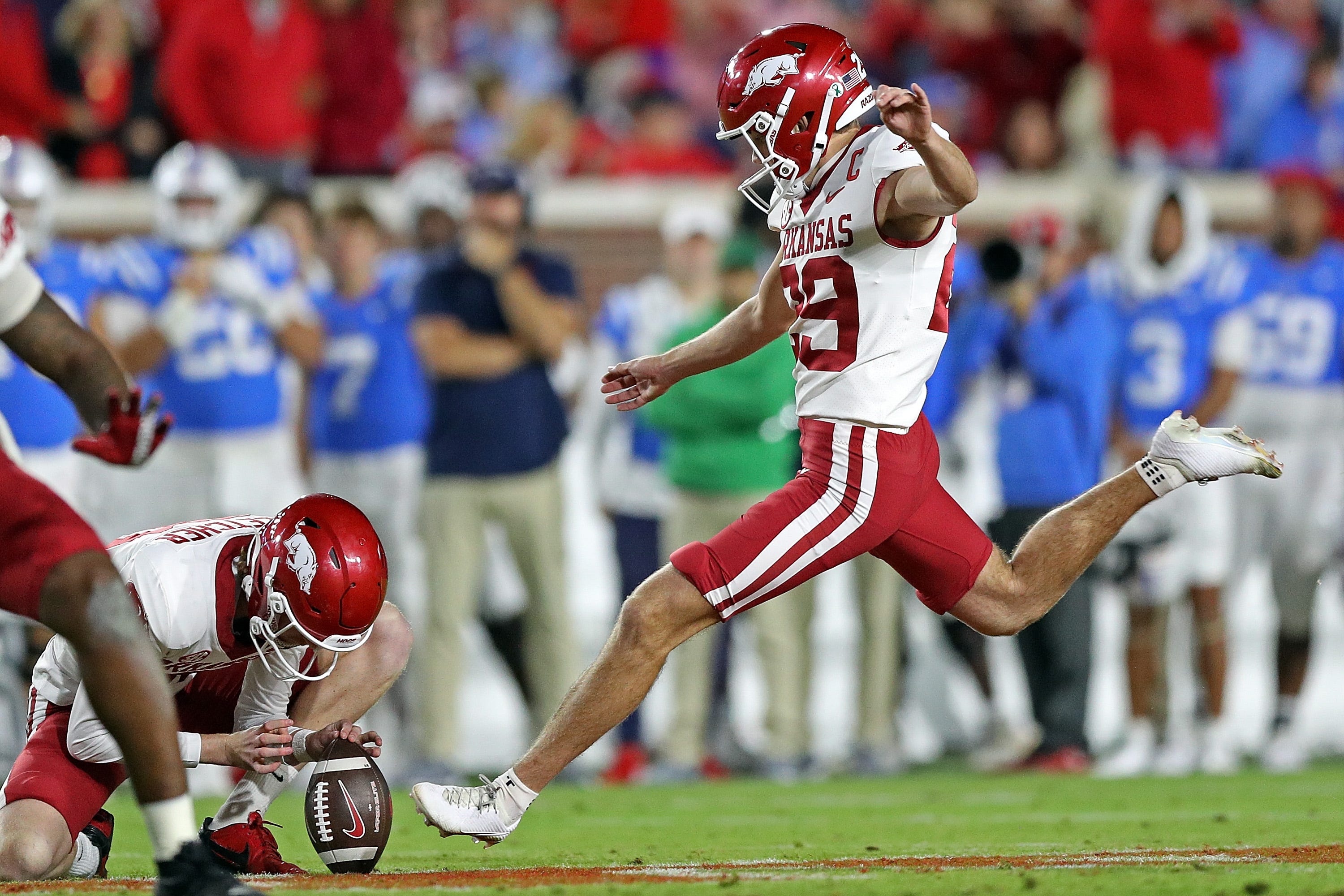
1 CAM LITTLE, Arkansas (6-1, 170, no 40, Round 5): Third-year junior, third-year starter. Won’t be 21 until August. “His best days are ahead of him,” one special-teams coach said. “He’s a little scrawny 20-year-old guy that’s really good at what he does. Maybe he can get up to 185 (pounds).” Made 53 of 64 field-goal attempts for 82.8%, including 70% from 40-plus and 80% on what were categorized as “clutch” kicks. “Very confident,” said the coach. “He’s physically immature but he’s very powerful. This kid is impressive.” Made seven 50-plus kicks in three seasons, including four in 2023. Career long was 56. Never missed on 129 extra-point tries. From Moore, Okla.
2. WILL REICHARD, Alabama (6-1, 189, no 40, 5-6): Won the job as a true freshman in 2019 but was limited to five games largely due to injury. Took over in 2020 and went on to accumulate 547 points, most in NCAA history. “I’ve done him for three years,” said one scout. “I don’t ever remember seeing a better kicker. The pressure on him at that place has to be tremendous.” Made 84 of 100 field goals and 295 of 297 placements. “He’s been spectacular,” one special-teams coach said. “He has similar power to Little. They’re very close. Little was definitely a better kickoff guy than Reichard.” Career long was 52 yards. Made 71% on 40-plus and 90% in “clutch” situations. “I think he’s a good college kicker,” another special-teams coach said. “I don’t think he’s got an NFL kind of leg. He doesn’t get the ball up all that high. He has not been very impressive.” From Hoover, Ala.
3. JOSHUA KARTY, Stanford (6-2, 206, no 40, 7): Three-year starter. “He is very accurate,” said one coach. “He was 85%. He was a good kickoff guy, probably the second best behind Little. Not that that matters anymore. But he did not have a great combine. That was a bit of a blip on the radar. He’s really powerful. He can really hit the ball from deep.” Made 51 of 60 field goals and 72 of 73 extra points. Career long was 56. “He had a great junior year,” said another coach. “Didn’t have a very good senior year. He should be talked about legitimately because he had a great junior year.” On Oct. 13, he connected from 47 on the final play of regulation to force overtime at Colorado. From Burlington, N.C.
OTHERS: Spencer Shrader, Notre Dame; Harrison Mevis, Missouri; Vincent Blanchard, Laval (Canada); Matthew Cook, Northern Iowa; James Turner, Michigan.
PUNTERS
1. RYAN REHKOW, Brigham Young (6-4 ½, 235, no 40, 6-7): Staked a claim to the job as a true freshman in 2020 and held it for four seasons. “He can do what NFL punters are supposed to do,” one coach said. “Hit the ball high and far and directionally. I saw him three years ago as a sophomore and I thought then he would be an NFL punter. Good holder, too.” Punting at altitude, his career gross average was 47.4. “His swing is kind of effortless and fluid,” another coach said. “He can really get the ball down the field. His average hang time at the combine was 4.45.” Went on a three-year mission to London after spending high school in Veradale, Wash. Married in 2022.
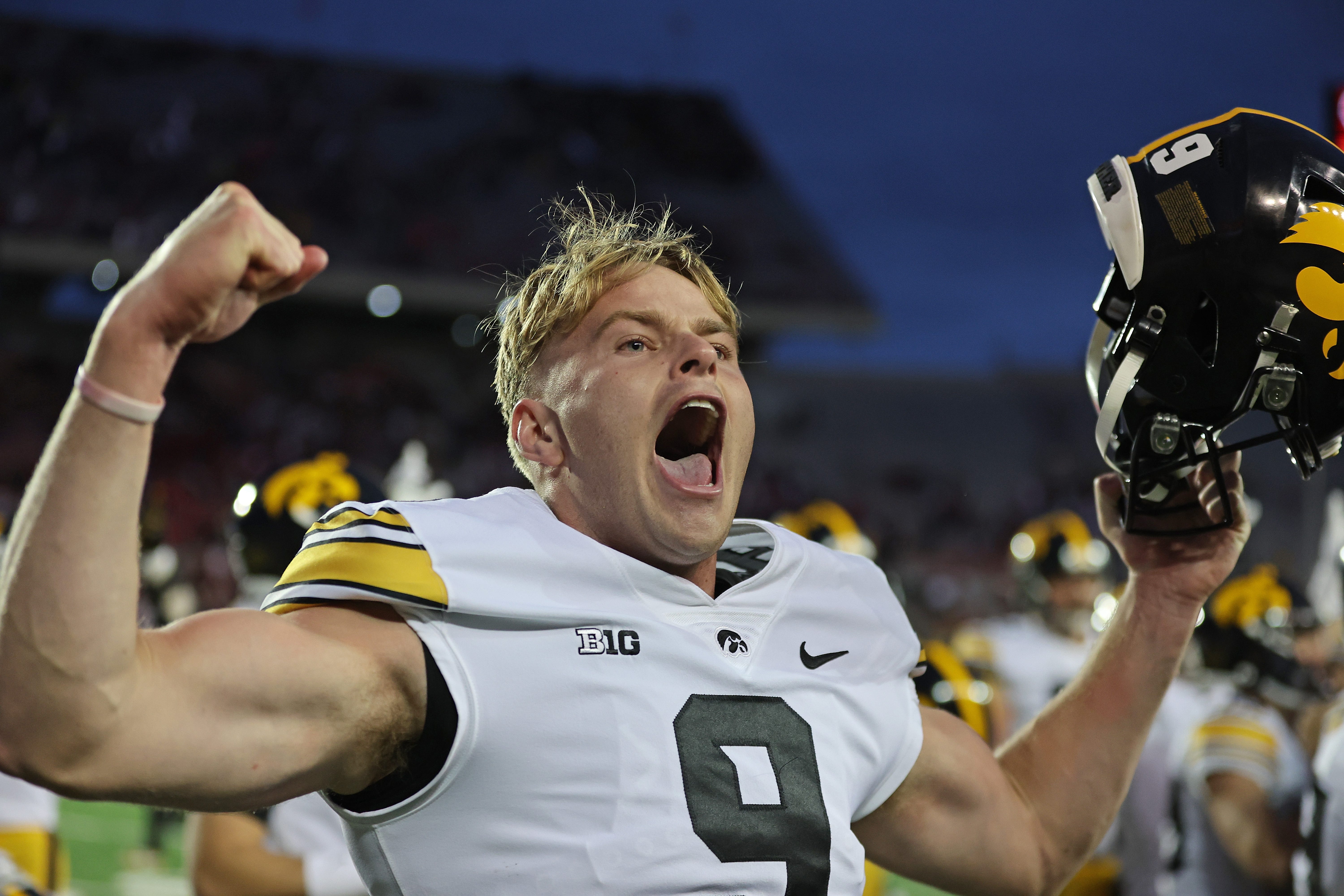
2. TORY TAYLOR, Iowa (6-4, 222, no 40, 6-7): Grew up in Melbourne, where he played Australian Rules football but never punted. Four-year starter with a 46.3 average in 295 attempts. “He’s very mature and certainly has the size,” one coach said. “Not the most physically imposing guy. He’s not built the best. He wasn’t great on college tape. I’m not 100% sold on him. He’s not a really good athlete. He showed he can get the ball up in the air pretty well at the combine, which he did not do at Iowa.” Examining about one-third of Taylor’s 93 attempts in 2023, one coach said his average hang time was 4.02. “That would have been dead last in the NFL,” he said. “His average hang at the combine was 5.02. Big difference.” Some scouts criticized Taylor for outkicking his coverage at times, but one coach said Taylor was instructed by the Hawkeyes’ coaches just to get the ball far down the field because of their inept offense. “Like most Australians, I don’t think he hits a spiral as good as most NFL players,” said another coach. “He’s a good situational guy. He does all the Aussie (punt) stuff. He’s the guy with the most notoriety. I just don’t think he's the best NFL punter. He might have been a really good college punter for their rules and things they do.” Will be 27 in October.
3. JACK BROWNING, San Diego State (5-11, 190, no 40, 7-FA): Backed up Matt Araiza in 2021 before assuming the duties of the Bills’ sixth-round draft choice in April 2022 for the past two seasons. He punted, he kicked and he kicked off. “Two-year punter and kicker,” one coach said. “So he doesn’t have a ton of history, but what he did do he did pretty well.” Averaged 45.8 on 122 punts, made 35 of 47 field goals (74.5%) and made all 53 extra points. Was given a scholarship in September 2022. “He’s just a little guy,” the coach said. “That bugs me a little bit. My biggest issue is because he was a kicker and a punter he’s never held. He didn’t hold at the combine. That’s a huge thing, obviously. Got a good leg … punted the ball pretty good at the combine … but he’s never held.” Kicked in junior college for one season. Made a 61-yard field goal at Air Force on Sept. 30. From Lakeside, Calif.
OTHER: Austin McNamara, Texas Tech.
LONG SNAPPERS
1. PETER BOWDEN, Wisconsin (6-2 ½, 239, 5.14, 7-FA): Redshirted in 2019, didn’t get in a game in ’20 and started from 2021-’23. “Like him,” one scout said. “He’s got consistent velocity, average accuracy. Lacks strength in protection and speed to cover, but the snapping stuff he can do. I doubt he gets drafted.” Ran the 40 in 5.14, the slowest time for an exceptionally slow-footed class of snappers. “I like for them to run under 4.9,” said one coach. “All these guys are over 5-flat.” Got downfield to make just two tackles in 39 games. “Solid guy,” the coach said. “What’s unique with him is he did have to protect a little bit. Is he really an athletic guy? He is not.” From San Diego. “He’s fine with velocity, he’s fine with accuracy,” said the coach. “He had a little bit of a problem with lace control at the combine. It wasn’t as good as I’ve seen in the past. He struggled controlling the laces. He seemed to kind of fix it at pro day. Probably a free agent. Only been a couple guys been drafted in the last couple years.”
2. MARCO ORTIZ, Nebraska (6-4, 253, 5.06, FA): Did a lot of snapping during his five years at Florida before becoming a Cornhusker in 2023. “He’s a big guy … pretty good accuracy,” one coach said. “One thing I worry about is he’s slower getting his head up to protect. That’s going to be a bit of an issue. There will be a learning curve for him.” He made just one tackle in his career. “He had good velocity but he struggled with accuracy,” one scout said. “Tends to miss high. I didn’t see the athlete to run and cover and protect. He can zip it back there but you just don’t know where it’s going. Him running down there, I don’t see that, either.” Will be 25 in January. From Richmond, Va.
3. JOE SHIMKO, North Carolina State (5-11 ½, 233, 5.08, FA): Snapped in 62 games over five seasons. “A little small,” one coach said. “But he’s a tough kid.” Managed to get in on 12 tackles. “One issue I had with him is he’s a shorter guy,” another coach said. “He’s borderline size-wise.” From Belmar, N.J.
OTHERS: William Mote, Georgia; Randen Plattner, Kansas State; Brady Weeks, Minnesota.
RETURNERS
1. XAVIER WORTHY, WR, Texas (5-11, 169, 4.23): One of the fastest players ever at the combine with an average hand-held time of 4.23. “Every time he touches the ball as a punt returner or receiver it’s a potential touchdown,” one scout said. “He was the closest thing to Tyreek Hill, and he was certainly more productive at the same stage as Hill. Only thing I didn’t like about him was his weight.” Returned 40 career punts for a 14.1 average and one touchdown. His best season was 2023 with a 16.9 average. “He runs all kinds of returns: middles, rights and lefts,” one coach said. “Most of these fast guys don’t run middle returns. Sometimes he’ll lose ground and run backwards to try to turn the corner. Stop-start is what you’re looking for. His cutting ability reminded me of Tank Dell last year. He’s aggressive getting the ball up the field.” Returned just two kickoffs. From Fresno, Calif.
2. DAEQUAN HARDY, CB, Penn State (5-9 ½, 182, 4.38): Starting at nickel back for the first time in 2023, this fifth-year senior made a name for himself more by returning punts than covering slot receivers. “That (returns) is what he does best,” one scout said. “He doesn’t make nearly the same amount of plays at nickel that he does as a returner.” Hardy, who didn’t return until 2023, brought back 17 punts for a 14.6 average and a pair of touchdowns against UMass. He returned three kickoffs for 47 yards. “Has very good balance and body control,” the scout said. “Doesn’t have a lot of shake. What he does, he looks for a seam and then, once he hits that seam, he just has to run through the first tackle and then get his speed up from there. I don’t think people would even be talking about him if not for his return ability.” He’s from Pittsburgh. “He had just one year doing that but it was really good,” a special-teams coach said. “Some guys run fast but you don’t see the explosion on tape. This guy you see the explosion. And he jumped out of the gym.” His vertical jump was 42 ½ inches.
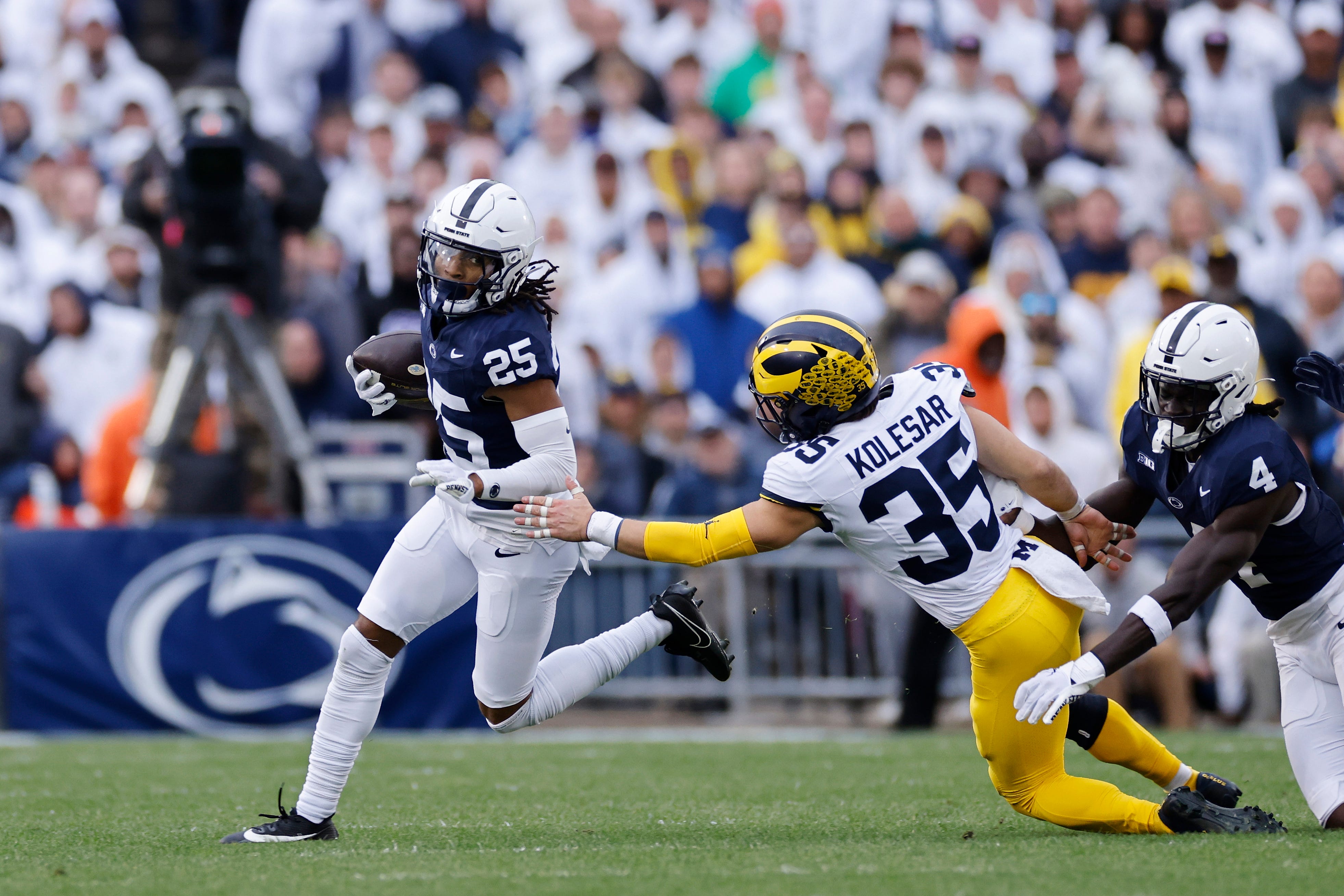
3. COOPER DeJEAN, CB-S, Iowa (6-0 ½, 202, 4.45): He returned punts in 2022 and ’23. His best season was ’22 when he averaged 16.5. His career mark was 13.1, and in 31 returns he scored one TD. “He’s one of those guys you never bet against,” one coach said. “He does everything pretty damn good. Like him as a guy and as a player, too.” Only one kickoff return. From Odebolt, Iowa.
4. AINIAS SMITH, WR, Texas A&M (5-9 ½, 189, 4.59): He hurt his chances for an early draft selection with a bad 40. That, however, hardly diminished the admiration evaluators have for his ability as a return specialist. “In 20 some years (of scouting) I’ve never seen somebody field punts so calmly and so courageously,” one scout said. “He’s so natural and makes it look so easy with dudes barreling down his chest. It’s almost a detriment at times; he has some ball security issues. He’s a really interesting player as a punt returner. DeAndre Carter comes to mind as a punt returner only.” Over 4 ½ seasons he returned 82 punts for 10.2 and two TDs and returned 20 kickoffs for a subpar 18.0. Last season was his best returning punts (14.3). “He’s tough and loves football,” one scout said. “Practices his ass off. He’s just not fast. He’s quicker than fast. You can line him up in the backfield some and he can be your starting punt returner.” From Missouri City, Texas.
5. TULU GRIFFIN, WR, Mississippi State (5-10, 182, 4.42): Though undersized, Griffin made a name for himself in the perilous business of returning kickoffs. “He’s more slender than you’d like to see but you don’t feel that when he plays,” said one coach. “He’s very aggressive and decisive, which you wouldn’t think he’d be based on his size. He’s tough and gets up the field quick. Good cutter. Has a feel for setting up blocks. Has some short-area ability which you usually have on punt returners.” He returned just three punts for 7 yards. A four-year veteran on kickoffs, he brought back 54 for 30.4 and two TDs. His worst season by far was 2023 (21.9). From 2020-’22 his seasonal averages were 37.3, 32.8 and 32.3. From Philadelphia, Miss.
6. ANTHONY GOULD, WR, Oregon State (5-8 ½, 177, 4.40): He was the Beavers’ top punt returner from 2021-’23. “Excellent speed and good hands but he’s not really quick,” one scout said. “He’s faster than quick. More of a straight-line guy. He is a good punt returner. Has vision, block use, speed.” He returned 26 punts for 16.3 and two TDs but had just one kickoff. “His best year was 2022,” one coach said. “Not real big.” From Leavenworth, Kan.
7. PHILLIP BROOKS, WR, Kansas State (5-7, 175, 4.51): Had 182 reception and 14 TDs as a wideout but his best chance for NFL employment will be as a dual return threat. “He’s got four touchdowns in his career,” one coach said. “He’s a little guy (but) highly productive.” Finished his five-year career with 101 returns. Brought back 57 punts for 12.5 and the four scores. On 44 kickoffs, he averaged a modest 19.3. “Good little player you might take late,” one scout said. “He’s not as good as Worthy or Ainias Smith or Cooper DeJean. As a punt returner, he can get north-south.” Worst year on punts was 2023 when his 15 returns netted merely 4.9; his finest season was 2020. From Lee’s Summit, Mo.
8. KOOL-AID McKINSTRY, CB, Alabama (5-11 ½, 197, 4.52): He never returned a kickoff but saw regular duty on punts the past two seasons before being benched late in 2023 for fumbling and poor decisions. “I liked him better in previous years,” said one coach. “I thought he was terrible this year. Put the ball on the ground, made some poor decisions. His ball protection was unacceptable this year. The level of decision-making was poor. A Nick Saban-coached team, I couldn’t believe the guy was still on the field.” He averaged 15.8 in 2022 but just 6.1 last year. His career numbers read 35 runbacks for 11.9. “He’s got some wiggle to him,” said one scout. “He’s got pretty good vision. Good speed. OK hands. He seems like a guy that needs work on the catching part more than the return part. The return part looks a lot more natural. He got replaced at the end of the year.” From Birmingham, Ala.
9. ISAAC GUERENDO, RB, Louisville (6-0, 223, 4.33): In four seasons at Wisconsin he returned kickoffs only in 2022. His career numbers were 31 runbacks and a 23.0 average. “On kickoffs, north-south and good speed,” one scout said. “He has great size. The positive thing is there’s not a whole lot of wear and tear on him. He was a backup at Wisconsin and Louisville.” Never returned a punt. From Clayton, Ind.
10. DYLAN LAUBE, RB, New Hampshire (5-10, 206, 4.46): Prolific rusher, receiver and return specialist. “He was a highly productive guy,” said one coach. “Just not real big and level of competition, too.” Competing at the FCS level, he brought back 90 kickoffs for a 24.5 average and two TDs along with 34 punts for 12.5 and two TDs. His best of six seasons in Durham was 2023 when he averaged 31.3 on kickoffs. “Great third-down, change-of-pace back with return skills,” one scout said. “Very good at it – at that level. Now once you start getting in the upper competition he gets exposed for lack of explosion. But he’s got enough skill set to make a team.” From Westhampton, N.Y.
OTHERS: Xavier Legette, WR, South Carolina; Ladd McConkey, WR, Georgia; Keilan Robinson, RB, Texas; Will Shipley, RB, Clemson; Jayden Price, CB, North Dakota State; Ricky Pearsall, WR, Florida; Tyrone Tracy, RB, Purdue; M.J. Devonshire, CB, Pittsburgh; Malik Washington, Virginia; Sione Vaki, S-RB-WR, Utah.
THE SKINNY
UNSUNG HERO
Spencer Shrader, K, Notre Dame: After high school in Lithia, Fla., he pursued a career in professional soccer. Later, he reversed course, walked on to the football team at South Florida in 2019 and, in four seasons, made 28 of 41 field goals (68.3%). Last year, he hit 15 of 22 (68.2%) for the Fighting Irish with a school-record boot of 54 yards. “He hit some kicks at the combine that I’ve never seen in terms of height,” one coach said. “He really gets the ball up high, high, high. Showed great power.” In January, he enjoyed an impressive week at the Hula Bowl. “He needs to get more accurate but he’s a guy that has some real potential,” another coach said. “He’s the real deal.”
SCOUTS’ NIGHTMARE
Harrison Mevis, K, Missouri: Headlined the highlight shows in mid-September after crushing a 61-yard field goal as time expired in Mizzou’s 30-27 victory over Kansas State. In November, he hit from 30 as time expired to beat Florida, 33-31. A four-year starter, he made 83.5% of his field goals and all but one of 148 extra points. “His numbers,” one coach said, “are very similar to Reichard’s.” The main knock on Nevis (6-0, 242) is his physique. “He’s not that big (Sebastian Janikowski) but he’s a big guy,” said one coach. “He’s kind of sloppy big to me.” The other is a brash personality that can rub NFL people the wrong way. “I don’t know if he’s a character,” another coach said. “He’s very confident. There’s a difference between being confident and cocky. He’s a little bit cocky.”
SCOUT TO REMEMBER
John Fitzpatrick: The regard with which Fitzpatrick was held among the scouting fraternity was apparent in Indianapolis at Lucas Oil Stadium during the 2009 combine. Fitzpatrick, who died two months earlier at age 47 after battling a long-term illness, had been an area scout for the Vikings since 1993. For years, the combine had chosen him as an official timer for the 40-yard dashes at the event. So, his scouting friends deemed it fitting to place one of his trademark wool cowboy hats near where he would have been sitting. A native of Greencastle, Ind., he played offensive line at Wyoming and Purdue. He broke into the evaluation business as a scout for the National combine from 1986-’92. One of his scouting colleagues, Dan Shonka, wrote at his Ourlads Scouting Service: “John Fitzpatrick was intelligent, perceptive, intense, determined, loyal, imperfect, a practical joker, humorous and at times as obstinate as the horses he broke on his Texas ranch.”
QUOTE TO NOTE
Special-teams coach: “Sometimes punters don’t worry about that (holding). They just go by their punting. I know the kickers care about it. Sometimes teams cut a punter and let the snapper go, then they wonder why their kicker had a bad season.”
ICYMI:
Is Jayden Daniels the best QB in the draft? SI’s Conor Orr joins the podcast to discuss his story on the quarterback class.
I'd love to see Gute draft Joshua Karty on day three--before round 7 because I doubt he'll still be on the board that late. Karty is my top-rated kicker, not third as suggested here. In 2023 he made 23 of 27 FG attempts, supposedly not very good according to the quoted scout here but still a school record, but he was 18 for 18 in 2022, one of which was a 61-yarder against California, the longest FG in Stanford history. Gute is clearly concerned about Carlson, as am I. He is not reliable, even on extra points. The two kickers who are his competition are not impressive. Karty strikes me as someone who is potentially better than all three now on the roster. The Packers should give the guy a chance to show that by drafting him on Saturday. If they want to be serious SB contenders, they simply have to have a first-rate kicker. Right now they don't.
Aha! Ask and thou shalt receive! Kick-offs, that is...
And a Badger ranked #1 somewhere. Glorious day!