


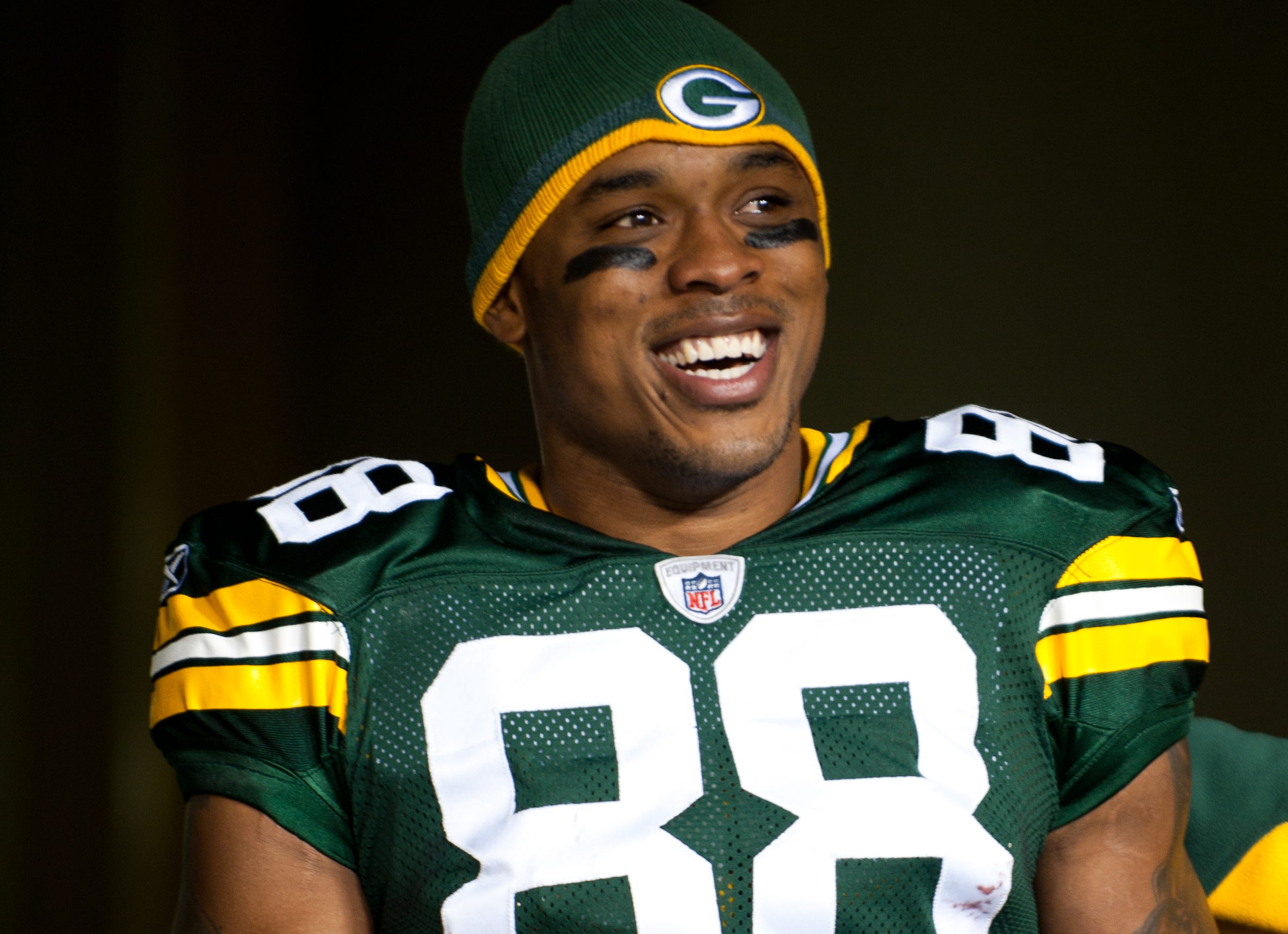
One split-second changed his life forever.
Jermichael Finley went from Canton dreams to worrying if he’ll be paralyzed for life. A “vegetable.”
Here at Go Long, the former Green Bay Packers tight end reflects on it all…
Raising five boys. His oldest, Kaydon, is a wide receiver at Notre Dame and there are more avengers coming for that gold jacket.
Post-NFL darkness was real. He struggled for a period.
Day-to-day life. The Finley of 2026 is quite different than the one in Green Bay, Wisc., from 2008- ‘13.
Grandma’s influence. She raised him.
His relationship with Mike McCarthy. (Good!)
His relationship with Aaron Rodgers. (Not good!) And, yes, we get his response to Rodgers saying he’s not a smart person.
When doctors told him there was a chance he could never walk again. Finley takes us inside his mind.
Was there any hesitation in letting his boys play football?
If he doesn’t suffer that injury, where does his career go?
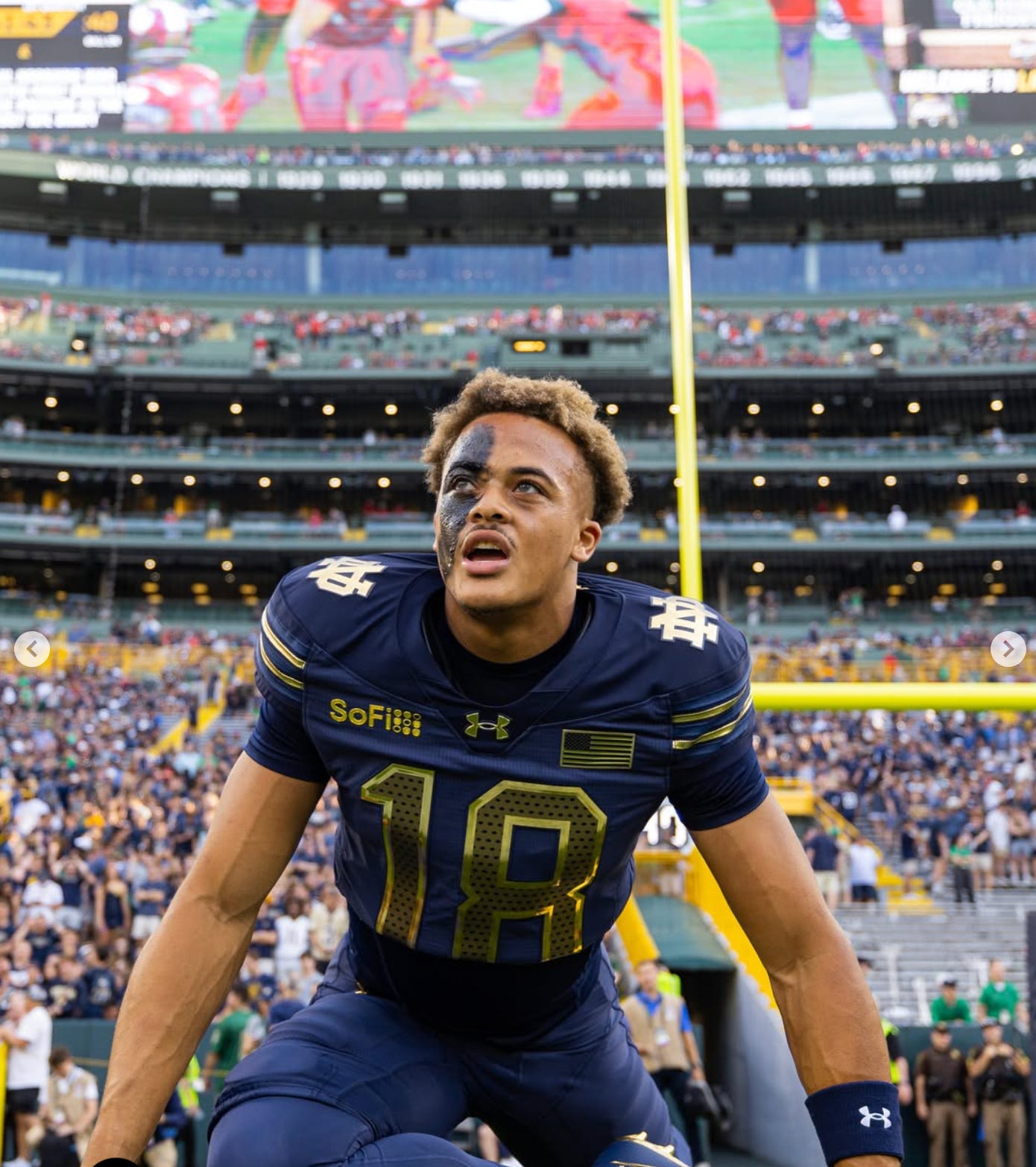
Son’s football career began exactly where Dad’s ended: Lambeau Field.
Full video and audio is here, icymi:

For those who’d rather read, our conversation is transcribed below.
Go Long is powered by you.
Thank you for fueling independent journalism.
This is long overdue. Thrilled to be sitting here talking with a go-to guy out in those Packer days, covering the team at the Milwaukee Journal Sentinel. Jermichael Finley, one of the greats in Green Bay. We all remember watching you. There weren’t many guys playing the position like you, dropped into the middle of one of the best offenses in NFL history when you look at the numbers and what you guys were able to do together. It’s been 13 years since you played. I can’t believe it.
Finley: Yeah, time flies. They say time flies when you’re having fun, too. So yeah, it’s been 13 years, man. A lot has changed. A lot has went on in a positive way in an upward trajectory. And I’m enjoying life, enjoying the fruits of my labor. Raising five kids, loving all my family here in the great state of Texas. It’s been a hell of a ride. A great ride.
We haven’t caught up in forever and it was so great to just shoot the bull with you on the phone a couple weeks ago ahead of this podcast. You can hear in Jermichael Finley’s voice how much you love being a Dad. It is your whole world. You’ve got Kaydon out there with the Notre Dame Fighting Irish — who just played at Lambeau Field — which was surreal for you. But five kids being a dad, what is life like for you day-in and day-out?
Finley: Man, life is enjoyable. It’s a great time. Right when I open my eyes up at 6:30 in the morning, I’m rolling and getting it going. Getting lunches going, getting kids into the carpool line, getting them out the door, running to the Montessori school down the road for my 4-year-old, and then running back to the middle school for my 14-year old. And then going to get my coffee at my little coffee shop. I’m a creature of habit, so I do the same thing in and out every day. Then I run up here to one of my homeboys’ house at H5 barn and get my workout in. And after that, we’re back onto getting the kids from school, getting to practices and doing all of the logistics that helps me be a great Dad.
How old are your kids? Let’s hear it, and their names.
Finley: I’ll start from the youngest to the oldest. So I’ve got a 4-year old, little Zepplon. I got a nine-year old in Brooklon. I’ve got an 11-year old — just turned 11 a couple days ago — in Hilton. And I’ve got a 14-year old in London and I’ve got my 18-year old out at Notre Dame in Kaydon. It’s a fun ride. All boys, too. So you couldn’t ask for better where we can go out and hit the backyard, hit the football field. It’s one of those things where my career ended and so happened God just gave me five boys and he was like, “Your career’s not done. On the gridiron, it’s done. But in life, you’re just starting.” So he gave me five boys and it’s just been a hell of a ride. I’m enjoying being a father, man.
That’s where my mind goes when I think of you, Jermichael — October 20, 2013 against the Cleveland Browns. You’re having a hell of a game and a bruised spinal cord ends your career right there. It’s always hard for all players to move on when they don’t have a career-ending injury — let alone somebody whose arrow is doing this. Gronk, Jimmy Graham, revolutionizing the position with a future Hall of Fame quarterback. How long was that period to adjust? I know you probably went through some dark times, some depression, trying to find a purpose.
Finley: Yeah, no doubt. It took a minute. I talk to former guys now whose careers not only ended, but ended off, one, not getting picked up. Two, they retired. Or three, if it’s a career-ending injury. And every one of them, all the stories matched up. Everyone leaves the game discombobulated. Because if you think about it, your whole life, me playing in junior high, me playing in high school, me playing in college and going to the National Football League, you always had a time to be somewhere. If it was practice in the morning in junior high and high school, you had to be at morning practice or morning lifts. Then I got to college, you had to be at some sort of lift in our classroom at the time. And then you jump and go to your dream. And my dream was playing professional sports of any sort because I started out playing basketball, baseball, football. I told my grandmother, “Hey, I’m going to play some sort of professional ball.”
It so happened it was football. You always looked at a screen. It says 6:30 be here, 7:30 be here, 8:30 go to special teams. Then you’ve got 10:30 position meetings. So it was kind of like a machine-robot type. And then in a blink of an eye, my career ended and guess what? You have no structure. So it was hard to adjust. I did go into some sort of depression — trying to find my niche, trying to find what I’m doing next. It was tough. I went into that downward spiral. And in my opinion now, it was helping me grow into the man I am today. Me and Courtney are still together. My kids are healthy and blessed and have all the things that they need and the father at his full potential. So it grew me into who I am today.
And financially you were in a good place?
Finley: I’m in the best shape of my life. God gave me more than I was supposed to get. And now Kaydon’s in Notre Dame. I’ve got a 14-year old who’ll probably be better than Kaydon. Sorry, Kaydon but he’s just a beast. And I’ve got an 11-year old who’s an animal. Then I’ve got another kid that’s a little Reggie Bush and then I’ve got my little baby 4-year old who’ll be in the house his whole life. He’s my baby. It’s a life any man would love.
There’s nothing like being a Dad. I can see you from afar pouring yourselves in to all these boys. You’re ripping them through NFL-style workouts. Kaydon looked like a mini J-Mike at 12, 13 years old.
Finley: And it’s one of those things that as a parent — with me and Courtney parenting these boys — at some time of the day we’re like, “Geez, we are tired!” Because we’ve got such a rhythm and a routine that it wear downs on us because we want our kids to be a certain type of kid. Not only sports, but academically also. We want them to be very physically and mentally educated around what’s going on in this world. I have my boys in a really, really strict routine and how we run things and how we do things and it’s very mapped out. And so, everyone sees the glitz and glamor in where my kids are at now with Kaydon. But the structure and the things he had to do to get there with being at school, being at practice, doing treatment — which you have to do treatment at such a young age — doing the personal training that he’s done day-in and day-out. It’s the things that no one sees and no one really gets. Those are the things that you’ve got to do to be a really, really good student athlete nowadays.
We should probably take it back. Go all the way back to your own upbringing, your own childhood, because you didn’t have that father figure in your life. You didn’t have that example to look to. What was your childhood like?
Finley: Yeah, my childhood was very, very different. I grew up in Diboll, Texas, a little small town in East Texas, population of 4K. You’ve got two stop lights, you’ve got your Dairy Queen, Dollar General, you’ve got your little Sonic, Jack in the Box maybe. And I grew up with my grandmother, who was a really, really hardworking lady. I grew up in a hunting lodge that probably no one in this world… “You grew up in a hunting lodge?!” My grandma worked in a hunting lodge. She was a chef. So the guys that go out there and shoot the deer, shoot the hogs or go doe hunting and do all of them things, bring all the meat back and she’s in the kitchen just scrapping it all up, getting it all ready to go. So I grew up a country boy. And grew up very tough. A strict household where you had to — before you get your butt ready for school — take out the trash, make up your bed. And if there’s some dishes on the stove or if the dish is dirty, I need you to wash some dishes before you hit that bed because if you didn’t, your butt would be blistered. That was back in the old days.
You took a few whoopings?
Finley: I took a few. You get me once, but that next one, I’m going to think about it. I’m going to make sure them dishes are out the dishwasher. But I grew up very disciplined and I grew up in a structured household where my grandmother was a hardworking lady, worked 40 years at Temple-Inland. It’s a little wood factory out in East Texas. And she took very, very good care of me, got me the things that I needed. Not wanted. And that’s what made me work so hard to get what I got today. I was a Section 8 baby. I was a kid that grew up in poverty. She’ll tell you today — she’s 81 years old — she’s like, “This boy right here, he always wanted to be great and he always wanted to get his own things, the nice things in life.” And so it happened.
I was supposed to play basketball. Lute Olson came and recruited me in a small town in Diboll and I was going to go to Arizona to play with the Wildcats. I went down there and visited him and went to a couple games in Arizona. Then he was like, “Oh, you play football, too. So we’re going to give you a football scholarship.” So I was going to be a dual-sport athlete.
Then, good ol’ Mack Brown came to Diboll, Texas and put on that little political talk. And so my grandma, she didn’t want me to go play so far away. I was a grandma’s baby. Mack Brown came and said, “Here at the University of Texas, we want to offer you a scholarship.” And I was like, “Wow, so you’re going to let me play basketball and football?” He said, “Yeah, we’ll let you be a dual-sport athlete.” I got the scholarship, went out to the University of Texas, signed my letter of intent. And he said, “Here at the University of Texas, we play football.” I was like, “Oh, I thought you were going to give me a basketball scholarship, too.” He said, “Well, this is the great state of Texas and football is the sport to play here.” So I was like, “OK, well, I’ll go play football.” And so that’s how that happened. Here I am today.
So your relationship with your Mom and Dad, why were you raised by your grandmother all these years?
Finley: Me and my Mom, she’s awesome, man. She’s in my life. She was in my life when I was a kid also. She had me at a very, very young age (16) where she didn’t have the means and the funds to be able to maintain a little young kid. So my grandmother took me over. But me and my mom are very tight-knit today. More like brother and sister, but she’ll still get on my butt. She’s awesome. My father wasn’t around, but he’s come into my life now and has taught me a lot of things. And now I’ve got my boys. They’re getting a relationship with them now. But he came back into my life and it’s been awesome.
So you get to little old Green Bay, Wisconsin. Did you even hear of Green Bay, Wisconsin before they drafted you?
Finley: I got that call from Ted Thompson, Mike McCarthy. My family saw it before I did because I was back in my hometown where I lived at and we were outside having a little country barbecue. I was paying attention, but I wasn’t and then everybody saw the name. I got the phone call. And it was like “Jermichael Finley, third round, Green Bay.” I was like, “Green Bay? Out of all the 32 teams, Green Bay drafted me?” Next thing I know, I was like, “I’m coming from Austin, Texas, headed to Green Bay, Wisconsin.” I’m like, “Those are two totally different worlds there.” You get what I’m saying? And so I get a call from a couple Texas boys (who played in Green Bay): Johnny Jolly and Mike Montgomery. They were like, “You better bring every Nintendo, every kind of TV you got, everything possible because there’s nothing to do here, my guy.” I was like, “Oh God.” And he said, “When I say it’s freezing here, sir, it’s freezing.” I was like, “Man! Out of all the teams… Green Bay?” But it was probably the best situation for me. It was all about the fans. It was all about going to work. It was all about being a family man, and that was really good for me because I was raised in a small town starting off anyway. So going to Green Bay was a shock after three years from Austin, but it all panned out in the right, right way. It really did.
Yeah, J-Mike in the big city could have gone a different route, I’d imagine, at that point in your life.
Finley: It could have, man, because coming from where I came from — coming into the money that you come into — it can distract some people. It can really fog your mind to thinking that you’re invincible and you’re really not. A lot of guys didn’t get over that hump of being fortunate enough to get by with not going bankrupt, with not getting in trouble in the streets or getting that DUI. I was fortunate enough to never have a rap sheet. Never having to worry about finances. I had some kind of angel looking right over me because I did make some hiccups where it just didn’t just punish me to a certain degree. Green Bay was awesome to me, man. The fan base was amazing. The town was amazing. Great food there. Great little honeycomb, little spots that you can go to and get some good gourmet food. I’m a foodie.
That’s the beauty of Green Bay. I loved living there and you would run into everybody. I remember being out as a 21-, 22-year old and seeing you guys. When I sat down with you for that feature, I want to say it was 2012, we went to Plae Bistro.
Finley: I remember that. That’s the spot every time I go back for appearance or I go back to Green Bay and do some things there, I’m a creature of habit. So I’m like, “Let’s go to Plae Bistro. I want that Fettuccini Alfredo with some chicken. Cut it up.” And so it is just one of those things where you know the spots you’re going to hit. You see the same people there. It’s one of those towns where nobody ever moves there. Everybody soaks in and stays there, raises their kids there. It was a dream come true for me.
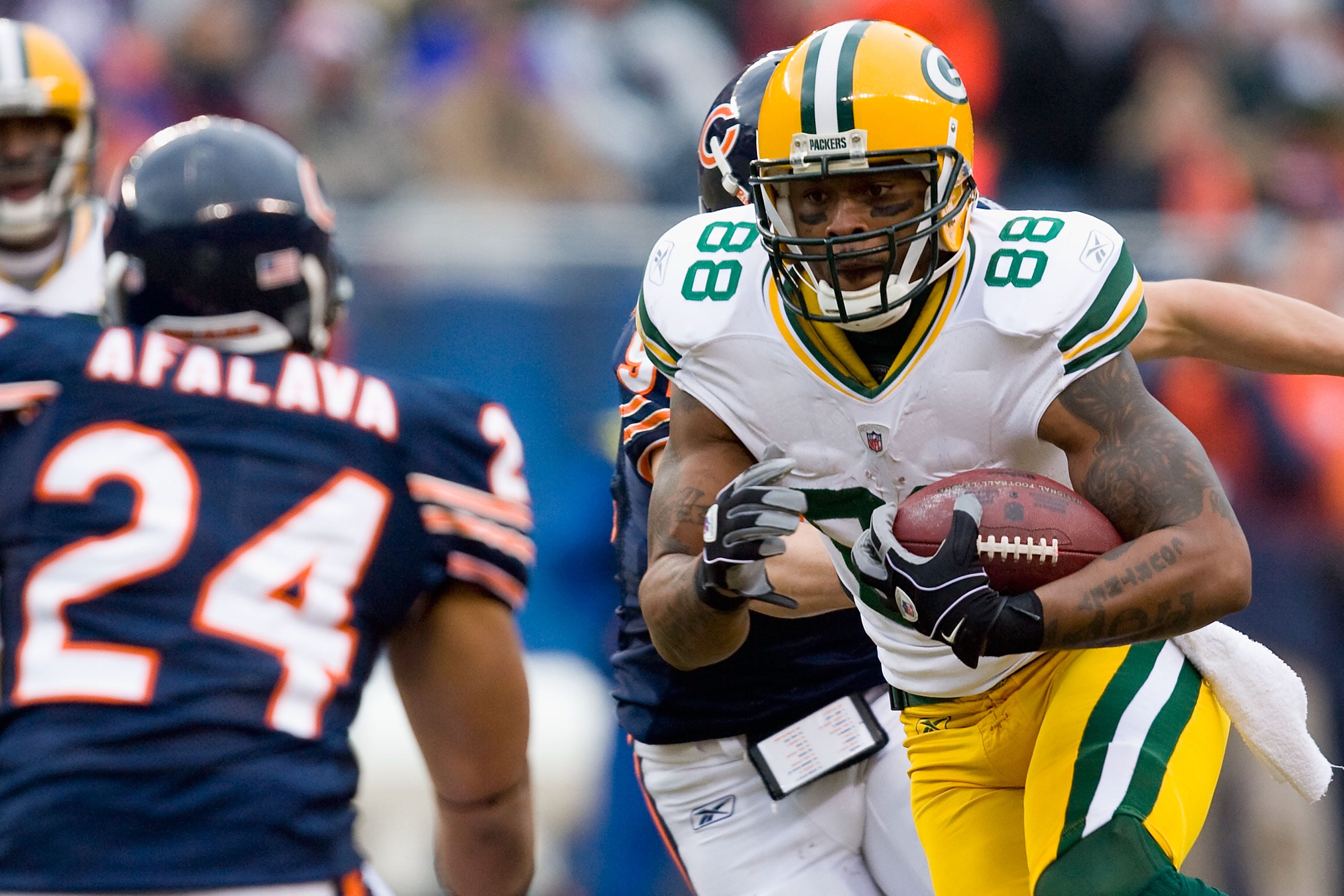
So rookie year, you didn’t play much, you’re getting acclimated to the pros. And then ’09, you break out: 676 yards and five touchdowns (in 13 games). Big plays in big moments. I’m thinking of that Viking game facing Brett Favre in the old Metrodome. That stadium was rocking.
Finley: Rocking. It was a Monday night game. It was rocking, man. And my thing was, I love to play indoors. If you’ve ever been to Green Bay, I know you have. I’m talking to our audience here. If you ever been to Green Bay, it’s cold. It’s brutal. And everybody’s like, “Oh, we’ve got homefield advantage.” It’s really not homefield advantage. We’re cold, too.
Brett Favre used to say that. His record in the cold was incredible. He’s like, “I don’t like playing in this shit, either. It’s freezing.”
Finley: Freezing. So when we got to the domes — the Detroits of the world, Minnesotas of the world, it was heaven. It’s like, “Oh, I’m on a fast track. Indoors. I don’t have to worry about switching my hands up 1,000 times to catch a ball. Chest passes or whatnot.” It was a place that I loved to play. Minnesota, the fans were just outrageous. Fans were loud. It was a hostile environment. I loved to play in hostile environments where you can shut the fans up. So that’s why I love to go torture them guys.
In 2010, you guys win the Super Bowl, but your season ends after five games. You’ve got the ring. You’re a part of this team that will go down in history. Anybody from that team can go back as a conquering hero to Green Bay and the larger Brown County area. But it must’ve been bittersweet, too, to not be out there. What were the emotions through that season?
Finley: The emotions, man. It was bittersweet. Sweet, we won the Super Bowl. Bitter, was that I wasn’t on the field. I gave 25 percent of that championship, of course, playing five games of the season. In the NFL, it’s not if you’re going to get hurt, it’s when you’re going to get hurt. The game is moving so fast. So, it was heartbreaking. There were a couple of us out that year. Nick Barnett, I think Brandon Chillar.
Morgan Burnett. Ryan Grant.
Finley: See, the list goes on. What’s the sweet part about this is that these guys still pushed through. Still figured it out. Still made things happen. And you can’t downfall that. You can’t look down on that because they found a way and made things happen. They went on a run in the playoffs there — all away games — and got the job done. Kudos to those guys. It was an experience just being there, being a part of that team. It went down in history. You can go back there and be a rockstar, superstar now because no championships have been there since. And Green Bay is due for one. It’s about that time.
Your head coach, Mike McCarthy. You two had a special relationship. And really over time, you gain such a respect for Mike McCarthy because he did value those 1-on-1’s. And it seemed like you were somebody he’d want right in his office talking face-to-face through all the ups, all the downs. Take us into that office. What was that relationship really like at 1265 Lombardi Ave?
Finley: Oh man, it was very special. His nickname for me was “Man of War.” It was like, “Boy, you can do anything. You can come out and play football and then you go out there and do what you want, do that. You can do anything.” And man, it was very special. He was like, “You know what? I need to see you once a day in my office. Every morning you come through them damn doors, I need to see your face. And bring me some coffee upstairs.” I was like, “Alright, I got you.” At the time, if you knew me, I was like, “Bring me some coffee?” And then at the time, he said: “And you know what? You and 12, you two need to get your asses on-board together. We need you guys seeing eye-to-eye at all times.” And so we had that special bond where I can talk to him and he can talk to me, and we knew the lingo. We knew it wasn’t any disrespect. It was all about winning and making his team better. And that was one of the things that we did. Every time I came in the building, he said, “I just want to know what your ass is thinking all the time. We just need to know what 88’s thinking because if 88’s thinking right, this team can go here.” And every morning I ran upstairs, “What’s up, McCarthy? How are you? I’m good. I’m ready to go today. My mind’s right.” He said, “This is what I need from you. I need you and 12, every Saturday, I need your asses in one of your rooms. If it’s his room or your room, I need you guys to get this gameplan right because if the middle of the field is open, we can get Jordy and Greg Jennings — all them guys — we can get them going.”
So we got it going for a good two years. And if you know the offense at the time, it was in an upward trajectory and things were rolling. Offense, we probably had the best offense at the time.
The cover of Sports Illustrated, we can all picture it, right? All the weapons around Aaron Rogers on that cover.
Finley: It was rolling. And me and 12 met in each other’s room for two years straight. If you were a fly on the wall, it’d be a very interesting conversation because really, we really didn’t talk about… We talked about football probably 10 minutes, went over the gameplan, went over logistics, where he wanted me to be. If he’s taking three steps, he wants me to go five on a couple routes, break it off. But at the end of it, we talked about family. And that’s why when I see him talking on little podcasts, I’m like, “Alright, whatever.” It was really a relationship. No ill will, no hate, no nothing. And I was just one of those guys who was just going to shoot you straight. That’s it. There wasn’t going to be no sugarcoating. There wasn’t going to be, “Oh, I said this, I said that.” It was just going to be straight down the line.
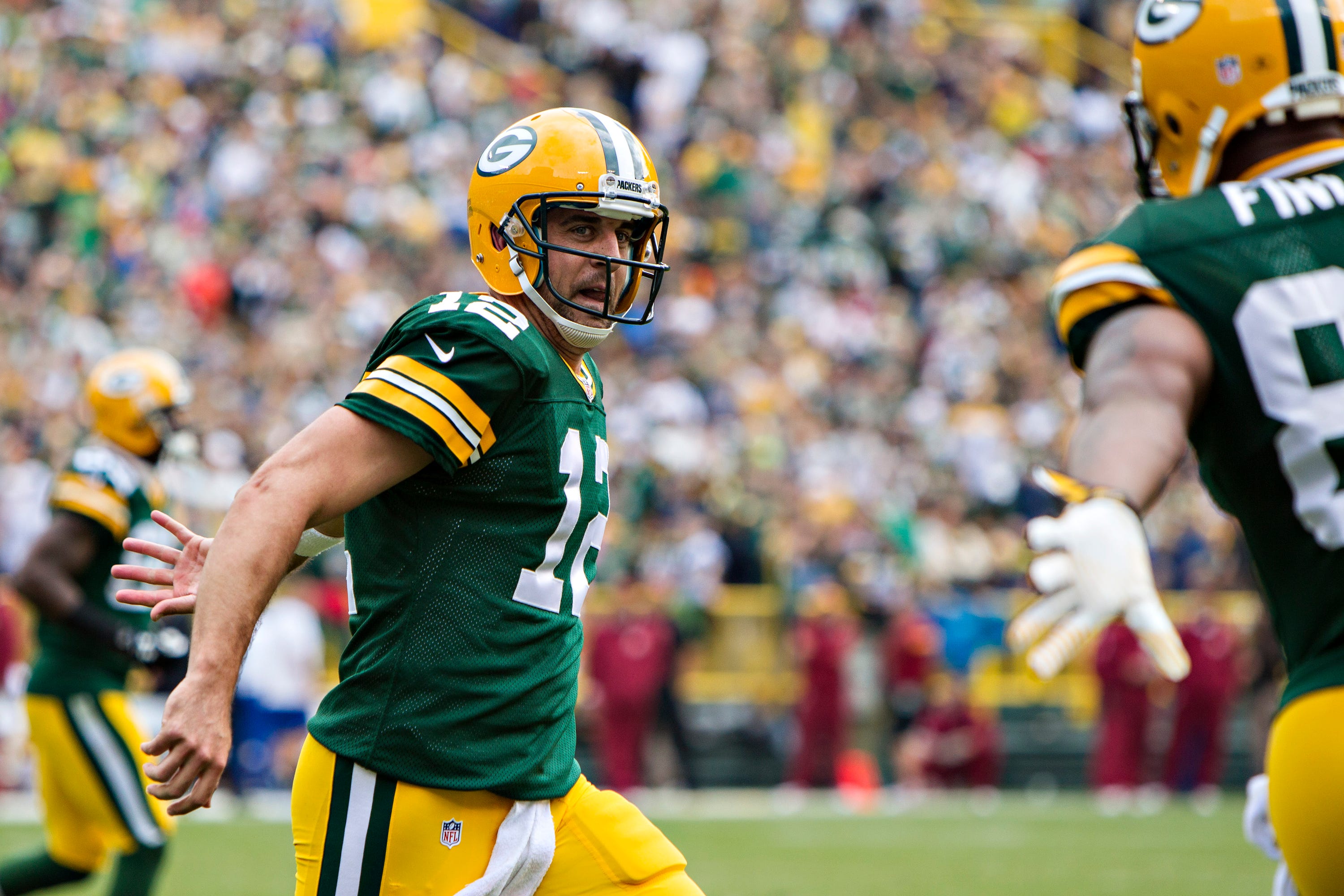
No doubt, Jermichael. I’m thinking about 2012 when we sat down for that feature I mentioned earlier and you stressed wanting to freestyle and not have to overthink and play your ball. He probably felt a certain way, Aaron Rodgers, about that. Because he wants his receivers in a certain spot and an offense run a certain way. He is a mad scientist. There’s a reason he’ll be a first-ballot Hall of Fame, four-time MVP, all of that. When I wrote those stories that he referenced on that most recent podcast, Cam Heyward’s “Not Just Football,” which you know what? I watched the whole thing and I’m like, “This is awesome. Aaron Rodgers just letting loose on every topic. This is great.” We only ask for transparency when we’re talking to all these players, all these coaches. It’s what he thinks. And then he dropped that line. He doesn’t mention you and Greg Jennings by name. But it’s the “two teammates.” And he called you not a smart person.
Finley: Hey, that’s his own opinion. I have my opinion. He has his. And we do live in a country where you can say it’s freedom of speech. It really threw me off. I didn’t see it live. Someone sent it to me and was like, “This guy doesn’t know you.” I was like, “I don’t think he does either.” I can’t be too dumb. Like I said, I’m raising a family. I’ve got a kid here at Notre Dame. Living really good. Really don’t even think or have anything to say bad about him, but I just think, like I said, he’s on a rampage of, I guess, making himself feel good or making himself feel worthy. But his job right now is to go win football games. And that’s what he’s supposed to do. He’s not supposed to worry about the past or anything that’s going on now. So I don’t know what that was all about. I wish him nothing but the best. But at the end of the day, he knows nothing about me. I haven’t heard his voice. He hasn’t heard my voice. He hasn’t seen my face. I haven’t seen his face. But I’m a phone call away and he can always hit my line and really see what I’m up to and really see the intelligence and the smarts I got because obviously what he said was dumb.
Anybody who has five boys, embraces fatherhood and keeps that at the top of the priority list is the smartest, most intelligent person in my book and a lot of people’s books. When is the last time you even talked to Aaron Rodgers?
Finley: Realistically, probably when I left. When I was in the hospital.
Really? That’s the last time you talked to him?
Finley: Hospital. Never really contacted each other outside of that. Never reached out. That’s about the last time. But like I said, me and McCarthy, we talked. The last time we talked was right before he took the Steelers job. I embraced his relationship. We were in Green Bay together last year for a game. He was in a box. It was a reunite of all great energy. I’m a big McCarthy fan and McCarthy is my guy. I hope he does really well here with the Steelers. But at the end of the day, man, it’s a game of “What have you done for me lately?” And that’s what I know.
And just to defend you and Greg Jennings, because you guys are taking those bullets. Look, I wrote a story at Bleacher Report in 2016 and then another one a couple years later looking at what in the hell happened in Green Bay after Mike McCarthy was fired. And it was after that one when Aaron responded by calling you and Greg “irrelevant” and “bitter.” Which, you guys caught a lot of passes from Aaron Rodgers. Greg, some of the most famous passes he’s ever thrown in that Super Bowl. You’re laying your body on the line and your career ends in that 2013 season as we referenced. All I say is this, I’m calling as many people as I can, talking to as many people as I can. You two were willing to put your name on it. You’re not alone, by the way. There are some names that would probably surprise people that agree with you two in the way that you described his leadership and him as a teammate. Not taking anything away from him as a player — obviously one of the best ever. But I feel like your opinions matter. You’re there firsthand. And here you are taking the high road. At the end of the day, that matters for people to know I’m reaching out to you. You’re picking up the phone and simply answering questions.
Finley: That’s it. And like I said, from here on out, I take the high road. I have kids and people and other places looking up to me. So it’s no ill will. I’ve got bigger fish to fry. I’ve got a lot of things going on in my life that’s positive and I want all my blessings. I want things to pan out right for me and for the pieces to move in the right direction for me. So everything I do from here on out will be strategic. It’ll be in a smart way. Like I said, Aaron Rodgers is one of the best quarterbacks to ever touch the pigskin. I really believe that. And if he ever needs me, wants me, I’m here and I’m always going to be straight down the line.
Let’s bring him on next week. Aaron, come on if you’re watching this. It’s been 13 years, so there you go. What a great reunion. So you are spending those Saturdays together in the hotel. That was before every game, just going over football stuff, talking life because he referenced those as well.
Finley: Going over life, going over plays. If we had Cover 2, we had Cover 3, we had cloud, where he wanted me to be, how he wanted it to look. Because he is the quarterback. So I had to listen. And it wasn’t that I didn’t know and things like that. It was just — if I got going in the middle of the field — it helps the other guys get open. So I didn’t get what he was saying that he had to “help” me. It wasn’t no help. It was just two guys obviously that didn’t see eye-to-eye on things and they wanted us to come together. And it wasn’t nothing like, “Oh, Finley didn’t know it. He didn’t know this play. He didn’t know that play.” It was just if Finley got the ball and got the game going in the right way, guess what it does? It gets the running game going. We can get the play-action going to get the middle of the field open. Or we can get the shot players on the outside to get Jordy and Greg, James Jones, Driver. And at the time, Cobb was coming in as our second-year guy. So it was just really to get the relationship going. So I guess he lost his thought process of what it really was.
I remember in the moment, in real time, that was what you would stress repeatedly — you really wanted a relationship off the field. You really knew how important that was for it to bleed onto the field.
Finley: Because if you look at today’s game, if you have no relationship with the quarterback, it’s nothing. Now they’re handing out tons of money — tons of money to all the players at this point. So the quarterback is the head of the offense. So you’ve got to be on the same page as him. You’ve got to be seeing eye to eye with him because if not? You’re just not really maximizing the opportunity of what y’all can do in the offense. I dropped my pride, I dropped everything I had and I was like, “Let’s get it going. Because if we can get it going, then everybody else in the offense will bloom,” and it did bloom at the time.
A lot of mouths to feed. You’re producing still. So 2011, statistically your best season, 767 yards, eight touchdowns. But I remember we talked about it then into 2012, there’s still this element of — there aren’t many human beings sculpted like Jermichael Finley. There’s another tier here that everybody can feel, everybody can see. There’s the ups and downs of 2012. But then it really did feel like in 2013 that you were turning a corner and figuring out who you could be as a player. Take me through ‘12 to ’13, up to that game against the Browns and where you thought your career was going. Where was that arrow really pointing for you?
Finley: The arrow was just unbelievable, just big as day, biggest. Man, it was going up. I looked at myself as going down as one of the greatest tight ends to ever play the position. Because of, one, the quarterback I had. I had a lot of respect for him and his ability to throw the ball. Two, the sort of offense McCarthy had created around the tight end and in the play-action game to get me open and to create mismatches, which he did very, very well. And three, just the speed and the size. It was unequal to the linebackers, safeties even when you want to split me out on the corner. At the time I got injured, it was devastating because I was really coming into my own at that time — literally at that time. And like I said, I was supposed to have a yellow jacket on today. What I always tell people, if I don’t have it on, one of my kids will have a yellow jacket because I will implement all the things that I know and all the physical tools that I know how to get to that point into my kids. And that’s what I believe, man. I was coming into my own at that time.
The Five ‘Finlet’ Avengers. They’re coming for you.
Finley: You’re going to hear it over and over and over. It’s going to be Finley boys. Even if it’s Major League Baseball, it’s going to be something. You’re going to hear them. That’s most definitely.
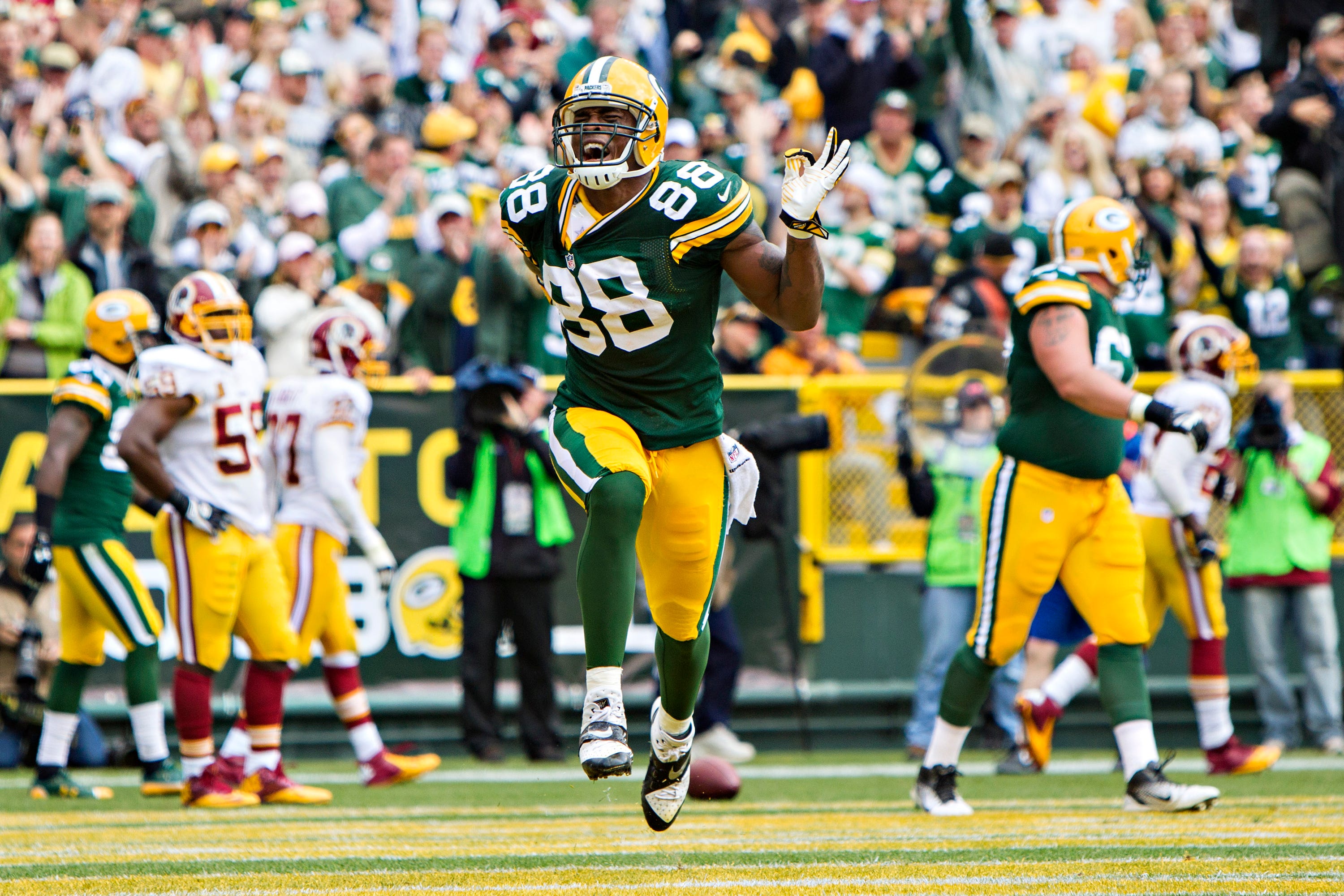
What do you remember about that play where you got hurt? Do you remember it blow-by-blow or does it vanish from your memory?
Finley: I remember bits and pieces. I remember, of course, the slant route. It was a quick read from Aaron Rodgers. Quick release, caught the ball. Then when I looked up, that’s when everything shut off. But other than that, man, it was a bang-bang play. It was football. It wasn’t anything he did wrong or right. Nothing I did wrong or right. It was just such a quick bang-bang play that no one had time to think or no one had time to adjust to get my head up or anything like that. So it’s part of the game and I live by it and I die by it that my career ended off of such a play where no one had time to adjust. So like it’s part of the game.
It’s the most terrifying part of the game, though. That’s every player’s worst fear. It always blows my mind to watch a game when — it just happened last week to the Packers. Jayden Reed against the Jets, first drive. To see a player not moving. Motionless. Get peeled off of a turf, loaded onto an ambulance, driven off, and for those 10 other players on the field to then have to throw themselves right back into it. It’s so different when you’re standing on the sideline and you hear these collisions. You feel them up close. These are the best athletes in the world, the fastest, strongest, colliding at angles that human beings were never meant to collide at. To then transition into that next play, I don’t know how you do it. And so you’ve seen that same scene as a player, right? You’re going through those mental computations. You can’t slow down.
Finley: Because it’ll be you next. In practice, if you’ve seen that happen, it’s called “five yards up.” You move five yards up and the training staff is back there handling that person. You’re like, “Damn, the game is vicious. This game is a cold-blooded game.” But at the end of the day, guess what? We signed up for it. And they are paying you a good amount of money to go out there and be a gladiator. And it’s part of your job at the end of the day. So that’s what I tell my kids today. If you don’t want to get hit, we might as well start really focusing on academics and let’s get a good degree and let’s go do something else or let’s go to band or something. Because if you don’t like getting hit, we need to find something else for you to do.
Or if you don’t like going to get that grit, that work. My 11-year-old now, he’s like, “Dad, I don’t want to go to lessons today.” I was like, “Well, let’s go over here and get this book and read this book real fast because if you don’t like the grind, if you don’t like the dirty work of it, there’s so many kids that need the sports world and need the financial part of it. There’s some kids out here that are hungry as hell that’ll really work for this shit. Really work for this and really want this. “So if you don’t really want this, bro” — that’s how I talk to them — “let’s go do something else.” And then I’ll get in their heads. They’re like, “Dad, I’m ready to go to lessons, Dad. Let’s go.”
So that’s the one thing. I play mind games with my kids: “If you don’t want this, let’s do something else.” And then next thing I know, I leave him alone, but I’ll be in the room getting ready for lessons because I know he’s about to come in and say, “Let’s go. I’m ready now. I’m ready.” So I was like, “That’s what I’m saying. That’s what it’s going to take. But we’ve got to get to where daddy’s not going to give you this pep talk to get your butt up to go do this.” So it’s just part of the game. I even have a field in back in my yard with a football field where we train day-in and day-out. It’s hard ass work. And you’ve seen some of my training on Instagram. It’s tough. And the kids that I used to train, they’ll tell you — “Mr. Finley’s workouts are no game. It’s not a game.” It’s 30 minutes and it’s up-tempo and it’s got a sense of urgency to it. It’s how I played and how I train kids. They’re going to need it because nobody really gives it. Nobody cares. They want to see what can you do for me now? And that’s what I’m trying to teach these kids because when they get into collegiate sports, these coaches are going to say, “What can you do for me?” And it’s just part of it. They might not tell you that, but that’s what it is.
As a player, you went one speed to turn your body into this well-oiled machine on Sundays. So your kids are going to live that. But I guess this is a two-parter for you. Because of the way football ended for you, was there any hesitation for you as a Dad to introduce football to your boys? And then is there any hesitation in their mind — as they’re deciding whether to play or not— when they see the play on YouTube. Have they seen it? It’s all out there. They can see their Dad motionless.
Finley: We’re in a world of kids getting phones early. We’re in a world of TikToking and YouTube TV, and all that. So they’ve seen it. But my two oldest ones, they stuck in the game and loved the game. Kaydon’s already into collegiate sports, so he’s in it. My 14-year-old, if you see him, he’s just different. He’s bigger than all the kids, faster than all the kids, so he’s in it. Now my 11-year-old, he’s like the lawyer, doctor. He’s like, “So Dad, I don’t think I want to get hit, Dad.” I was like, “Alright then, bro, we’ll put you at quarterback. You going to have to be our pitcher or first baseman.” He was like, “Yeah, I think baseball’s going to be it, Dad.” I was like, “Alright, we’re going to quit football.” And now I got him straight baseball. But my 9-year-old, you would think he was born in Diboll, Texas. He’s a dog. He’s different. He’s like a Reggie Bush type, so he’s going to be in the game, too. It’s in ‘em. It’s in their blood. So there’s nothing I can do at this point.
That “Man of War,” like McCarthy said. It’s in the blood.
Finley: (He’d say), “Finley, we need to teach you how to practice because you’ve got one speed and we’ve got to figure out how to adjust and tempo your speed in practice.” I was like, “Coach, I’m sorry. I go one speed and that’s what I’m going to do here.” He said, “We need to teach you how to practice.” I was like, “I didn’t know you had to learn how to practice.”
In terms of tempo’ing down?
Finley: Yeah, tempo’ing down. He said, “Finley,” he’s like, “Crazy 8s, you’ve got one damn speed and we’ve got to slow your ass down in practice, man.” I was like, “All right, I don’t know what to do, coach.” And I never adjusted, never figured out how to practice for him. I just had one speed and one speed only.
When did you come to in the hospital? Knowing where in the hell you are?
Finley: It was probably the next day, but still had the tingling, the feeling in my body. I had a lot going on. And it was tough to grasp because everything was just shut off. It was hard to even connect fingers and turn my neck and had a little tingling sensation in my left arm and my legs were dead. It took me two weeks or so to really just come to feeling some of my body. It was a hell of an ordeal, man. It was tough. It was tough.
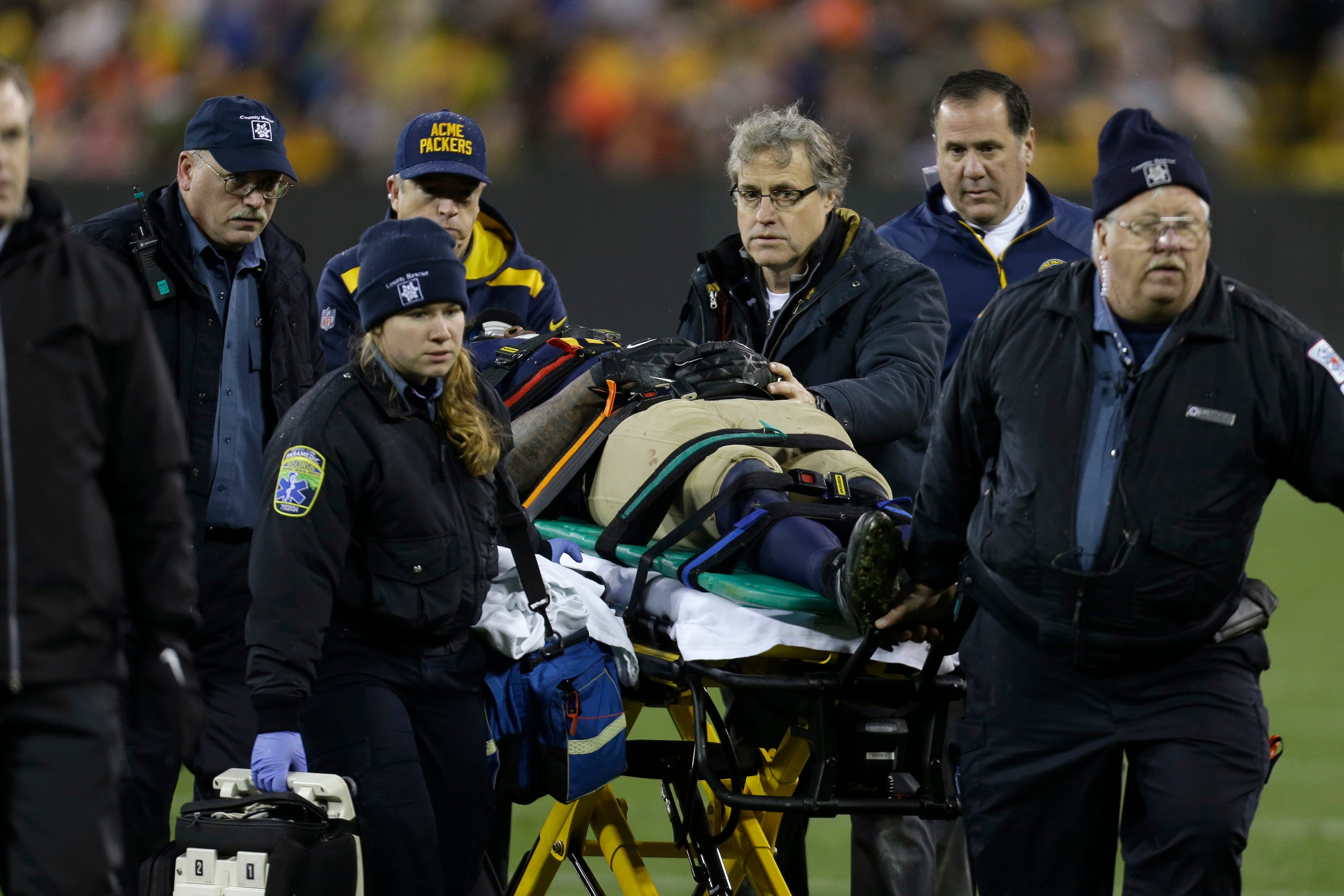
When you were taken off the field, you went right to the hospital and you can’t move at that point. Do you know what’s happening?
Finley: That was my first time ever being in the ambulance. You would think, growing up in Section 8, you’d have been in the ambulance because we used to play a game called “Kill-a-Man.” You throw the ball in there and whoever touched this damn ball first gets hurt. So you would think I’d have been hurt at some point, but that was my first time ever being on a stretcher, being in an ambulance. Next thing I know, the media’s there. I was just hearing a couple little things: “We’ve got to take you down through the basement of the hospital.” I’m like, “OK.” I’m just sitting there on this thing just shocked. A whirlwind. Because everything’s moving so fast, but really slow. And life is moving fast, but in my world, I’m still trying to gather all my senses. Next thing I know, they get me there, put me in the CAT scan and do all these things. I hear, “Zzzzzz!” I’m like, “What the hell is going on?” They’re cutting my helmet off, cutting my pants off. Everybody’s moving fast. I’m like, “OK, what’s going on?” They said, “You’re paralyzed.” I was like, “What?” I said, “Will I be able to play football again.” They said, “That is the least of your worries. You need to figure out how you’re going to be able to live without sucking out a straw.” I was like, “What? Sucking out a damn straw? Now, we’ve got a freaking problem.” They said it’s 90-10. Ninety percent of people don’t come back. Ten percent of people do. I just poured down in tears. I’m like, “What the living hell?”
That was in the hospital. You’re hearing all this from the doctor.
Finley: I’m hearing a shitload because I’m asking them, “Will I be playing again?” Because you know me. I love the game. Shit, I need to be back on that field.
Meanwhile, what can you move at that point? Anything?
Finley: Because once you get a spinal cord injury, they can’t move you. You can’t move. Well, I couldn’t move just from my senses, but they can’t even move you. They can’t torque you and do all of that because you’re sensitive at the time. Things can break. And so I’m asking them, “I need to be back on that field next week.” They’re like, “You need to simmer down.”
Because at that point, they’re thinking you could be paralyzed.
Finley: For life.
From the neck down. That’s a possibility?
Finley: For life. So after that, man, I was so messed up in the head from the upward trajectory I was going on and just figuring out the game. Now, I’m laying paralyzed on the hospital bed and having Courtney steer me around with the belt, learning how to walk again at some point down the road. I’m like, “What?” She helped me use the restroom. I’m like, “What the hell is going on here?” I was just a superstar in the National Football League, and now it’s a possibility I can be a vegetable. And so that didn’t sit with me right.
What’s going through your mind? When you go from ascending — you’re thinking gold jacket, one of the best to ever do it — to “I might be a vegetable?”
Finley: A lot is at the time. A lot as far as, “Screw all of this. Forget it.” After that, coming back, little senses are coming back here and there. Then, I’m really grasping. I came back and my limbs are coming back after a couple months. I’m back lifting weights and getting back strong to try to push back to the NFL. And then I get to the Steelers because the Steelers doctor, Dr. Maroon did my surgery.
This was the C3-C4 fusion that you had done?
Finley: Yep, I get that surgery, come back stronger, start lifting again, get back out to Scottsdale lifting with Ian Danney, the trainer. And then I pushed back, got back swole, got back ready to go. Went out to Seahawks, visited John Schneider down with the Seahawks (in March 2014). Went to the Steelers to visit the Steelers. And then Steelers were ready to go. They were like, “You’re ready. You’re ready to go.” We were doing a contract also with Schneider and the Seahawks at the time, and he came back and was like, “No, I wouldn’t do this if I was you.” I was ready to go to. At the facility. Getting back to the NFL. Schneider was like, “Oh bro, you’ve got a bruise on your spinal cord.” Our neurology doctor said, “I wouldn’t let this kid come back.” Next thing I know, I went out to Mayo Clinic, and they said the same exact thing.
A couple people said that. I had to listen at some point. It was like, “If you get even tapped one more time with your head?” That’s when sucking that straw came back. Courtney was like, “You’ll be a dumb MF’er if you come back.” I was like, “Yeah, I would be.” Then I had the insurance policy at the time on my body. She was like, “If you do the math, you get several million dollars and you’ve got to play in the NFL another five years to get this equaled up to. Let’s just take this insurance policy, sir.”
Blake Baratz at the Institute for Athletes for the win there, right?
Finley: He’s still my brother today. We did that, man. What a time it’s been. It’s been a miracle. I’m in the best shape of my life now. Living the American Dream.
That’s why we have to listen to our wives, right? Because the competitor in you, that “Man of War,” that dog, that kid from the country of Texas is dying to play. Killed those workouts. Seattle, Pittsburgh, you’re close, you’re on the cusp, but these doctors are telling you, really, if you take a head-to-head, if you’re hit wrong awkwardly in a certain way…
Finley: You could really be back to sucking out that straw, seriously. And so listen to that. Went to the best hospital in America in the Mayo Clinic down there in Minnesota, and they told me the same thing. So I was like, “Kudos to y’all. Thank y’all. I’m going to go live my life.” And I did that. And like I said, now I can just implement into all my kids that hard work does pay off, but you got to be smart, too.
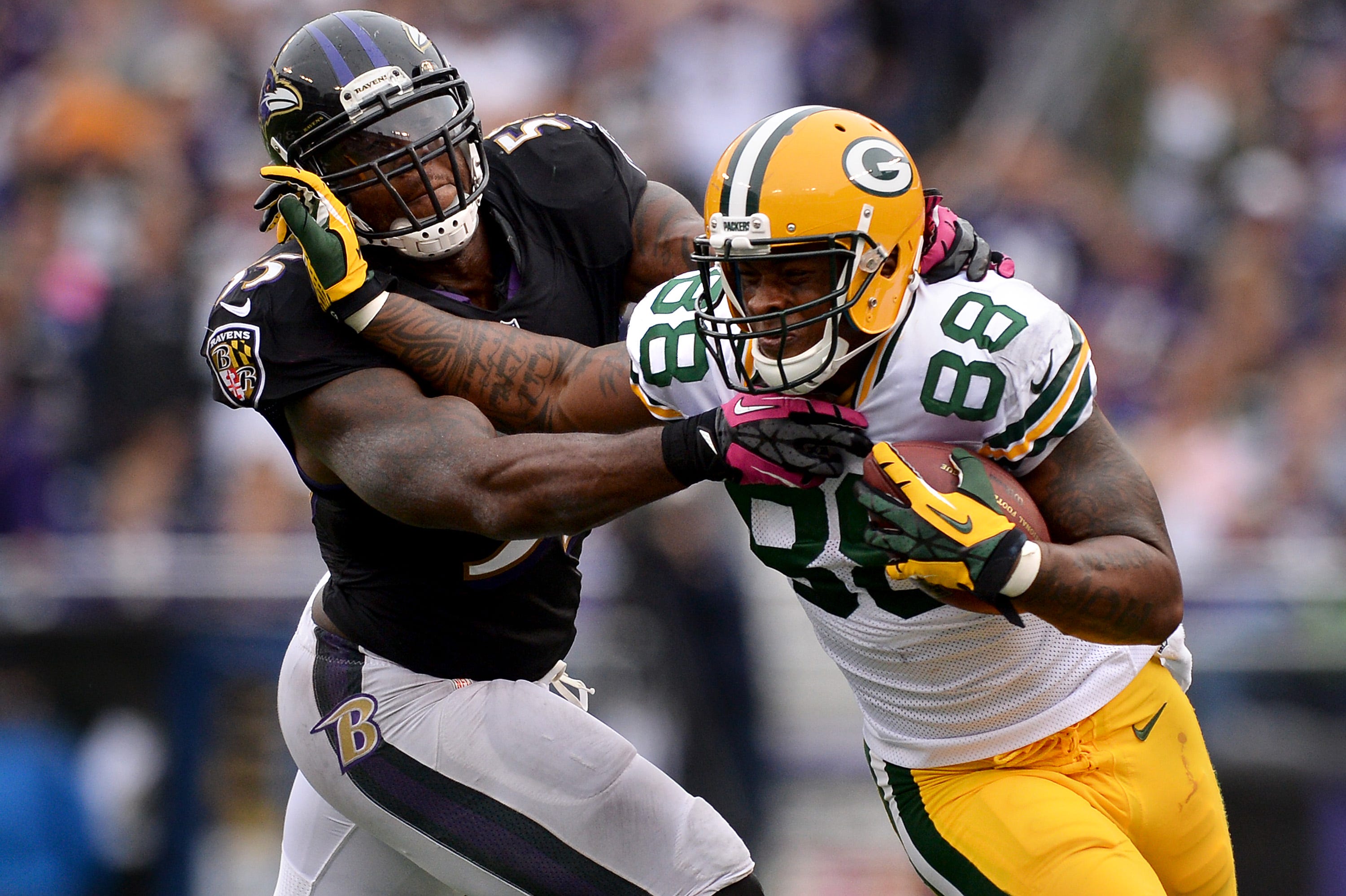
Let’s allow you to dream for a second. If this collision never happens, what would you have done with the rest of your career?
Finley: If it would’ve never happened, for sure, probably would’ve been the best. It would’ve been hell on the NFL. They would’ve seen something that probably they haven’t seen at that time. For sure, would have outdid the numbers of what they predicted for me. Would’ve beat all odds for sure, which I already have beat all odds. But really just smacked the stats in the face and would’ve been getting prepared to have put that yellow jacket on. That’s most definitely.
I mean, we’re probably talking more Super Bowls too, because you look at those playoff losses that came in ‘13 and ‘14 and ‘15 and ‘16, you would’ve made a difference in those games.
Finley: No doubt. And it would’ve been at least two more Super Bowls there in Green Bay, Wisconsin. That’s 100 percent.
But to be able to pour into your boys, I’ve got to think it’s the most fulfilling sensation anybody could have. As a human being, it’s got to be so gratifying to see them loving football, loving sports, loving life.
Finley: It is one of the most fulfilling things on earth, man, to see my boys just pan out to where they’re going and who they are today. It’s one of the most fulfilling things that I’ve encountered here in life as we speak.
You were in Lambeau. (For Notre Dame’s opener vs. Wisconsin) How was that return for Kaydon’s game stepping out of that field?
Finley: Yeah, it was surreal. The crazy part is my kid started his career when my career ended. So it was one of them divine moments where this is what’s supposed to happen. He came over, usually he’s on the other side of the rope. I’m the player. He was the kid. Now, he was the player and I’m over there like a fan. He came over. I’m like, “Damn, it’s a role switch over here.” When I say it was an experience that I never imagined, it was bone-chilling. Green Bay, it was rocking, that stadium was going, and he was jacked up and juiced up, ready to go. It was just very exciting to see him so excited. Man, he was jacked.
It had to have been a good feeling for you because as a player and then even since you’ve been done playing, fans have kind of been all over the place. … To be out there at Lambeau, I imagine they’re yelling your name, they’re cheering for you.
Finley: A very cool feeling. A very cool feeling for my family. All the boys were there and had the 18 jerseys on, had Kaydon’s jersey on. They were hanging over the rails, just jacked up, had them on the sideline. We got to see him in pre-game warmup, running out the tunnel.
Man, it was a feeling that I won’t be feeling for a long time.


