


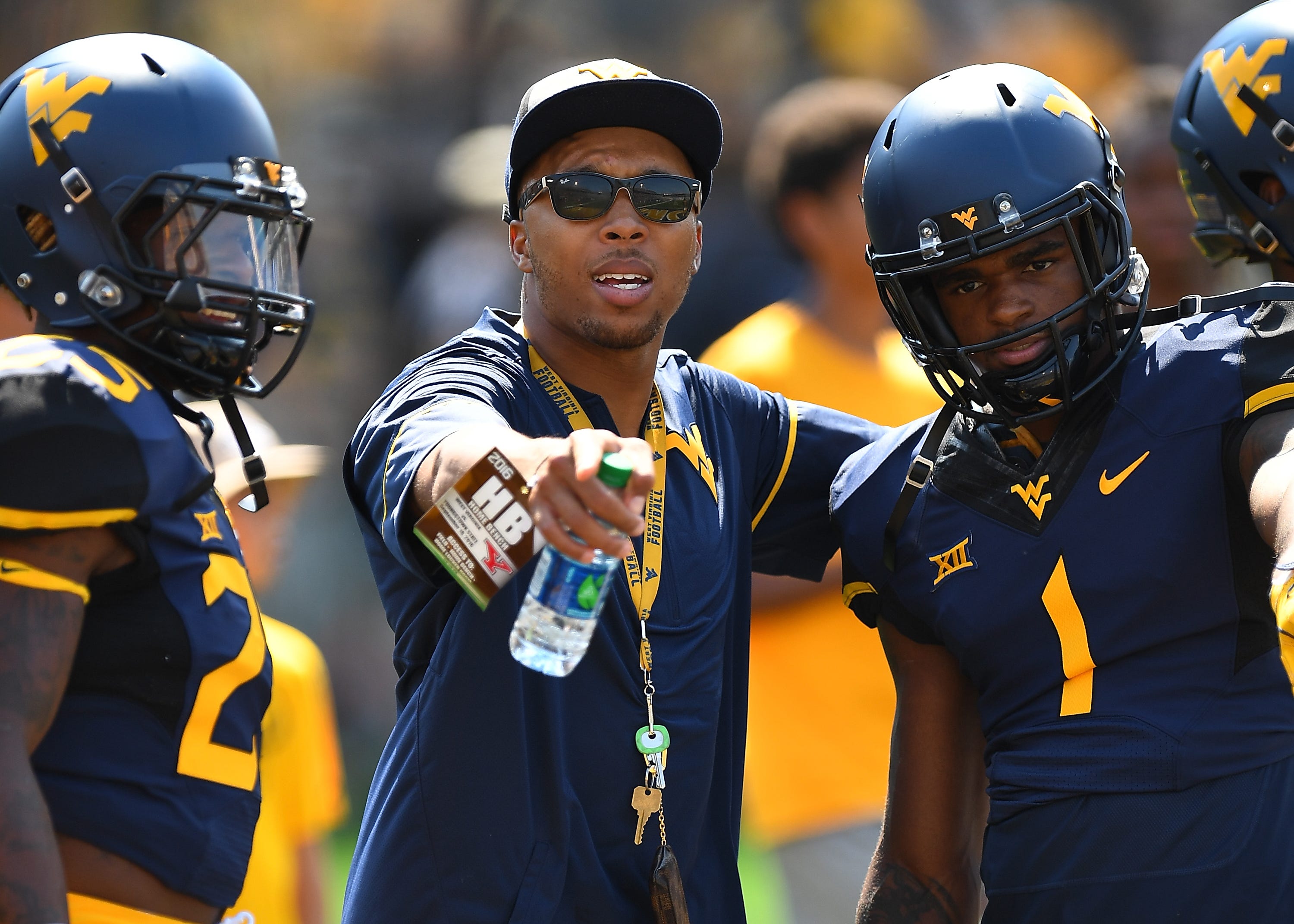
Stedman Bailey is alive.
Stedman Bailey is now determined to change as many lives as he can.
This week, the former NFL wide receiver joined the Go Long Podcast to pick up where we left off eight years ago. Here is the 2018 story I did on Bailey during my Bleacher Report days. Back when he opened up on taking two bullets to the head in extremely graphic, harrowing detail.
Bailey will never forget the doctors telling him he’d be a “vegetable.”
He wasn’t able to play football again and, sure, he plays cruel games of “what if” on NFL Sundays. Bailey knows he could’ve lit up defenses to an AB-extreme. But this father of three also learned he’s a hell of a lot stronger than he ever knew. One centimeter the wrong direction and he would’ve died. Perspective, he explains, is everything. He found happiness. He knows karma will take care of whoever tried to take his life. He’ll enjoy Toy Story 5 with his kids and he’d really love to connect with another victim of gun violence: Florida State football player Ethan Pritchard.
Video and audio of our conversation is right here.
Words are transcribed below.
Thank you for subscribing and supporting, all.
Go Long is your forever home for real, raw football.
We are fueled by you.
On one hand, we could talk about this surreal experience that you had the night of Nov. 24, 2015, or we can just talk about raising three kids and watching Toy Story 5. We can go two very different directions with this conversation. We were just talking about Dad life before starting. I loved it. I thought the message in Toy Story 5 was phenomenal and everybody out there should watch it.
Bailey: Yeah, absolutely, man. Just in real time, what we’re dealing with our own children — technology vs. being able to be outside and play with toys and really be present. The technology is really taking over and not just with the kids, but even us as adults. We find ourselves just being so glued to our phones for many different reasons. But seeing a movie that had a concept like Toy Story 5, I thought it was really good. Me and my family really enjoyed it.
So do you guys absolutely devour multiple bowls of popcorn at the movie? What’s the experience like for the Bailey family? We went through pop, we went through popcorn, multiple trips to the bathroom. It’s like being at a sports game: “Sonny, we’re going to miss an important plot point!”
Bailey: First of all, it’s an expensive experience. I think you can attest to the fact that the prices of popcorn, the prices of pop, the prices of anything at the movie theaters is certainly inflated. However, my kids, they definitely look forward to those movie experiences where, “Dad, I want popcorn.” Whatever they want. And it could be candy. It could be chocolate. It could be a hot dog. It could be a slushie. I’m down to just making sure that they have a really good time. So I open my wallet.
Where are you living right now, Stedman?
Bailey: So now, I’m back in South Florida where I’m born and raised. Not too far from where I had my incident. But I’m actually in Miramar. So it’s a somewhat better community. It’s a nice community that I’m currently raising my family in, got some good schools around and it works out for me. I have a lot of family that’s still here. So for convenient reasons, it works out.
That’s pretty remarkable considering what you’ve been through, to return to that area in any capacity. Let’s just jump right into it. So for those who don’t know, I’ll have the link in the post. If you want to go back and read it, it was a longform story in my Bleacher Report days. That’s when I connected with Stedman. We were hanging out multiple times over the course of two, three days and you really opened up on this whole experience.
I’ll just read the first few paragraphs.
His finger traces the path of the bullet that should’ve killed him on site. Right here, he points. Right here, one bullet struck him near his right temple, traveled through his head and exited just above the eyebrow.
His skull shattered. Shards of bone fell into his lap, blood gushed, and a car screeched away. The shooters used hollow-point bullets, he explains, bullets designed to expand and destroy and kill on impact.
Thirty hit the SUV in all. Eleven struck his cousin. Two struck Stedman Bailey in the head.
“A barrage,” Bailey says, “of bullets.”
That night, Nov. 24, 2015, the then-St. Louis Rams receiver was going to eat dinner with his cousin Antwan Reeves, Antwan’s 10-year-old son and 6-year-old daughter, and one of Bailey’s best friends, Terrance Gourdine. They were in an SUV they’d rented to drive the nine hours from Miami Gardens to Atlanta the next day, to spend Thanksgiving at Bailey’s mother’s house, waiting in front of Gourdine’s house while he changed for dinner.
The back hatch of the SUV was left open, an unknown vehicle pulled up from behind, and around 8:45 p.m., the gunfire commenced.
“Like a war zone,” Bailey recalls. “Call of Duty, but you’re really there.”
Bailey, in the passenger seat, took those two bullets. Reeves, in the back, felt one bullet rip through his chest, another strike his lower back and another zip through his arm, then lost feeling in his legs and regained enough feeling to leap atop his kids in the back seat and absorb more bullets in the shoulder. Once the assailants sped away, Reeves handed a cellphone to his son and told him to call Mom, to tell her that he and Bailey were shot.
But his son was staring at Bailey. At the literal holes in Bailey’s head.
The 10-year-old screamed.
“Sted’s dead! Sted’s dead!”
Sted is not dead. He’s here. He’s a miracle.
All of that, does it feel like it was 11 years ago or does it feel like it was yesterday when you think back?
Bailey: Well, my recollection of it feels like it was yesterday. It’s something that is still very vivid within my mind. However, as I just listened to you read that off, it really just sounds like something that could only maybe happen in a movie that just turns out to be really bad. But that is my story. To be where I am today, as you mentioned, I am a miracle. I’m blessed to have all my functions, just everything about me just working and able to just be here for my family.
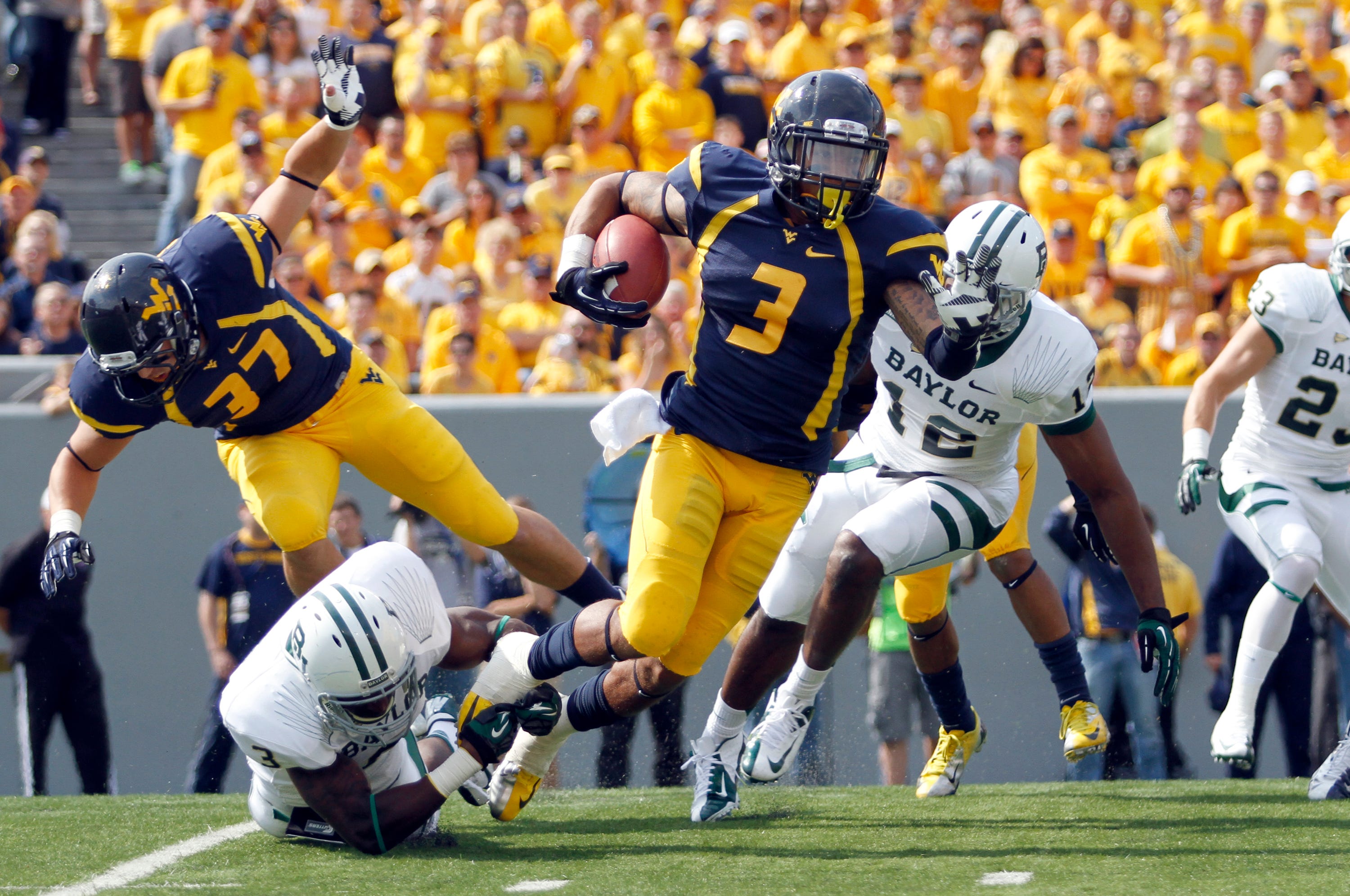
We should really backtrack because I forgot how insanely productive you were at West Virginia. That last season: 114 catches for 1,622 yards, 25 touchdowns. You’re drafted in the third round. You’re producing for some bad St. Louis Rams team. Your career is all in front of you: fame, fortune. That ends. Your life nearly ends. I can’t imagine what is possibly going on in your world at that point of time when you’re then in a hospital room. The pictures they showed you of your surgery sounded just insane. You saw a flap of your head open like a garage. You could see your entire brain. Your eye drooped out of the socket by three feet. You’re seeing this and the doctor’s telling you, “We don’t know if you’re going to walk again.” In the snap of a finger.
Bailey: Well, I remember just within the timeframe of being in the hospital, that little time was tough because of all the words that I was hearing from the doctors. The projections of what my future would look like after that. And they essentially explained that I would probably live the rest of my life as a vegetable. However within my mind — though I just went through such a traumatic incident — it was something that was embedded to say, “No, first and foremost, we’re a fighter. I’ve always been a man of faith.” So that’s something that I was really able to lean on within that time of just trying to understand it all really. I’ve always been a person to believe that everything happens for a reason. Now, it took me quite a while to just really sit back and really process everything. To this day, I’m still trying to figure out my true purpose.
However, I have found some lanes that have been truly beneficial for me and it brings me a lot of hope just being able to — in this very moment — connect with other survivors who have also been through gun violence. Some people have survived, some people have not. The people who have not, I get a chance to connect with their families. But it’s been something that has been able to bring me some joy. Being able to give other people hope and even people who have not been through gun violence. Just seeing that I’m a person that went through what I went through and came out just as I am today, being a man of faith. If I can help turn people in the world to knowing who Jesus is then I feel like I’m doing the right thing. To me, that’s purpose.
You can connect with victims of gun violence in a way no friend, no family member, no therapist ever could. You lived it. You were shot in the head twice and live to tell that story. When we were hanging out, it was your mission to play football again — with a plate in your head. That was a real goal for you. That desire to want to play the most violent team sport on earth — after this all — it’s not just physical. The physical part of it is minuscule compared to the mental. You shouldn’t have even been in South Florida at that point. You’re suspended for something that, even at the time, is legal in several states. Marijuana. You’re also not allowed to be around your team in a suspension. That’s why you were back home. You’re banished. So you could play all those what-if games and curse out loud to whoever. And even when we’re hanging out in the moment, when it was still fresh, I never got the sense from you that you were bitter, spiteful.
Bailey: Having a relationship with God is what gets me over the hurdle. I know that within my situation, things could have been much worse. But I was blessed to overcome something that was probably meant to destroy me. And it taught me something about myself — I’m a whole lot stronger than I probably initially ever thought I was.
How so? In what ways did you realize you’re a lot stronger than you even knew?
Bailey: For most people, you never really know how much courage you may have, how much strength you may have, how much perseverance until you face adversity in life. Adversity is something that’s going to knock on everyone’s doors. I don’t think no one is exempt from adversity, but I do know it looks different for everybody. And for me to go through something like that when gun violence or anything remotely close to that was far, far from a life that I lived, going through that helped me to see that I could make it through anything. There’s no adversity or little problems that I run into now that make me feel that I can be defeated.
I remember you telling me that you and Reeves, your cousin, both thought it was an initiation for a gang possibly. And the local detective back then, he never got back to me. There was like a federal investigation ongoing. Maybe it was mistaken identity. Did you ever get any answers?
Bailey: Nope. To this day, I can’t tell you anything in terms of who, what, why. That’s something that’s a really big question mark in my life. However, I think it’s kind of good that I don’t know in a sense because I wouldn’t want to be a person that — to the slightest degree — would think about revenge, retaliation. I lost a whole lot behind that. And there’s probably ways to easily go get revenge. But it’s a situation that I’ve been through and something that I turned over to God. Karma is real. So whoever those assailants were behind the guns, I believe in due time they’ll get whatever is coming to them. Whether it be doing something else that may cause them to lose their lives, I can care less. As long as I’ve got 100 percent health like I do, my brain is functioning, heart, everything. And I’ve got family, I can press forward.
Beautifully said. Back then, you said “whoever those dudes were, they’ll get theirs” and “revenge is killing them with success. You thought you had me. I’m coming back stronger. So hey, thank you. Here I am.”
Bailey: Honestly, just being here in South Florida as a very popular and notable figure, obviously, I’m sure there’s a lot of people that probably do know and could give me some answers. But I’ve never really had no one come to me. Some people just ask about my point of view. But again, I think it’s best that I don’t know and just continue to live life. … Everything in life is perspective.
It’d be easy to be negative about this all. The millions of dollars lost…
Bailey: I choose to be positive. I have a choice. We all do as humans. When it comes to my situation, my outlook and how I chose to go about it, I chose to be positive. For the simple fact that God blessed me to still be here.
One centimeter the other direction and we’re not sitting here talking.
Bailey: We’re not talking in 2018. I’m not talking no further after 8:28 that night. And the very location where it took place at, I pass by it almost every day because my mother-in-law, my wife’s parents, they live not too far in the area of Miami Gardens. And so I pass it all the time. Sometimes I’m with my son and we’ll just look over and obviously it takes me back. All I can do is just thank God.
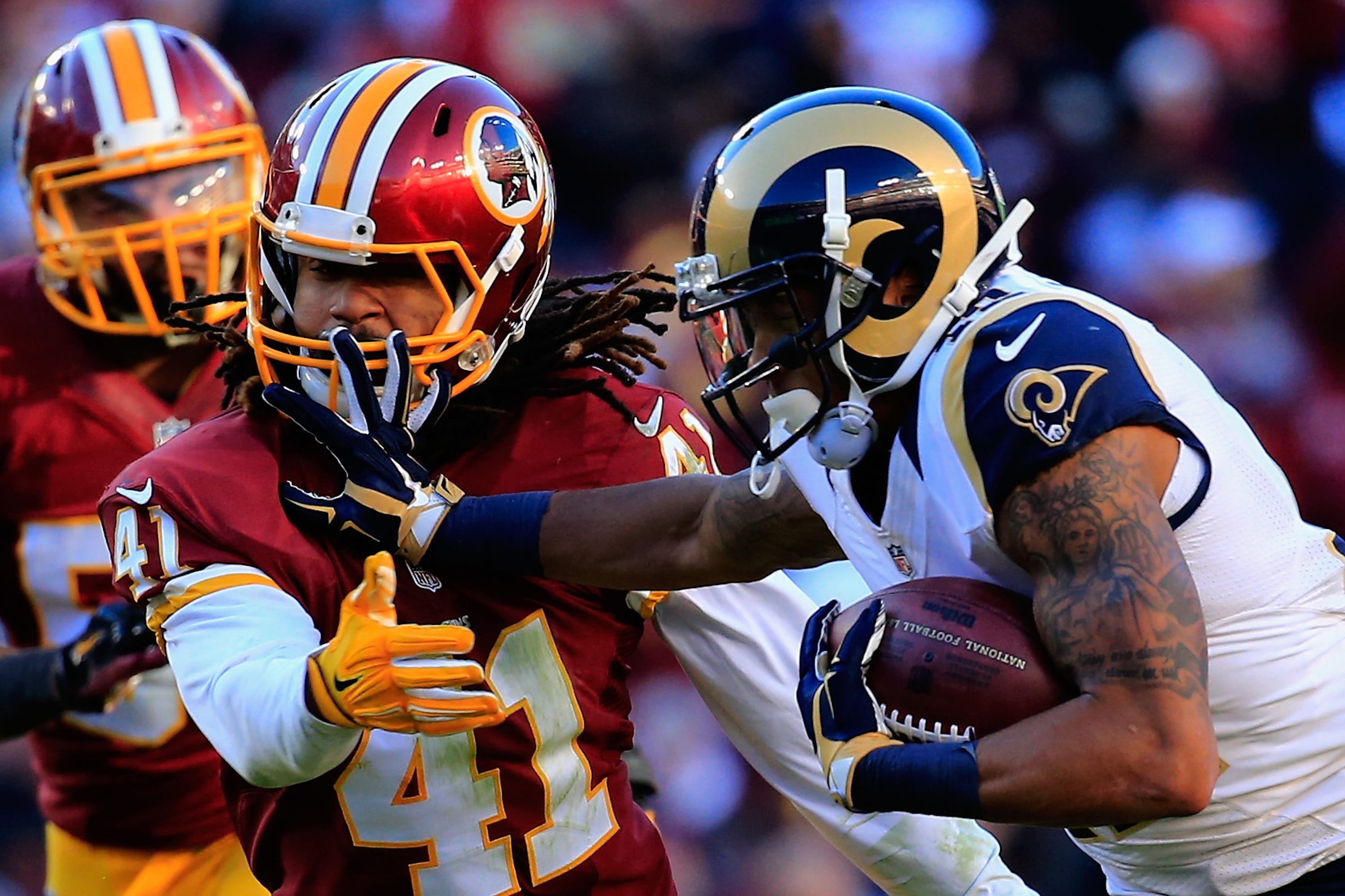
Even back then, if I recall, you didn’t have PTSD from any of this. I believe your cousin did for a while. He was sleeping with a gun, wondering: Are they coming back? Obviously his kids had to seek therapy, I’d imagine, with what they saw out of you. You were always pretty good.
Bailey: His son is now 21. Actually just celebrated his 21st birthday in April and his daughter I think might be approaching being a senior in high school. So they now live in Georgia. After that situation, they moved up to Georgia and that’s where they’ve been ever since. But just seeing them now, his oldest son AJ is 21 and knowing what we had to endure 10, 11 years ago — and seeing where they are now — gives me a lot of joy because, again, their life could have been totally different, cut short, if their Dad didn’t play a heroic role in laying on top of them.
And before any of this, you and I got a chance to speak and I told you about another kid named Ethan Pritchard who is currently a football player for Florida State University. He’s also a Florida kid. He too like myself, is a survivor of gun violence. He too was shot in the head and he’s still right now actively recovering and his situation happened sometime last year in 2025. Now he just went viral about a week ago by the words of the doctors defying the odds and being able to walk on his own. Now I found that to be just incredible because it definitely brought me back to my time, my situation of hearing a doctor say that I probably won’t be able to walk. I’m sure this kid heard the same things. And here he is, another miracle on his feet and walking and just slowly but surely progressing.
I, after being shot, was still able to walk. Actually was able to walk into the emergency room and explain what was going on with myself. So I’m really a miracle. So is this kid, Ethan. But yeah, I’m trying to reach out to Ethan to just essentially see if I could be a part of his journey and his recovery. Being a person that has gone through what he’s currently facing. I believe that I can give him so much hope that his life can get back to normal and maybe he can return back to football. I’m not sure what his mindset is or where he may be with the whole situation of even wanting to play again. But if he’s anything like me, I’m sure that he’ll still just try to push as hard as he can to get back to everything that the devil tried to take from him. I’ll just dress it up that way: taking his life, taking his joy away from him, the game of football and everything else.
So that’s something that I’m trying to do right now and pretty sure it’ll happen sometime soon. So we could look forward to that and maybe in the situation that I get ahold of him, maybe we can all jump on the pod and make it real special.
If he was here right now, what would you want to say to Ethan? What would be your message?
Bailey: Well, I would first harp on him about how much of a blessing he is to be able to overcome what he has been through. I would really try to talk to him about faith and hope that he understands there’s a higher power that is looking after him and that clearly — with him still being here on earth — he has purpose to fulfill and that I would want to help him try to go discover that as I continue to discover mine. Being two people that have been through something that’s so similar, I feel like we can do some really positive things together. But I would also tell him that he could use his story to impact a lot of people in the world. I think that essentially when we’re put here on earth, he’s a football player, but if we can impact people in a way to bring positive and help people understand that it’s a higher power, I think that that’s the job well done. So I would just try to help him understand those things and tell him to continue to push forward that if he just looks at how I am today, he can, too, get back to being a regular person and living a regular life.
It was just in the news last week out of Tallahassee: “Less than a year after being critically injured in a shooting, Florida State football player, Ethan Pritchard has taken another step forward in a 16-second video. Pritchard was seen smiling and walking without a walker, taking small steps while occasionally using chairs for support.” That’s from WCTV down in Florida. I would think there’s so much mental anguish and mental hurdles to overcome in that moment where you do have to zoom out and realize, “OK, yes, maybe the NFL, maybe millions of dollars, celebrity,” this path I was on 100 miles an hour, that’s taken from me, but I’m alive. I’ve got a larger purpose.” And that’s a transition that you made so seamlessly, so much better than former players that played for a decade and had success and won a lot of games and made Pro Bowls. You see it repeatedly — and it’s so sad — how tough it is for players to transition to everyday life. Life after football is unbelievably difficult and sadly we see players take their own life. My God, the last three, four years there’s been several.
Bailey: It’s been rough. It’s been rough. I’m human, so I do have my days. I still watch the game very closely and sometimes I’m still looking at certain players. At my age right now, I’m 35. I feel like I could still go out there and be better than some of the players that I get a chance to watch on Sundays. However, football is far behind me. So I channel the energy that I have to want to get out and still be a part of the game to, now, passing that all down to the youth. So that’s something else that I’m currently doing now. I wouldn’t really call it the coaching world, but more so like training at wide receiver. There’s a slew of talented young men down here in South Florida that just with a little bit of molding here and there and some good guidance, good leadership, mentorship, and essentially the trainer, these kids can go a very long way. So I live through some of those guys by trying to push them to be the very best version of themselves as little young kids here in South Florida.
In 2018, when we were hanging out, you were throwing around 80-pound dumbbells, you’re playing pickup hoops. I think Todd Gurley was out there at the time. You’re texting “Bones” Fassell…
Bailey: So life is still pretty much like that. I’m still in touch with Todd. Todd still lives in California. When I get a chance to go over that way, I connect with all of my former teammates and I’m thankful for the brotherhood that you get a chance to build when you are on those teams, on those rosters, in those locker rooms, the camaraderie. It goes a long way. People like Coach Bones, I genuinely love that guy to death. He’s a people person. So the love that he has for people extends much further than the game. To this day, he checks up on me, his wife, everybody.
And I want to say you were engaged with one child at that point.
Bailey: So now it’s married with three.
Everybody has come back from torn ACLs and hip surgeries and Achilles. You were serious about an NFL return at that point working out like you were with a titanium plate in your head that the doctor said is stronger than bone.
Bailey: I still have that plate. It’s still hanging on inside of my head. And that plate was added to give me an additional layer of protection over the area where I had a lot of bone destruction right here over my right eyebrow. Being able to have that in my head, I thought certainly that it should give me just the amount of protection that I need to be able to return to the game. However, I had to find out that it was too much of a risk. But from a physical standpoint, two, three years later, I was in really good shape. I was running really fast and I was ready for the game.
You went to a Marshall Pro Day?
Bailey: I went to Marshall and West Virginia. I got a chance to partake in both of those pro days and I killed them. Honestly. I did really well. Got a chance to talk to a number of teams who probably at this point, they might’ve sold me a dream. They were saying some really good things to me about just being impressed with my story and seeing where I was in that time of being present at the pro days. But being able to go back and showcase that and show the world that I did have doctors saying that I would be a vegetable, but God is the person that I feel is the author of my life. Doctors, OK. You don’t know everything. I’m proof of that.
At that point, you’re thinking of return as possible. When did you come to grips with, “OK, this isn’t a risk that a team wants to take or one I should even take here and find your next purpose in life from 2018 and 2019 on? When did you refocus?
Bailey: I got a chance to go to a neurologist out at the University of Michigan. I think they happened to be one of the top neurology practitioners in the United States. So around that time, I was trying to find the best neurologist that can scan my brain and make sure everything looks somewhat normal so that I can potentially go and play again. And when I did go to this neurologist, the tests were coming back really well. They actually took me as far as taking me on the University of Michigan’s indoor facility on the football field to run some drills for them just to see with me bouncing around, how would that essentially affect me? And they had one of their doctors — as I was trying to run around and catch passes — stand with pretty much like a pad that you could put here on your forearm. And after I caught a pass, they tried to run into me as hard as they could to see what would impact look like for me. And the impact that they had with the little bag is definitely not the same as what it would be as an NFL athlete running into me full speed. So that wasn’t necessarily realistic and that, too, was like a piece of cake. I’m just catching the balls and throwing a little flipper and moving these little guys around.
And they initially said that they were going to sign off for me to return. And then when I got a chance to leave, they sent me an email and I’m not sure if maybe they started talking to some other people and it kind of boiled down to the fact that — if they were to sign off for me and then I actually do go back and have some type of serious injury — I got lawsuits everywhere. I could go after a lot of people. So again, initially they signed: “Okay, yeah, we’re going to sign off for you to return.” And I was ecstatic about that because it’s like, “OK, it’s really about to happen.” But within a day of me going from up there at Michigan, I got an email and it was extensive of them thoroughly breaking down that there’s still, within my brain, supposedly a gray area that’s dead, that just doesn’t function.
So I’m no neurologist. That was beyond me in terms of actually understanding what does that mean for me. But at that point it’s like, “OK, well, if I can’t get them to sign off for me, then I guess I’ve got to accept the fact that it would essentially just be too dangerous for me to go.” So then I turned to look at my family and then you get to weighing those things: “Would you want to go risk?” Which at the time it’s like, “Yeah, absolutely.” But then I’ve got my family, too, who I know needs me at the end of the day. So that decision wasn’t that hard. Like, OK, I guess I can find something else to do in which I turned to go finish my degree up at West Virginia and I did that and I started to dabble into coaching for a little while. But then I was like, “Yeah, I don’t think this is for me because coaching is very time-consuming.” I thought I used to be busy as a player, but their time extends a little further for the overall preparation that goes into making sure that your players are ready. So I was like, “Yeah, I don’t think that’s the right move for me neither.”
So then I kind of jumped into the CBD world, cannabis, but just by way of trying to find myself some natural remedies that can help with things that can just be brain food for making my brain better. So I found out that CBD was pretty good and kind of got into that for a little while and just been moving along.
Like you said, you’ve got three young kids. That’s such a great decision to know right then early on in the coaching world, OK, maybe I don’t want to just stay all night at the facility and take my kids to Toy Story 5.
Bailey: Yeah, I might miss something as precious as going to see Toy Story 5. That just didn’t really make sense for me, but I know that that’s a door that I can easily step into when I’m ready. I might have to start at a lower level and work my way up, but having the name that I have within the game, it’ll help me get into some places.
I feel like that West Virginia team still has a cult following. It doesn’t matter who you talk to in the sport. Hell, here in Buffalo, Joe Brady just got the job and he remembers going to early coaching clinics and Shannon Dawson is talking there about this crazy offense that you guys had and he’s learning as much as he can about that. And then William & Mary played them the next year after you guys had left. You were doing just some pyrotechnic shit that other teams weren’t in putting up 40, 50 points a game.
Bailey: It was a whole lot of fun back then. I knew once Coach Dana Holgorsen got to Morgantown, things were about to get crazy. I checked his track record, his offensive mindset. For myself being a wide receiver, I went to go check the wide receivers and what the production was like within the offense. Justin Blackmon, a College Football Hall of Famer who played at Oklahoma State. He was amazing and he was in Coach Holgorsen’s offense that threw the ball around a whole lot. Now before Coach Holgorsen got there, we ran the offense that was ... eh. It wasn’t as fun. It was whatever. But again, I got a chance to look at the numbers of Blackmon and saw that he won the Biletnikoff trophy for best wide receiver in college football two years in a row. And then he also had two years of going for 20 touchdowns.
In my mind, seeing that come to Morgantown, I just thought to myself, “Well, 20 is a lot. But if I can get maybe a fraction of what Justin Blackmon was able to do, I should be sitting somewhere around maybe 15 touchdowns and well over 1,000 yards. And within that first year, sure enough, I went for 1,200 yards and 12 touchdowns as a redshirt sophomore and then followed up with doubling the touchdown count with 25 and 1,600 yards. Yeah, sky’s the limit. It was the limit within that offense and being able to play alongside Tavon Austin, defenses had to be honest when playing us. And therefore there were not too many double teams on me, not too many double teams on him. But if we did have those situations, we were beating that, too. So a whole lot of fun. And Coach Dawson, he’s now down here at University of Miami (Fla.) calling the plays. So I had a chance to run into him this past spring and he gave me a really big hug, very happy to see me. And I’m happy for the success he’s having too. He branched off from Coach Holgorsen and he’s looking real good and has some exciting players. Malachi Toney is a person that he says reminds him of myself just in terms of having grit being a past catcher.
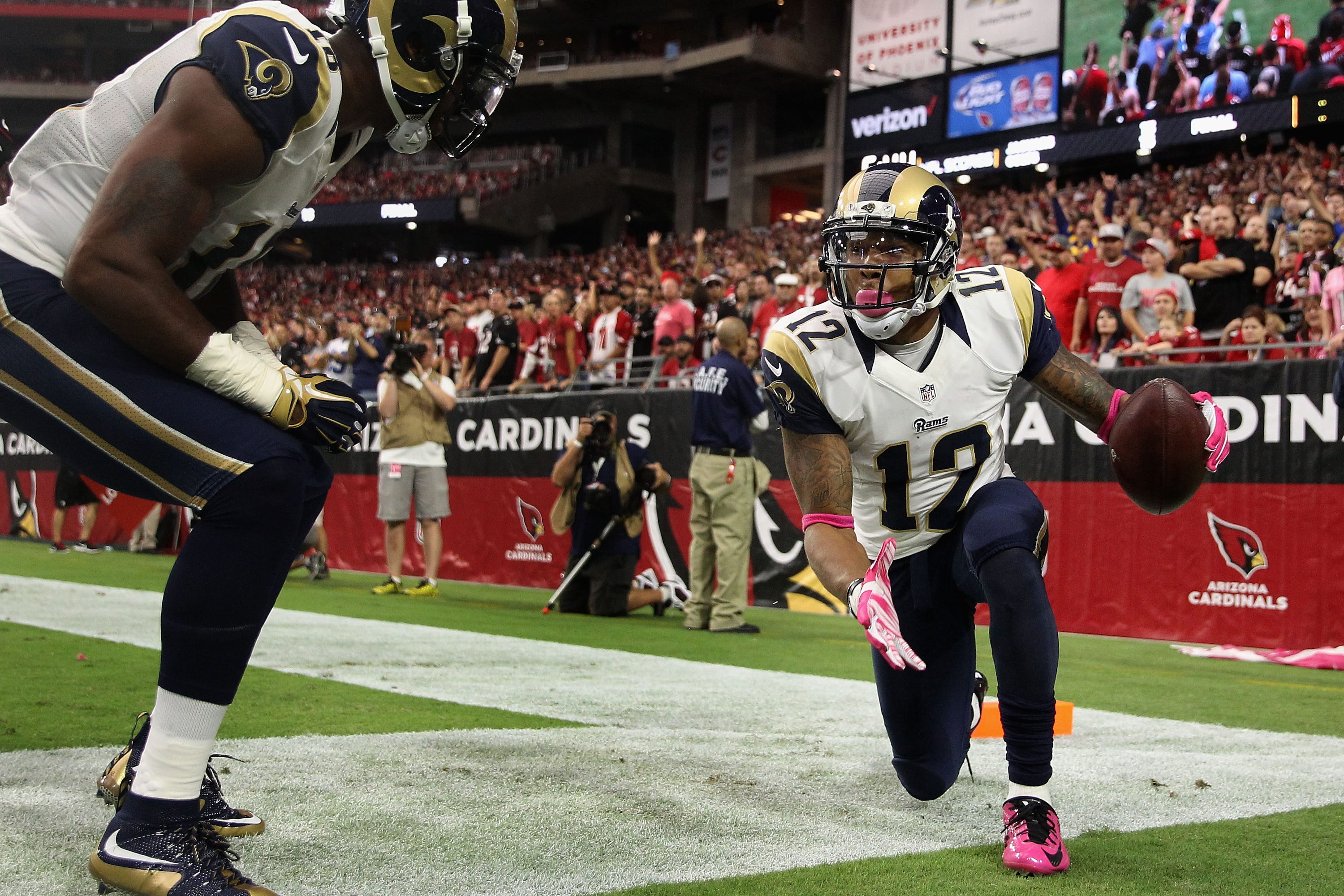
Even in the pros, that second year you were starting to come on.
Bailey: My trajectory was looking really good, man. To this day, sometimes I battle with the what-if’s because I was seeing how my trajectory was going and I’m not sure what would’ve been next, but I know as far as how I see success in the NFL, it’s always about being in the right situation. Guys like Antonio Brown who was phenomenal had one of the greatest stretches ever at wide receiver. He’s a person I grew up with and a person in the offseason I got a chance to work out with all the time. From a physicality standpoint — talent of how we run around cones and work — I didn’t really see a whole lot of differences. And he’s also somewhere around my height. So I used to remind myself to be patient when the opportunities come, obviously to capitalize on it. But moving down the line, nothing is ever concrete as a player. You can be traded, you can be moved. I just imagine that maybe if I would’ve led it with any kind of quarterback, someone like Matthew Stafford, the what-ifs eat me up. He keeps a receiver that’s over 1,000, leading the NFL. So again, the what-ifs just eat at me sometimes, but I’m just thankful that I actually even had the opportunity to go to the NFL at all. Perspective.
So what’s your day-to-day life really like, Stedman? I know you want to fight gun violence and you want to be a voice that can prevent something like this happening to somebody else in the future.
Bailey: So I work with a couple different anti-gun violence organizations where it’s essentially all about trying to dig a little deeper and go to the congresspeople of different states to try to enact laws that will ... I mean, it’s a long road. But essentially enact laws that can try to keep guns out of the hands of people who should never have them in the first place. And then you turn over to a person like myself. Victim Recovery Services. So maybe having the resources that a person like myself could turn to after going through such a tragic event, whether you need a little financial help, you need to see a therapist. It’s a wide range of things, but it’s something that I’ve been pretty passionate about because I’ve been able to meet a lot of survivors along the way and give those people hope. So it’s something that I’ve been hands-on with and then ramping up with my training stuff. So after we get off, I have to go look at my schedule to see what kids I have to interact with this week as far as that goes. And then with my son, he’s on summer break right now from school. So I spend a lot of time with him. He’s playing basketball right now, so we’ve got to go get shots up today. I’m just very, very, very present, man. Very present with the family.
And you’re a hell of a player from what I remember watching those pickup games out there in LA. A lot of football players say they can play, but you can ball.
Bailey: That’s something that I tie into when I’m working out on a regular basis, but that’s a real good form of cardio. I’m a very competitive person and it works out. Getting with some friends, a lot of guys that are my age and seeing who still has it. A good amount of us are slowing down, but I’m still rolling around.
Better than me, man. I retired about five, six years ago. I was like, “I’m worried about this Achilles popping or an ankle ligament getting damaged beyond repair.” I conceded defeat.
Bailey: I feel that. I mean, I actually had a friend on the court who, not too long ago, tore his Achilles, but he’s a guy who was never really an athlete ever. So he probably shouldn’t have been out there in the first place, but it’s a reminder that things do happen.
Really, I have no excuses. You were shot in the head and you survived and you’re playing. So I need to get off my ass and get play basketball.
Bailey: It doesn’t have to be basketball, but obviously just taking the health part of our lives is something that as we get older, we want to make sure we’re doing something because the calendar days go by. We’re all busy with day-to-day life, but we could find an hour, two hours to get the heart pumping a little bit.
You’re in the right part of the country to start a wide receiving training service.
Bailey: I’m about to get some things going, man. With the kids that I’ve been able to train so far, I can just really see myself pretty much just raising them on up as they go through high school and even when they get to the point where, OK, we’re getting scholarship offers now. Now, we’re talking NIL. Being a person who can help advise and point them in the right direction because I mean, when we talk at NIL, it’s really wild, wild west. Such a slippery slope. You want to be able to maximize everything that they can when it comes to NIL. And for the kids that I got my hands on right now, I can see them being able to have a whole lot in the future if they just stay on the right path. And that’s something that I want to help direct.
Everything that you’ve been through, how did it really make you in mind, body, and soul? Who is Stedman Bailey today in 2026? You look in the mirror and you’re proud of what you see.
Bailey: I’m Stedman Bailey, survivor of gun violence. Man of faith. I’m a husband. I’m a father. I’m a person that pushes just positive energy. Perspective. Perspective is everything. So being a person that can exude such energy that is infectious to everybody that I come in contact with and then they get a chance to learn my story, who I am and it’s like, “Wow.” They see a light and I hope that I’m living in a way that they can see Christ through me.
It’s such an important message that anybody — not just former players — should listen to. To see somebody like yourself mid- 30s, late 30s, happy with all of that behind you. Forget losing football. You lost so much more than that. Just to smile and love life is a perspective that all of us should take.
Bailey: We all need, right? A little reinforcement. I plan to do a few more podcasts where I can share my story a little bit. I’m not sure if you may be familiar with one of my former teammates. He’s running a podcast called “Raw Room.” Have you ever heard of that one on YouTube? Daren Bates, he’s one of the hosts on that show and one of my former teammates and it’s like locker room talk. So they touch on a variety of topics and really just kick it. It can be off the chain a little bit, but it’s something that I look forward to just being able to speak about it a little bit more. You mentioned the suspension for something that now everybody uses. I’ll be able to kind of touch on that and give a little bit more of my story. But I plan to join a few more podcasts and continue to let my light shine, man.
You’ve always said, too. There’s a reason that that even happened — you’re getting suspended and you can’t be around your team and you’re back home. You got to look at it that way. There is a reason for this happening and then that happening. OK, now you’re ejected from the sport. What do I do now?
Bailey: Things never really make sense when you look forward. But when you look back, it’s like, “OK, yeah.” Chronological line of events, “OK, OK, OK.” So everything is a lesson learned. I’ve definitely learned some lessons and I hold myself accountable in terms of even just the whole suspension thing, that part starts with me. But I trust God and that’s why I’m able to be content with where I am today.
Thank you so much, Stedman. You are welcome back, man. Any day, any time you want to BS, Go Long is here. Next one will be a Dad podcast to help the fellow Dads out there.
Bailey: Yeah, that’s cool. Whatever you want to touch bases on, man, I’m here for you, man. I appreciate you always. You started this off by just reflecting on the wonderful article that you put together in 2018. That’s still something that’s really a highlight for me. The way you were just able to make that thing come to life. Obviously, we sat down and I’m pretty sure I painted a really good picture, but that piece by you was awesome. I still have copies of that here at the house.
Really it was all you and your willingness. Because I think before I flew out there, we talked on the phone a few times and I wasn’t really sure if that night was something you wanted to get into. It’s so traumatizing beyond belief that I would’ve completely understood if you want to keep those details at surface level. And hell, we sat down for dinner I think the first night out there in Thousand Oaks and you dove right in. You were willing to share. And I think to this day it’s going to help people — you being so open.
Bailey: But you know what, Ty, you too, man. You’re a great person so it’s very easy to talk to you. You get a chance to rub shoulders with certain people and you might not get a great feel where you may want to go into something like that. But I appreciate you for just who you are, man. I appreciate you.
We just wish you nothing but the best. Thanks so much, Stedman.
Bailey: Alright, Ty. Catch up with you, man.
Video:
ICYMI:
'I’m back:' Jamal Lewis gets to the other side

ATLANTA — Life was spiraling. Most days, he was paralyzed by darkness. Lost. Depressed. Contemplating suicide. Jamal Lewis was in a scary place mentally the last time we hung out.