

MIAMI GARDENS, Fla. — Fear cannot enter the equation. Anyone at any weight can execute a flawless back flip. But you’ve got to trust that you won’t land on your head, break your neck and spend the rest of your life in a wheelchair. That’s why 99 percent of people attempting a back flip, he explains, stick their arms out at the last split-second.
Aaron Brewer was never scared. Growing up in Dallas, he’d flip off trucks and houses and gates with his cousins.
Eventually, he learned how to run full speed and hurl his body backward.
“Busted my ass a couple times,” Brewer says. “I was a daredevil.”
Practice made perfect. Even as he beefed up to 272 pounds as a high school senior at Dallas Skyline.
The hidden talent gave him an idea.
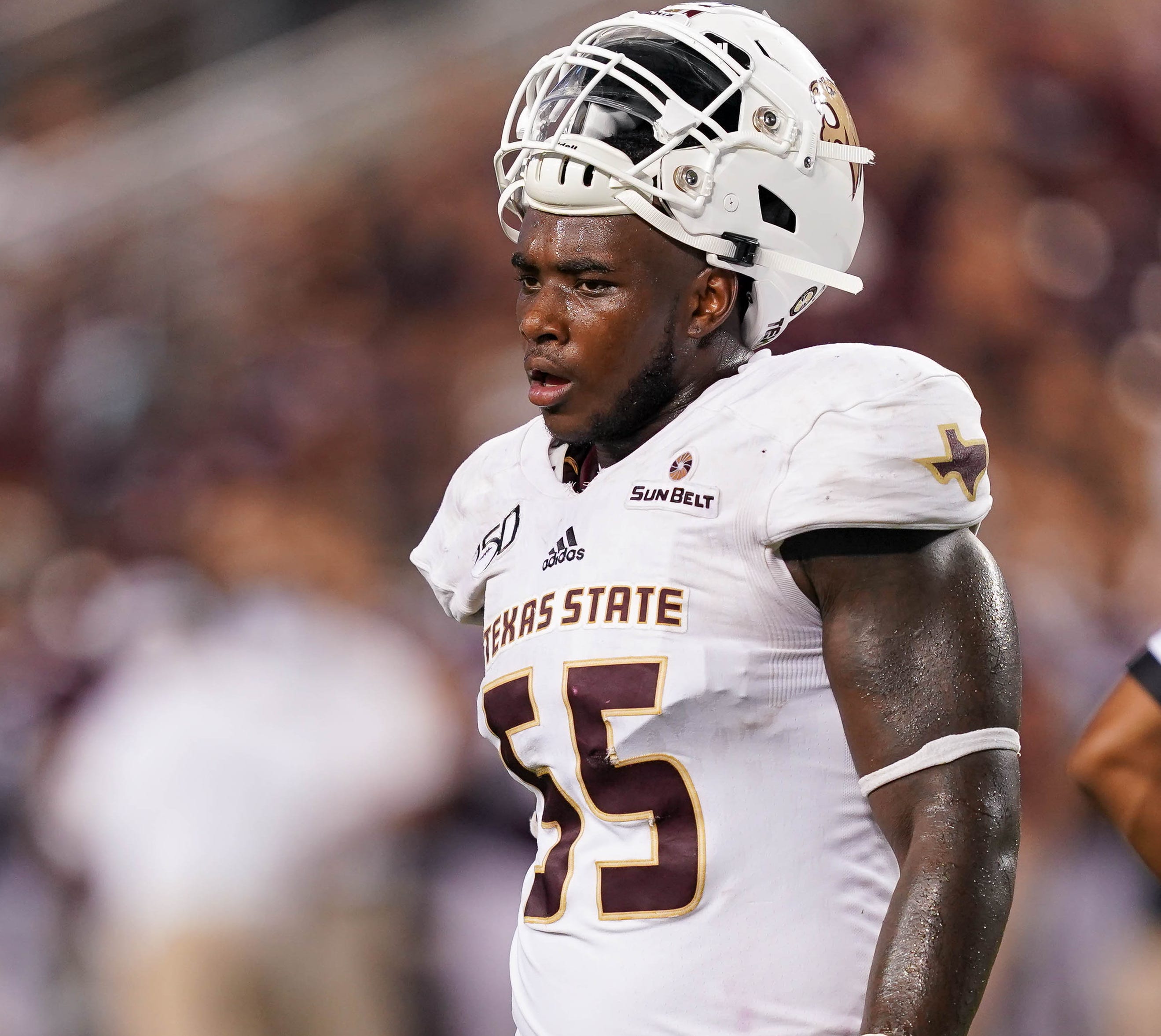
When a recruiter from Texas State’s football team stopped by his school to chat — but exited without extending an offer — Brewer had a buddy record him executing a back flip during track practice. They posted the video online. The sight of a very large kid defying gravity spread. Texas State called back to extend an offer.
The first day Brewer visited campus, coaches asked him to do a back flip seven times to confirm the stunt and his life changed forever.
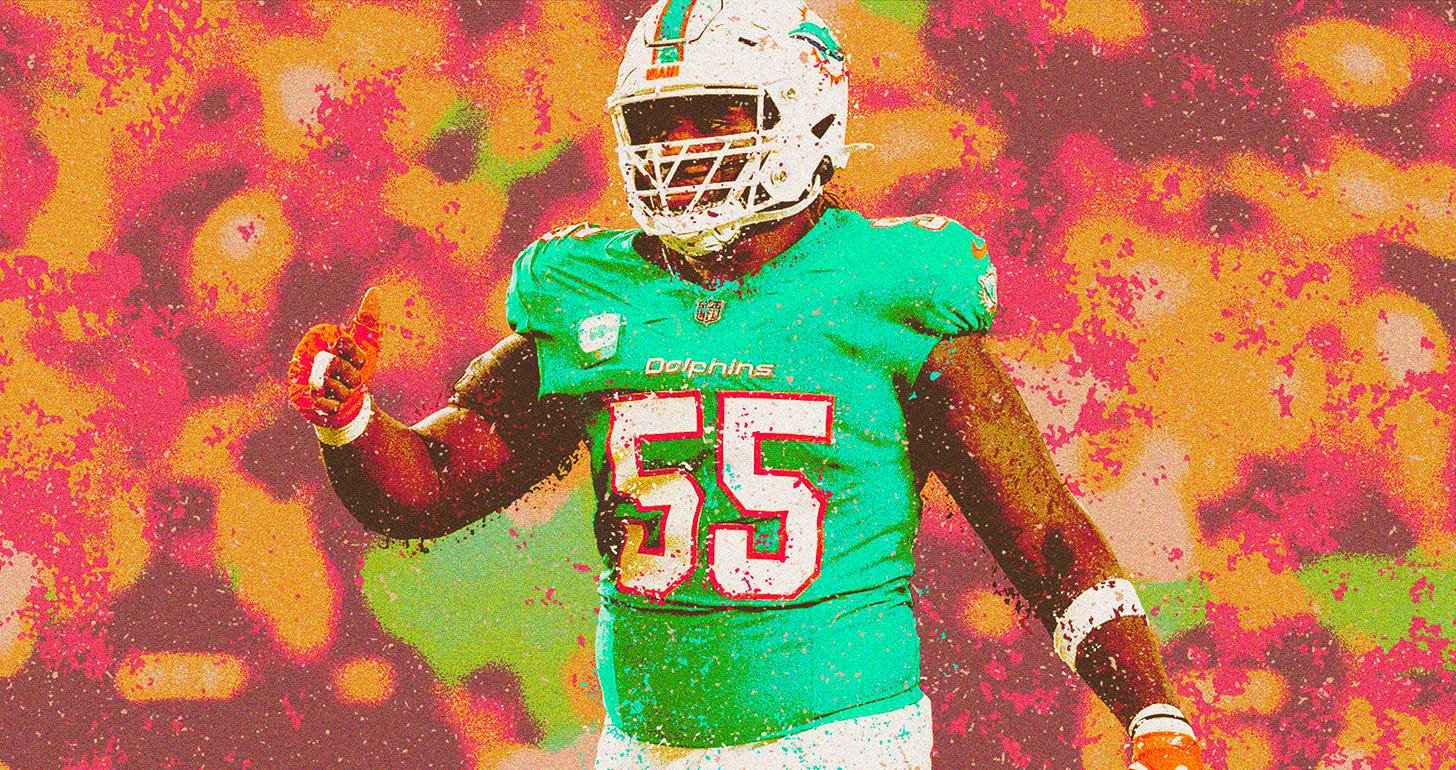
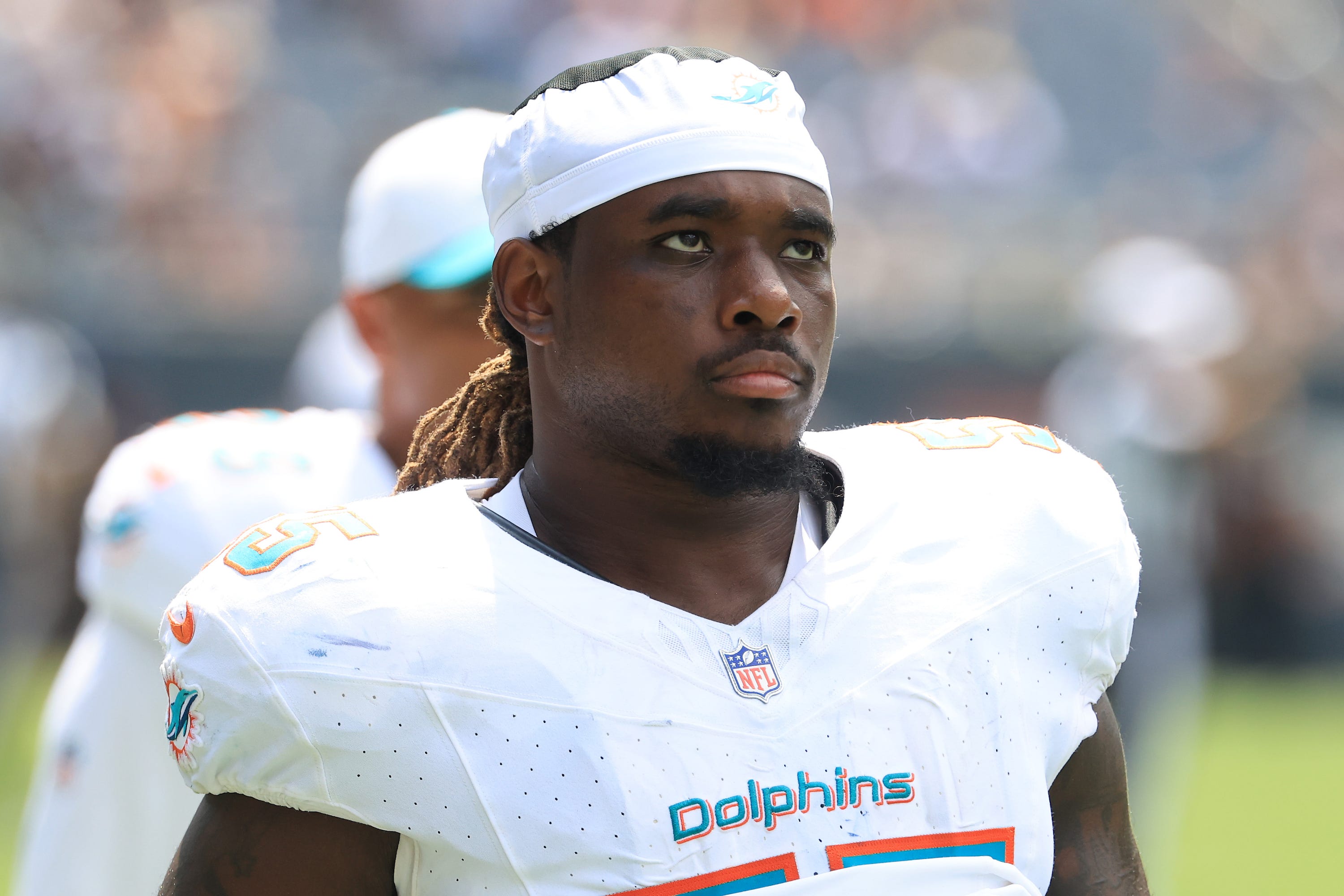
Soon, the best 2,880 football players in the world descend upon 32 training camps and exactly 1,184 of those participants will not make the 53-man roster. Camp is where droves of NFL dreams go to bake in the sun and die. Seated here at Dolphins HQ — orange tee cut at the sleeves, Jesus cross around his neck — is a man who transformed from undrafted nobody out of Texas State to All-Pro, to one of the sport’s most feared brawlers. The Miami Dolphins center asserted himself as one of the best offensive linemen in the sport last season and this new regime rewarded him with a three-year, $52.5 million contract extension. Naturally, he christened the occasion with a back flip.
His expedition explains how anyone buried on the depth chart takes charge.
From his roots in Dallas. One chilling close call could’ve swerved his life a very different, very dark direction.
To pushing his body to the point of collapse after earning that ticket to Texas State.
To one coach’s blunt challenge in college.
To NFL obliteration. All 11 defenders must train their eyes to keep No. 55 in their periphery, considering Brewer treats the field as more of a demolition derby at the county fair.
The key: He permits zero doubts — zero fear — into his subconscious.
Aaron Brewer has forever viewed himself as the baddest man on the planet.
No job in the sport demands brain and brawn quite like that of the NFL center. The man on the pivot must diagnose all pressure, snap the ball and then, a half-second later, stonewall a Sumo-sized nose tackle. Or pull. Or get to the second level to pick off a bottle-rocket nickel.
This 6-foot-2, 288-pounder credits the work first. His workouts are crucibles of pain because if you’re tired on Sundays, you’re toast. Once your cardio’s gone, you don’t think straight. Focus wanes. Technique malfunctions. “You forget everything,” Brewer explains. “You’re just trying to breathe!” Train like crazy and you think clearly. You’re the one dragging opponents into such waters where football, he assures, becomes “a game of inches.” As Brewer details how he owns those inches, he’s part Dennis Rodman explaining the art of rebounding on The Last Dance and part astrophysicist on the cosmos.
Pre-snap, he’s snapping pictures. Clues are everywhere. A safety tip-toes into a rotation to the other side. A linebacker’s leaning forward on his toes, itching to blitz. A defensive tackle’s weight is clearly swaying one direction. He’s done all the film work. Extremely large noses tend pop straight up out of his stance, which means getting paws on the chest immediately. Some prefer to shuffle with a “1-2” number sideways, which means beating them to the spot. Then, he stands up to illustrate how he shuts down Tackle-End (T-E) stunts that destroy unsuspecting lines. One look at the D-End’s feet and he knows if that end will take a 1-2 step or a longer 1-2-3-4 step inside, and he’s always able to catch ‘em.
Brewer wins before the ball is snapped.
Violence can now take over.
This day, he’s thinking of a screen pass to the running back vs. Atlanta. Dreads spilling from his helmet, he gets upfield to drill Jessie Bates and free Ollie Gordon III for a touchdown.
It’s fun de-cleating defensive backs, but he doesn’t discriminate.
“DBs, fucking D-Ends, those are the blocks you look for,” he says. “If I get like a sweet position on the nose where I know I’m finna dunk on them? A linebacker coming through, I get him on a perfect angle. I clean him up.”
He sees all moving parts. The game is now moving in “slow motion.”
There are Aaron Brewers scattered across camps this summer.
But, hell no. This did not happen overnight.
Go Long is your home for longform this season — and beyond.
Subscribers can access all stories, all podcasts, all season long.
We are fueled by you.
He got the offer. He committed to Texas State. He looked into the mirror and was repulsed by the shape that stared back at him. That day forward, Aaron Brewer didn’t so much train as test the cardiovascular limits of the human body.
“I hit a different mode,” he says. “I hit a different switch. My grind went up to a different level.”
The best place to start was fourth period. Typically, this group of Skyline seniors sat around, BS’d, hit on girls, smoked. Brewer quit it all “like cold turkey,” and it helped that two of his friends were Texas Tech-bound. He joined them for their school’s workout program and ran an extra mile. After school, he’d eat quick — a bowl of cereal or a sandwich — before heading to 24-Hour Fitness to play basketball for 3+ hours straight. Then, he’d get to the workout provided by Texas State coaches, ran another bonus mile and headed home.
Monday through Friday. With a bonus workout on Saturday and with what became known as “Want-It Wednesday.” At 4 a.m., each hump day, trainer/mentor Lawrence Hatchett and Demarquis Brooks picked up Brewer and a few others to work out. Doors were left unlocked for them to walk inside and wake up the kids who didn’t answer their phones. It was drilled into his head: Miss A.M. workouts in college? You’re in the doghouse, blacklisted, toast. For six weeks, nobody was allowed to sleep through a Want-It Wednesday. Hatchett recalls it as a “mind challenge.”
They’d start by 5 a.m. and wrap up by 6 before the first school bell rang.
Usually, they trained on a hill right behind a school in Dallas that overlooked downtown. Hatchett appreciated the symbolism.
“You’re going to go through hell,” Hatchett recalls, “but once you get to the top of the mountain, you get to see the enjoyment in everything that you get from it. … I would put him through the most brutal workouts and he would come back the next day.”
Brewer’s goal? Ditch offensive line for tight end or defensive end.
Unveil a new body and blow their minds in San Marcos, Texas.
Each night, he’d return to his family’s two-bedroom apartment — one shared by his mother, brother, aunt, aunt’s boyfriend and aunt’s son — in a state of depletion. Brewer inched into the bathroom, turned on the shower and sat there as the water fell. And if he could sense any juice in the tank at all, he’d get into the plank position to do as many push-ups as he could. Or sit-ups. Until he collapsed and fell asleep on the bathroom floor. Brewer didn’t consider the day truly successful unless he knocked himself out. The best way he can articulate this feral stage of his life is through an Eric Thomas quote. In one of his most famous speeches, the motivational speaker said: “When you want to succeed as bad as you want to breathe,” Thomas states, “then you’ll be successful.”
Adds Brewer: “If somebody holds your head under water, how bad are you going to try to come up to breathe? I took that shit literal. Twenty-four hours, seven days a week, I’m pouring into it.
“That’s when you realize how far your body can go. It’s literally all mental.”
Nobody in his immediate family played sports. Two older cousins started playing football, and he tagged along. It’s not as if anyone was ordering him to do this all. Ask why on earth he’d torture himself to Goggins extremes and he cites those two Tech-bound friends. When they made varsity, he played JV. When they received offers, his mailbox collected dust. It was frustrating. Brewer thought he was working just as hard. (“I have to change something,” he told himself.) There was also his living situation. Growing up, he bounced around the Dallas area. His aunt’s apartment was in the particularly rough neighborhood of Oak Cliff (“Bro, once when I leave here. I’m not trying to come back.”)
In all, Brewer shed 50+ pounds. Officially a 220-pound block of granite, he could not wait to unveil his new look to Texas State coaches that May of 2016.
He expected applause.
He was greeted by the exact opposite. Coaches were incensed.
They wanted an offensive lineman. Not a damn tight end. Brewer was immediately ordered to eat. And eat. And EAT. Which sounds a lot more fun in theory than it is in practice. Think about Joey Chestnutt and the gang stuffing their mouths with hot dogs on July Fourth. It’s not a festive feast. Over the next 2 ½ months, Brewer ate 10 peanut butter and jelly sandwiches a day and drank glasses of chocolate milk nonstop. “A terrible program, bro,” he laments. “I did this shit all summer.” It worked. He put on 45 pounds. Of course, it was all bad weight. By July, he couldn’t even look at a PB&J. Further, Brewer could tell there was a stigma attached to his name. On his official visit as a senior, he wore a tank top with a palm tree on it and claims the team’s strength coach, Aaron Burkhart, interpreted this as a marijuana-themed shirt. When summer workouts commenced, he was unrelenting. “Military sergeant type shit,” Brewer says, “He’s telling everybody, ‘Oh yeah, we’ve got the pot smoker of the group.’”
Ribbings didn’t last. Brewer was soon lapping other linemen during the 300-yard conditioning test and dusting seniors. He even kept pace with skill-position guys.
Into the season, he earned playing time as a freshman.
“Then,” he says, “we had a coach come into Texas State. His name was Eric Mateos.”
One handshake and the subconscious immediately makes judgements. First impressions are powerful. Of course, Eric Mateos remembers the first time he was around Aaron Brewer the spring of 2017.
Thoughts filling his head weren’t pleasant.
“A degenerate,” Mateos says. “Super immature. He had a confidence about him that was like, ‘I’m the man.’ But he was just so naive and dumb to what he really needed to do to be a good football player. … Young and dumb. It’s really that simple.”
Where the kid grew up, he knew, was no cakewalk. (“You’ve got to be a little rough around the edges to come through that school system.”) Brewer kept showing up on the coach’s “list” for skipping classes, remained stubborn about his weight and did not seem to care much for Mateos’ ban on tank tops inside the dining hall. The coach told all his linemen to wear damn sleeves because nobody enjoys armpit hair in their food. Brewer continued to show off the guns. Mateos started to wonder if all Brewer owned in his closet were tank tops.
But Brewer wasn’t getting arrested, wasn’t doing anything unsavory or illegal.
To the core, he was a player who enjoyed smashing fools on the field. Mateos knew they shared the same passion for the sport. The coach was only 27 years old himself and jokes that he didn’t know what in the hell he was doing. Yet, as a GA with Arkansas, he was around center Frank Ragnow… a first-round pick and future three-time All Pro. Then, with LSU, he coached center Ethan Pocic… a second-round pick now entering Year 10. He knew what NFL talent looked like. Brewer had it. So, during their exit interview that spring, he laid out reality in the purist of terms.
The “list guys,” Mateos told him, do not go pro.
The choice was binary. Buy in, and you’ll be in the NFL. Mateos informed Brewer that he possessed more talent than Ragnow and Pocic.
“Getting him to believe that it was a real thing, not just some pipe dream,” says Mateos, who’s now the O-Line coach at Wisconsin. “Texas State was a losing program at the time. When I got there, it was Loserville and we had a guy who wasn’t a loser. He refused to lose.”
All offensive line coaches are black sheep in a society hyper-focused on emotional sensitivities. Nothing is sugarcoated because they understand football — especially in the trenches — remains one of the last remaining bastions of legalized violence. Mateos quotes Liam Neeson’s character in Taken. O-Line coaches, he says, require “a unique set of skills.” You’re managing egos. You’ve got to be tough without being “too much of a dick” or else guys won’t trust you. The balancing act is constant. Above all, you’ve got to demand perfection from your best players.
That’s where the two connected.
Brewer has a Grade-A bullshit meter. He’s always trying to figure out who’s real, who’s full of it. After one quizzical, Are you full of shit? Squint of the eyes, Brewer embraced Mateos’ message. Deep down, he harbored a desire to be the best player on the field. Mateos fed this wild side. Looking back, he chuckles. Most players chose Texas State to party first, play football second. And here was Brewer, a player whose expectations were “on a whole other planet.”
Brewer credits Mateos for teaching him everything about the sport. All X’s and O’s. How to read defenses. How to understand offensive personnel, motions, formations. Up to this point? “I’m just playing off just fucking grit,” he admits. “Fucking see somebody, go hit ‘em.” Mateos taught him the game and — most importantly — made him believe the NFL was real. Quickly, Brewer expanded his vision board. He didn’t compare himself to anyone in the Sun Belt Conference. Brewer stacked his game up vs. the best linemen across all of college football. To him, it wasn’t delusional. Mateos brings up a 40-31 win over Georgia State in 2018. One screen pass, he laid out two players at once. Brewer was the best player on the field.
Says Mateos: “I was like, ‘Holy shit, this dude is not normal.’”
Opportunities at facing top competition were scant. In a 35-7 loss to the Big Ten’s Rutgers, he maimed whatever was in front of him. (“We weren’t any good,” adds Mateos, “but I mean, he whooped everybody’s ass that they had.”)
The high-schooler passing out in the bathroom lived with zero contingency plans.
Make the NFL… or bust.
Become one of the most feared players in the NFL… or bust.
Mateos told Brewer to walk and talk and think like the greatest player who has ever lived. He took it to heart.
“He’s like The Terminator. He can’t be killed,” Mateos says. “He’s just going to keep moving forward and getting better and better and better. He fights complacency. At the end of the day, he likes to do pushups and wear tank tops and be the tough ass kid from South Dallas. The fact that he’s never changed who he is has helped him. Because once he believes, once he saw himself as an NFL player, there’s never been a Plan B. He refuses for it to go any other way.”
As the 2020 draft closed in, however, a strange thing happened.
NFL teams only saw “6 foot 2” and “Texas State.” They didn’t bother getting to know the man. The only phone call Mateos received from anyone in the pros was from Carmen Bricillo, an O-Line coach with the New England Patriots. Two-hundred and fifty-five selections came and went without Brewer’s name being called. Eight centers and 17 guards were selected in all.
The Tennessee Titans signed him as an undrafted free agent and back to the dregs he plummeted. From afar, Mateos knew that Brewer still viewed himself as the best lineman on the Titans roster. It’s how he’s wired. Not easy when your new offensive line coach is kicking your ass. The relationship between Player and Coach did a 180-degree turn in the pros. Brewer recalls Titans assistant Keith Carter threatening to ship him home, saying things like “You can go start selling insurance!” and “Go back to your hometown, go sell paint!”
Says Brewer: “My O-Line coach used to talk to me crazy every day.”
Into Year 2, he tore his pec. He was now the worst kind of damaged goods.
NFL teams are typically in no rush to stay patient with undrafted players who are injured. And undersized. And from a small school. Aaron Brewer could’ve — perhaps, should have — viewed himself as damaged goods. Yet, it’s in these defining moments, he instead thinks back to the roots of his mentality.
To growing up in Dallas, to all close calls.
One in particular.
Close your eyes to bring this imagery to life and, no doubt, it’s jarring. But in the moment, nothing about day-to-day life in South Dallas felt abnormal. That’s what strikes Aaron Brewer as an adult.
“You don’t know what you don’t know,” Brewer says. “Growing up in that atmosphere, it was different. I grew up around crackheads, trap houses, violence.”
Twelve to 15 family members sardined into his great grandmother’s house. Across the street, he explains, was a trap house. He’s seen SWAT team members knock on doors. He’s seen people shot in the street.
“I’ve seen,” he continues, “the motherfucking cartel cut peoples’ heads off. … Head sitting on the street.” (Thankfully, he did not know anyone involved.)
Like endless pros who rose from sketchy neighborhoods — Damar Hamlin, Azeez Al-Shaair, David Long Jr., Ray Davis, Javon Bullard — Brewer doesn’t want people getting the wrong impression. It’s a delicate balance. He dozed off to the soundtrack of gunshots killing people at night. Not an ocean breeze, not country crickets. But this childhood also hardened him in the best ways. He lived all over Dallas, primarily on Park Road, while his great grandmother resided in Oak Cliff. All men and all women in his life, he emphasizes, were tough. “My great-grandmother, bro?” Brewer says. “You talk to anyone in my family, she was a fucking gangster.” Understandably, she slept on the couch near the front door with a .38 tucked under her pillow. Great granny cussed like a sailor, too. Whoever walked into her home stumbled right into a Netflix-style roasting.
All in good fun. She was beloved, a neighborhood fixture right up to her death at age 94.
Meanwhile, with friends, Brewer got into more fights than he could count.
All of it — he’s certain — forged this zero-fear mindset.
“That chip, that grit, that aggressiveness I play with,” he says. “It comes from being in that environment.”
He also realizes how swiftly his life could’ve come crashing down at age 13.
One day in 2011, two of his 14-year-old cousins rode a train to the NorthPark Center Mall to shoplift at Dick’s Sporting Goods. They then rode it back and four boys in all, ages 12 to 14, decided to steal a stranger’s iPod. Nineteen-year-old Octavius Lanier was simply on his way to a medical appointment when he was harassed, attacked and shoved into a moving Dallas Area Rapid Transit (DART) train. Lanier’s body became lodged between the train and the platform and was fatally dragged for several yards.
He was 19. The entire scene was captured on surveillance footage.
Brewer still remembers police coming to his school to investigate. Instantly, his cousins were the top story in local and national news. The sentences for the four boys ranged from 7 to 30 years behind bars. Both cousins got out after only four years, before then violating their probation with a string of armed robberies through Dallas. They’re back behind bars.
A visible chill passes through Brewer’s body. That exact day in 2011, he wanted to join his cousins. He was living in the Lancaster area about 22 miles south.
Mom refused to take him to the train station. Son has no clue where he’d be in life otherwise.
No way he’s sitting here inside an NFL building.
“I was supposed to be there with them,” Brewer says, “but I wasn’t there that day. That was wake-up call.
“It should have been over with. Little incidents like that are in the back of my mind. I don’t really think about them, but once I really get the thinking about the path? This shit is not normal, bro.”
Mom’s intuition saved him that day. But it would’ve been remarkably easy for Brewer to descend into the streets with how much both parents worked. He avoided it entirely by staying active. Football, basketball, baseball, track, wrestling, chess club, even ballroom dancing. As a fifth-grader, Brewer mastered the Rumba, Waltz, Tango, Foxtrot and Swing. The key, he explains, is loose hips.
When Hatchett picked up Brewer for those Want-It Wednesdays, he saw family members scattered everywhere.
Throughout the week, the trainer would text motivational messages: You can change your environment. Brewer never made excuses. And on drop-offs, other kids would ask Hatchett to leave them a block or two down the street. Years later, he learned that known drug houses were raided nearby. Brewer, universally respected, was shielded from all pitfalls. Gang members didn’t mess with him. He was going places. Mateos, again, is blunt. Considering football is a violent endeavor, it doesn’t hurt to have a grown-ass man who grew up throwing hands like Brewer. “You can’t have any milk-drinkers on the O-Line,” he says. “They’ve got to be beer-drinkers.”
Mateos calls him a “quiet killer,” with the snarl of a character on the crime drama, Snowfall.
“He doesn’t take any shit from people and he’s really reliable, but he’s right on that edge,” the coach adds. “He could have gone down a different path and been the best gangster in America. That’s who he is because he’s just a winner.”
Brewer stayed on the straight and narrow. He realizes his case is rare.
At age 12, 13, 14, he explains, you see everyone working at Family Dollar, McDonald’s and don’t realize other jobs exist. Careers. “So a lot of my friends, everybody,” Brewer adds, “wants to be fucking gangsters, OGs. That wasn’t my path. I wanted to see more of the world.” A vision sharpened through those ghastly sights in the street, the incarceration of his cousins, right to Texas State and the NFL. That’s why he’s so determined to unleash the imagination of kids trapped in the cycle.
Brewer recently donated $25,000 to the Future Leaders Program, the organization that picked him up on Tuesdays and Thursdays and took him to a nicer part of Dallas. At charter schools and private schools, he was introduced to totally different classes that opened his eyes to a world beyond the hood. Brewer plans on bringing 5 to 10 students from South Dallas out to South Florida to tour Miami University, Florida International and attend a Dolphins training camp practice. He’ll get kids into a game, too. Brewer didn’t even attend his first NFL game until he was in the NFL. On IR as a rookie, in 2020, he used his allotted complimentary ticket to attend a Titans-Bills game in primetime. His mind was blown by the energy inside Nissan Stadium. Fireworks blared. Derrick Henry stiff-armed Josh Norman. Throughout the Titans’ 42-16 win, he felt “like a kid in a candy store.”
He knows what this ecstasy could do to a 13-year-old, back in South Dallas, who thinks his only choice is to sling drugs or flip burgers.
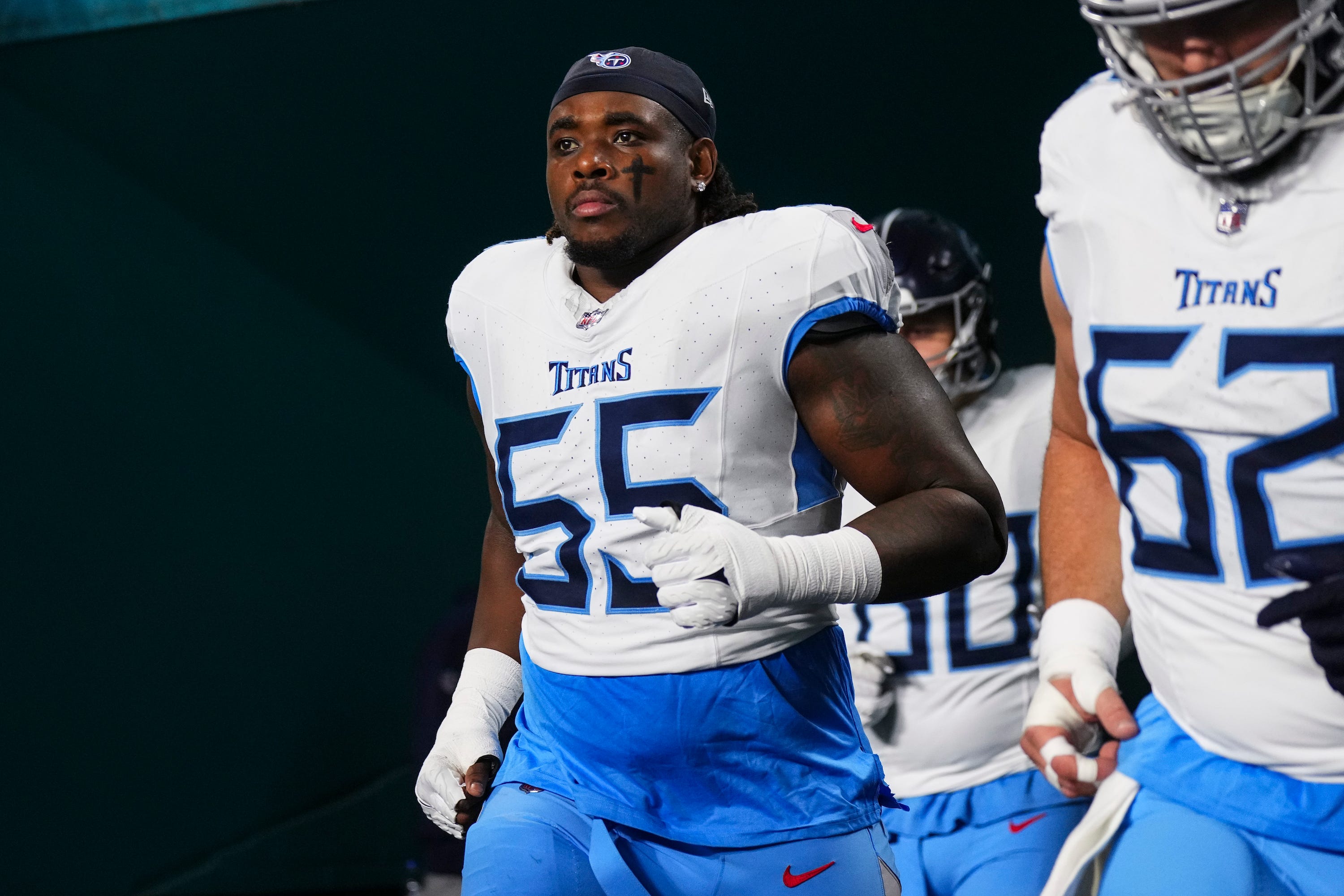
So why get discouraged? His NFL career crumbling, that belief — I’m the baddest MF’er on the field — never waned. Even as Carter ripped him. Even as he tore his pectoral the spring into his second season. Through rehab, he started to see why so many players retire after significant injuries. It’s taxing. It’s lonely. Doubt can creep in when everyone walks right by you each day. He missed a slew of practices, yet rallied in time to crack the 53 again.
“Only thing I can do is control my response,” Brewer says. “Everything else? If this team wants to let me go, I can’t do anything about that. I’m hurt. I can’t fast forward this injury to make it get better faster. All I can do is my PT, go home, eat how I supposed to, do little things I’m able to control to heal my injury faster. But thinking about the outcomes — ‘Am I going to be good when I do this?’ — that’s only going to drive you crazy. That’s anxiety.”
In Year 1, he played 152 snaps. In Year 2, that number jumped to 507.
He learned from veteran Ben Jones. Told himself, again, I’m going to be one of the best in league. The next year, Brewer started all year at left guard. Finally, in Year 4, he settled in as the starting center. Around this time, he called Mateos livid. He hated the state of pass pro and knew he needed his old coach’s magic touch. Mateos was coaching for Baylor at the time, so Brewer asked if he could hop in a car and travel 95 miles to Waco for a 1-on-1 session. Together, they solved his issues. Such tales are in high supply. Whenever he’s back in the Dallas area, Brewer texts Hatchett on Friday nights to get extra workouts in. “My wife is like, ‘You’re not going to no club or anything,’” Hatchett says. “I’m like, ‘No, I’m going to go work out with Aaron.’”
These days, the duo know to stick to 288 pounds.
When I suggest to Brewer that playing below 300 helps him get to the second level to take on linebackers, he cuts in. A sore spot has been identified.
“I dunked some of the biggest nose guards you’ve seen in the league,” Brewer says. “They don’t say shit about when fucking big ass Tristan Wirfs gets hump-moved by Khalil Mack. They ain’t saying, ‘Oh, he’s too little.’ He’s not too little. It just happened. It’s the league. It doesn’t matter how big you are or how small you are.”
There’s the spunk, the sharp edge.
The way Brewer has always felt about himself has become an on-field reality with the Miami Dolphins.
Each gameday, on three separate occasions, he takes the time to pray. Given his rise, it’s no surprise Aaron Brewer has simultaneously experienced a spiritual awakening. Avoiding that train in 2011. One backflip in 2015. One college coach’s challenge in 2017. This summer’s life-changing contract extension. All of it fills him with gratitude. He calls himself a Child of God. He cites Jesus Christ as his “ultimate why.” He views this relationship as the same as a husband shares with his wife.
“It’s a forever task,” Brewer says. “It doesn’t just stop. Once you get to a certain point and say, ‘I’m five years in, I’m good,’ that shit starts going south.”
This is no athlete defaulting into cliché autopilot. Brewer practices exactly what is preached.
He reads, journals, prays, engages Dolphins teammates in endless faith-based sauna conversation.
Then, to begin each week, he fasts.
At around 8 p.m. on Sunday night, he’ll polish off dinner and swear off food for the next 24 to 36 hours. Not one crumb is consumed. Only water. Some weeks, he’ll eat again on Monday night. Other weeks, he’ll wait until Tuesday morning. He isn’t doing this for any physical benefits. Brewer believes fasting builds up the “spiritual armor” he needs each week. He points to Jesus gaining full clarity after fasting for 40 days and 40 nights.
That’s how he feels. When his gut is clogged, his mind is clogged. When his gut is cleared, he thinks clearly and makes better decisions.
Each time, he essentially hits a refresh button on life.
A new perspective sets in. There’s no reason to bitch about anything.
“If Jesus was able to do this for 40 days, 40 nights, and he was able to carry a 300-pound cross on his back, me fasting for a day, I have no room to complain,” Brewer says. “There’s so many people that go through things so much worse, but it’s easy to get caught up in your own world. There are people across the country. So many people less fortunate than us who deal with everyday struggles. But we only focus on us, so we think our problems are the worst in the world.
“There’s someone always going through something 10 times, 20 times worse than what we’re going through. I keep that on the forefront of my mind and in my heart.”
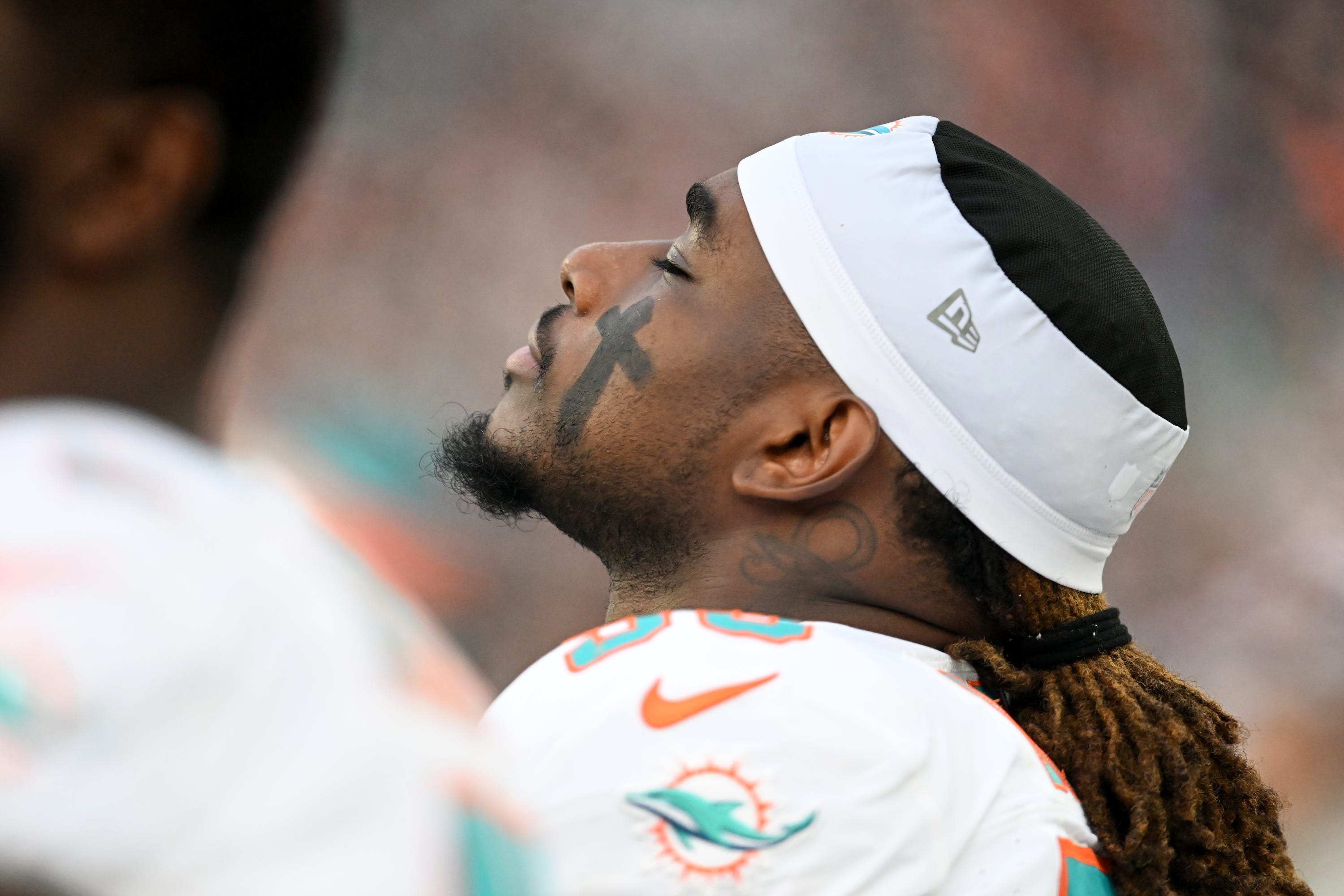
Brewer thrives by staying honest with himself. Fall asleep in meetings. Refuse to put in extra hours. Slack off, at any point, and the league spits you out. He’s seen it. The line between making millions of dollars and unemployment is so visible. Too many players, he says, cannot verbally admit, This is why I’m in the UFL or This is why I’m in the CFL or This is why I’m out of football. They’re allergic to accountability and don’t see the light until they’re long gone.
A perfect segue into these Dolphins.
Ask if exactly that — accountability — was an issue for this team last season and Brewer starts chuckling. As if I asked if the sky is blue.
A teammate can only do so much.
At some point, you’ve got to man up for your own actions.
“You have to hold yourself accountable,” Brewer explains. “Anybody can push you to do anything. But if you’re not going to do it yourself? It’s not going to happen.
“That’s the piece we’re missing. When you’ve got a bunch of older guys on the team, it’s easy for them to be stuck in their own ways and not easy for them to buy into something new. Or get out of their own way. I’m not a believer of ‘Do as I say, not as I do.’ Walk how you talk. Show by actions. That’s the biggest thing we all need to do coming into this year if we want this to be a successful program. Not just a successful year. For a successful program for years long to come. You’ve got to be comfortable with being uncomfortable.’”
Nobody can force you to give a shit. Brewer will train like that 17-year-old back in South Dallas, and it’s on others to do the same. Oh, he’ll speak up. He knows from experience that all it takes is one inspirational message. Eric Thomas’ words “hit a trigger” inside of him.
He’s confident the Dolphins finally have the correct leaders in place. Go Long will have more on this transformation soon.
Once his fasting is complete, Brewer feasts on all 11 defenders. Amid Miami’s malaise, he was one one of six finalists for the NFL’s inaugural Protector of the Year award. Don’t ask how he emerged out of nowhere. He’s no one-hit wonder. Brewer studies centers of all ages — Jason Kelce, Creed Humphrey, Zach Frazier — and believes he’s only now hitting his stride. Hit play and he’s more 90s fullback in space, pancaking defenders at all three levels. One Colts nose tackle is drilled into the turf. Proud linebackers Zaire Franklin and Quincy Williams aren’t blocked. Rather, humiliated ass over teakettle. Safety Jaylinn Hawkins, that poor sap, never sees the destruction coming.
“Shit is dangerous,” he says. “You saw the tape. It’s crazy.”
Footage that everyone close to Brewer’s seen forever. Hatchett directs us to Brewer wiping out a cornerback 15 to 20 yards away from the play on his high school Hudl reel. “As a lineman,” he adds, “you’re not supposed to make that play.” He sees Kelce, only much more athletic.
Hatchett knows Brewer’s antennae is still up, scanning for doubters who claim he’s too light.
“He can go down,” Hatchett says, “as the best center that’s ever played the game.”
When vet Jordyn Brooks told him how linebackers must react to the linemen, it was music to Brewer’s ears. Everything’s slowing down for him. He knows if the call’s an outside zone, that linebacker must take an extra hop-hop. All he needs to blast through his face. Nobody’s expecting a thing out of Miami in 2026, but this offense does boast two electric weapons in Malik Willis and De’Von Achane. Get these two harmonizing RPOs and linebackers may need to take three… or four… or five extra hops to decrypt what’s going on in the backfield.
Brewer is bullish on his new QB1, a former teammate in Nashville. There’s the human who gave a homeless person his NFL Combine attire, oblivious to the fact that his act of kindness was being recorded. Brewer cites everything Willis endured, Auburn to Liberty to Nashville to Green Bay. “He’s been at it forever,” Brewer begins, “and he’s so strong-willed.” Then there’s the dual-threat weapon who’s been dying for the chance to lead a team. This is a moment the two have discussed for years.
“For him to finally get this opportunity to be full time? That shit’s scary,” Brewer says. “It’s scary for the league because bro is an athlete. He’s got an arm. He can run. He’s got the full package. I’m one of his biggest fans. I’m so excited to see him play this year and ball out.”
With that, he lays out his goals for the Dolphins.
He wants to win a Super Bowl.
He wants the defense to lead the NFL in takeaways and the offense to finish in the top 5 of most statistical categories. Personally, he expects to go All Pro again, make the Pro Bowl and earn another “Protector of the Year” nomination. But he wants company. His plan is for another O-Lineman to earn the same accolades. “Two of us, if not more. If all five of us can do it, fuck it, let’s do it.”
After football, he’ll get into public speaking in addition to all philanthropy and investing plans. He’ll share his story — “a piece of me” — to help anyone overcome adversity because he’s proof that one message, one backflip can change a life. Until then, he’s a testament to all NFL players on the fringes. There’s no secret sauce to this UDFA-to-All Pro metamorphosis. He never quit believing in himself, never quit working and will keep on displacing 300-pound men against their will. Brewer vows to be an open book inside this Miami locker room.
If anyone has a question, they know where to find him.
Granted, it’s not necessarily an orator teammates need.
Imagining the scene at a Dolphins practice, his old college coach pauses for a moment.
“It’s easy to follow the guy,” Eric Mateos says, “that you know would kick everybody’s ass.”
We travel the country to sit down with NFL players and bring you pro football in its realest, rawest form.
Thank you for growing our community.
Go Long subscribers can hang out with former players around the NFL. Miss our latest Happy Hour on Zoom? Here’s the Eric Wood Replay:
Helluva story. Love it when the underdog rises into the top dog.
I love the fire of UDFAs! Great story!