

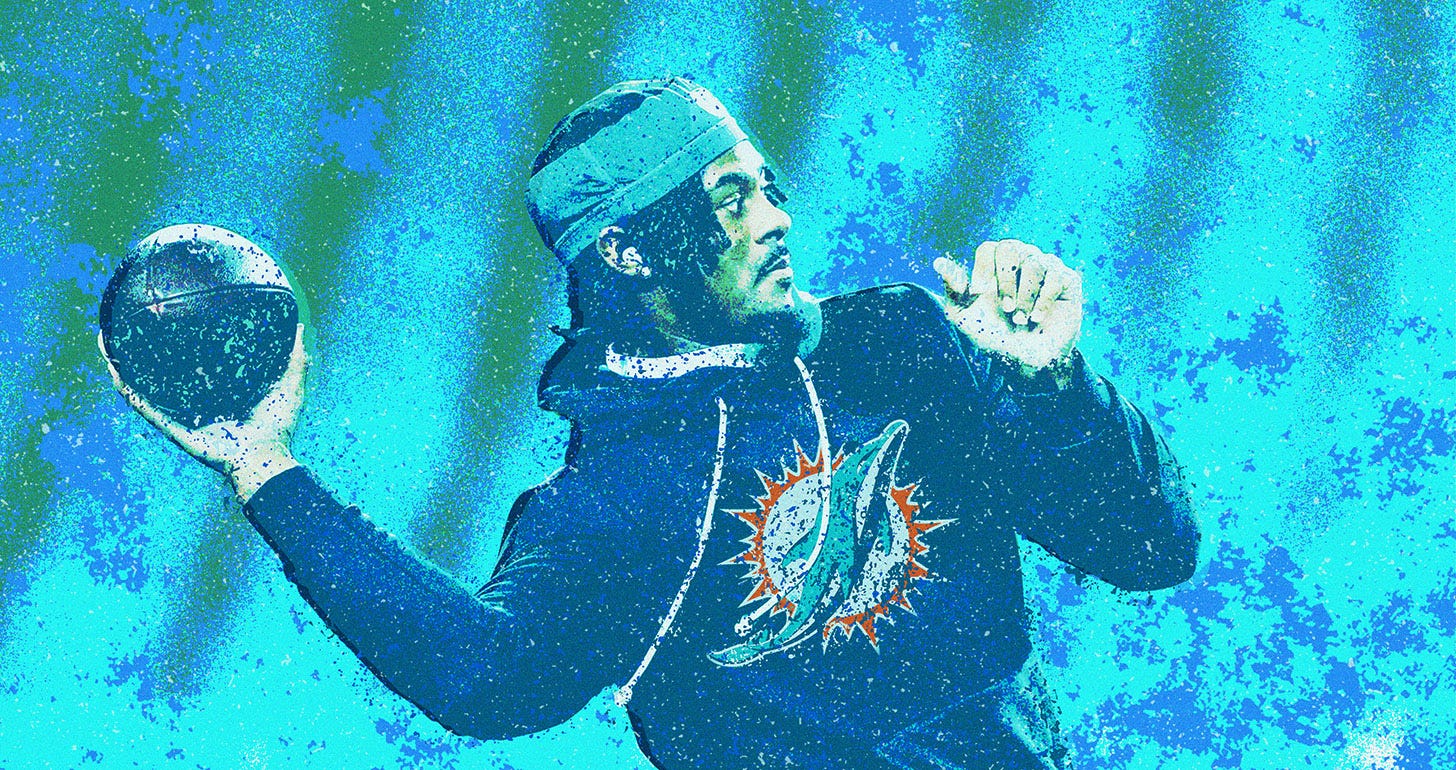
The NFL career of Malik Willis appeared finished almost immediately.
He was drafted 86th overall in 2022. He struggled throwing the ball with those Tennessee Titans as a rookie. The Titans drafted another quarterback. Soon enough, he was shipped north for a seventh-round pick.
Now, this offseason, Willis represents one of the sport’s greatest redemption stories. The quarterback inked a three-year, $67 million contract to be the next starting quarterback of the Miami Dolphins. He’ll now try to lead this franchise to its first playoff win in 26 years. Auburn to Liberty to Tennessee to Green Bay to — now — Miami, this has been quite a quarterback odyssey.
How did he get to this point? What comes next?
To learn more, Go Long chatted at length with the man who knows Willis’ game best: Sean McEvoy of Quarterback Takeover.
McEvoy has been working with Willis since his senior year of high school in 2016 and explains exactly how he got here.
The keys to an NFL franchise are now his.
Topics covered include:
Being overlooked at Auburn. How did Willis handle the snub?
Breaking out at Liberty.
Draft Weekend. It was wildly disappointing for everyone, but Willis’ demeanor shocked family and friends. (“Malik was the one picking up the room.”)
In another universe — if Willis isn’t thrust into action as a rookie — what happens? Mike Vrabel had a developmental plan.
Whenever he did get overlooked, Willis’ response has been the same. He doesn’t play victim or smite the football gods. (“The situations he went through would’ve completely ruined guys. And that’s not just hypothetical. … They quit altogether.”)
The moment everything clicked in the pros? He was still a Titan.
Willis was dynamite in 1 1/2 games last season. McEvoy explains why he believes that version of Willis is here to stay through the course of a 17-game season. (“That’s who he is. You’re just going to see that multiply out.”)
Everyone saw Willis give his NFL Combine gear to a homeless woman who was also pregnant. He doesn’t do this stuff for the cameras. McEvoy has witnessed this scene many times.
Jon-Eric Sullivan is the new Dolphins GM. Jeff Hafley is the head coach. Malik Willis is the QB. None of this is an accident. (“The people that have been around him have no doubt of what he is and what he will be going forward.”)
Our wide-ranging Q&A below.
You know Malik Willis better than anyone. When did you first start working with Malik? How did you develop that relationship?
McEvoy: Yeah, so it was going into his senior year of high school. His head coach at Roswell High School. So he was at Westlake in Georgia where Cam Newton went to school, AJ Terrell, a bunch of those guys. So AJ and Malik were teammates at Westlake, but then he transferred to Roswell for his senior year. And this was where he was fully going to make the transition to quarterback. Because at Westlake, he was playing some wide receiver, playing some QB as well, kind of wherever they needed him. Just being an athlete. He was going to make the transition over to Roswell for his senior year and play quarterback. And the head coach, John Ford, was the head coach at Roswell. He knew me really well. I had trained some of his other quarterbacks and he made the connection.
What did you see in Malik way back then?
McEvoy: It was the talent, the flashes. You very rarely get these guys that can run 4.3 and just have a whippiness to their arm talent. But very raw. Very inconsistent.
Never really had been a full-time quarterback and never really had done much training at that position. At the time he already had a Georgia Tech and a Virginia Tech offer as an “athlete.” They’re like, “Let’s just bring him in. We don’t know if he’s going to play DB or wide receiver or whatever.” But just from a skillset and an athleticism, you knew he was a Division I player. So obviously right out of the game, it was “Alright, how can we start to be more consistent as a passer? Can we just have better footwork, have better base and balance, start to find some consistency in our mechanics? Can we just be repeatable? Can we just throw the same way every time to simplify it?” So that was the beginning of a journey that really never stopped.
For the last 11 years, we’ve just been continuing to get even more consistent and repeatable and efficient with our mechanics. And could we even be better with our base and balance and stability and footwork? And then when it came to the footwork he was going to be asked to do in college vs. what he needed to do to be successful in the NFL, it was being better with all the different problems that were going to be created at that next level. So it’s so funny as we talk about the beginning and then like, “Hey, what are we working on right now?” so much of it is just the same types of things.
At Auburn, in 2017 and ‘18, he was backing up Jarrett Stidham.
McEvoy: Jarrett came in as a transfer as Malik came in there as a freshman. So they were more or less in the same recruiting class. But obviously Jarrett was a couple years older after coming from Baylor and then having that year off in-between.
Then, Gus Malzahn gets Bo Nix in there and Malik enters the portal.
McEvoy: 100 percent. So the first two years of Jarrett, Malik was the backup. He was QB2 behind Jarrett just trying to learn the system a little bit. He got a chance to get some garbage time. And it was kind of funny because even then, he ripped off a couple 70-yard zone read runs and had a couple flash highlights as a freshman. But yeah, it was just part of trying to learn, trying to put himself in position. And obviously the hope was that once Jarrett left — going into what would be Malik’s junior year — because this was back before the four-game redshirt rule. So if you played one play, that was your year. So he hadn’t redshirted yet for those first two.
Going into what was going to be Malik’s junior year, that was Bo’s freshman year in that recruiting class.
And so obviously Malik thought he was positioned well and they made a different decision. To Coach Malzahn’s credit, he was very open and honest with Malik and told Malik what his thought process was at the end of that spring season, which allowed Malik to get into the portal and find a home. Early. And then obviously the Malzahn-Hugh Freeze relationship came into play quite a bit. And I think Freeze was very confident in taking a chance on a guy who didn’t have much film, but was at least able to get enough information from Auburn that he felt like it was a guy who could potentially fit what they wanted to do there.
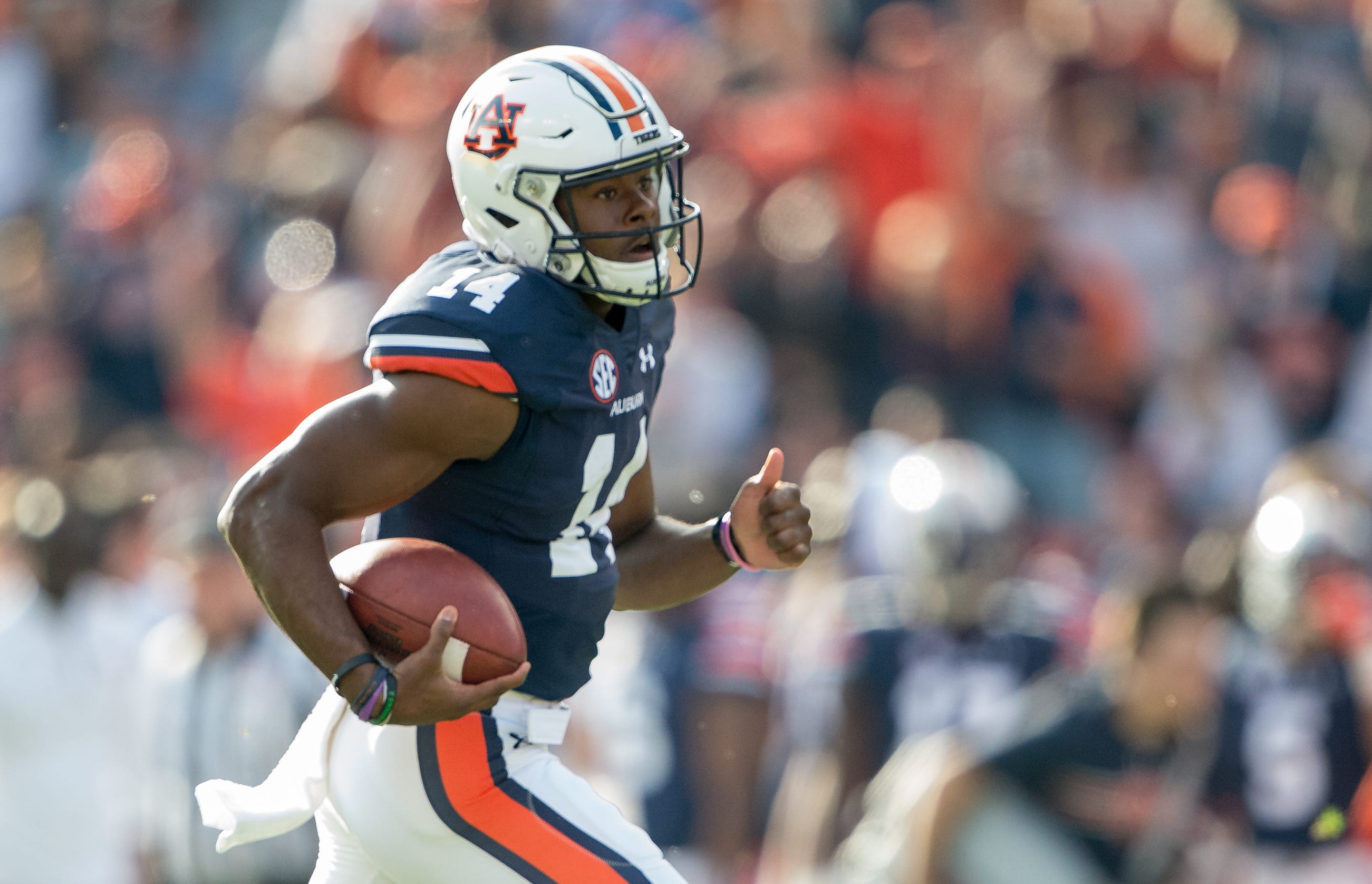
The theme of Malik Willis’ football life is believing in yourself when there’s another quarterback brought in, a coach who believes in somebody else. So right then — early on — how did he handle all of that on a personal level?
McEvoy: Obviously, it’s frustrating. There’s times where it’s unfortunate. Things didn’t work out the way that you thought you had positioned yourself. You felt like you were taking the necessary steps and preparing and getting better to be able to earn that next opportunity. And then it didn’t happen. What Malik’s always done well, he’s really good at taking accountability. He never fell into the trap of, “I got screwed here! This isn’t fair!” All those things that sometimes it’s easy to fall into. Even the people around him — myself included — wanted to have my mind go there. But it was always, “What could I have done better? How could I have put myself in a position where it didn’t go this way? What do I need to focus on and work on so, that the next time, I am the guy who wins the job? Or when I get the opportunity, I’m more successful than I was last time.” That was always his mindset.
At that point — when he’s leaving Auburn — what did Malik identify as, “This is what I have to work on right now to improve.”
McEvoy: Consistency. Day-in and day-out, how he carried himself as a leader, as a QB1. Being the same person every day. From a mechanic standpoint, being a consistent passer. Being able to execute the offense on time and in the way that the coach wanted to see it run. Those were all things that were still new to him even going into his third year of college. He was still learning a college offense, learning a new system, and being able to play with — not just on time — but with anticipation in the pass game was really the main focus for him.
At Liberty, he had to sit out a whole year. That feels like ages ago.
McEvoy: Exactly right. Doesn’t it feel like we’re going into the history books 20 years ago — remember back when you couldn’t just play right away? Remember the good ‘ol days? It was funny because this was the time where Justin Fields got the waiver and Tate Martell got the waiver. All these other high-profile quarterbacks were able to find a way to get the waiver to play right away. And I laugh because I literally think Malik was the last guy who ever had to sit out. Everybody else got a waiver and his didn’t come through or he didn’t have enough of a reason to ... yeah. So, he went Liberty. The good news was that he hadn’t used his redshirt yet. Because he was the primary backup the first two years of Auburn. And so that third year, he was able to use his redshirt and still preserve, at the time, two years of eligibility. Because of COVID, it actually ended up being three. So talk about another crazy time there. So yeah, he sat down a year. Which was good, I think. A tough year for him personally where it’s like now you don’t even get to try to contribute. You don’t even get to try to get on the field. But he could reset, spend the year really just focused on his development, focused on learning a new offense, focused on getting to be the quarterback that Hugh Freeze was looking for. Reset is the right word. Reset and refocus on “How can I get myself prepared for what’s next?”
It couldn’t have been easy to sit out and wait… and wait… and wait that long.
McEvoy: He’ll tell you that was probably the toughest year of the last 11. That was the year where if self-doubt was ever going to creep in — “Can I do this? What’s next for me?” — that’s where it would have caught him. And once again, to his credit, he’s very good at staying centered. Very good at being self-aware of, “This is what I can do, this is what I am, this is what I haven’t done well enough yet. This is where I need to focus more time and preparation into.” And then he’s always been able to rely on his faith. Anybody who’s been around Malik or just has heard Malik speak knows he’s so faith centered. In these moments, that’s where it became so vital to him. He had that to fall on when times got tough.
I’m going to sound like a middle-aged curmudgeony, bald man here, but that’s a lost art: a 19-, 20-year-old being who’s willing to look in the mirror, especially as a quarterback and say, “OK, this is what I still have to work on.” So many of these guys are surrounded by yes-men, yes-women and NIL money. Enablers. There probably aren’t many Malik Willises who are staring into the mirror like he is at that point.
McEvoy: 100 percent. I think the situations he went through would’ve completely ruined guys. And that’s not just hypothetical. I can think of eight guys who went through similar things and never made it. They quit altogether or stopped working hard or fell into all the different traps along this journey that are easy to fall into.
Not that you’re going to drop names, but you’re seeing that up close with quarterbacks?
McEvoy: 100 percent. He’d tell you that his faith and his family is what pulled him through. They’ve always been very tight-knit. Not just his parents and his brother and sister, but his grandparents and his aunts and uncles. They’re very, very as close-knit of a family as I’ve ever been around. And that support system, I’m a small part of that as well. From continuing to help instill confidence in him when things didn’t feel like they were going to go the way we thought they were supposed to. But that’s what pulled him through for sure.
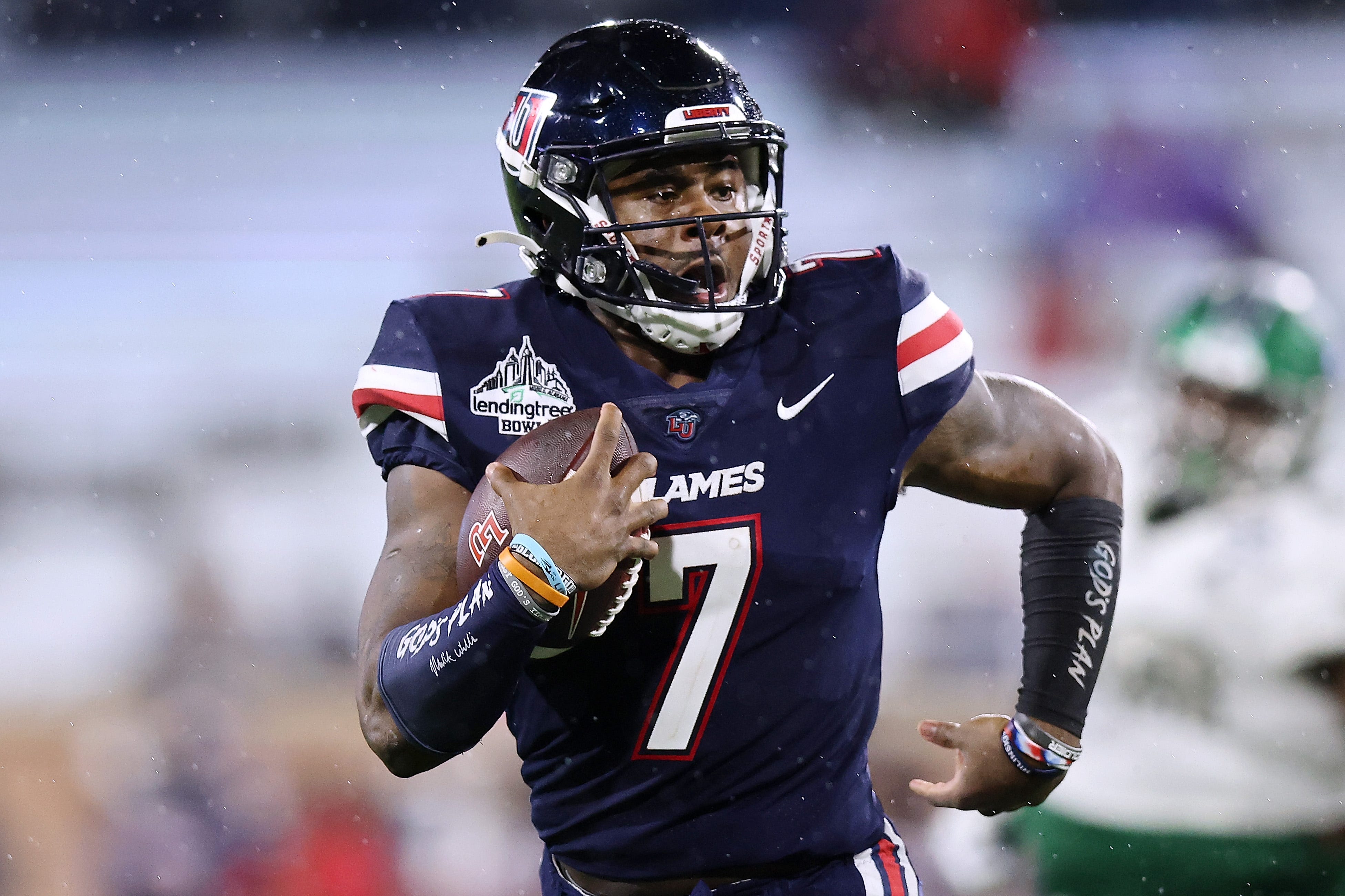
And then how did things really take off? How did he put himself on the NFL map at Liberty?
McEvoy: The simple explanation is he got on the field. He got to go play. The opportunity that he felt he was ready for, and prepared for, couldn’t happen until a coach decided to let him be QB. He fit what Hugh wanted to do. He fit a lot what Hugh needed him to do. Because of the situation they were in at Liberty — they had just transitioned from an FCS school up to FBS and that first year him starting, they got Virginia Tech on the schedule in Blacksburg. They got Syracuse on the schedule at the Carrier Dome. They play NC State. They’ve got all these ACC schools on the schedule and they’re a second-year FBS program. That means that three-quarters of your team went there as an FCS recruit. Now, they’re juniors. But they weren’t big-time FBS recruits coming out of high school.
So having a guy that was able to make some plays off-schedule, out of structure when you had to be the best player on the field allowed him some freedom and some creativity within that offense. For a play-caller — when you don’t have to always have the right answer or the right play call and it’s third and 6 and my QB just makes a play and we get the first down — I think that was a really good mesh of what Hugh was willing to let the quarterback do and what Malik was able to do. Malik will also tell you Hugh Freeze had total confidence in Malik Willis and that piece was what he hadn’t had to that point. If you’re talking about Liberty, Kent Austin is another name that’s very crucial here, too. Because Kent was the quarterback coach and the OC. He was there at Auburn with Hugh the last couple years as well. Kent Austin was another one who had played quarterback, played the position, saw the field through the eyes of a QB, which has always been something that Malik has enjoyed.
They were behind him. And because of what Liberty needed him to be, he was able to show quite a bit. It wasn’t always on time. It wasn’t always like, “How does this translate to the next level?” But it was certainly wow stuff all over the field. Every week. And then he obviously was able to go beat Virginia Tech in overtime and go beat Syracuse and put up really good numbers and statistics. Especially that first year in 2020 for a team that had no expectations and people that didn’t know who Malik Willis was, he was able to jump on the map pretty quick there as they ended up beating Coastal Carolina. They’re in the bowl game and finished 11-1 and finished as a top 15 team in the country that year.
Malik tore Syracuse up twice.
McEvoy: The team success wasn’t as good as senior year but I think he actually made some personal growth from his game play. You saw him play more on time and a little bit more efficient that second year, continuing to showcase all of his abilities. He’s super proud of that two-year run and what he was able to accomplish there at Liberty.
He did it differently than everybody else. You’re talking about a guy who was obviously the leading passer, but he was also every bit the leading rusher every single week. He was the one-man offensive show. He obviously he had a young DeMario Douglas, and then he had a young CJ Daniels as a freshman. So there were some guys that we later on found out were NFL players, too. But it didn’t seem like there was much around him and he was able to play a high level.
The entire NFL couldn’t really figure out what they had in Malik Willis. By then, there were quarterbacks with his 0-to-60 rushing ability, his acceleration and the strong arm. Lamar Jackson was winning MVPs. But his unique rise to Liberty might’ve confused NFL people. From what you could tell, how were scouts and coaches in the NFL world deciphering everything that Malik was doing at Liberty?
McEvoy: The things that really worked for him were the traits. Anybody who was around him, watched his film, obviously saw him at the Senior Bowl or the Combine were like, “OK, super strong arm. Super quick, fast, athletic.” The high-end traits, those boxes were able to be checked. There was nobody discounting those pieces. Which you could start comparing. OK, there were other guys that had that kind of athleticism like a Lamar. This kind of a strong arm like a Josh Allen, or whatever. You can try to make those comparisons. The hard part was always going to be: How do we compare what he did at Liberty, a non-Power 4 school against some of the competition they played with the exception of those five or six ACC or the Ole Miss game? How does it translate? Plus, how does Hugh Freeze’s offense — very college-level, very RPO-based — translate? It was very, “Hey, Malik, go make play.”
That’s where a lot of NFL teams struggled the most to wrap their head around it. How does this translate to the next level?
Now that being said, we had just done Trey Lance’s draft prep the year before. So they figured out how Trey Lance — as an FCS QB — was supposed to translate to the NFL. Zach Wilson, in 2020, I would argue, didn’t play as well as Malik had against a lot of those same teams. That Coastal Carolina team beat BYU that year, that was the team Liberty and Malik beat in their bowl game. And that was a year because of COVID where BYU did not play a single Power 4 team. They played a group of five and an FCS schedule. Liberty was one of the few because they were independent, who did find those.
So I was like, “OK, they were able to figure it out for Zach Wilson. He went No. 2. FCS Trey Lance, they were able to figure it out. He went No. 3.” We had Jalen Hurts a couple years before. I’ve seen Jalen Hurts throw. I’ve seen Malik throw. Similar skillset. But Malik, from an arm talent standpoint — obviously Jalen Hurts is 1 of 1 in a lot of places — but from an athleticism and arm strength standpoint, very similar players. Built. Everything else. Justin Fields is a guy we’ve trained for years. In our minds, you could make the comparisons to similar traits or similar styles of play or say this guy also played at a smaller school. When you’re trying to make the comparisons — at least in our world — Malik stacked up really well with some of those other guys who the NFL had no problem figuring out.
When you really think about it, Zach Wilson goes two. Trey Lance goes three. I remember Coastal beat Wilson up that game. They had that player jamming his head into the turf.
McEvoy: That’s exactly right. After the play. And to be fair, what Trey Lance had going for him was a very pro-style offense at NDSU. So the common thing was the smaller school and the not-great competition. But they had the pro-style offense you could wrap your head around. But I wouldn’t make that case for Zach. I didn’t think BYU was much more NFL-style. Maybe 2021 was the year they took the chances on those guys. And then by 2022, they’re like, “Never again.” Obviously, he didn’t show up to the draft on Night One thinking he wasn’t going to get picked in the first round. The information we were getting from the people who normally know this the best seemed like there was enough interest there where he was going to have a chance to go possibly really high, and at the very least at the end of the first round.
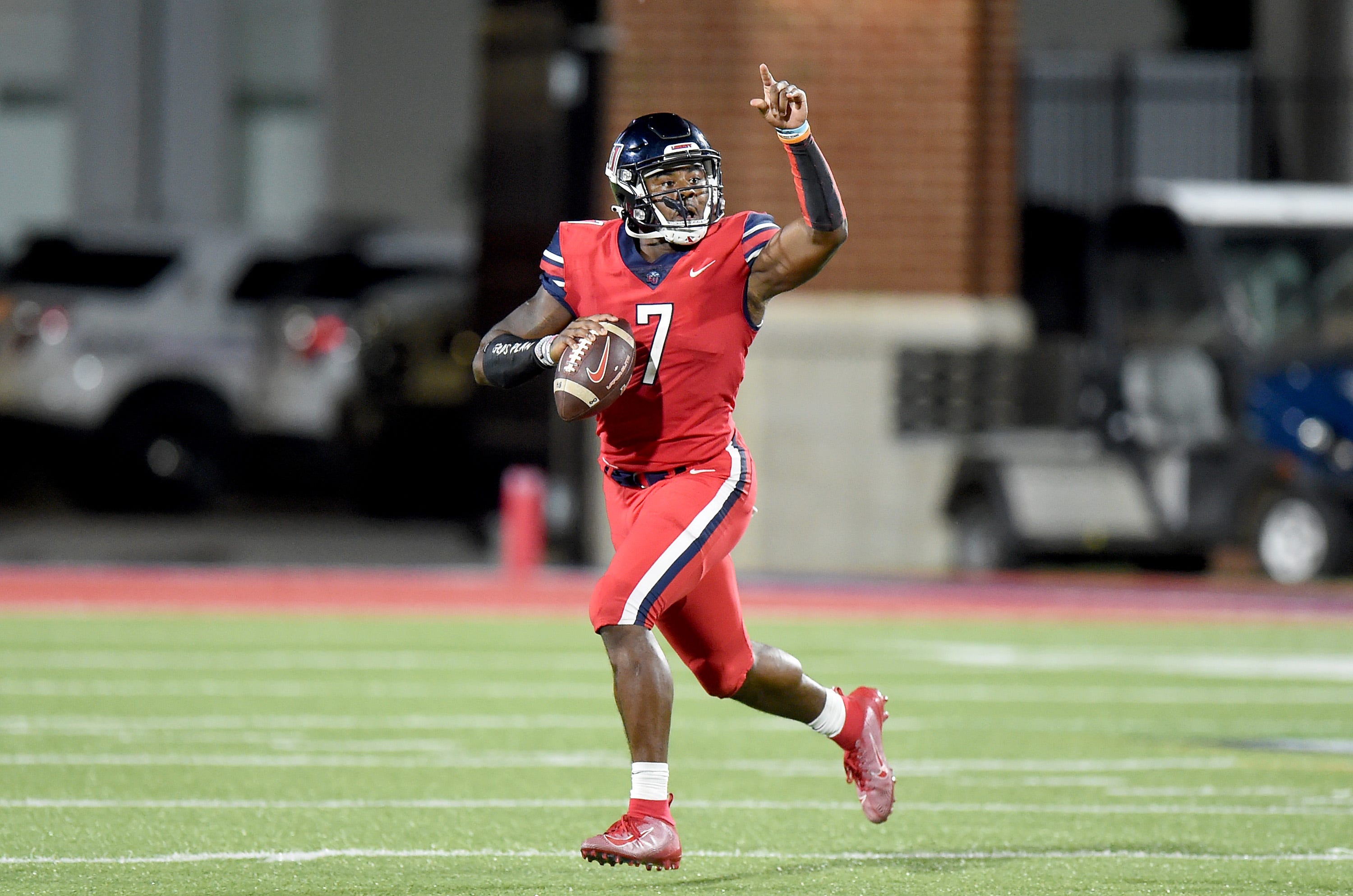
Where did you guys think he was going?
McEvoy: Pittsburgh was that one spot where it was like, “OK, Pittsburgh at 20. They’re going to take a quarterback. It’s either going to be Malik or Kenny Pickett.” And a lot of the belief at that point was that they liked Malik more than Kenny. Or at least some people in the organization liked Malik more than Kenny.
Obviously that was wrong. It’s easy to look back in hindsight. And then there was Carolina was at six and Detroit was at two. But if Aidan Hutchinson goes one and they don’t like Travon Walker, do they go QB way too early? There were all these potential things out there. We didn’t know what Atlanta was going to do. They were going to be a team that we knew needed quarterback at some point. And then obviously if, somehow, he slips past Pittsburgh, does a team trade into the end of the first and get the fifth-year option? By then, pretty much everyone had Malik mocked in the top 20. So if he somehow was still there at 28 — if I’m Indy at the top of the second round — do I come in at the end and try to get Malik? We thought all those things were on the table.
What is going through Malik Willis’ mind? Because it’s not just mock drafts. He’s hearing from these coaches. He’s hearing from these teams.
McEvoy: That’s exactly right. It felt like he made good connections and made good impressions. It’s a learning experience for everybody who goes through that process, but these teams are trying to keep their options open as well. And it might get to a point where teams tell three different guys, “Hey, if you’re there when we pick, you’re our guy.” Because if they only said that to one guy and that guy was gone, then what happened? So they’re trying to keep their options open, too. The way it’s communicated leaves a little bit of a blind spot.
Pittsburgh’s the team that — even to this offseason — sort of blows my mind. I don’t understand why they wouldn’t be doing everything in their power back in ‘22, obviously, but also this offseason to blow Malik away with an offer. That seemed like a perfect situation. On draft night, he waits and waits and is finally drafted. Were you with him on draft day? How did he react?
McEvoy: Yeah, we were there in the building in Vegas, in the draft room. And you obviously go home a little disappointed on Night One. But once again, Malik was the one picking up the room in the moment of what should have been frustration. Or “what the heck’s going on” or even embarrassment in a weird way. He was the one with the biggest smile on his face. He was the one who was like, “My dream’s going to come true tomorrow now instead of today.” That will always stand out. He was literally the one raising morale that night.
Now, we roll to Day Two. Which we thought we were going to be lone gone. Quincy (Avery) and I had both been there the year before with Trey. He got picked three. We were out of there in 20 minutes. Now, you’re into Day Two and they did a thing at Brooklyn Bowl in Vegas. Everybody, all the family and friends that had come to Vegas to celebrate from the night before just rolled into Day Two. And even that, we’re thinking, “OK, he didn’t go Round 1. This is going to be what, the first pick of Round 2?” Maybe Indy who didn’t have a first-round pick is going to figure out their successor (for Matt Ryan).
That was a team looking for their next quarterback to take over. This was the year before they ended up taking Anthony Richardson. So you knew that quarterback was on their mind. And then everybody came back around, “Hey, Detroit’s back around! Remember?” Pittsburgh already took their QB, but Atlanta’s still around. Tennessee’s still around. And then Round 2 came and went. Once again, it’s another moment where things didn’t work out the way everyone thought they were going to. But Malik had become resolved to that. He’d been through that. It was no different than when he thought he was going to be the starter at Auburn and it didn’t work out that way. And then he thought he was going to get to go play right away at Liberty and he had to sit a year.
It’s staying tempered and relying on his support system and his faith. Round 3 comes along and Tennessee made the call. He was ecstatic, happy, thrilled, elated. His dream came true. He didn’t care if it was the No. 1 pick overall on the first night or Round 3 at that point. He was just happy to get the opportunity to go play in the NFL.
You’re not kidding. As you’re talking here, I pulled it up on YouTube. You’re talking to him at a bowling alley. He’s all smiles. He gets picked and there’s legit tears of joy. He’s not in the fetal position in the corner, pissed off at the world. It’s the exact opposite.
McEvoy: Not just faking it or putting on a show. He is super excited. For a kid who one day dreamt of getting to be a quarterback in the NFL, he got to realize that dream and that was all that mattered. All he wanted was the opportunity.
Guilty as charged, like the rest of the world. After it didn’t work out with the Titans, I forgot about him. Wrote him off. He seemed good as gone. We caught up briefly at those joint practices with the Vikings and Titans his second year. There was a confidence to his demeanor. He said: “I know the plays, that’s the biggest difference, literally. They think he’s ‘trash.’ No, I just needed to learn the offense.” You could see he was still so centered right then.
McEvoy: A funny day that you picked out because he was the talk of that joint practice with the Vikings. Will Levis was in there. They were kind of competing for the backup job, which Malik ultimately won going into the year. But that Vikings joint practice was when I think he showed a lot of people. And we know Kevin O’Connell pretty well through the years. He made a mark. He opened some eyes there that shared that same belief as you: “We don’t know what this guy is.” That was between the first and second year of Tennessee. People think he got to Green Bay and suddenly became good. There’s a lot of people around Tennessee — especially that last offseason before he got traded — that were like, “Hey, you could clearly see it coming together for him.” And it was just a matter of when was he going to get on the field again? Because no one had seen him since those three games when he very clearly wasn’t ready to play. And this is back to him always taking accountability. It wasn’t like, “Oh, I got thrown in there. I didn’t get reps at practice. I didn’t get any first-team reps.” No, it was just, “Ah, man, I’ve got to see that faster. In my footwork, I have to be set to my first progression on the last step of the drop so I’m able to get that ball out on time.” Unfortunately, it took a little while until he got that next opportunity.
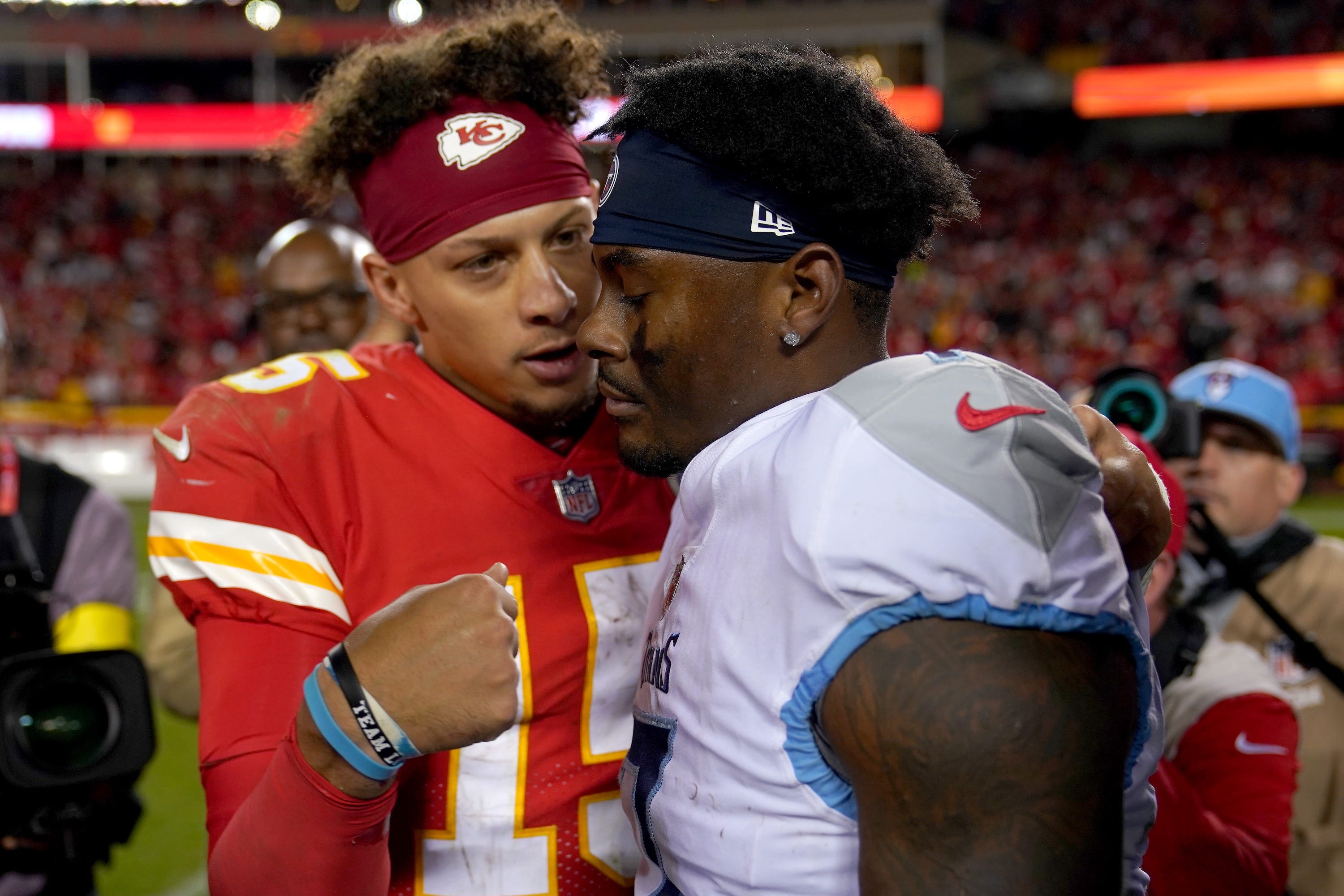
And it’s not just the media. NFL teams themselves are operating on this 100 MPH quarterback timeline like, “Oh, alright, we saw a little bit. We’ve got to get another guy.” They draft Will Levis. They’re moving fast. Malik is kind of like an old soul operating on his own clock. He knows what he has to get better at each year.
McEvoy: Listen, I think there’s another universe where Ryan Tannerhill doesn’t get hurt that first year. And Malik sticks to the development plan that Jon Robinson and Vrabel and the Titans had for him: “Hey, we drafted you in the third round. We look at you as a developmental prospect with huge talents. Can we develop you and get you ready to take that role?” If Tannehill plays 17 weeks (in 2022) and he’s the backup and he goes in and hands off a couple times in mop-up duty and he develops throughout the year behind the scenes? Then, when Tannehill’s ready to move on or if he’s needed in Year 2 after a full offseason — and that’s your first exposure to Malik Willis? — I think obviously they wouldn’t have drafted a quarterback the next year.
It’s another little piece of Malik’s story. He did have to play (in October) of his rookie year when he wasn’t as comfortable as he needed to be in the offense. That’s not because of anything Titans-related. That’s where he was in his own development at that point. And it’s the way it played out. I think anybody will tell you, there was no plan when the Titans drafted Malik in the third round like, “Alright, when we go on the road to play the Chiefs, we want Malik to start that game.”
Even Aaron Rodgers, his rookie year, I think it was a Monday night against Baltimore, they lost 48-3. It was an absolute shit show. Nobody remembers.
McEvoy: And not for nothing, in three years, I’ll bet no one remembers that game Malik played either. But you have to do more to make people forget about the old stuff, right?
He’s dealt to Green Bay. Ten days later, he’s thrown into action and wins a game. How did he pull that off?
McEvoy: Truthfully, that offseason going into Year 3 (with the Titans) — that whole preseason with Callahan coming in in Tennessee — he felt so comfortable. He felt really prepared, ready, understood. He felt like all through training camp, all through the preseason, everything was slowing down for him. He felt really in position. This is coupled with all the offseason training and all the mechanics overhauls. Efficiency. Cleaning all that stuff up. He worked so hard. He finally got to that Year 3, and obviously he was hoping it was going to be with the Titans, whether it was the backup to Will or whatever they need him to do, he felt like if “I get the opportunity, I’m taking advantage of it.” And they traded him. They traded him to Green Bay and it couldn’t have been a better opportunity. You go back to really smart offensive coaches that know how to work with a quarterback and develop a quarterback. They got him up to speed very quickly within their offense and there were enough similarities between things he had done in Tennessee. He felt comfortable. He felt like he had a ton of support in that building from Coach LaFleur, from Adam Stenavich.
A lot of credit to Jordan Love and to Sean Clifford that QB room that was super welcoming to him and helped get him up to speed. He talked so fondly about that QB room. Jordan, especially. The opportunity to see how Jordan prepared and see how they did it at that level. And when it came time — obviously earlier than anyone expected going into Week 2, the home opener for the Packers — he felt comfortable in what he was going to be asked to do.
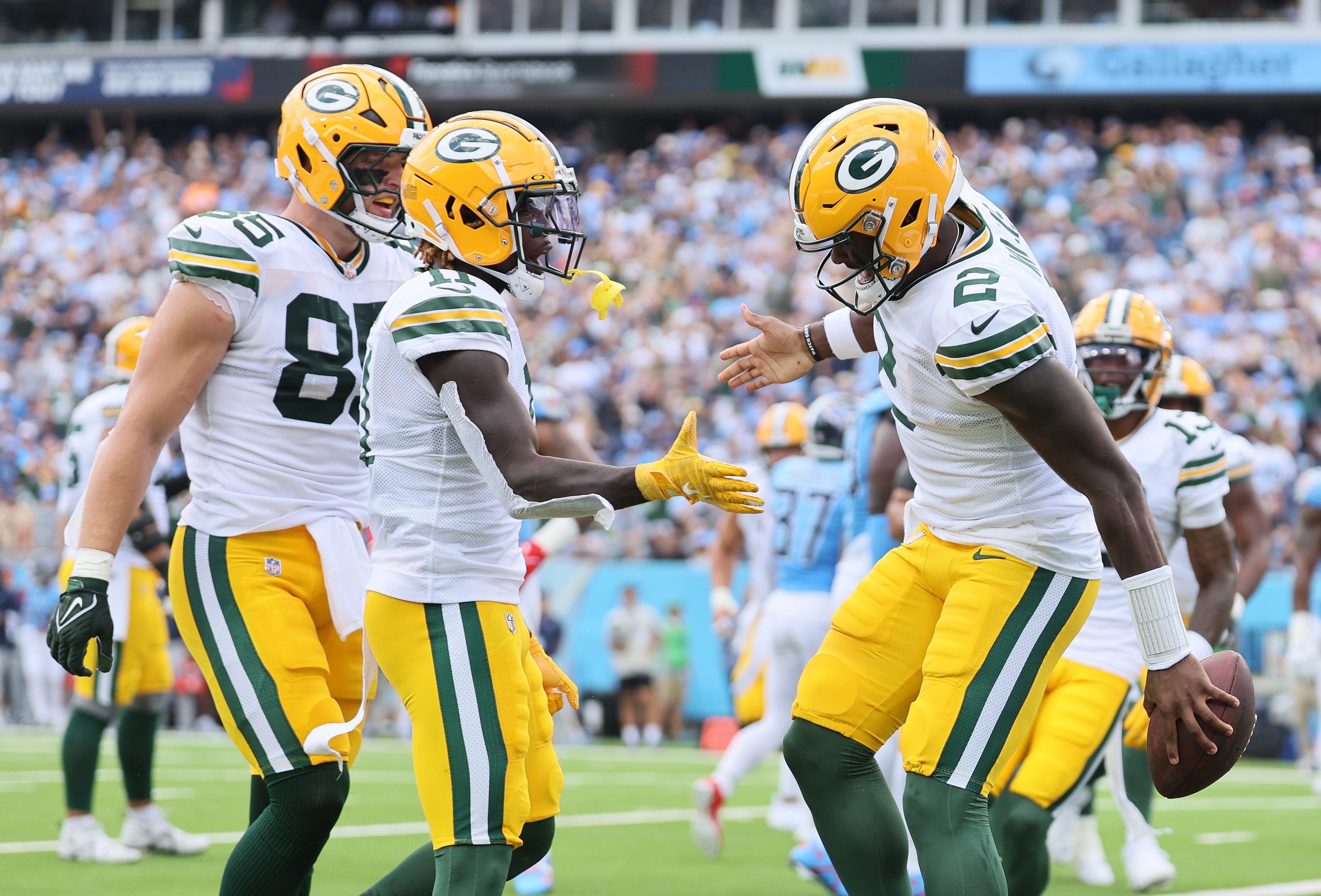
And by Year 2 with the Packers, Year 5 in the NFL, he’s a legit playmaker.
McEvoy: Even just from the Colts game to the Titans game that first year — Week 2 to Week 3 — it was almost like, “Oh wait, OK, he’s got this. Let’s give him more.” And they opened it up into Week 3. And then he got the opportunity at the end of the Bears game where they were down 10 and they came back and took the lead where they had to play a little bit more wide open.
Then, he finally gets whole offseason. So it’s the first time — in literally his entire NFL career now of four years — that he’s going to go back into a second year with the same offense. He had never had that before. So you get to really master the footwork in the offseason and really make sure that you understand all the concepts and how Coach LaFleur wants you to read them out. When you saw him on the field this year, everything that LaFleur wants a quarterback to do was available to them because he knew Malik could run the offense the same way. And then he also gave you something in the run game that other quarterbacks can’t give you. What he did this year in that game and a half — Baltimore and that second half of Chicago — the numbers tell you literally nobody played more efficient football than what he did in that small sample.
What makes you think that small sample can lead to a 17-game sample where we’re seeing the same thing over a long period of time?
McEvoy: That’s obviously the No. 1 question. The reality is, the things that allowed him to show that in the small sample are part of his DNA now. The comfort and the timing. Understanding how to see what defenses are doing. Make decisions quicker. Being able to throw with anticipation, throw on time, make good decisions in the pass game. That comfort with the speed of the game and NFL offenses. And obviously, the traits that he possesses, those are his DNA. So to me, whether he gets to showcase that in one game or he gets to showcase it over 17, those things remain constant.
It’s easy to say, well, in two years he had three starts and played five games total. OK. But he hasn’t played anything but exceptional since three years ago.
How were those three games literally four years ago, his rookie year, how is that who he is? And not what you’ve seen literally every single time in seven different appearances off the bench, no practice, whatever. That’s what you’ve seen for the last three years. To me, that’s who he is. It’s not like I’m saying, “Hey, if he plays 17 games next year, he will throw one interception all year because he hasn’t thrown one in the last two.” We’re not counting stats here. But things like completion percentage, and if you want to get into the analytical stuff of on-target throws and efficiency, EPA metrics, they’re averages for a reason. The average, with more games, doesn’t drastically change. That’s who he is. You’re just going to see that multiply out.
But it’s really because of how consistent he is as a passer now, which is really the biggest difference you’re seeing just physically from the quarterback you saw play when he was a rookie to the quarterback you see play now. An efficiency in his mechanics. A consistent accuracy because of the repeatable mechanics that he has now. And you couple that with what he can add to the run game and his ability to make plays off-schedule and out of structure — and then his ability and comfort to play on time with anticipation — that’s why I see him being very successful because that’s who he is as a quarterback.
Jon-Eric Sullivan and Jeff Hafley, they’re around him every day. They’re not placing this bet on 1 1/2 games, rather on two seasons of seeing how Malik Willis works every day.
McEvoy: There’s something really cool for the lack of having a thesaurus in front of me, something really gratifying about the people who know you the best knowing something maybe nobody else does. Which makes sense to a guy like me. I never have an issue with people who want to doubt the small sample size or “I don’t know what he is,” because they just don’t have the information that I have. So anybody who wants to say, “Oh, I don’t really think he can throw. All he can do is run.” OK, they don’t know. They don’t see him, and there’s very little exposure for them to be more educated in their opinion. It’s fine.
The people that have been around him have no doubt of what he is and what he will be going forward. And that’s where Jon-Eric Sullivan and Jeff Hafley are as well. They’ve seen him every single day. To me, it feels like those guys took a job where Malik was very much a part of what they were going to bring to Miami.
I don’t think Jon-Eric Sullivan took the job without knowing he was going to hire Jeff Hafley as his head coach. And I’m not sure that Jeff Hafley took the job without knowing he was going to bring Malik with him if he could to play quarterback. And so if those three guys want to sign up to do this together — because of their relationship, because of how much confidence and faith and trust they have in each other to build this and obviously there’s a lot on the line for all three of them — that’s the part that’s exciting.
You can look at the macro of those relationships, even the structure of the deal. If he’s everything that you hope he is, it sets up for an even bigger contract. And then there’s the micro. I’m picturing Malik Willis and De’Von Achane working RPOs.
McEvoy: 100 percent. Jaylen Waddle. I love that they re-signed Greg Dulcich. The way he came on at the end of last year. There’s some pieces on offense. Center Aaron Brewer was with Malik in Tennessee. They know each other very well. There’s a lot comfort there with those two. Thinking about guys who’ll be very key in protection calls and things like that. We spent two offseasons where Aaron would come out three days a week and just snap to Malik while he was throwing to receivers. That’s a testament to Aaron Brewer’s work ethic. I can count on literally one finger the number of centers I’ve had at the pro level who have come out to snap for QB throwing sessions.
There’s some people that Malik knows in the building who are super excited that he’s going to be coming in. There’s a lot of pieces that set up well and give him the help that any quarterback needs to find success early on.
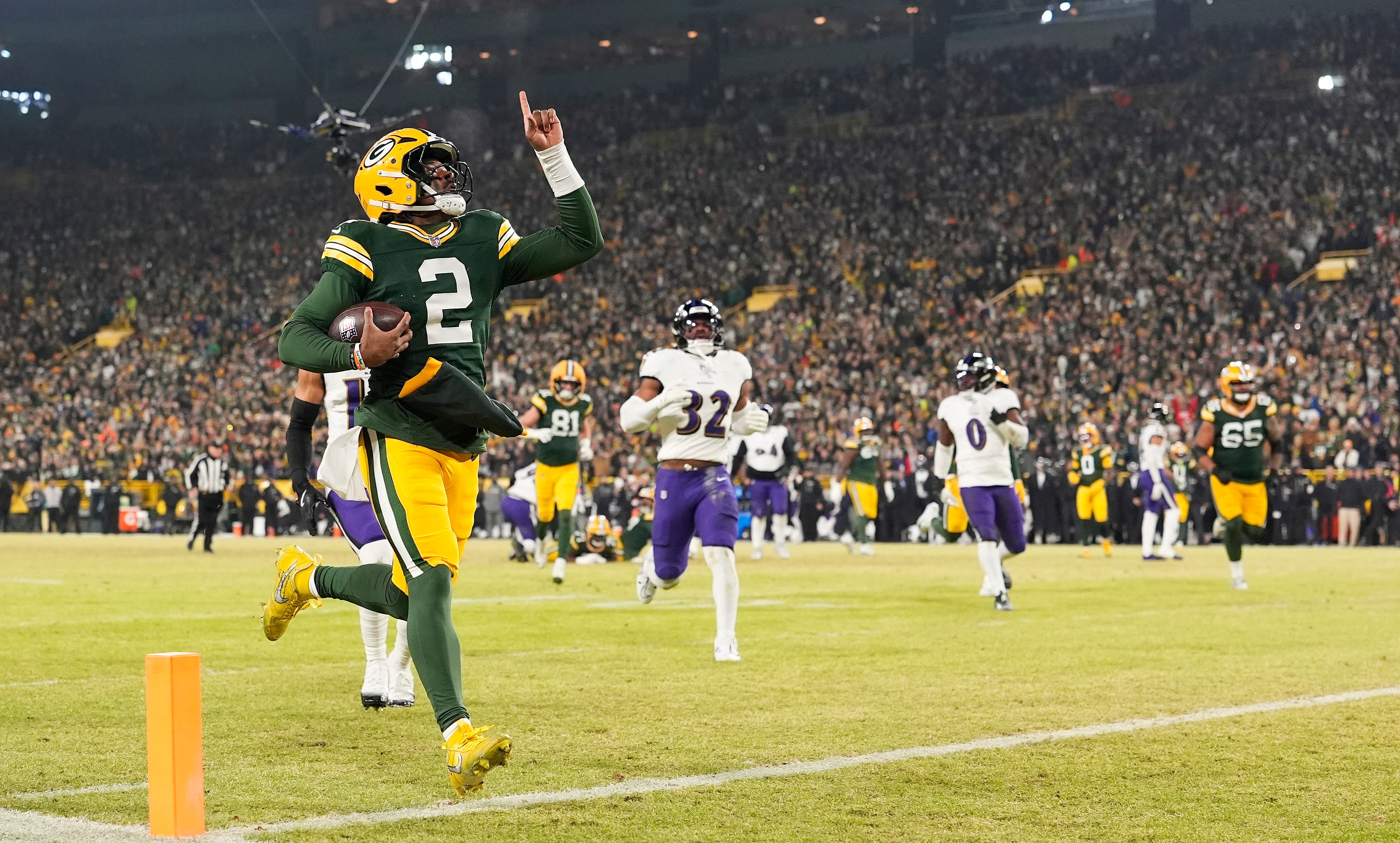
Where do you see this going? In your dream scenario, knowing Malik better than anybody and how he’s wired? We didn’t even talk about Malik giving away that Combine clothing to a homeless woman in Indianapolis.
McEvoy: I could tell you got 20 stories where we were walking, I thought he was next to me, and then all of a sudden I looked back and he stopped 30 feet back because he’s trying to find money to go… or he’s talking, he’s having the conversation. Here’s a funny story for you. We would go eat in Nashville all the time because we’re training together. We’d go get lunch after a session. He likes to stay himself. He’ll DoorDash food to the apartment or whatever. That’s the way he works. But if we go out to lunch, we’ll eat. And then when we’re about ready to go, he’ll order something to take home. So he’s like, “Okay, I can just bring it home. I don’t have to worry about DoorDash.” Well, the number of times that he would walk out with his dinner for that night and we don’t get 12 steps out the door of the restaurant and there’s someone in need there on the sidewalk? Malik doesn’t have cash on him, so he just gives him the dinner. It became laughable to the fact like, “Hey, that big plan you have about having dinner later, I guess you’re back to DoorDash.”
How many times do you think he did that?
McEvoy: Oh my God. Maybe six, eight different times that I was with him. The day that we met with (agent) David Mulugheta to sign — he was coming out of college trying to figure out who his agent was going to be, taking agent meetings for the draft. I met him there. His Dad was there. Mulugheta. The marketing agent. There’s a group of people there. Malik called on the way and he’s like, “Is anyone eating? I’m going to get a pizza.” He comes in, brings in a couple large pizzas. Nobody else ate it. It was just him. He had come from a workout. So we’re leaving, he’s walking out with a pizza. Sure enough, I’m walking. Once again, look back, Malik’s back by the hotel lobby door still because he’s talking to a homeless person for five minutes. And then obviously, he gives him all the pizza he had left over. It’s happened so many times now. So when that thing comes out at the Combine, that’s no surprise to me.
He’s not doing it for the cameras. Somebody filmed it from afar.
McEvoy: I talked about the close-knit family. I talked about his grandparents. He’ll tell you, that’s his grandmother. That was going to church with his grandmother growing up. I think Liberty — and that world — played a big part, too. Because it was so front of mind there at that university. It’s who he is.
Dream scenario, where’s this going?
McEvoy: It’s these three guys that’ve built this relationship. He would tell you faith and God’s plan brought Jeff Hafley in to be the D-coordinator at the same time when Jon-Eric Sullivan was getting ready to take his own job. Even the GM that helped draft him, Jon Robinson, ended up back in the building in Miami. It’s like these people that have built this relationship over the last two years are now entering this thing together. The best-case scenario is these guys find that success together. And I think Malik is going into it where, “Finally, here’s the opportunity. I just wanted the opportunity to get a chance to be Quarterback One. It hadn’t happened to this point. I get a chance to be on the field, go earn that opportunity for this year, and then what can we do over the next decade in Miami with Coach Hafley and Jon-Eric Sullivan. Let’s go do something special here.”
That’s where his mindset is. For sure. This has a real shot at happening because of the belief I have in him and his ability and what he’s ready to do on the field. I’ve got to imagine that’s what Jon-Eric Sullivan and Jeff Hafley envisioned when they make the move to go get him and make sure he’s their guy.
amazing read tyler, very cool. as a packers fan definitely going to miss Malik and wish him all the success in the world
Preparation meets opportunity indeed. Seems like a special dude, we'll soon find out if he's a special player. I'm definitely rooting for this guy