


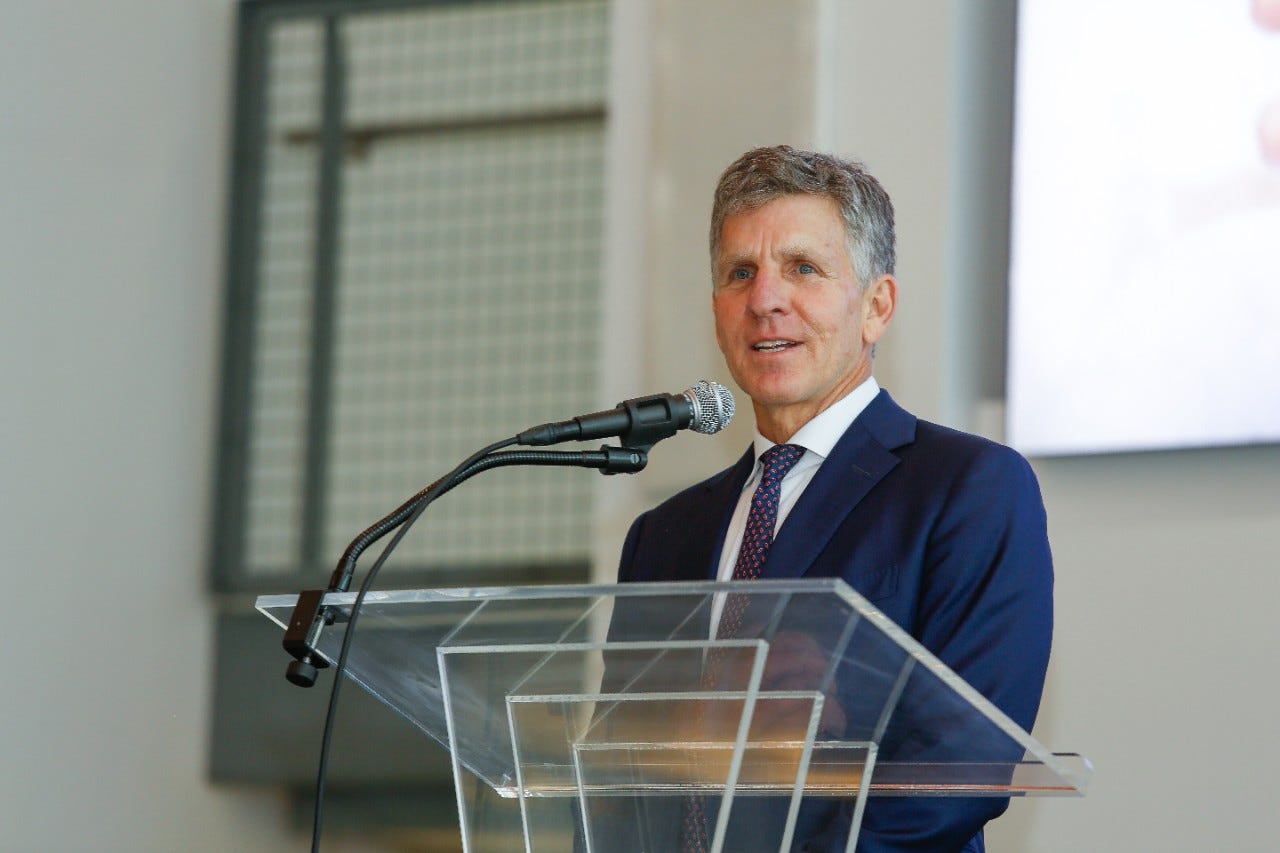
There’s an NFL presented at podiums and proliferated on social media.
Then, there’s the real NFL behind the scenes.
We’re always trying to bring the latter to life. So what a good time it was chatting with a former Green Bay Packers vice president who enjoys lifting up that curtain to educate the masses. You can watch the full Go Long Podcast episode with Andrew Brandt right here.
For those who prefer to read, our chat is transcribed below.
Be sure to read his new book — “Smarter About Sports: My Life Navigating Athletes, Agents, Media, and the Business of the NFL.” The Amazon link to hardcover, Kindle and Audible is here.
We get into Andrew’s rise in sports, orchestrating all contracts in Green Bay from 1999- ‘08, the Favre-to-Rodgers transition to his mission today.
New here? Go Long is fueled 100 percent by our readers. We’d love to have you as a subscriber today.
What a pleasure to welcome on a familiar face for not just us here at Go Long, but the entire sports world. Andrew, you’ve definitely been so generous with your time and sharing your experiences and your knowledge with everybody. It’s made everybody smarter about sports, which is why I love the title of your new book. “Smarter About Sports:” Andrew Brandt, of course, VP with the Green Bay Packers from 1999 to 2008. All of your amazing work at ESPN. And I love what you’re doing today. Now, you’re helping the next generation at Villanova as the executive director of the Sports Law Center.
Brandt: Great to be with you, Tyler. I’ve known you for a long time. I’ve enjoyed working with you. And it’s been, I think really since I left the Packers some 16 years ago, I’ve just tried to do this. And this meaning, make people smarter about sports through TV, radio, podcasts, all my writing first for National Football Post, then for ESPN, then for Sports Illustrated. Now I do the Sunday Seven newsletter and the podcast and all the appearances I do. And, of course, students. I’ve probably taught 1,000 students over the years. And when I started thinking about a title for the book, I’m like, yeah, that’s what I’m trying to do. I’m trying to do that in 20 different ways in my life now. Let’s just sum it up there with “Smarter About Sports.”
And I’ll get right to it, Tyler. The one thing I thought I could do is (write a book) through stories that only I can tell. These are stories that only I can tell and there are hundreds of them, literally. There’s more than 100 stories in the book. That’s the way I teach in front of my classes. That’s the way I lecture when I talk to corporations. It’s stories. I’ve found in life that what resonates more than anything in terms of learning is a story. Not just standing up there and telling theory. Not just saying this is the way you should do something. It’s through stories. So that’s what the book is. Through my entire life. And as you’ve seen so many chapters — I know a lot of people want to talk about the Packers. That’s just part of it in the way I’ve sort of lived my life through these different angles in sports. And I hope it’s instructive and informative and certainly entertaining for anyone interested in the business of sports, the law of sports, the sociology of sports, sports policy, and of course working in sports. I hope it’s great for everyone.
I love that approach, Andrew, because it’s visual. We can picture you in these situations. It’s easy today when a contract goes down or somebody gets suspended or anything happens in pro football and you got ChatGPT, you have Google, AI and badabing, badadboom, we think we know everything in that 1.2 seconds it takes for something to get spit out. That’s not going to tell you anything. You lived it. You were at the negotiating table literally with some of the biggest names in sports. You had to roll up your sleeves at times. That’s where you learn how this stuff really goes down, isn’t it? It’s not just being a self-anointed expert on the subject, which there are plenty of those in NFL media today.
Brandt: When I started tweeting when I first left the Packers, all of a sudden people are like, “Wow.” And I’m thinking, “Everyone knows this.” And I’m finding out, no. No one knows this. And this is hard to explain right now, but things that really go on in the inner-workings of sports that I would decide to tweet about or write about when I first started doing media. And people are like, “I didn’t know that. I had no idea.” And I’m like, “You didn’t? You didn’t know that these NFL contracts aren’t guaranteed. You didn’t know that you can cut a player and never owe them any money, even a veteran after three years of a contract?” So these are little things.
And when I put this book out, I think I was talking to Trey Wingo or Jim Rome or somebody and they go, “Andrew, do you know that the magnitude of people you’ve been around your whole life, no one gets to be around this sort of panoply of football, basketball, all this and people in the business and Gary Vee. Spending two years with him. I’m like, “Yeah, I mean, I just do it.” And my editor’s like, “What are you thinking when you’re with David Falk and Michael Jordan? What are you thinking when you’re hanging out with Gary Vaynerchuk? What are you thinking with Brett and Aaron?” I’m like, “I’m not thinking. I’m just doing.” And my life advice at the end of the book is, just do. Don’t talk about it. Don’t ruminate about it. Just do. Mood follows action. And the people that get stuck end up in whatever — low levels of depression — because they just can’t move. So everything to me is onward and I talk about that throughout the book.
Where do you want to start, Andrew? What really inspired you to dive into this world? I know you’ve been all over the place. We got into it on the Happy Hour. Across the Atlantic as well. But where would you point to as Point A — “OK, I love sports. I want to be involved with sports and I want to go this different route?”
Brandt: Early on. I was a big sports fan growing up in DC, two teams that have different names right now. One was the Redskins in football and one was the Bullets in basketball. Season tickets. A huge sports fan. Went to Stanford, came back to law school in my hometown of Washington DC. And luckily for me, there was this firm down the road called ProServ. It’s no longer, but they represented athletes. And I always sort of went through life like — as a young kid even— would there be a way to sort of marry this love of sports, I’m never going to be a pro athlete, with a law degree or business, anything? And the agent world was not that established then. There were some agents, but it was like, maybe. So I go over to this firm and I was a tennis player and they ran tennis tournaments. And more importantly, I was a ball boy for the big Washington DC tennis tournament every summer that they ran and they’re like, “Yeah, OK kid. Come on in, do some stuff for us.” And that led to sort of an unpaid internship and here I go.
After law school, finally got the job. And I tell people that I chose a sports agent life over being a “real lawyer.” And even as a young kid, I’m like, “I’ve got to think about this.” Because everyone’s like, “Yeah, you want to hang out with athletes, not stuffy lawyers.” But for anyone thinking about it, I gave up a tremendous amount of money and a tremendous amount of security and a life that would be stable in a law firm. And I went the sports route and I did because of this passion for sports. But I learned quickly, as I tell throughout the book, the glamor of working with high-profile athletes, that wears off in about two weeks. And now you’re just working for clients and you’re being an agent, and that’s a theme of the book, first sort of chapters of my career beyond Barcelona, are all being agent work.
You think it’s the player, but it’s often the wife, the girlfriend, the wife and girlfriend, the father, the cousin, the AAU coach, the friend, the half-brother, the half-sister, the half-stepbrother. And you take on what I call “the herd.” Being an agent is a tough life because you’re not just beholden to the client. You’re beholden to all these people that are around him and want you to answer the questions. And many times I had to be the “no” guy. Usually, it’s about money. But sometimes about other things. And that’s what the client is paying you to do. So I learned working at the foot of David Falk, the NBA superagent with Michael Jordan, Patrick Ewing, all these great clients. And that was a learning experience for me. And I learned I’ve got to be my own person. I can’t do the style of David who was a very relentless negotiator and used the leverage of Michael in ways that I could never do. I don’t have the ego for that. But I learned what not to do and also what to do. Sort of the beginning of my career as an agent, I was very blessed to be around superstars in that world.
You glossed over two pivotal moments in your life, too, where you truly did bet on yourself. An unpaid internship. I imagine that was a pivotal moment to pour yourself into something and know you’re investing in yourself. And then get into that decision to go the sports route where, yeah, you can have a cushy job and make God knows how much money and see in the future clearly where you’re going to be, how much you’re going to make, a sense of security. But you bet on yourself at that point, too.
Brandt: And then you look for opportunity. I have this phrase in the book. A Stanford professor said it to me: “Allow in your life for serendipity.” And David Falk was so invested in the NBA and I was representing NBA players, including the first client I had — the only client I could ever look down upon — named Muggsy Bogues. He was 5 foot 3. He was my first client in basketball. Twelve pick overall with the Washington Bullets.
I saw these football players. I saw NFL players no one had ever heard of, but I’m like, “No one’s paying attention to them. I’ll do it. I’ll do it.” Look at me. I never played football, but I’m like, “I love football. I’ll do it.” And that began my career as a football agent. Only because I saw opportunity at a young age. I’m like, “I could be in this NBA and learn from David, of course. But no one’s taking care of those guys.” So I went over there and in seven years I went from three to five to 10 to 15 NFL players. So there is a little serendipity.
Then I’m doing a contract with the Minnesota Vikings and the general manager at the time named Mike Lynn kind of looks me up and down after the negotiations says, “Hey Andrew, you speak Barcelonan?” I said, “What is that?” He said, “Spanish.” That led to him offering me the first general manager job of the Barcelona Dragons of the NFL World League. And I, again, young, single, allow for serendipity. I said, “Yeah.” And I left the agent side, the player side for the first time in my career. There would be another time going to the Packers. But I’m like, “Why not? Why not?” And now I’m in Barcelona where they’re cheering at the wrong times and they’re doing the wave the entire game long and they have no understanding. It’s the hardest thing I ever did, Ty. So at age 29, I’m a GM trying to sell tickets where no one understands the game. They do the Olé song the whole game long. Our first touchdown, they have polite golf applause. And then our kicker kicks the extra point and they go nuts. I’m like, “Where are we?” That steeled me for a life that was never as hard as that.
Working for the Green Bay Packers compared to that? That was a great experience. Then I’m back to the agent business. I’ve got a guy named Ricky Williams, the best client I ever had, Heisman Trophy. Three months later, he fires me for Master P and I’m like, “Who’s Master P?” He says, “A rapper.” I said, “What’s going on?” He goes, “I don’t like the company you’re with. I like you. You want to work for Master P?” I’m like, “P? Me?” He said, “Yeah.” And again, serendipity. The exact same time, Ty, the exact week — like a day later — the Green Bay Packers are calling me. I had some Packers over the years. No one great. I had third-string quarterback at the time: Matt Hasselbeck. And they’re like, “How’d you like to switch sides?” And I said, “What? You talked to 100 agents. Why me?” And you know what? Ron Wolf said, “Listen, Hasselbeck and these guys really like you. You have a nice way of dealing with people. You know your way around these contracts and we want to get more agent-friendly. What better way than to hire an agent?” And then it’s talking to my wife. We’re both east coast people. I decided to leave the agent business. Ricky was obviously a determining factor. But I think it was time. I had a young family. It was time to get off that train and it’s a little more secure life, albeit in a place we’d never, ever considered living. We moved to Green Bay, Wisconsin. And obviously of my 16 chapters in the book, I have four on my life in Green Bay. Which again, as I call it in the first words I talk about Green Bay, the best story in sports — 100,000 people, a city thriving, not just competing, but thriving in the NFL. If anyone out there can think about a city near them with 100,000 people. Can’t imagine having an NFL team, and I talk all about that.
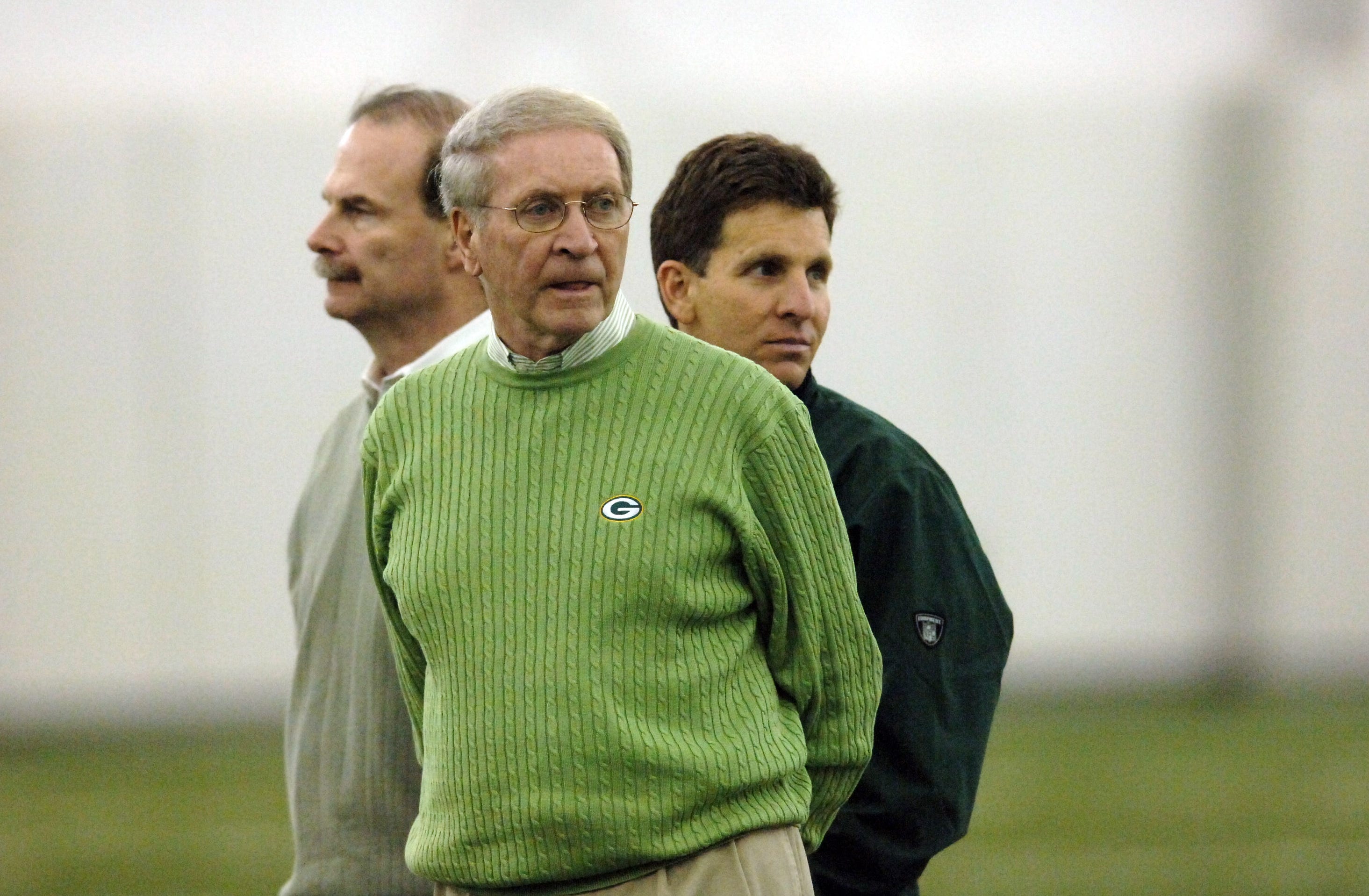
Like you said, it’s truly one of the best stories in sports. To live that up close, what does that look like? Because you hear how they’re publicly owned and there’s no owner to report to. But day to day, month to month. I was out there at the Milwaukee Journal Sentinel for five years and I’m seeing it to an extent, but I’m still on the outside. What makes it different than any professional sports team to you, Andrew?
Brandt: Well, I didn’t grow up with a history of it. So I get out there and, first of all, it was just the bowl before our renovation. It was like a high school stadium. I’m like, “This is where the Ice Bowl was? What?” And then everyone can talk about this where you’re driving down a residential neighborhood and there’s Lambeau Field out of nowhere. You realize, “Oh, this is a little different.” And then I’m looking out my window the first weeks and I’m like, wait a minute, these people are driving up and actually genuflecting to the building. There’s something different here. Like our GM, like our coach, I had tremendous autonomy. And if I did a $5 million contract or a $50 million contract, there’s no one up there somewhere saying, “Hey, great job. Bad job, Andrew.” I was trusted to do that, just like our personnel was trusted on the player side or coaching on the coaching side. No owner.
Now we had a board of directors, we had an executive committee, but they were pretty rubber-stamping most of what went on over on the football side. They got involved on the business side, pro shop, concessions, parking, et cetera. So I wasn’t awed by it. I appreciated the magnitude of it, the vast Packer Nation. I tried to operate: “What would the shareholders want?” I think working for the Packers is like working for a public trust. It really is. This is important to people and I never lost sight of that.
And then, of course, the unique things about living in Green Bay where I’m pumping gas and someone says: “Hey, how’s that Donald Driver contract going?” Or, I tell the story of trying to make a trade and my phone went out and I go to this ranger station. I’m in the middle of the park and I said, “Hey, I’ve got to make a trade. I’m with the Green Bay Packers.” He looks at me like, “Who the F are you?” So I finally go right up to him. I’m actually in my swim shorts and I look at him and I say, “Listen, we’re trading David Bowens to the Buffalo Bills, but I’ve got to do it right now.” And then I knew I had him, when he looks at me, he goes, “We’re trading Bowens?” And I said, “Yes, if you let me use your phone.” “Why are we trading Bowens? He’s good.” I said, “Listen, let me do it.” And then I come back the next day, he’s got the paper and I sign it about the trade, but this is Green Bay. It was truly unique. And what I detail in the book, I’m trying to be very vulnerable too, because I think the things that we sort of loved in our early time in Green Bay kind of pushed us out.
I couldn’t go out of my house after a while and not be asked about the Packers. Just socially. It’s so insular with that team. I’ve never seen a community wrap itself around a team — pro, college, high school, and nothing’s wrong with that. People are nice, but I want a little more diversity for my family, but also for my life. For my life. I wanted to do more. I had done all the contracts. I had done all the cap management. I’d done Brett’s $100-plus million dollar contract. I had done A.J. Hawk’s, one of the biggest rookie contracts. I’d done all the small contracts. The cap’s in good shape. I’m like, “Yeah, this is enough.” A lot of people I know in the NFL are lifers and then that’s fine. That’s for them. This was never going to be a life for me. It was a chapter, and actually four chapters of the book. But a special place. And obviously I talk about the highlights everyone wants to talk about with Brett and Aaron and everything else as well.
Win or lose, you can feel the community take on the result. I still remember when they lost to San Francisco — the 2013 season. It was frigid at Lambeau Field, the wild card game. And the next day it was even colder. I don’t know how they would’ve played a football game. It was negative-30, no wind chill. Negative-50 something with the wind chill. And a depression sets in when they lose in the playoffs and it’s cold and there’s nothing to distract you from that result. It can be extreme both ways. But like you alluded to, you were around for Brett Favre and some magical moments there. Then transitioning to Aaron Rodgers — and you write about this in the book — you were close to both. You’re in a really tough position there as they’re making this move to Aaron Rodgers. Start with Favre, what was that relationship like? How did you get to know him?
Brandt: This may disappoint readers, but I am extremely positive about both those men. I mean, Brett was the biggest thing in sports. Obviously this is pre-social media. But he was Mahomes, he was Brady, he was Michael Jordan when I got there. The lines when we pulled into hotels just to get a glimpse of him. And just a couple things to note that you never read about. Brett was a prisoner of the hotel when we traveled. He couldn’t go out. He was too big. But he loved the production meetings. So for people who don’t know, it’s CBS, NBC, Fox, ESPN, the day before the game, they sit with the visiting team and they request the head coach, they request another player, and they always requested Brett. And Brett always wanted to go last because he just loved talking ball with Troy Aikman, with Cris Collinsworth, with Matt Millen, and especially John Madden.
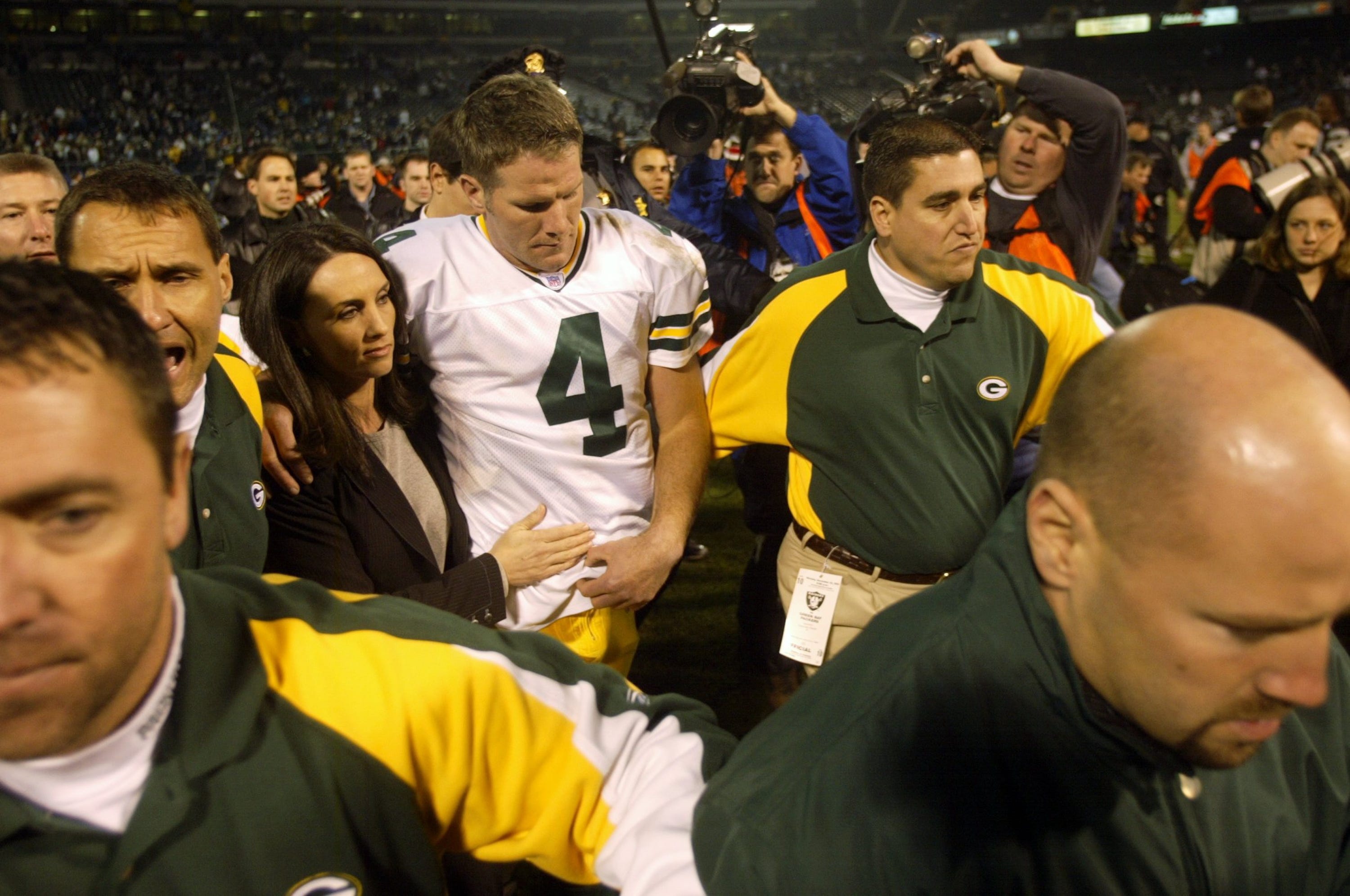
And I remember so many times we’d get together for a 7:30 or 8 p.m. meeting on a Saturday night or a Sunday night and everyone’s like, “Where’s Brett? Where’s Brett?” And he’s still talking ball with Madden or Collinsworth or Phil Simms. He loved it. He was a coach’s kid. And speaking of coach’s kid, I’ll never forget that day. I’m in Oakland where, on Sunday, we get the day off. We have a Monday night game and his agent Bus, who I talk to all the time, he’s like, “Where’s Brett?” Bus is usually a jovial guy. He called in a panic, “Where’s Brett?” “I don’t know. It’s his day off.” He says, “Irv died.” And Irv was not only Brett’s dad, but well known around the team. Kind of a fixture in the locker room. And I’m like, “Oh.” So anyway, long story short, we finally found him. Where else? On the golf course. He doesn’t have his phone. He never had his phone, but we got Doug Pederson on the phone and Deanna told Doug. Doug passed the phone to Brett and he came back and, Ty, I’ll never forget it. We caught him right in the lobby and he said, “Listen” — he’s in tears — but he said, “Before you go on, I’m going to play. I’m going to play tomorrow night.” Those was his first words. Then we bring him in front of the team. He said that about his Dad. How his Dad wanted him to play and there wasn’t a dry eye in that house. And then of course, as everyone knows, the magical game against Oakland, that Monday night where the balls fell out of the sky.
And then I went to Mississippi for the funeral, a few of us, and that was a different Brett. This was no superstar. He didn’t speak, but he was a friend. He was a neighbor. He was a son. He was a community member. He was just Brett in Hattiesburg, Mississippi. That taught me a lot. And then sort of getting to know him as things were going late in his career about, “I know it’s going to end,” and then being with him as he was retiring, but then he wanted to come back. I’ll say this. One thing I try to point out in the book is that these are people. Sometimes in sports, we just think they’re automatons. They’re people. Forget about drafting, I’ve told this story many times about drafting Aaron, and he was the only one on the board that we had a first-round grade on. And combustion in the room. Should we take him? Should we go to our second-round grades, et cetera. But everyone turned away.
And then it’s three years. Three years where it’s myself and John Schneider, Reggie McKenzie, we’re managing this. And this is Brett and Aaron. Nowhere in life would you put a country Mississippi guy in a room with Northern California cool for five hours a day. Nowhere. And Brett’s calling me and his agent’s calling me all the time like, “Hey, Andrew, do you know what it’s like sit in a room and sit with your replacement every day? It’s no fun.” And Aaron’s camp is calling: “Andrew. He’s never going to retire. What are we doing?”
And I just tried to be professional and patient and tactful and like, “Yes, I get it. This is hard, but listen, there’s going to be a change. We just don’t know when.” And that was the hardest part. See, again, the world turns away. Oh yeah, Brett’s got a backup and Aaron. And then all these people like, “Aaron’s never going to play.” Aren’t you going to get a Kerry Collins kind of a stopgap” Jeff Garcia? I said, “No, no, no. We’re going to Aaron.” And people couldn’t believe us. You’re going to a rookie? Or he wasn’t a rookie by then, but “Yes! Yes!” This was not like all the other Packer quarterbacks, including my former client, Matt Hasselbeck, where they were picked to be traded. This was a real guy. And the transition, of course, the messy divorce. Like you said, I was close to both sides and it was tough.
Back to Brett. Bus called me that June 20th, 2008. He had just gotten out of Mike McCarthy’s office and he was crying. And I said, “What’s up, Bus?” I was hiking on the mountain somewhere. And he said, “McCarthy just told us three words: ‘We’ve moved on.’” Imagine the face of a franchise for 16 years hearing that. So this is what you learn working in sports.
That’s phenomenal. I remember being an intern that summer in ‘08 for the Shawano Leader and the Packer Report as a sophomore in college just living out of a hotel. What a baptism by fire to cover the NFL. It was madness. And my naivety, I’m thinking how Brett was thinking. He wants to play, he should play. Look at the accomplishments. You were one throw from the Super Bowl. You’ve got a team that went 13-3. The conviction that the Packers showed in that moment…
Brandt: And we heard it. You should’ve heard my voicemail. It was nothing like Ted Thompson’s. It was 95 percent Brett. Everybody couldn’t believe it. And I told Aaron, to just keep his head down. Aaron became a favorite of ours pretty soon after he came in. He had a wry sense of humor, smart off the charts, physical skills, amazingly spinning the ball. We loved Brett and we loved Aaron. And that’s what happens in sports sometimes. It’s not an either-or. It’s how do we make this transition as gracefully as we can? And then they’re trying to get Brett to be an ambassador, but he wanted to play. So obviously we traded him to the Jets. And then again, I am positive about both those because I saw their impact. This is what sports can do. I called it the “afterglow.” When Brett or Aaron were brought over to children, especially developmentally disabled children or people who were disabled, it wasn’t perfunctory for either of them. Either of them. They spent time. I always called it the afterglow. So when Brett walked away or Aaron walked away, my eyes would focus on the family and that beaming — that beaming — I don’t know what else can do that. A sports superstar like those two, and they were both great at it, like great, never feeling like it was something they had to do. And you appreciate those things when you’re around people like that.
Both unbelievably charismatic in their own ways too, and both very demonstrative on the field in their own ways where Brett’s going to tackle you in the end zone and Aaron will let you know if you screw up. But they wear their emotions on their sleeves.
Brandt: A lot of people are like, “Well, see what they’re spewing out of their mouth this part of their careers and lives.” And I’m like, “Listen, I don’t know them the way I knew them then.” Yeah, I’ve stayed in touch with Brett. I’ve stayed in touch with Aaron, but I’m not here to talk about what they’re talking about politically or anything else. I’m here to talk about what I knew and saw in this developmental time in both my career, Aaron’s career, at the end of Brett’s career. And again, no one really can talk about that in the way that I can, and I try to be very honest.
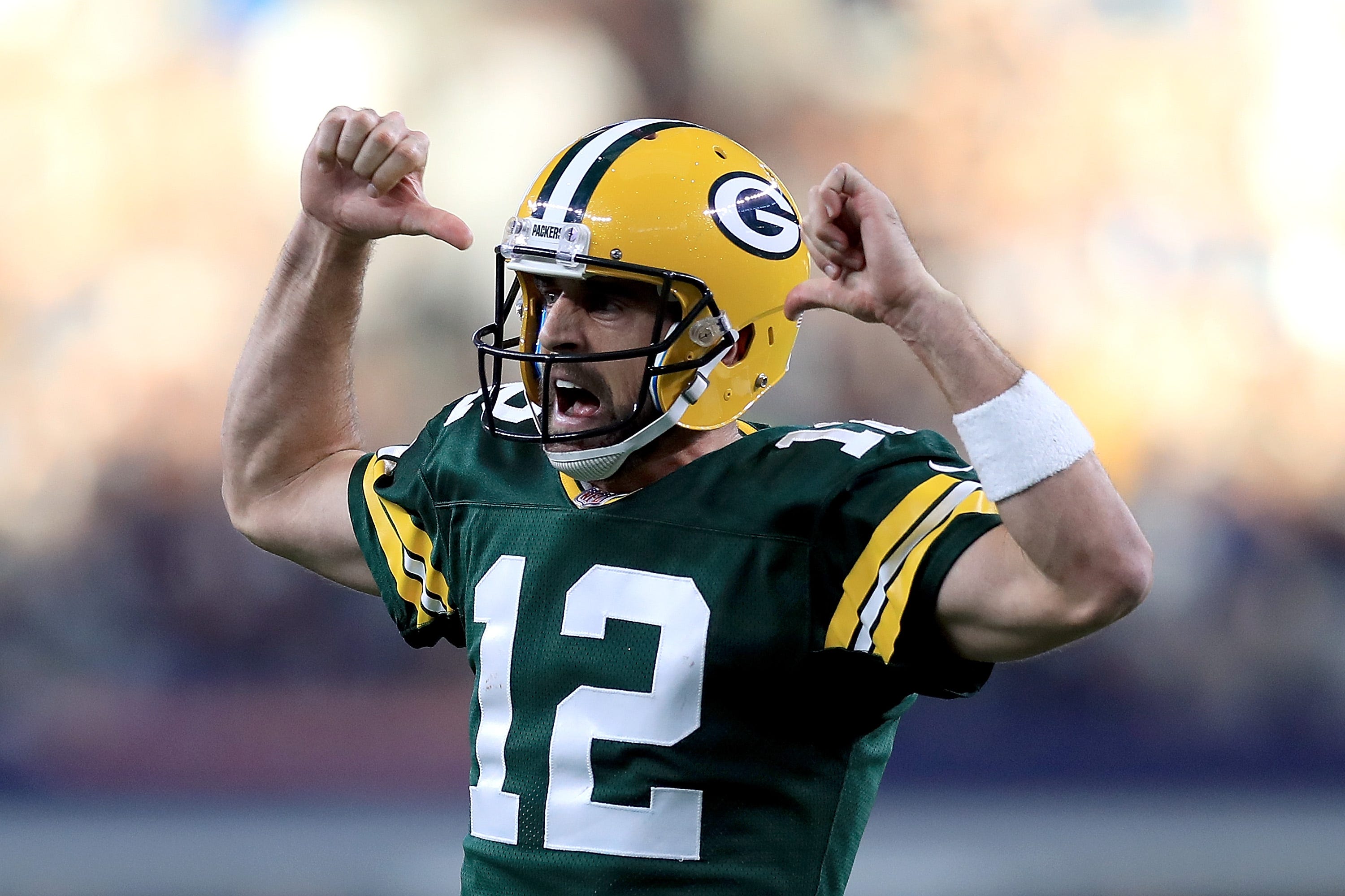
That’s what’s so great about your book, too. You do bring it full circle to where Aaron — toward the end of those Packer years — didn’t understand how good he had it. The grass isn’t always greener. He’s definitely living that reality. Lo and behold, he’s come full circle with Mike McCarthy in Pittsburgh, which I never would’ve foreseen.
Brandt: It’s great to see them back together.
But it is interesting the way he broke into the NFL is exactly how Jordan Love broke into the NFL. Waiting three years, developing. I don’t think it should have been a surprise when Brian Gutekunst was ready to move on, but he was surprised. He kind of wanted something on the other side where he’s more appreciated. Can you glean anything on what it’s like behind the scenes in Green Bay?
Brandt: Brian is a disciple of Ted and Ted is disciple of Ron. I think the one thing that people have to understand about the Packers, it’s football. And this is what makes it so different than any other team. And I detail why my job was so different than my colleagues at every other team. It’s all football. The money’s not going to some yacht. The money’s not going to some vacation spot, the kids’ houses. It’s all back into the team. And having said that, you get guys like Ted or Brian Gutekunst — it’s all scouting. They’re in their element in a dark room looking at players on the screen. And maybe they’re not the most warm and fuzzy. I mean, Ted relied on John Schneider, myself. Massage things with agents, massage things with players. That wasn’t his forte. And I think Brian’s a little more personable than Ted was, but yeah, I guess Aaron could say, “Hey, these guys aren’t warm and fuzzy.” Yes, they’re scouts. That’s what they do.
You’ve got to make those hard decisions. At his airing of grievances, that press conference, he’s rattling off those players that they let go. Tom Silverstein pointed it out to Aaron in the moment he’s like, “Aaron, Ted was right in a lot of those cases.” You’ve got to make the hard decision.
Brandt: What’s so amazing is obviously I was long gone by then, but I think it was 15 years to the day they chose Jordan Love. And I’ve said this. There’s no team in the NFL except the Packers that even has a quarterback sit for one year. I think Pat Mahomes sat one year behind, but he played at the end of the year. Three years! Imagine that. Three years is just an amazing stat. I put a stake in the ground. That’s never going to happen again — unless it’s the Packers.
When you don’t have an owner breathing down your neck forcing this to happen — that’s a real thing — you can make these prudent patient decisions.
Brandt: Yes, exactly. And I’m so proud to have been part of one of those because we were patient. Ted was in the face of all the things I talked about: How dare you do this? He just stood forthright. And of course, Aaron turned out pretty good. And Jordan, too.
Ted Thompson, Brian Gutekunst both to make that decision. It wasn’t easy. I remember the shareholders meeting that summer, too. Fans going right up to Ted with the petitions. Booing him relentlessly. It had to have taken such a toll on him. He’s so stoic and he would never bleed in public. You’d never know. And then just a few years ago, Aaron Rodgers puts it out there, I want the GM fired to return. But that’s why GMs are GMs, coaches are coaches, players play. And there’s all these variables and all these moving parts to put together a winning football team.
Brandt: Yeah. And since I’ve left, I’ve never really wanted to be back with a team. I talk about a couple when Al Davis called me. For me, it was a chapter of my life and it was enjoyable and unique. Especially working for the Packers. But I was on to other things. It was time for me to move on to other things. And when I went back to Green Bay for the first time, I remember seeing all my friends on the team and they’re like, “Yeah, we’re surprised you stayed as long as you did.”
Even Ron Wolf — my mentor — people think he was there a long time. He was there nine years. Nine. Mike Holmgren, seven years. All these great people have come through Green Bay, but they don’t stay that long because people are moving around. And as I said, truly unique. All of us were in this fishbowl. All of us came from somewhere else. And it was a truly unique place to live where I talk about being a fish out of water and my first banquet. I go to a team banquet — a supper club, not a restaurant. And there’s a huge glass in front of me of whole milk. And I’m like, milk? I take a sip. Here comes a guy filling up the milk. I’m like, “that’s different.” I’ve never been used to something like that. Ron takes me out to lunch at some sandwich place, puts down $5. I’m like, “Yeah, that’s nice. A decent tip.” She comes back with change for two sandwiches and a Coke. I’m like, OK, this is a little different, this place. But I have nothing but warm feelings about the people, the team, the city and the region. So great.
Can’t thank you enough for taking some time. Everybody out there listen and watching — “Smarter About Sports,” Andrew Brandt. I’m reading it now. It’s phenomenal. We are just scratching the surface on your stories. The Ricky Williams stuff, Master P, all of that, I could listen to those stories forever. So do yourself a favor out there and make sure you buy a copy today. Amazon, Barnes & Noble. Do you want send folks anywhere?
Brandt: Well, obviously Amazon’s the easiest. There is a website, smarteraboutsports.com. And I know a lot of people listen to me on your pod that are in and around the Green Bay area. So I’m coming out. So I just did a couple signings. I’m coming out to do it Cowboys weekend. So the game is Sunday night. Saturday in Appleton (Oct. 17) at Barnes & Noble. Saturday afternoon in Green Bay — Lion’s Mouth Bookstore. And then Sunday (Oct. 18), Barnes & Noble Green Bay. So you’re going to have three chances if you’re around the Packers area on Cowboys weekend, October 16, 17, 18. So I want to get that out there. I’ll be there within a month for three signings.
Go Long is your home for home for longform.
Thank you for supporting our independent journalism.
ICYMI:


We’ve got a YouTube Channel as well.
Subscribe ‘n share: