


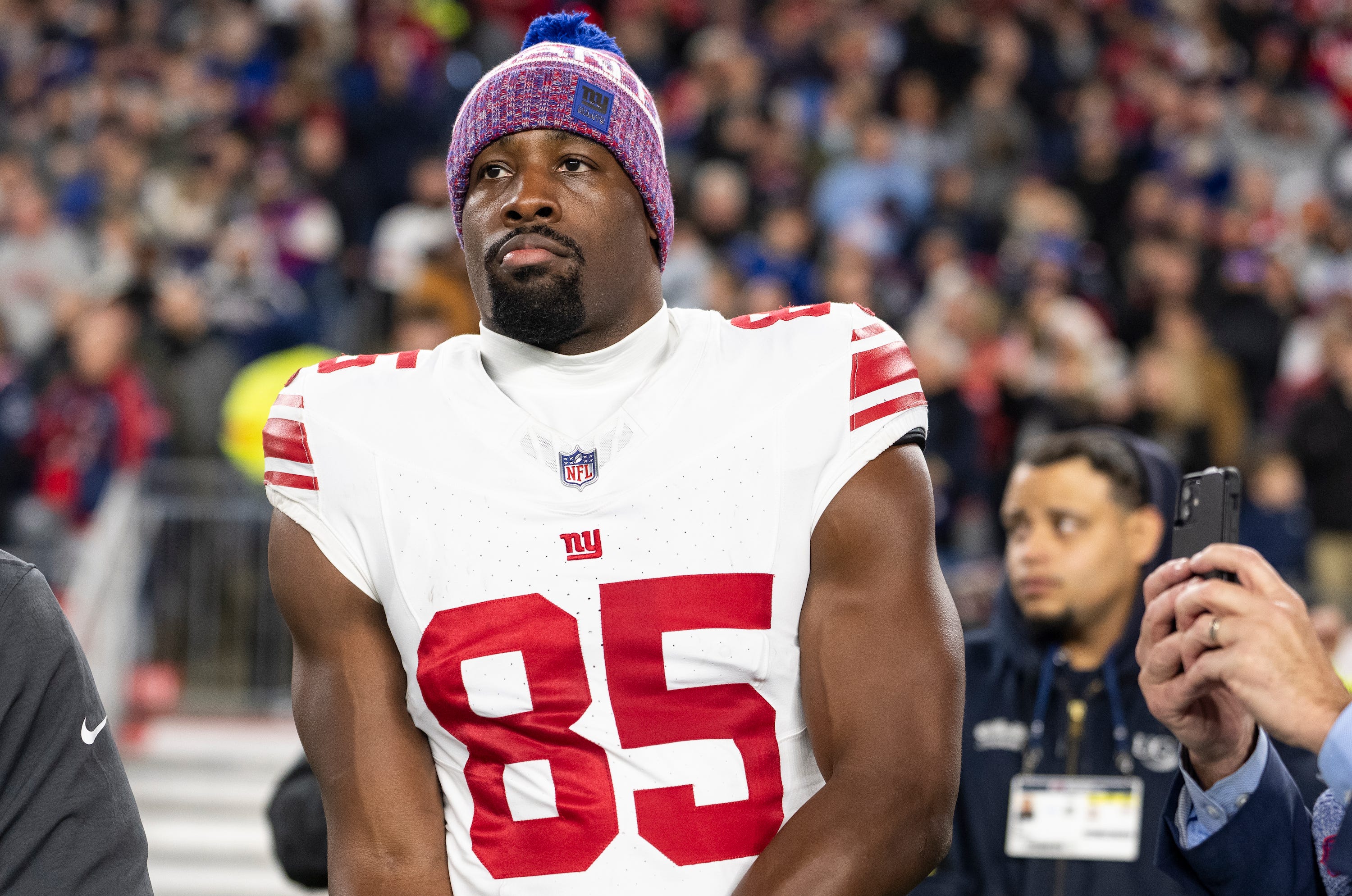
Good morning, all. A month ago, I chatted with veteran tight end Chris Manhertz. Video and audio of that conversation is right here if you missed it.
Prefer the words? The transcript below.
There’s a reason a basketball player from Canisius University in Western New York has now lasted 12 seasons as an NFL tight end. Long ago, Real Football co-host Jim Monos and Buffalo Bills GM Doug Whaley offered Manhertz a tryout to play football. He excelled, cracked the 53-man roster in New Orleans the next season and now has young players asking him every day how he’s managed to survive.
His timing is impeccable. Tight ends are now invaluable in today’s NFL.
How Manhertz manages to stick around — and thrive — is a lesson to everyone in the NFL as training camps start to open up around the country.
Expectations are rising again in New Jersey with the arrival of John Harbaugh. We get into these 2026 Giants.
The year is 2047 and Chris Manhertz is playing tight end in the NFL. Our kids and our grandkids are going to regale future generations. You’re going strong into Year 12, I want to say.
Manhertz: 12th year, yep.
A pleasure to welcome you back on the Go Long Pod. For those who don’t remember, Chris Manhertz was one of our early conversations with Jim Monos at Go Long. You two go way back. First things first. How’s life, the family. This must be a nice little lull in the NFL calendar for you?
Manhertz: Life is busy to say the least. I’m just trying to juggle that all with the family and football. But to your point, we just wrapped up our last practice of OTAs before that big break before train camp begins. So get an opportunity to relax a little bit. It’s time away. It’s not really time off, but nonetheless, you got to take what you could get during this time, right?
I’ve got to think that you probably have learned to find those windows in the calendar to pace yourself, take a little break. I don’t know what your secret sauce is, but you’ve got to get away from it in June to an extent.
Manhertz: That getaway time I would probably say is maybe a week max and then you’ve got to hit it. At least at my stage. I can’t really afford to take too much time off because that might be a detriment to the momentum.
That’s why you’re here, right? Is that it? Going one hellbent speed in your training, your approach. How are we still talking about Chris Manhertz bullying people on the line of scrimmage week-in and week-out?
Manhertz: I think the secret sauce is, if anything, is priding yourself on being available. And that stems back to how you take care of your body. The things that my body needed when I was 22 years old vs. being 34 years old and my maintenance routine and everything like that, it obviously requires a lot more as you get older. So you have to do just as much to keep up with all this young, fresh talent that’s coming in and trying to compete. So that’s always the constant challenge, but it’s fun.
Mid-30s now and you see all the young whippersnappers coming in at 21, 22, 23 years old, it’s probably got to be motivating. There’s constantly these new waves of players that are drafted, signed, added to the 90-man roster trying to take your job. That’s going to light a fire.
Manhertz: You’re absolutely right. It’s literally a revolving door. Talent every year. You have to prove to the organization along with everybody else that you’re just as valuable and you don’t want to be replaced by somebody that’s younger and cheaper. That’s always going to be the challenge the older you get. So you have to pride yourself on providing as much value as you can as a player and it forces you not to become complacent.
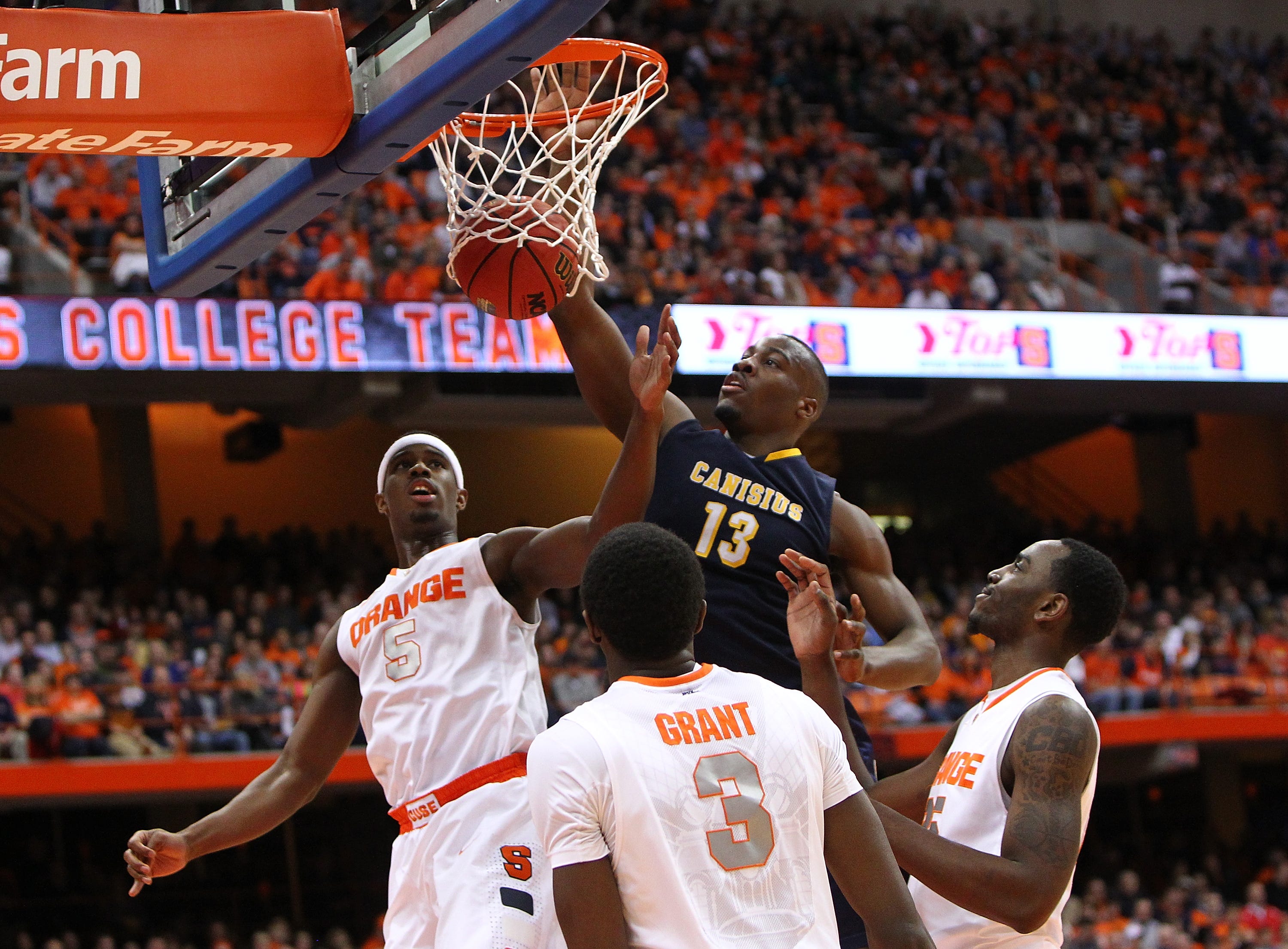
Start at the start in Western New York with basketball, with a young Jim Monos, Doug Whaley seeing a little something special (with the Bills). In your words, how did this all begin in professional football?
Manhertz: It started with those guys giving me an opportunity. Never in a million years did I ever think that somebody — a football organization, football scouts — would take interest in a collegiate basketball player. So at that time, fish out of water. Didn’t really know much, if anything, about the sport. Just giving it a shot. At the time, I literally felt like I really had nothing to lose as far as taking that risk. But obviously in hindsight, it’s probably one of the best decisions I’ve made. So that’s a long skinny version, but a lot of it is just taking it year by year and like I said, just keep constantly trying to provide value and getting better.
What kind of basketball player were you at Canisius?
Manhertz: I was what I would call a “garbage man.” Somebody that did the dirty work, kind of synonymous with what I do on the football field. Defended, rebounded. I was that pillar defensively and embodied just a lot of grit and just that typical glue piece that holds and keeps everything together.
Did you have a favorite NBA player that you watched growing up?
Manhertz: Yeah, Kevin Garnett was by far legendary growing up. I mean, he’s legendary now, but growing up, that was probably one of my favorite basketball players. Kobe Bryant. LeBron, I mean, he’s been in the league for 20 years. So we looked up to LeBron when he first started and came in.
Who would be a legendary garbage man, though? I mean, obviously Dennis Rodman. But there’s got to be an under-the-radar, random 90’s NBA player that you loved.
Manhertz: In wake of the resurgence of the New York Knicks right now, I’d probably say Anthony Mason. That guy, if you know, you know.
To me, he’s a Charlotte Hornet. I grew up a Hornets fan. I remember crying as a kid when they traded Larry Johnson for Mason and my Dad had to sit me down and explain “Ty, this is how it works in sports. Sometimes your favorite players get traded.” … And he was just a junkyard dog, man. I loved Mase. God rest his soul. Absolute legend. I can see that in your game.
Manhertz: Oh yeah. Junkyard dog is probably the perfect word to use. Just scrappy.
At that time, yeah, teams are looking at college basketball players to play tight end. But they’re high-flying, above-the-rim, Jimmy Graham types. The Bills had a different vision for you back then in 2015 that is still going strong. Today, what skills that you had on the basketball court applied to football and how do you think you showed that in your workout and those early days?
Manhertz: From a raw athleticism standpoint, there’s always a ton of transferable things that I had from the basketball court to the football field, whether it was that spatial awareness, whether it was footwork, whether it was hand-eye coordination, catching, things like that. There’s certain things that translate. But there’s a lot that in my opinion and experience you just learn. The physical toughness part was something I had to learn. Although I was a bruiser on the basketball court, the rigors of how physical it is on a football field is unlike anything on the basketball court. So you have to re-program your mind and reprogram your body to get that.
What was that breakthrough moment for you? Was it a hitting drill in a training camp practice, a game? When did things kind of click: “OK, football’s a little different.”
Manhertz: Well, from that standpoint, mentally, things probably didn’t start to quick until maybe my third year, which is crazy to say. But there’s so many different moving pieces as far as what you’re able to cognitively process on the football field in conjunction with all the physical stuff that we just described. So putting those two things together was probably the hardest thing I had to do, but the physical part probably came a little bit easier for me because I could control that the most. A lot of that just comes down to want-to and a certain mentality.
Was there a block or a personal battle in a game where you took another human being and drove him backward and you told yourself, “OK, this could be my thing in the NFL, this could be my calling card.”
Manhertz: That was probably one of my first practices at the time with Buffalo blocking Mario Williams. Now, those who don’t know who Mario Williams is — defensive end, huge guy, athletic specimen, genetic lottery, the whole thing. Seeing somebody like him obviously can be intimidating initially. Especially for a basketball player that never played the sport. But I didn’t know what I didn’t know. And honestly, I didn’t even know who he was to the extent of what everybody else thought. So for me, I was just going up against somebody that was big. I didn’t care. But after the fact, I realized, “OK, I have the capability of doing this if I hone in on my technique.” So once you do things like that, you just feel like you slowly belong and obviously it builds confidence along the way.
So you took it to him in practice?
Manhertz: I did. I did. And you could ask Jim about that. We talk about that all the time. That was a moment where I was like, “OK, I could do this.”
He’s the $100 Million Dollar Man at that point off of one of, if not the best season of his career in ‘14. You don’t know what you don’t know. You can’t put these guys up on pedestals. Maybe not knowing a hell of a lot about the NFL and what you’re walking into helped as well. What do you have to lose?
Manhertz: Certainly. Certainly. I think that helped because, again, I’m going in it with very limited expectations as far as what I’m going to get across from the guy standing across from me. So I think that helped in a way.
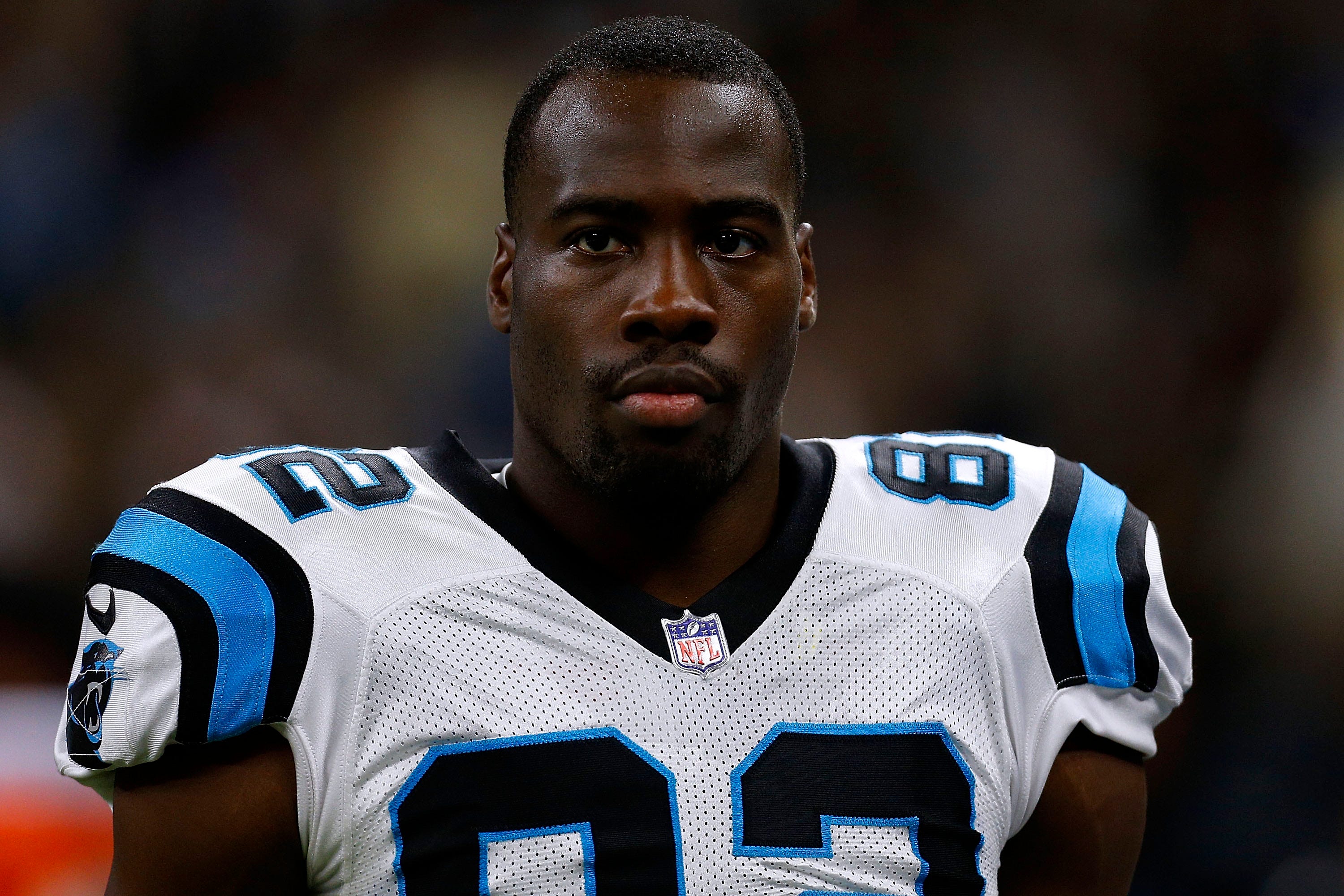
The Bills run doesn’t last long. And then it’s New Orleans, it’s Carolina, it’s Jacksonville, it’s Denver, now the Giants. There’s got to be a mental stamina to constantly go into these training camps — one of 90 — not knowing what to expect. How do you mentally approach your profession that’s just different?
Manhertz: You have to embrace that uncertainty in a way that you have to truly focus on the things that you can control. And obviously the body of work that you’ve put in, you demonstrate that over time. It breeds confidence. So a lot of that for me, that’s where it helps me out in knowing and supplying the confidence that I have in my abilities. And year after year goes by, you might have a new coaching staff, might have a new system, you have new young players coming in. But at this stage in my career, guys are asking me the questions as far as what it takes to last so long and things like that. And it oftentimes gives you an opportunity to reflect and refine certain things that you might have about yourself that you could add to your toolbox or maybe just a constant reminder that you always have to be in a state of trying to improve. Because if you don’t, you’re probably going to get left behind. That’s what I’ve realized in my time in the league, especially with guys that are drafted first round, second round, undrafted. It’s really about what you do when you get there and what your mentality is on a day-to-day.
You should just tell them to play all the video games in the world, order pizza, pound wings. No, you’re helping these guys out. What were those specific areas of improvement you think that kept pumping oxygen into your NFL career along this decade plus?
Manhertz: It’s really every year reassessing who you are as a football player and figuring out what it is that is required of you on that given year or that given staff or that given role that they might have for you — for you to give yourself the best chance to really make it. And obviously my role has been pretty consistent for a majority of my career as far as being a blocker and things like that. But I have to constantly tell myself that there’s always something to improve on. There’s always something to improve on. Whether it’s little techniques here and there, whether it’s my preparation, whether it’s my routines, how I take care of my body, how I’m taking care of things mentally. Because it piles up after a while and it doesn’t get any easier. So that’s why I say you always have to constantly try to refine those things.
What are some of those things you’re doing to keep your body a well-oiled machine or things you picked up along the way. Is Chris Manhertz going full Rocky Balboa in the weight room blasting the music? What’s your day-to-day life?
Manhertz: I train five days a week. I eat very clean. I go to sleep every night at maybe 8, 8:15. I don’t drink. If I’m not doing those things and I’m not on the football field or in the film room, I’m doing something. Whether it’s a recovery tool, whether it’s hot tub, whether it’s cold tub, whether it’s oxygen chamber, there’s a boatload of modalities that kind of could help give you your edge. So I try to fill my time with doing those things because ultimately this body is ... I look at my body as my war machine and I have to really feed that machine good stuff so that I could have a very high output. There’s no guarantees in that, but I know not doing that will probably leave me more susceptible to all the bad stuff happening.
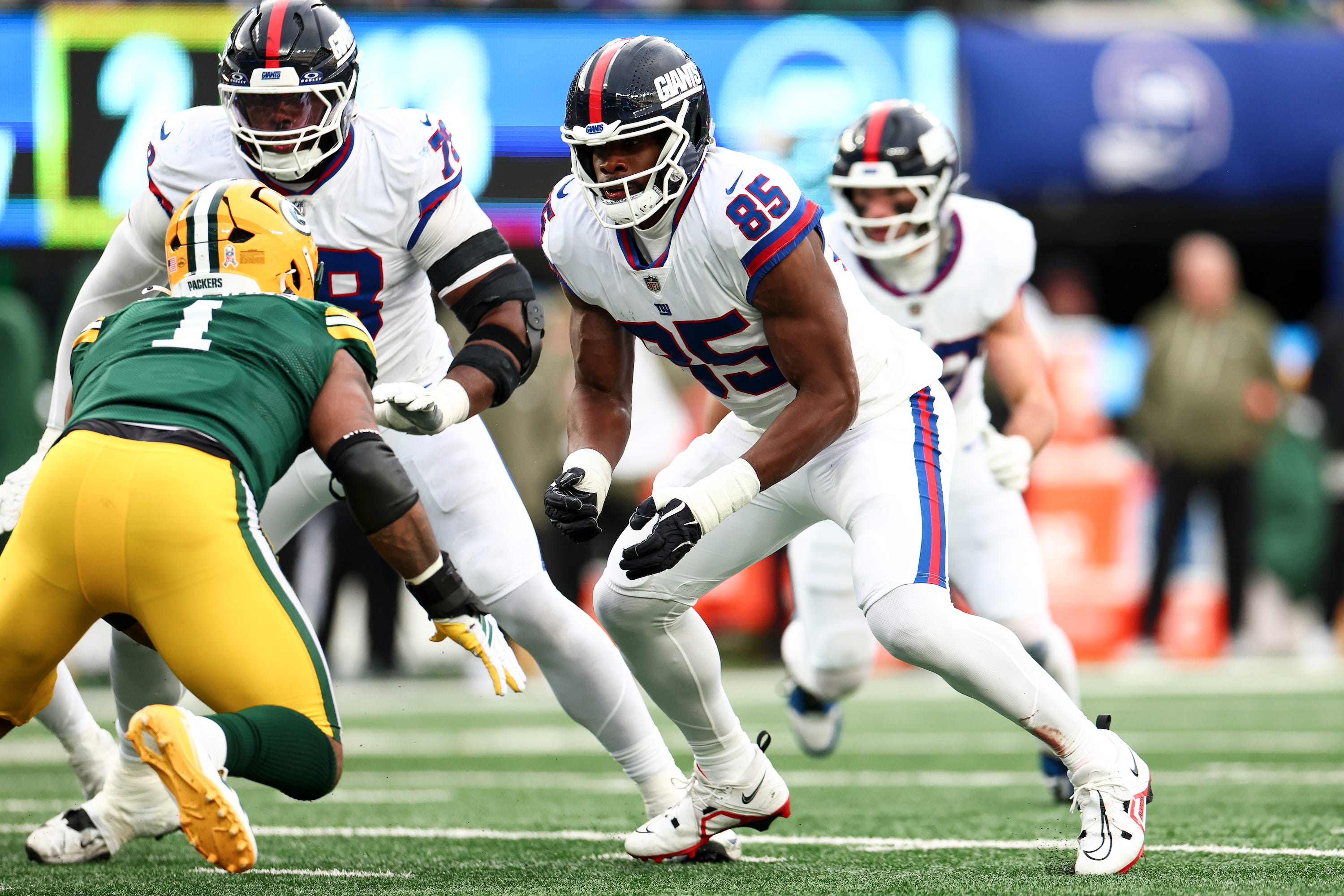
It’s got to be tough with three kids to find the time to do all that. How have you balanced life and football and maintaining that “war machine?”
Manhertz: That’s probably one of the hardest parts. Obviously after becoming a dad, you realize how much time you really have and how you want to prioritize that time. And I guess what works for me, at least nowadays, is I’m an extremely early riser. So my first alarm is at 4:30. I try to, whether it’s on a workday or even an off day, I try to maximize that time before they wake up so that I’m not eating into the day because once the day starts and kids and everything and dropoff and pickups and the whole nine, you kind of look up and you’re like, “Man, where’d the day go?” So if I have a hard stop at 8:00, 8:30 p.m. to go to sleep, I have to find something in-between to be efficient and maximize my time with the time I have. So I’ve learned to get up a lot earlier. It all comes at a cost, but it’s worth it.
A cost like missing the New York Knicks’ comeback? Or did you stay up for it?
Manhertz: I was at the game. That was amazing.
What was it like at MSG?
Manhertz: I’ve never seen an environment like that. I always say I’ve been to few NBA games, but there’s nothing like The Garden. There’s absolutely nothing like it, whether it’s the celebrities there, the music, the crowd, it was great. It was indescribable. And thankfully I was there on a night that was very historic in the NBA World as far as their comeback. So definitely wore my Meta glasses. I’ll review that from time to time.
Where are you sitting? Put us in the arena for those who might not have thousands of dollars for a ticket. I can’t imagine what it was like.
Manhertz: I was in a suite with a few of my teammates, so that was pretty cool sharing that experience. It’s electric. Even after the game, you’re trying to walk to get out the building. You’ve got people crowd-surfing.
It’s got to cross your mind: “If our New York Giants win, what’s it going to look like?” I get it. It’s a different sport. A lot of Knick fans are Giant fans. It’s been a while since the Giants were NFL royalty. What’s it going to take to get this team to that kind of place and what would it feel like?
Manhertz: That would be a dream come true. I’m a hometown guy. I’m playing in my hometown. That adds another element to it. But what is it going to take? I think a lot of it starts from the top — leadership from the top. Our head coach, our scouting department bringing in the right talent and ultimately the leadership on the team. The players. And I think that it’ll require a lot of buy-in from us as far as what the head coach is trying to build, what type of identity we want to be as a team. And the one silver lining is — and this might be football talk — the best teams are the most situationally aware teams in the NFL. When it comes to situational football, they have it down pat. So kind of training that because it’s going to happen, things are going to come up during the season and the margin for victory is really small. So you might take a look at maybe four or five plays that really dictate the outcome of games. A lot of that is situational awareness and ultimately executing. So just being sharp with that’ll help.
You just nailed it. It really is just a few plays that decide these games, whether you’re a good team, a bad team. Hell, you’ve lived it with these Giants. Two minutes to go, a fourth down. The ball is shaped funny for a reason. But now you bring in a coach who’s won almost 200 games. How does it manifest in practice? What does it look like? Is he stressing these situations day-in and day-out, harping on it.
Manhertz: No question. Most of that starts in practice. You have to create a certain level of stress in practice, so that once the game comes, you’ve seen it before. You’re not startled by it, you’re not disheveled by it. It’s something that you’re used to, you’re accustomed to and you’re built for. So stressing that in practice on both sides of the ball — offense and defense — and putting us in those situations, whether it’s long-drive drills, whether it’s 2-minute, whether it’s 4-minute, whatever situation it is, just feeding it to us and making sure that we’re primed to be in the best position to execute during those times.
It can’t be easy to simulate the real thing though. You don’t have 70,000 screaming fans and the pressure of knowing all of America’s watching. How does he do it? How does he make it as real as possible?
Manhertz: Well, the crowd and the pressure of America watching, I don’t want to burst your bubble, but most of us don’t even think about that while we’re playing. It’s not even there. I was telling one of my family members a few weeks ago, they’re like, “Man, you don’t get nervous playing in front of large crowds.” I’m like, “The crowds aren’t even there when I’m playing. They’re not there.” It’s like if you have a baby, you might throw on a white noise machine. It sounds like white noise, but it’s not there.
For you anyways. That’s why you’re still going strong.
Manhertz: You stress those situations in practice as much as you can, as close as you can to what reality might look like. Ultimately, it’s not going to be the same as all those environmental factors that you just said. But just making sure we’re as close to that as possible to give ourselves a chance.
The timing for you is perfect as well. Two or three times through the course of your career, people might think of an old school blocking tight end as a dinosaur, a relic of the past. And then you look up and all the good teams are using two tight ends, three tight ends. That NFC Championship game was Seattle and LA. There were tight ends all over the field. Jacksonville drafted a tight end 56th overall. Chicago drafted a tight end 69th overall. Nobody saw those picks coming. Teams realize to create that unpredictability and keep teams on their toes, you need another extra lineman in there who can also catch a pass. That’s going to open up your playbook. That must cross your mind: “All of a sudden, I’m built for the modern NFL when for so long people thought I’m not.”
Manhertz: Absolutely. And it helps in knowing the system and how Coach Harbaugh utilizes tight ends based on what he’s done in the past and having Greg Roman as our run game coordinator. Greg Roman was our OC in Buffalo when I was there. And now 12 years later, I’m circling back with him and we’re in meetings and we’re reminiscing on where I was vs. where I am now and what potential I still have as far as adding value to the offense. So it’s been good having that. I understand that it’s a unique skillset, but overall it’s good for tight ends around the league because it’s only getting better and teams kind of have to keep up with that.
That was a pretty athletic touchdown catch that you had a couple years ago against the Commanders. You’ve got to feel the urge once in a while: “Alright, just a couple targets maybe guys?” Do you ever just put that bug in the ear to a coach here or there?
Manhertz: Yeah, every now and now and again, they might feed a dog a bone. I used to harp on it much more at one point. But now you have to let it come to you. And that play in particular was something that was set up for weeks. Because every week teams are studying your tape as well. Defenses are studying our offensive tape and situations and what we do on the goal line and what type of player No. 85 Chris Manhertz is. Odds are, he’s probably going to block 90 percent of the time. What are the odds that we’re going to be on the goal line and he leaks out for a pass. And so that’s the art of it. You have to play that game as an offensive coordinator and fortunately it worked in my favor and I was able to make a play.
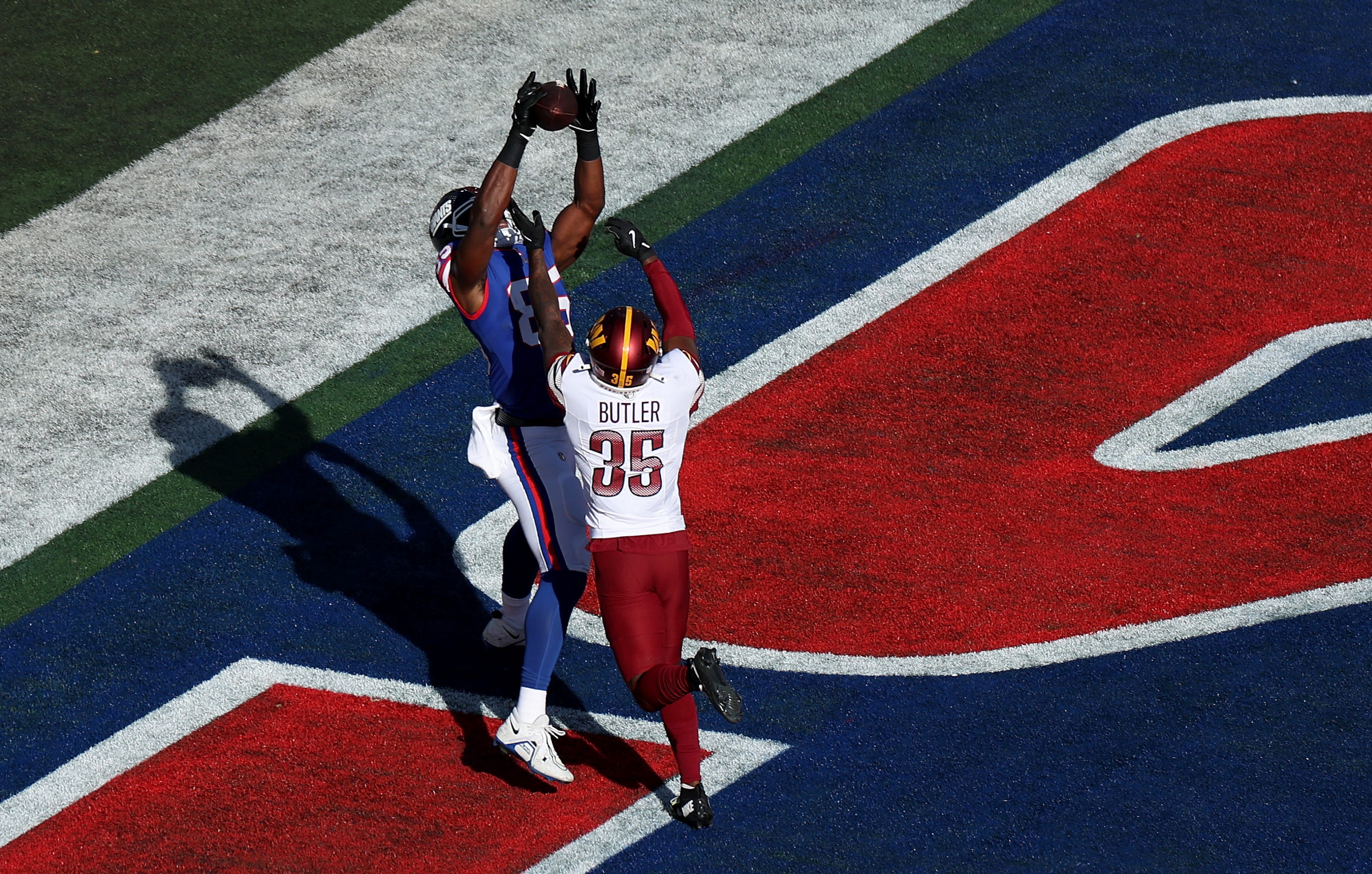
It’s not like you were wide open though. The guy was face-guarding you. It was a tough catch. You had to use some skill there.
Manhertz: I always tell my coaches, sometimes you’ve just got to remind them and put it on tape. I’m here if you need me.
So what is the dream scenario for you this year? If everything goes exactly how you want it to personally and for the team, what does it look like for Chris Manhertz and the 2026 New York Giants?
Manhertz: Competing in the playoffs because obviously the playoffs is a new season and what you’ve done, what any team has done over the course of the regular season once the playoffs start is, in my eyes, irrelevant. It’s a new season. So having the opportunity to compete that far into the season gives yourself a chance. Ultimately winning a Super Bowl would be awesome, but I also have to put certain micro goals in place before we get there.
You see playoff talent though on this roster?
Manhertz: Absolutely.
Jaxson Dart, what do you have to say about your quarterback?
Manhertz: Yeah, Jaxson is great. He’s learning every day. Obviously he’s a younger player, but he has the maturity of somebody that’s not in Year 2. So that’s always good. He could use his legs very well. He’s an accurate passer and obviously he has a lot of growth to do with the new offense and the coaching staff, but a good quarterback gives you a chance. Right? That’s all you need — a chance. So building on that holistically as a team — whether it’s on a defense, whether it’s on the offensive end, special teams — we just have to build that together and ultimately we’ve got to win games.
Chris, I’ve got to let you get back to chasing kids around, lifting weights, going into hyperbaric chambers, which I think Jeremy Shockey, former Giant great, he revolutionized that and took it to another level back in his day. So you’re keeping that tradition go. What is it about the chamber that helps you when you’re in there?
Manhertz: It’s pressurized oxygen. So you’re in that chamber, it’s a ton of pressure. Your ears are popping, but you’re getting fresh oxygen and you couple that oxygen with the amount of pressure that’s in that chamber. Your blood cells, your muscles are getting fresh oxygen. So in turn, your body has the ability to recover much fast than somebody that doesn’t use it. So that’s been my edge. I’ve spent nights in that machine, especially during training camp. So like I said, it’s a cumulative effect, but you just have to keep stacking it.
Spent the entire night?
Manhertz: Yeah, I’ve spent 7-hour stretches in the machine.
It’s no accident that Chris Manhertz is still going strong. Thanks so much, man.
Manhertz: No, I appreciate your time.
Related:
Calvin Austin III is the firestarter

CLIFTON, N.J. — His eyes squint toward the wall to his right. There’s nothing but a busboy over there tidying up dishes. Dim lighting. No foot traffic. But staring that direction, Calvin Austin III slips into a time machine. We’re not inside a restaurant anymore. We’ve transported to the Memphis Tigers weight room. It’s 2017…