


This is an awful time to watch television. It’s an election year. The barrage of attack ads is relentless, inescapable. Your weekly football games are spammed with juvenile mudslingin’ from both parties and it’s all unbelievably exhausting. Political discourse is more venomous than ever. People pick a side and go to war all day, every day on rage-based social media platforms.
Neither party gets their goals accomplished.
The people lose.
Round ‘n round we go.
Then, there’s the story of the Buffalo Bills.
A petroleum engineer who’s made his money in the oil and gas industry, Terry Pegula, forged a bond with a Democrat in a blue state to keep this team in this city. Point out the irony of this most unlikely of alliances and Kathy Hochul chuckles.
“It’s a common goal,” Hochul says. “A common love, common goal, and we do share that, and Terry was a great partner through this. Delivering this for Western New York is a huge point of pride for me.”
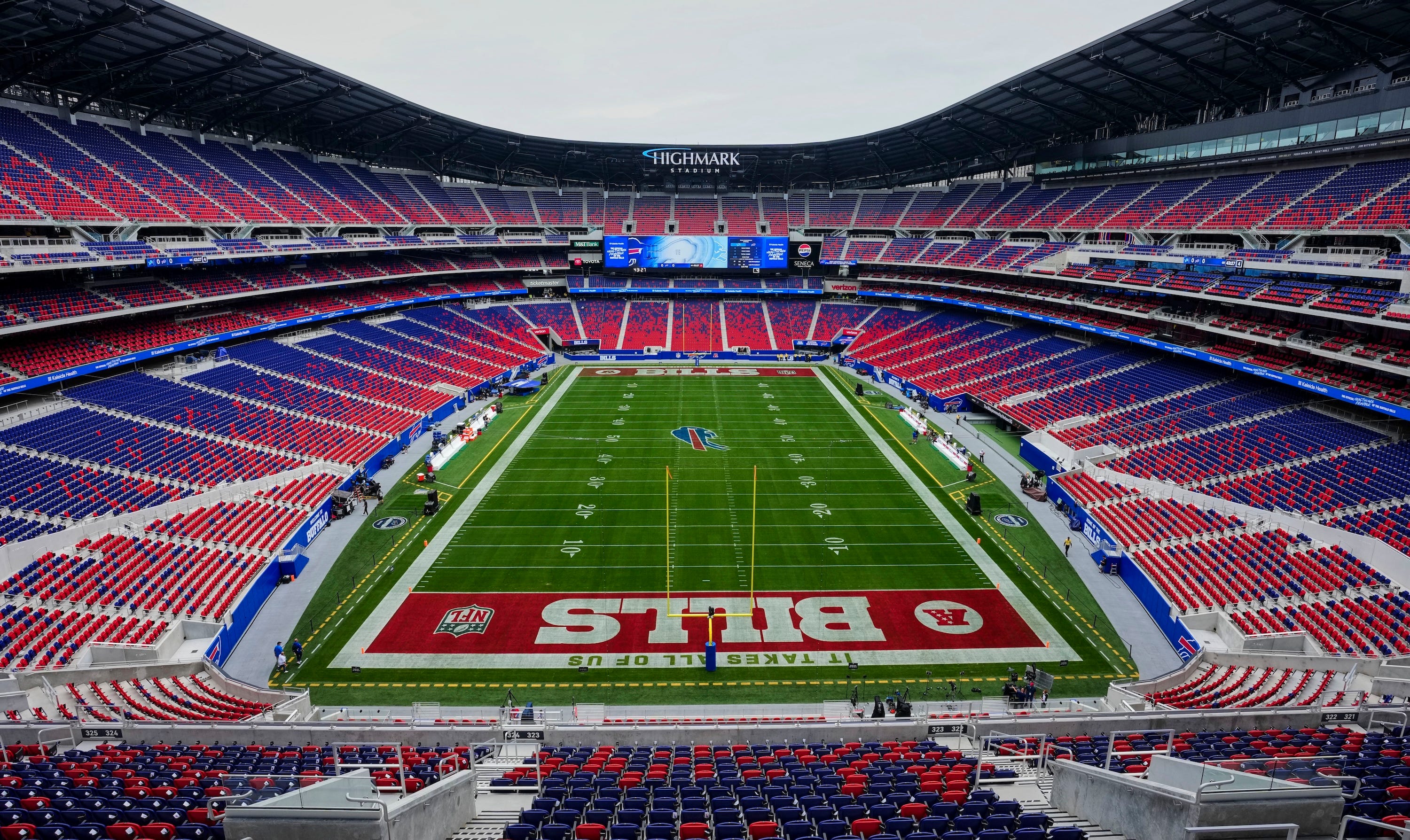
The Bills return to their new home this Sunday afternoon against the Baltimore Ravens and they’ll be here for at least another 30 years. Ahead of the grand opening at new Highmark Stadium, Go Long sat down with Pegula. Right inside his office, he guided us through all highs, all lows that led to the completion of Highmark. And it’s obvious that if making money was Priority 1, 2 and 3, the Bills would’ve packed their bags and moved. Perhaps to a city like San Antonio eager to fund a stadium itself. But it never got to that point. In our chat, Pegula stressed the importance of leaving a true legacy. He did not want to go down as this generation’s Art Modell and ended up paying north of a billion after overage costs.

One follow-up question from readers followed our story: How close was it really?
The Bills playing football in any city other than Buffalo feels sacrilegious, preposterous, impossible. But it’s true there was virtually no communication from the office of Gov. Andrew Cuomo. He ghosted the team. Hochul, a Hamburg native, took over on Aug. 24, 2021, prioritized the stadium, engaged with the Pegulas. The result is a sparkling stadium and the peace of mind knowing the Bills are in Western New York to stay.
So, Go Long reached out to the governor.
Thank you for supporting our longform. We are powered by you.
This phone conversation starts the only logical place it can — with Cuomo’s silence, with the unknown. Talks between the team and the state were practically nonexistent. Cuomo flat-out ignored the Bills’ calls. If there was substantive stadium dialogue, it was obvious to Hochul that those talks had “gone dark.” She was the lieutenant governor at the time.
When Cuomo resigned amid a sexual harassment scandal, one of Hochul’s first calls was to the Bills.
She knew the team’s lease was expiring. Most importantly, she knew locals had been terrified about losing their football team for years. She’s a diehard herself.
“And so even before I was sworn in as governor,” Hochul begins, “I reached out and talked to Terry, talked to Kim Pegula and said, ‘I’m going to make sure you stay.’ I’m going to make sure that we work this out. It’ll be difficult, but I’m going to make sure that no one ever questions where the Bills play. It’s going to be in Buffalo.’”
With that, a union was forged.
Hochul cites “difficult questions” throughout negotiations. They discussed whether the stadium would move to downtown Buffalo or stay in Orchard Park. Domed or not domed. How much Erie County should chip in.
Hochul fought for two provisions specifically:
A 30-year commitment with no chance of an early out.
New York State is not on the hook for cost overruns. “Which in retrospect,” Hochul adds, “was probably one of the smartest things I did.”
Indeed. The initial $1.4 billion ticket price for a new stadium ballooned to nearly $2.2 billion.
The state’s share for Highmark was less than 30 percent. (Not the case elsewhere.)
It was a chaotic time in Albany — a “blur.” Hochul lists off a handful of items immediately on her plate as governor. She was fleshing out a new government team, piecing together a ‘22 campaign, had hundreds of bills to either sign or veto and was authoring her first State of the State address, all while Hurricane Ida killed 17 and the Omicron virus emerged.
Through it all, she knew time was of the essence in Western New York. Conversations with Terry and Kim Pegula were prioritized.
“A lot of late nights, a lot of phone calls with myself and Terry and Kim, literally through the holidays, through Thanksgiving,” Hochul says. “I was speaking to people from the league as well, and midnight calls and New Year’s Eve right at midnight talking to everybody and just trying to piece it all together.”
Hochul wanted the Bills to know she was serious, not merely pacifying them with empty promises.
All of this was laced with a difficult task — convincing legislature downstate to give a damn. Hochul didn’t have much political capital then. Those in the Big Apple weren’t exactly thinking about the Bills.
She recalls getting blistered in local media coverage and political ads alike.
“This became a campaign issue against me when I’m running my first year. It was weaponized against me,” Hochul says. “But I was unwavering. I knew what I had to do and I was not going to be the governor who had on her tombstone: ‘She let the Bills get away. She’s the one who lost the Bills.’ I could not have that. So I knew what I had to do because I know what it means to the community. This is our identity.”
Those in the city didn’t understand the impact the Bills have on “the psychology” of the entire region, she adds.
Best way Hochul could explain it? The Bills are to Buffalo what Broadway is to New York City.
Says Hochul: “It’s part of who you are.”
Wheels were put into motion. One milestone followed the next.
March 28, 2022, the Bills reached an agreement with the state and county.
June 5, 2023, shovels were put in the ground.
June 23, 2026, ribbon was cut.
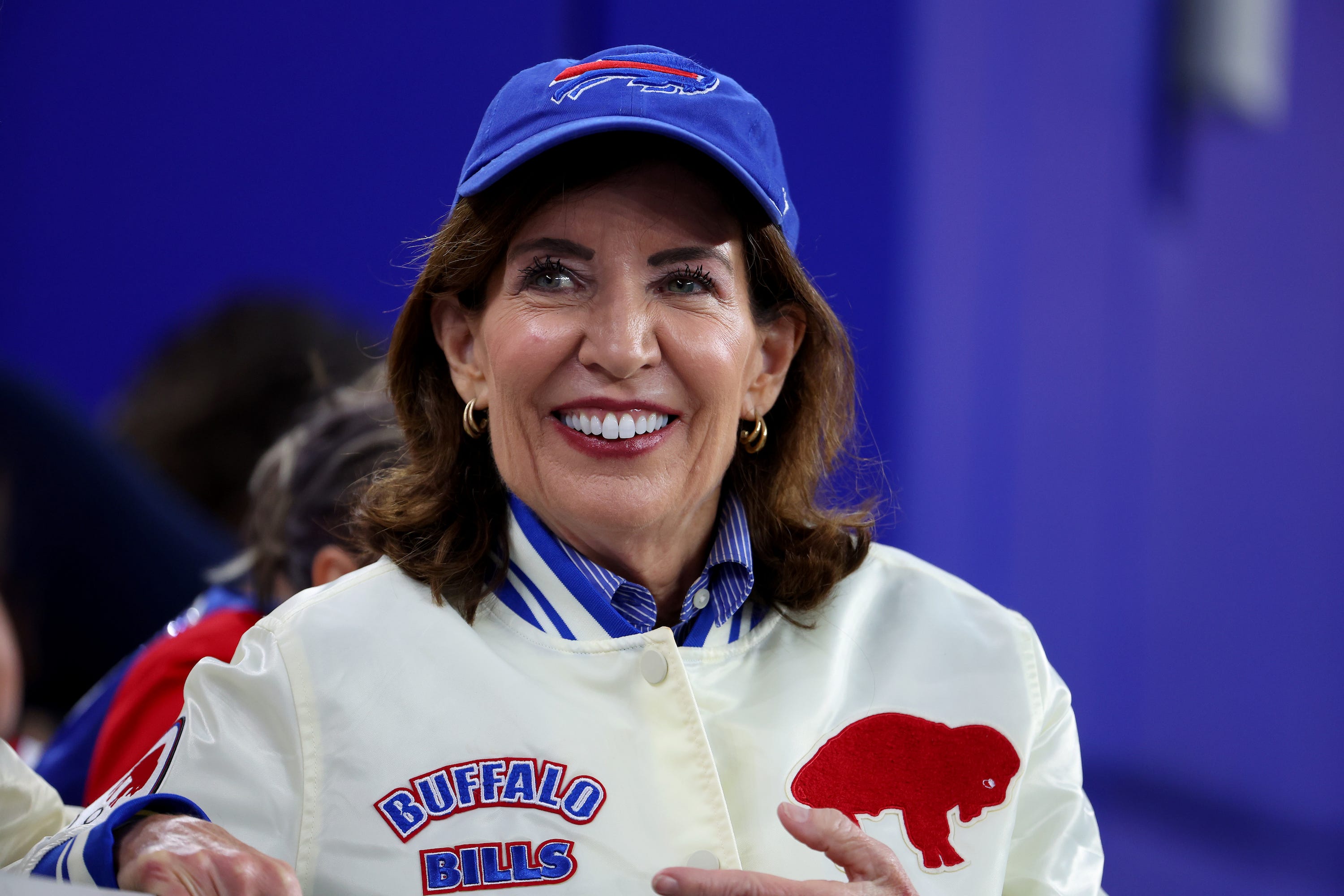
Sept. 17, 2026, the first regular-season game was played. Hochul attended the Bills’ 41-31 win over the Lions. She loved seeing people of all ages, all backgrounds, all political allegiances come together to celebrate.
“One of the most magical nights of my life,” Hochul says. “Almost like a spiritual experience. … I couldn’t stop smiling the entire night.”
Football gods have been cruel to these Bills… for decades. Wide Right. Four straight Super Bowl losses. The Music City Miracle. The 17-year playoff drought. Thirteen Seconds. Wide Right II. Finally, this organization experienced some overdue divine providence. Again, Hochul took office exactly when this city needed an ally in Albany.
She’s the first NYS governor from Buffalo since Grover Cleveland in the 1880s.
She understands the Bills are forever synonymous with Buffalo at a level other politicians never could.
Of course, Hochul has her go-to Bills-backer bar in Albany. When it was time to get an apartment in NYC, she made sure it was one block away from another.
“And so I watched a lot of the agonizing conclusions and playoff seasons in local bars surrounded by expatriates and other newfound fans of Buffalo,” Hochul says. “They all love Josh Allen. And it’s really been quite contagious. People walk up to me on the street. I was cutting through a kitchen at a hotel last night at a big event and the wait staff’s saying, ‘Go Bills, Go Bills, Go Bills.’ So I’m trying to teach people the language. It’s like ‘Ciao!’ How do you say hi or goodbye? It’s ‘Go Bills.’ … So I’ve actually had a lot of converts — people love the energy and what it means to be from a gritty place that got knocked down and now is part of the great comeback story.”
OK, let’s cut to the chase.
During the ribbon-cutting ceremony, Pegula hinted at those fragile 2021 times. “I don’t know,” he said, “if we’d be here today without Kathy’s support.” Other markets are dying for an NFL team. The appetite is ravenous. When I bring up San Antonio as one city courting the Bills, Hochul doesn’t hesitate. She heard the outside threat was real — “so real” — while adding that this was obviously a sensitive subject for those at One Bills Drive. In real time, the team didn’t want its constituents thinking relocation was an option.
Like so many pro sports owners past, Pegula could’ve tried leveraging a move in the public. He did not.
Like so many politicians past, Hochul could’ve turned this into a public brawl and positioned herself as the knight saving the Bills. She did not.
Commissioner Roger Goodell, if it got to that point, could’ve intervened to keep the team in Buffalo. He was born in Jamestown. No way did he want this on his NFL tombstone after seeing the Browns leave Cleveland on his predecessor’s watch. He never needed to step in.
Everything could’ve become a vicious 12-round fight if the governor of the state wasn’t a Hamburg native who refused to play stadium roulette.
“It was too high of a risk: ‘Well, let’s take a chance. Let’s just say go pay for it yourself and you’re on your own,’” Hochul says. “I’m a risk-taker by nature, but that one? The stakes were too high. I had carved out a good deal. The best I could get. And the rest is history. But no, I don’t think people knew that was a real threat because that wasn’t being broadcast. When you go back and think about the time when Ralph Wilson died and there was new ownership opportunities and all the talk about: ‘Is Donald Trump going to own it? Was Bon Jovi going to own it? Is he going to take it to Toronto?’ I told Bon Jovi, I saw him at an event about a year ago, I said, ‘We still don’t play your music in Buffalo.’ He said, ‘I wasn’t going to move it to Toronto.’ I don’t know. We didn’t know.
“So it wasn’t like that where everybody knew it was a scary, stressful time — ‘Are they going to leave or not leave?’ I think that maybe that was tampered down a little bit by some folks, but the people in the know knew it was real.”
Without specifying the markets, she assures San Antonio was not the only city trying to woo the Bills. There were multiple.
Now, about the cost for you all.
Like many of you, I also loathe paying taxes. Lighting money on fire as a small-business owner is not an enjoyable experience.
Like many of you, I cringed when the jarring sticker price for taxpayers on this new stadium was announced — $600 million in state funds, $250 million from the county. As noted in our previous story, the state’s responsibility dropped to $182 million after settling a dispute with the Seneca Nation. (And obviously we can debate whether or not $418M should go to a football team.)
Divide this remaining $182M state obligation by the 10,930,094 tax filers (per the 2024 numbers) and it rounds out to $16.65 per taxpayer.
Divide this figure by the 30-year length of the deal and each state taxpayer is spending less than 56 cents per year on the construction of the stadium.
Of course, Erie County also has its share. Napkin math the estimated 440,000 taxable households in the county and it’s $568 per taxpayer, or about $19 per year over the course of the 30 years.
No governor of either party can relay this message in front of a mic. But when I bring it up to Hochul, she also argues the stadium will be an “income generator” in the long run that pays for itself. In theory, the state should collect enough income tax derived from the Bills staying in-state to pay off their share in 17 years.
She’s also hopeful everyone from Buffalo to the Bronx is proud to keep the Bills in the state.
“That doesn’t diminish the loyalty of the Jets and the Giants fans, and it runs deep outside of upstate New York,” Hochul says. “I always say to them, ‘If your team is not playing the Bills, can you root for the Bills on top of it? Make it be your second favorite team.’ There’s a lot of Buffalo love outside of Buffalo.”
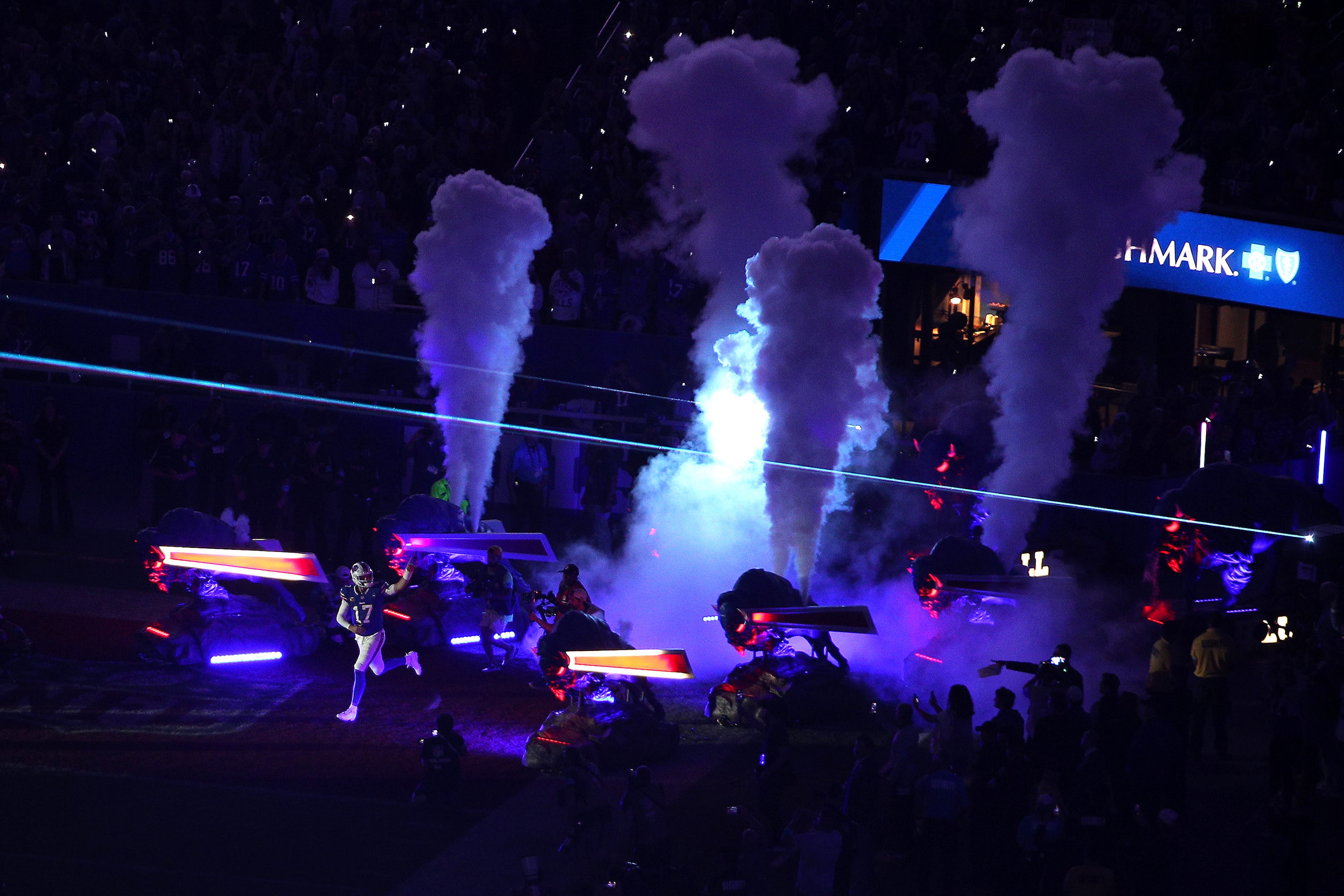
Now, it’s here. This weekend’s game against the Ravens marks the team’s fourth regular-season game at home.
Hochul is a big fan of this stadium’s architecture — how its verticality makes fans feel part of the action. It’s a hell of a lot louder here, too. Hochul, like Pegula, wanted the Bills to build a venue that offered a true homefield advantage. Even if it meant not hosting a domed Super Bowl.
“If the fans want to keep that advantage of the weather,” Hochul says, “the elements that any of us brave in a heartbeat, that those who are a little more faint of heart find challenging? I’d say Terry and Kim were both very much in-tune with what the Bills Mafia and their fan base wanted, and I appreciate that.
“If you moved it to downtown Buffalo, where are you going to tailgate?”
Look around the country.
Stadium deals are becoming ugly public spectacles.
A lawsuit over the Kansas City Chiefs’ stadium project was settled this week. The Chicago Bears are focused on moving to Hammond, Indiana. Cleveland and Washington will also move into extremely expensive new digs. One source that attended the recent NFL owners meetings heard one of these teams was hoping to earn $1 billion in PSL sales.
Hochul hesitates to publicly anoint the Bills stadium as her No. 1 accomplishment as governor. But heck yeah, this was personal.
The Bills-Lions home opener on Thursday Night Football was a family reunion. Siblings. Cousins. Everybody gathered. Hochul brings up a picture shared on her social media accounts: her grandfather’s “I Was There” card from the first game at Rich Stadium on Aug. 17, 1973. After a life working at the Bethlehem Steel Plant— “hard, hard gritty work,” she says — he didn’t want to go to Florida in retirement.
Instead, the family pooled together money for Bills season tickets.
Fifty-three years later, she attended Game No. 1 in the team’s new stadium.
It was an emotional night for everyone.
Most importantly? All along, Kathy Hochul knew she wasn’t alone.
“Being able to deliver something for my hometown, this was important.
“We’re not an atypical family. This is life.”
Great piece Tyler. Thanks for mentioning the income tax payments. That is often forgotten. I wrote of this last year using some state numbers that everyone acknowledged then were probably low: https://rochesterbeacon.com/2025/12/10/is-the-new-bills-stadium-really-such-a-bad-deal-for-taxpayers/