

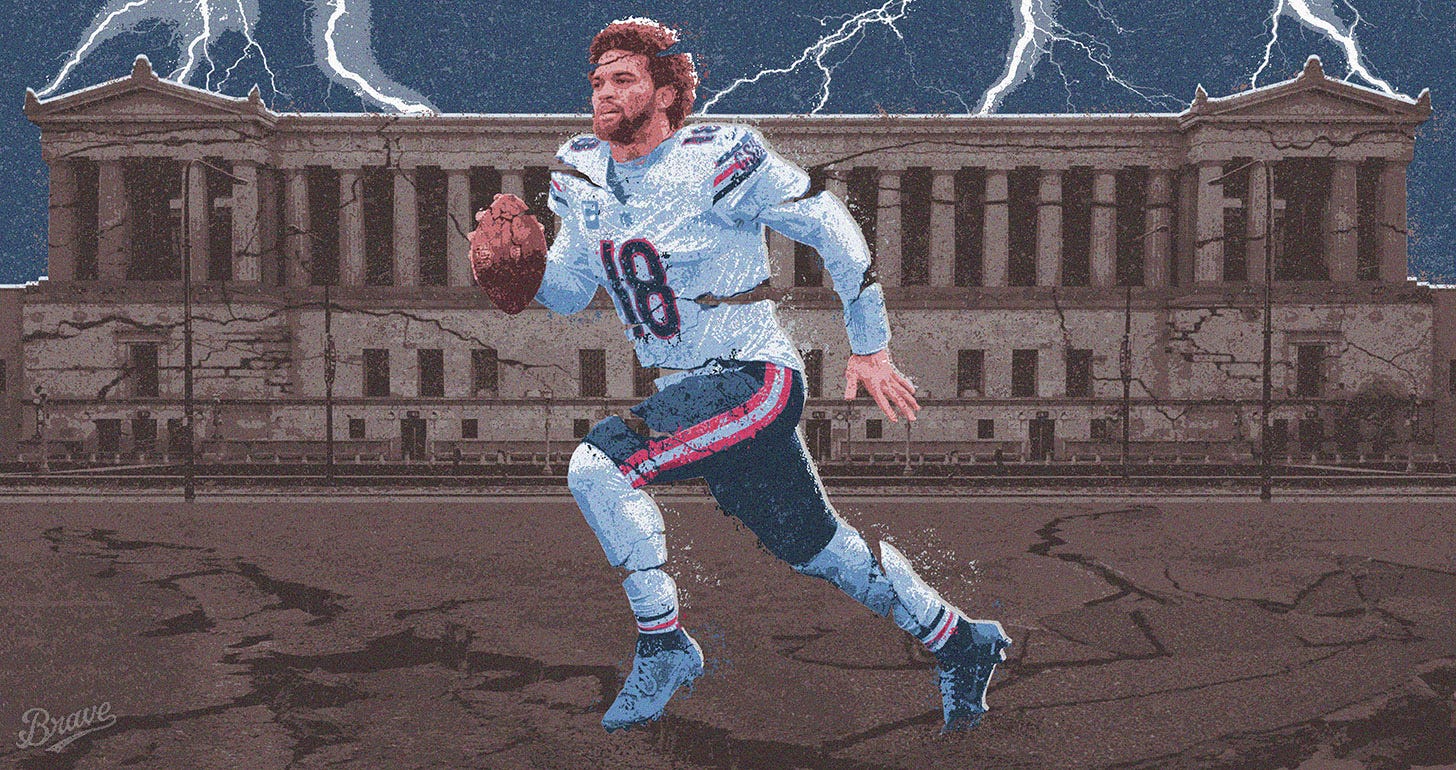
Highlight reels failed to capture his signature move as a professional quarterback. Cameras weren’t flashing and sycophants weren’t hyperventilating. But, yes, Caleb Williams was able to master one signature move as a rookie last season.
In college, he’d juke and spin and escape helpless defenders with hypnotic flair. He was an artist coloring outside the lines and this 53 1/3-yard wide, 120-yard long field was his personal canvas. But in the pros, such sorcery was scarce. In the pros, he’s been escaping a different setting with remarkable precision and consistency.
The most dramatic spectacle of them all occurred on Dec. 26. His team was hosting the Seattle Seahawks on Thursday Night Football. Commercials rolled during a timeout, so nobody at home saw this poignant moment that perfectly summarized the 2024 Chicago Bears. In the wake of two firings, heartbreaking defeats, staggering to the finish line of an agonizing 5-12 season, interim head coach Thomas Brown tried to explain something to his starting quarterback and… no. Williams was not having it.
An auto-response kicked in.
As he had done many times to many coaches all season, Williams turned his head and walked away. Shane Waldron, before getting fired as offensive coordinator, used to stay quiet. Not Brown. Not a stern, blunt, old-school coach who believed this 22-year-old crossed a line of disrespect. The typically calm coach lost it. On the headset, another Bears assistant coach recalls Brown pressing the mic to finish his conversation: “Get your ass back here right now! Don’t fucking walk away when I’m talking to you!”
Unfazed, Williams sashayed away. Right back to the huddle.
The Bears lost, 6-3.
“That’s when you knew the world was coming to an end,” one coach says.
He pauses. He thinks back. The world might’ve ended that day, but in truth? All warning signs were obvious seven months prior. Outside the walls of Halas Hall, hype reigned. Tickets sold in record numbers when the Bears made Williams the No. 1 overall pick. No. 18 jerseys flew off the shelves. This glitzy gazelle in the open field was universally extolled as the charismatic, electric, dare we say Mahomesian playmaker these Bears have lacked since inception in 1919. OTAs arrived, coaches unwrapped this gift from the football gods who’ve cursed this organization for so long and… yikes.
Williams struggled to execute elementary tasks. Every day was a new disaster.
That early, that spring, the Bears changed the snap count to appease Williams. Instead of using a combination of colors and numbers like every other team in the NFL, the Bears reverted to a “Ready, set, go!” straight out of JV football because that’s what the quarterback requested. Aside from the obvious on-field consequences — defenders could tee off — the Bears were establishing a troubling precedent in allowing a rookie to tell them exactly what to do. Veterans couldn’t believe it. “Are you shitting me?” one receiver asked a coach.
When a play call was sent in, he’d stare at this wristband for a painful length of time. “Like it was in another language,” another coach says. Williams verbalized the call in the huddle, it was wrong half the time, and then players would be lined up wrong all over the field. Verbiage was truncated. Huddling was minimized. The playbook, dumbed down. The Bears offense devolved into an exercise of trial and error to fit whatever the USC rookie demanded.
All of which would’ve been manageable if Williams was willing to work. He was not.
For all the talk about wanting to be great, this new quarterback didn’t seem to have the desire. When he wasn’t storming away from a coach, he was telling veteran wide receivers how to run their routes before taking a game rep himself. In the meeting room, he barely said a word and didn’t pay attention. Coaches often caught Williams on the wrong page of the gameplan completely. He blew off film sessions and lifts.
Chicago made him a captain.
Games began.
Chaos reigned.
The 2025 NFL season is here and these Chicago Bears are the most mesmerizing team of them all. Hope’s been restored with the union of a captivating quarterback (Williams) and a brilliant offensive mind (Ben Johnson). In free agency, the Bears rebuilt their offensive line. In the draft, they added weaponry. All offseason, it’s been drilled into your cranium that a bunch of dolts stunted the quarterback’s growth last season. Poor coaching ruining young quarterbacks is a tale old as time. Williams, so the prevailing storyline goes, is finally free. Thus, it’s now time for Chicago to rocket-launch into NFL contention.
When Go Long started phoning sources, this was honestly the direction I expected to trek. We’ve chronicled skeletons past in Chicago and explored the new duo. Yet, if we’ve learned anything since launching our longform site in 2020, it’s that there’s always a shady underbelly to the NFL that too often goes ignored. Life was, indeed, miserable in Chicago last season. But not for the reasons you think.
Williams was more source of turmoil, than victim.
And as always, the stench runs deeper than one person. The Chicago Bears possessed the most treasured asset in all of pro sports — the No. 1 overall pick in a QB-rich NFL Draft — yet proved again to be their own worst enemy.
For this three-part series, Go Long chatted with 32 sources. Coaches, scouts, execs, players and staffers inside Halas Hall guide readers through the sludge. Many have landed new jobs. To share their experiences without fear of retribution they’re granted a condition of anonymity.
The more we dig, the more it’s clear why the Bears have one winning season since 2012.
In Part I, we reveal how 2024 spiraled out of control through the eyes of those coaches. A season that included extreme frustrations, a near benching, a late-season revelation and mass firings. “A shitshow,” one says.
In Part II, we revisit the farce of a draft process that led GM Ryan Poles to select Williams No. 1 overall. One personnel man recalls the charade as “rigged.”
In Part III, we zoom out: Who’s to blame? The Bears have become an organization repellent to independent thought. The GM inherited a bad situation and managed to make it worse with a 15-36 record. All roads in this league tend to lead back to ownership.
Ben Johnson and his staff now stare down the barrel of more disorder than they anticipated.
The quarterback he inherits is not the same species of football junkie.
Former Bears coaches cannot grin and bear it.
No doubt, part of the job is taking bullets for your players. But when one of those players, in their estimation, so blatantly lies about how he’s been coached? They feel no choice but to shed light on what transpired behind closed doors. In Seth Wickersham’s upcoming book, American Kings, Williams told his father that he wasn’t getting any help from the staff. “No one tells me what to watch,” the QB said. “I just turn it on.” When this quote went viral, I was actually on the phone with one former Bears offensive assistant.
He read it aloud, seethed and called it “evil” on Williams’ part to describe last season in such a manner.
“Do you think we’re not going to meet with this kid and teach him shit?” the coach said. “Who would do that? It’s fucking crazy. I don’t get it. You think we want to be bad? It makes me fucking sick.”
Another coach on offense calls Williams’ complaint “bullshit.”
“For him to say it?” the coach adds. “That guy knows what the hell happened.”
Another coach says this entire staff didn’t merely show up in Chicago and forget how to coach. All have prepared players their entire lives. All have been around top quarterbacks before, and this player’s work ethic was the worst most had ever seen.
“Any narrative surrounding that film — if people buy into it — I have some beachfront property in Idaho I want to sell ‘em, too.”
He continues.
“There are grown-man responsibilities. You expect him to put the work in. And I think everybody desires to be great. Wanting to be great is phenomenal. If I go to a local barbershop, there are probably seven guys who wanted to be great players when they were 13 years old. But what you want and what you earn are two different things. This life and the game of football doesn’t give you what you want. I want $50 million. If I want $50 million, I’ve got to go earn $50 million.
“If you can’t sacrifice? There’s no substitute for the work. That’s something he needs to learn.”
Red flags were immediate.
Life only got worse. And worse.
Go Long is your home for independent longform coverage this NFL season.
We are completely powered by you.
Coddling Caleb
He rarely ever turned the tablet on. That was obvious. The Bears can see how much all players watch film on their devices away from the facility.
Which begs one question: How exactly did the quarterback spend his idle time?
One Bears coach sneers.
“That’s a good question for John Jackson The Third.”
The best place to start is with a player most NFL fans have never heard of in their lives.
Jackson was not amongst the 257 players selected in the 2024 NFL Draft, nor was he even one of the 15 or so UDFA free agent signings each team scoops up those manic hours afterward. Mainly because he’s not a talented football player. The wide receiver caught five passes in four seasons at USC, before totaling a meager 267 receiving yards his final collegiate season on a 2-10 Nevada team. He scored zero touchdowns in 51 games. The good news for Jackson was that his best friend is Williams, and the Bears’ GM was determined to keep his new quarterback smiling.
After participating at rookie camp on a tryout basis, Jackson was given a spot on the 90-man roster and then ate up a practice-squad spot all season long.
When I ask a GM for another team if Jackson was on his radar — at any point — he laughs, then assures it is not normal for a team to stash a quarterback’s buddy on the practice squad.
Bears coaches saw a receiver with no business being in the NFL.
“We all knew why this dude was on the team,” says one coach. “Couldn’t play a lick. And I like the dude. But that’s the lengths they did to kiss Caleb’s ass.
“We kissed his ass from Day 1.”
One coach is so irritated by the mention of this name that he refuses to touch the subject in fear of saying something he’d regret.
Hence, the fine line between building an infrastructure that helps a young pro flourish and outright pampering that player. This small nuisance symbolized a systemic problem. The Bears were willing to twist and contort at every conceivable angle to coddle its No. 1 pick. Throughout the entire draft process, roles flipped. Williams wasn’t interviewing for the Bears, rather the Bears were trying to convince Williams to say “yes” at the altar.
An ass-backward dynamic that spilled right into the actual football once the helmets came on.
On Day 1, Caleb Williams did not present himself as one of the guys eager to learn.
This looked like a kid whose reps asked teams about the possibility of receiving an ownership stake. (“He comes in here,” says one former Bears staffer, “acting like he’s a fucking movie star.”)
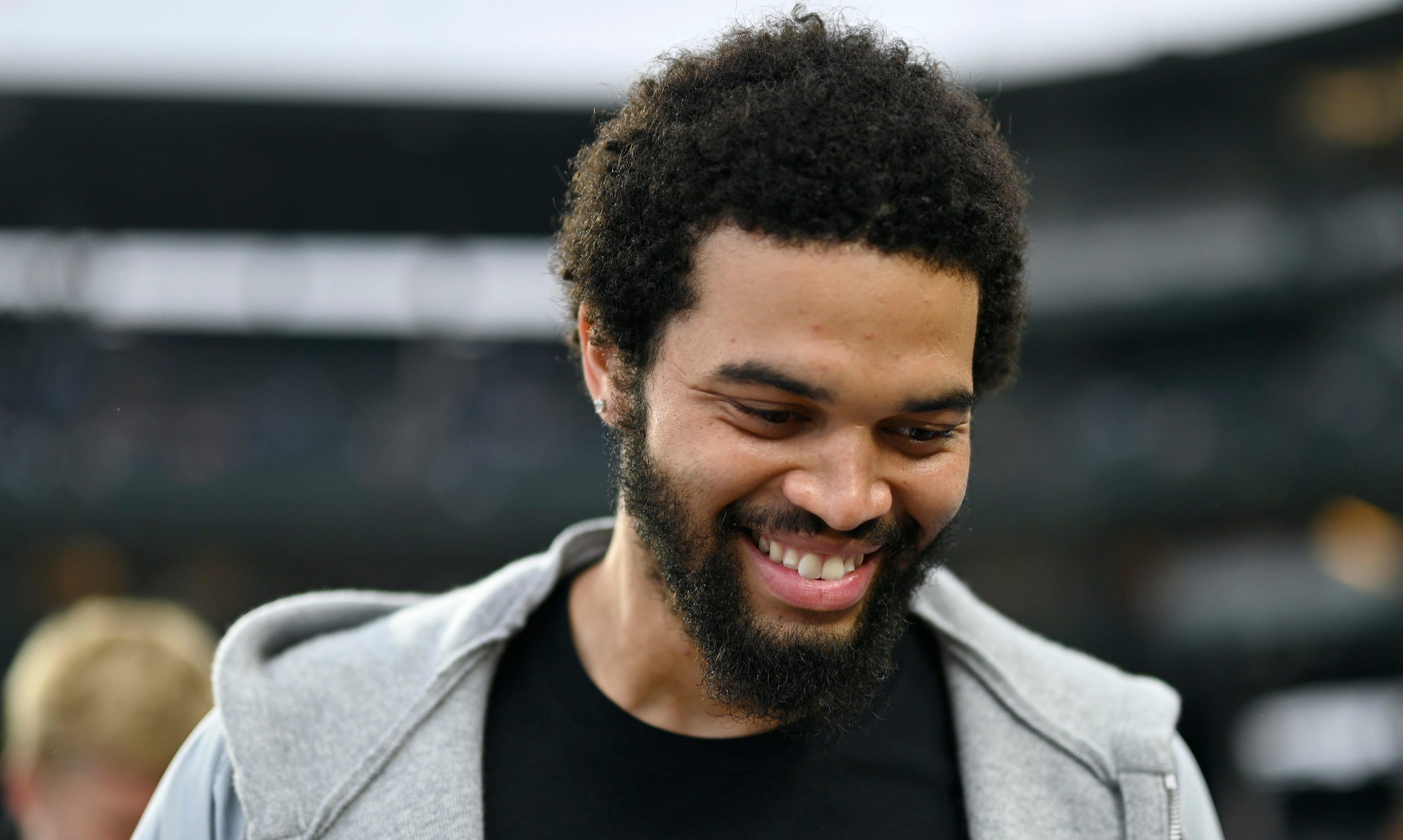
One coach who was around Williams a ton last season concedes it’s unfair for any rookie to glide into the league with “Peyton Manning”-level expectations. But this is also the most intellectually taxing position in sports. The only way any quarterback has a shot at pursuing greatness is if they’re “developed” and “molded” and — too often? — he sees prodigious 22- and 23-year-olds crowned by organizations. They’re given too much power.
Labeled a savior in the press. Treated like a savior in real life.
“Obviously if you’re the No. 1 pick, you’re a talented football player,” this coach says. “You probably haven’t had to work your ass off in every aspect of your entire life to be really, really good at football. The degree of separation in this league is not: ‘I ran around San Jose State and threw five touchdowns.’ We won’t play San Jose State. Those cats don’t exist. And so, the mental game that goes on behind the scenes at the quarterback position is huge. Especially the importance of habits. Habits are hard to break whether they’re good or bad.
“He’s super talented but talent by itself? Nobody cares in this league how talented you are.”
Very quickly, all parties involved realized Williams’ immense raw talent would not be enough.
Chicago’s mistake was allowing his worst habits to fester.
That’s why the staff is so floored by his accusation. If anything? They did too much.
A few wins at the end of the ’23 season helped Matt Eberflus save his job and Shane Waldron won the Great Offensive Coordinator Sweepstakes as the man to coach Williams. A process Poles took immense pride in, and why not? Back then, Waldron — a McVay disciple — was one of the hottest names on the coaching market. The Bears’ new staff was ecstatic to marry this Heisman talent with a sophisticated scheme that worked so well for the likes of Jared Goff in Los Angeles and both Russell Wilson and Geno Smith in Seattle.
Williams was not a fan. Williams won.
Almost immediately, the Bears castrated their own playbook.
“What plays we were calling,” one coach says. “How we were calling ‘em. Game planning. Not being able to run plays with alerts and cans and be able to have a run called one way and change it to the other way based on certain leverages of safeties and movements and stuff. He hated all that stuff.
“Everything had to fit what he wanted and what he was comfortable doing. Caleb wanted all this control of the offense, but really couldn't handle it.”
The Bears made their offense as basic as possible with easier formations, fewer motions, limited audibles. Smart centers typically take a mental load off of a rookie quarterback’s pre-snap plate but those centers cannot always see what’s brewing in the secondary — if, say, a safety creeps to the other side and morphs into an unblocked tackler. Williams was unable to keep up with these moving chess pieces. He didn’t realize he needed to motion a receiver over to pick that safety, or flip the run call to the other side.
Endless screw-ups forced the Bears to drastically dwindle their volume of checks.
Up front, Bears offensive line coach Chris Morgan was on McVay’s staff with the Washington Redskins back to 2012, worked with Kyle Shanahan’s NFC-champion Atlanta Falcons in 2016, and his Chicago teams rushed for more yards (5,413) than anyone in the NFL through the 2022 and 2023 seasons that preceded Williams’ arrival. His run scheme, however, requires a level of intelligence and diligence from the quarterback.
“Caleb didn’t want to do it,” one coach says. “Or couldn’t do it.”
Piecing together a functional drive became an “uphill battle all the time.”
Defenses roared off the ball thanks to that predictable snap count and the quarterback’s own sloppy habits. Sometimes, he’d simply stare… and stare… and stare at the defense’s structure. Other times, he’d flash his hands right before the ball was snapped — a split-second tell that served as a starter’s gun for pass rushers foaming at the mouth. On the headset, Morgan would lose his mind: “We’ve got to change the fucking cadence!”
Coaches deleted words out of the play calls. That didn’t help. Coaches tried going no-huddle to limit the number of times Williams would need to regurgitate those play calls. This wasn’t sustainable. All while a convoy of assistants nursed the rookie in every way imaginable. In earsplitting unison, they insist they’ve never seen a quarterback receive more help than Caleb Williams.
He was, in fact, taught exactly how to watch NFL film.
“They were babysitting sessions,” says one coach, “as far as walking through the process of how to study film, what to look at, whatever.”
Williams spent so many hours with both Waldron and quarterbacks coach Kerry Joseph that one person on staff thought the Bears might’ve even been breaking CBA rules.
The objective was clear: Make this offense as Caleb-friendly as possible.
“Shane went overboard in trying to help him,” says one Bears assistant who watched closely. “Shane tried to, well, ‘This is what they did at USC.’ In my mind, I’m looking at it, ‘It’s the NFL. Who gives a shit what they did at USC?’ He was bending over backwards trying to figure out the best way to reach him.
“Shane tried. Shane, I thought he went too far to try.”
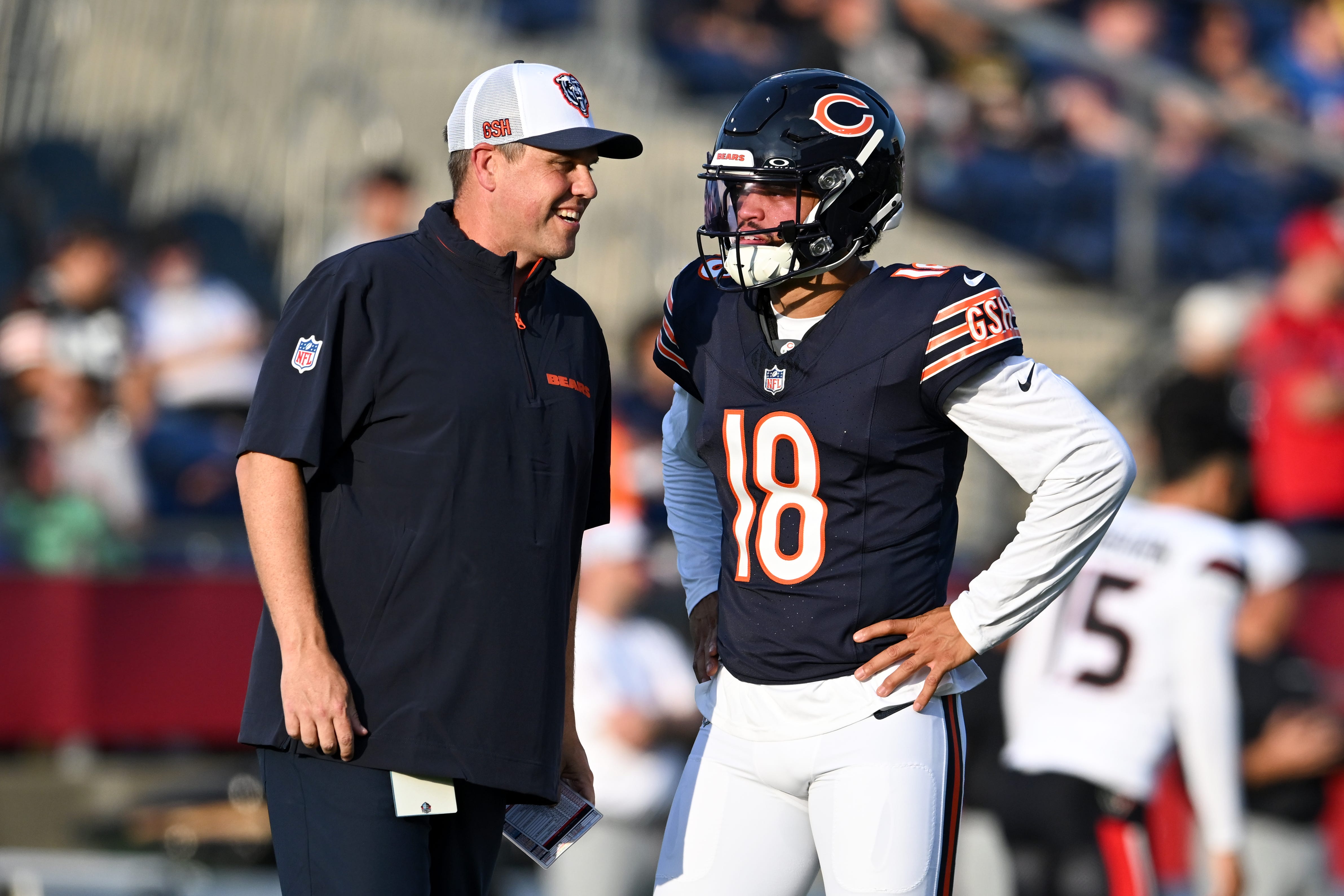
No wonder one of the ex-OC’s closest friends in the business says Williams claims are still eating him up inside. Any suggestion that the Bears abandoned the rookie is at such odds with reality that, to them, it hints at a bigger problem: an absence of character. The opportunity to go the extra mile at home was quite literally in Williams’ palms. He’d receive three blitz tapes each week from the O-Line coaches. Each week, Joseph spent seven hours straight splicing up cut-ups: down and distances, third downs, two-minute, red zone, etc. “Wasting seven hours,” one colleague adds. “It obviously wasn’t watched.”
In Washington, No. 2 pick Jayden Daniels developed habits of his own by showing up to work at 5:30 a.m. each morning.
In Chicago, nobody recalls seeing Williams show up remotely that early. Extra film sessions were always budgeted into the schedule, too. Centers and quarterbacks congregated for a pass-protection meeting in the AM. Technically, they were optional. But the only player who blew them off was the player who obviously needed them most: Williams. He was a no-show, one source notes, “numerous times.”
He skipped lifting sessions. When strength coaches tried giving the QB new times to show up, he supplied excuses why he couldn’t make it.
“Talking about being great and being great are two different things,” says one coach. “I don’t care what you say. I care what you do.”
Adds another: “Ask Tyson Bagent if we coached the quarterbacks.”
Whenever he was physically present, Williams rarely engaged. One player in the offensive meeting room recalls assistant offensive line coach Jason Houghtaling starting meetings with a gentle reminder: “Everybody is responsible for this protection. Everybody has to lock in. Everybody has to work together. Everybody has to be on their shit. Not just some people.” It was his gentle way of trying to get Williams to give a shit. Because whenever Houghtaling — any Bears coach for that matter — directly asked the quarterback questions, he had no answers. Crickets. He was in La La Land.
“He’d give you the look, like ‘Why are you talking to me?’” recalls one coach. “Well, you’re the starting quarterback. That’s why. He wasn’t answering questions. It was strange.”
Bagent, the No. 2 QB, did supply the answers. Repeatedly.
One coach brings up the visual of Williams sobbing uncontrollably in his mother’s arms after a 52-42 loss to Washington in college. To him, this was damning because of what you don’t see on the screen. When the going got tough — when emotions overwhelmed — Williams ditched everyone who sacrificed alongside him that night: his teammates. “It’s always somebody else’s fault,” this coach says. Right down to body language. Veteran receiver D.J. Moore snapped at his quarterback once on this front, telling Williams flat-out: “We don’t do that shit.”
If Williams didn’t like a coach’s teaching point, he was liable to strut away in a huff. This started early, in training camp, and lingered into the season. Specific examples are shared. Nobody was off limits, but Waldron was easily iced out the most. Quieter and non-confrontational, Waldron never wanted to escalate the situation.
Practices. Games. The setting never mattered. Williams acted as if he was above correction.
“He didn’t want to hear anything,” one coach says. “He didn’t like criticism, so he’d just fucking get up and leave. We’d be like, ‘This motherfucker.’ Get up and leave! I would see this guy storming off and hear them talking in the headset about Caleb. You look over, and there’s Caleb fucking walking away all pouty. Then, he would sit all the way on the other side of the benches.
“So disrespectful. But Shane didn’t want to cause an even worse scene.”
The best teams in the NFL, of course, police themselves.
Leaders sniff this out. Step in.
One of the team’s assistant coaches, who had a strong sense of the locker room, never saw a genuine connection between Williams and teammates. It was weird. The same players who were pissed off by the quarterback’s immaturity were too afraid to address the problem to Williams’ face. They’d complain about the rookie behind his back. Often, for good reason. They knew Williams wouldn’t listen to a word they had to say. Coaches and players both call Williams “abrasive.” Not in an aggressive way. (He’s not aggressive — “at all,” emphasizes one coach.) Rather, he’s portrayed as petulant. Sour.
All while Williams had no problem telling veteran wide receivers like Keenan Allen and Moore how to run their routes before taking one NFL snap himself. (That didn’t go over well.)
September closed in and Williams was named one of the Bears’ eight captains. News that was celebrated by the team as evidence the rookie had ingratiated himself to teammates. Uh… not exactly. Multiple coaches admit to Go Long that the team cooked the voting process to ensure a “C” was stitched on his chest. One assistant even laughs at the suggestion that players would anoint Williams one of their captains. It was obvious to everyone that Williams was not an alpha male. When the rookie captain was asked to break down the entire team, it caught him off-guard. He didn’t know what to say. His delivery was so awkward the Bears stopped asking Williams to do it. Nobody understood how a No. 1 pick could be such a mute during practice.
“He tried to portray himself as an alpha and he definitely was not an alpha in any type of situation,” one ex-Bears coach says. “It was forced leadership. Everything was a charade. There was nothing authentic.”
One of Williams’ perceived strengths out of USC — galvanizing teammates— is described en masse by Bears sources as a weakness. One veteran player who liked Williams as a person admits his body language and leadership were awful. The best gauge for any quarterback’s leadership is what those 300-pound offensive linemen think. On this front, there were many issues.
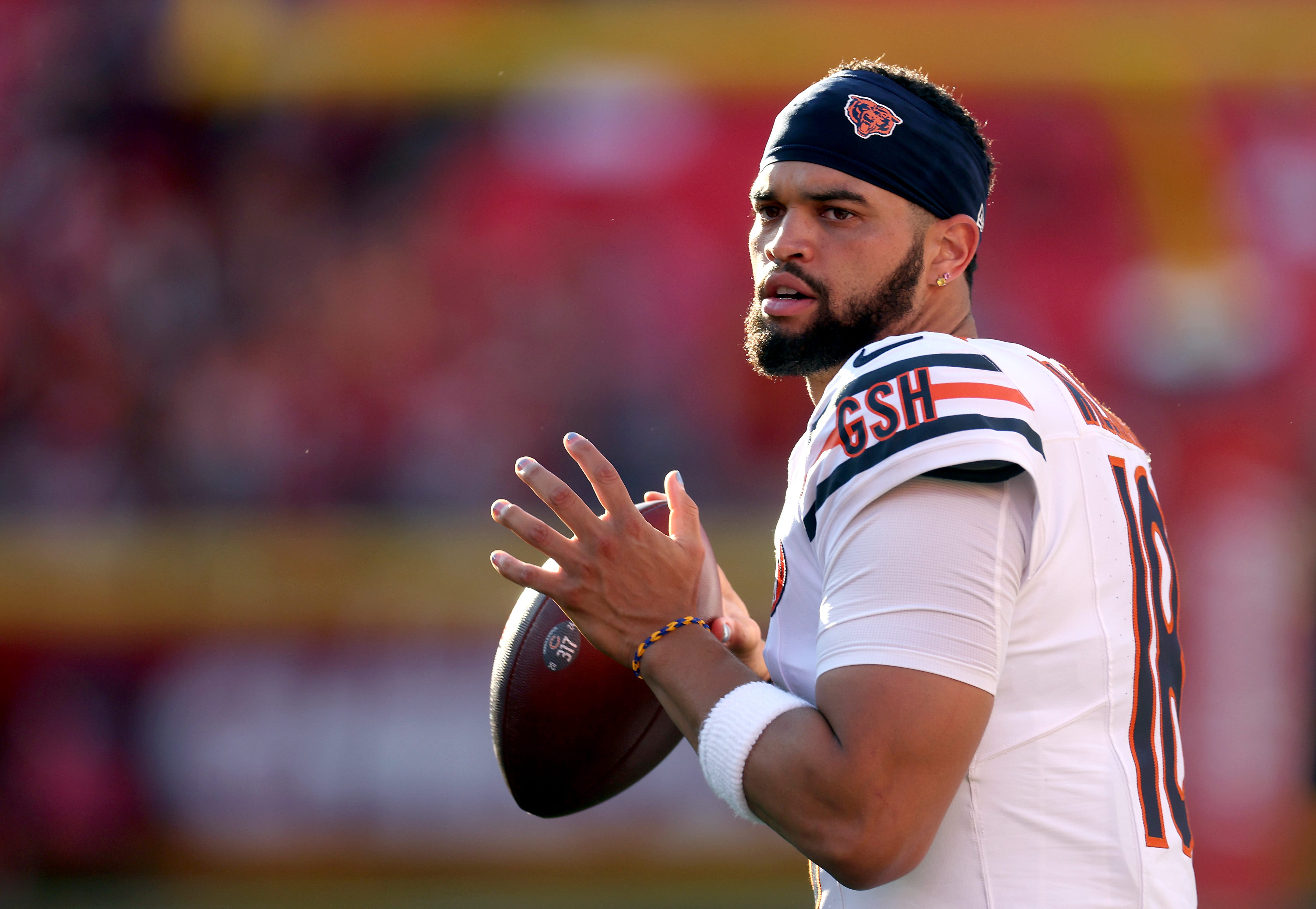
All of it created a poisonous tonic for NFL Sundays. Call of Duty sprees may seem innocent enough but those bloody three hours on Sunday are inevitable — QB1s coast at their own peril. Lions head coach Dan Campbell hit the bull’s eye when he called this league an unstoppable “freight train.” That’s why Friday and Saturday are typically flawless dress rehearsals ‘round the NFL. By then, everyone’s locked in.
On the field, the ball never touches the grass. Off it, the QB has every answer to the test.
Here, both days were disturbing omens.
“Ask anybody,” one coach says. “We had the worst Friday practices in the history of the NFL every Friday. Those are supposed to be perfect. We’d come off the field and you’re like, ‘Whoa.’ There’s all kinds of issues. Messy. People know where they’re supposed to go, but the call is not right. He’s not accurate. The tempo is bad. We’re back in the huddle because he didn’t get the call right. That started early and never improved.”
Onto Saturday, as Chicago’s offense reviewed plays on the call sheet, coaches would take a look at Williams and see that he was looking at the wrong part of the sheet or a different page completely.
Discombobulation predictably reigned. Coaches knew their 4-2 start to the season was a mirage, and the dam broke in spectacular fashion.
Ahead of a showdown with the Washington Commanders — a homecoming for their quarterback — Williams told people during warmups his stomach was sick. Many weren’t buying it. The rookie who said on “Hard Knocks” that he never gets nervous appeared visibly shaken. Williams started 4 of 16 and the Bears went scoreless on their first seven drives. (“All of a sudden you’re sick?’” says a coach. “I saw that coming before when we took warmups.”)
Williams snapped out of his funk and completed a few clutch throws to give Chicago a 15-12 lead with 25 seconds left. One 22-yard beauty to Moore before getting walloped by linebacker Bobby Wagner was damn impressive.
You know the rest.
Daniels launched a 52-yard Hail Mary to win it.
Williams pursed his lips and stormed off in disgust, only pausing to shout something vulgar toward the defense on the field.
If the team’s foundation was “chipped,” as one coach says, this play “shattered it” completely. When teammates eventually saw the viral video of cornerback Tyrique Stevenson taunting a Commanders fan during the play, they were livid. “They wanted to fucking murder him,” one coach recalls. “I would expect nothing less from him.” Stevenson apologized in a team meeting, but it was too late. Nobody wanted to hear it. The Bears never recovered.
Next, they were drilled by the Arizona Cardinals, 29-9. (“A car crash,” one coach says.) That week, Poles stressed patience. The GM told his scouts that Williams’ path would be “different,” that he was not a 2- or 3-star quarterback who worked his way up. He’d need to get his bachelor’s degree before his masters, Poles noted, and rely on the talent around him.
Chicago was then humiliated by the New England Patriots, 19-3. (“It was fucking embarrassing.”) That day, Williams went 16 of 30 for 120 yards, was sacked nine times and the Bears went 1 of 14 on third down — their worst mark since 2012. All against a team that had the worst record in the NFL. Boos at Soldier Field got loud. Fans chanted “Fire Flus!” Morale drained. Any relationship between Williams and Waldron cratered beyond repair. One video caught Williams shaking his head and rolling his eyes at the OC. He refused to sit by Waldron much of the game.
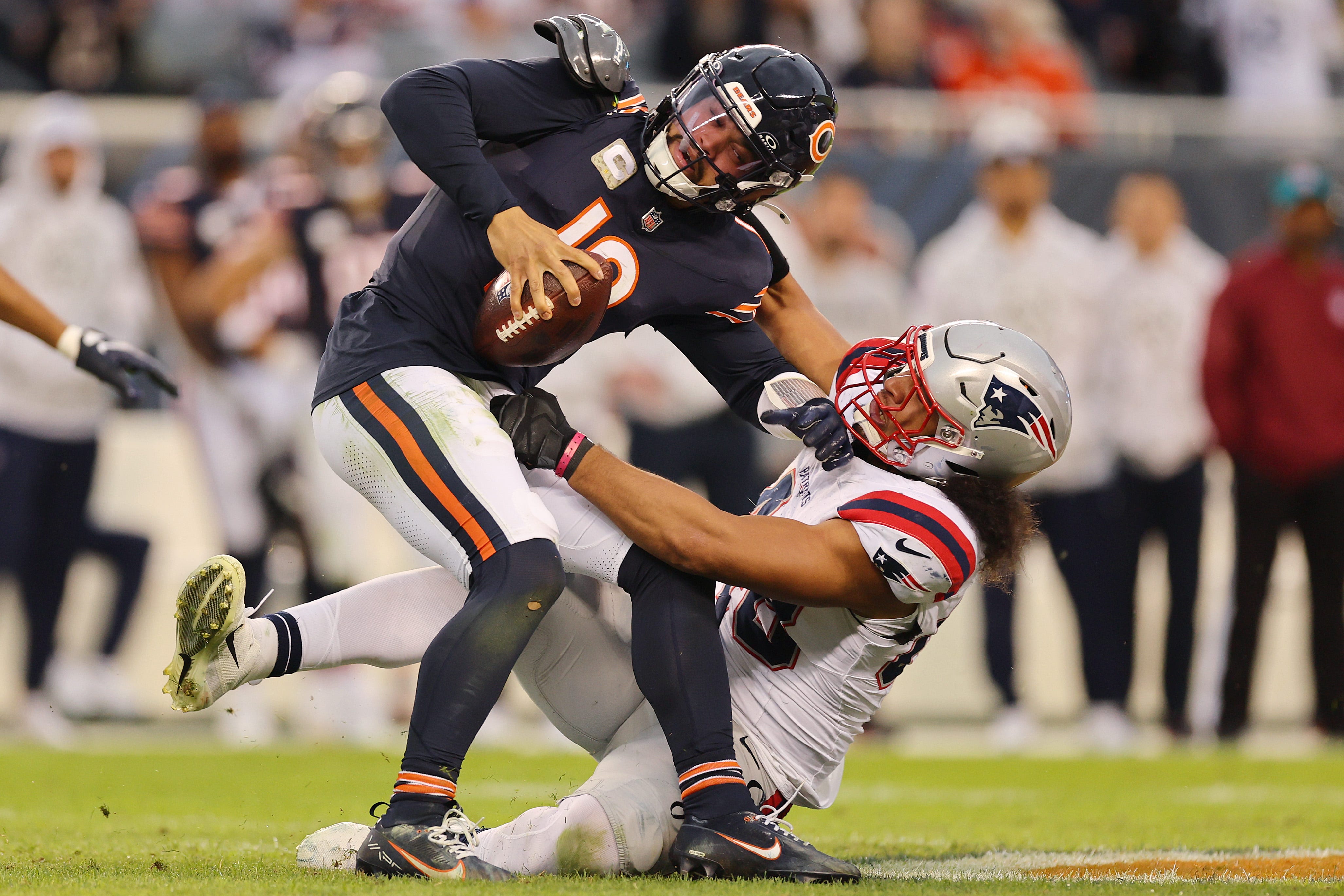
This is when the internal blame game intensified. Between plays — on the headset — coaches could hear Waldron sending plays in with time to spare on the play clock. But as Williams stepped into the huddle, he’d stare as his wristband for an extra four, five, six seconds and the other 10 players assumed the coordinator was taking his sweet time. After all, those 10 can’t hear what Williams hears.
“That’s what started everything,” one coach says. “That was the disaster. That’s what got everybody pissed off, and that was the start of the division between the coaches and the players — the finger pointing.”
Right around then is also when word leaked in the locker room that Williams was squandering his free time playing video games. Teammates were pissed. Tight end Marcedes Lewis, the 40-year-old leader of the room, spoke up.
All parties involved knew something needed to change.
And even the players could now see that part of the problem was the first overall pick.
The next 48 hours defined Chicago’s season.
Breaking Points
Finally, months past due, the Chicago Bears decided to get tough with their rookie quarterback. When coaches reconvened Monday morning after their repulsive loss to the Patriots, head coach Matt Eberflus informed his staff they’d hold Caleb Williams accountable by giving him a dose of competition in the form of Tyson Bagent. The split wouldn’t be 50/50, but the Bears plotted to work Bagent in with the starters more to make Williams earn those starts on Sunday.
For too long, back to the spring, the Bears gave the USC wunderkind everything. It backfired.
There was some talk about moving Waldron up to the booth but Eberflus assured that nobody was going to be fired.
A move from Caleb to Bagent might’ve shocked fans, but not those who witnessed how both operate day to day. The 2023 UDFA out of tiny Shepherd College, the son of an arm-wrestling champ who had no problems whatsoever regurgitating the team’s most complex play calls, mastered all checks in this offense and could sling it in his own right. If the objective was to win, a switch made total sense.
“Awesome kid. Awesome. I love him,” says one ex-Bears assistant. “He knew everything. He knew how to function. He was in and out of the huddle. His cadence was great. He could tell you every answer to every protection question out there and every run question. Tyson Bagent’s a great one.”
Most telling, there were many players who supported a move to Bagent. As everything got worse and worse — and the Bears dropped to 4-5 — a growing number started to look at each other and ask, “When are we going to make a change?” Initially, one offensive coach pointed to the vets Moore and Lewis as “ringleaders” who wanted Williams benched. But they were not alone. Another coach on offense states there were far more than two players advocating for a quarterback swap and that the players’ message was absolutely conveyed to Poles.
Says another coach: “Those players wanted to bench Caleb the week after the New England game. The players were the ones wanting him out after the New England game before Shane got fired.”
All parties involved seemed to agree that the best thing for Williams was a wake-up call.
All parties, that is, except Poles and the front office.
On Tuesday AM, Eberflus called another staff meeting to inform everyone that Waldron was fired and assistant Thomas Brown would be promoted to OC. There also would be no Bagent sightings. Poles made it abundantly clear to all that Williams was the team’s undisputed, unambiguous starter. “The scalp he gave them,” a front-office source adds, “was Shane Waldron.”
All of which amounted to damning whiplash for the organization, a Butkus-like clothesline into the mud. Here were the Bears, fully prepared to give a quarterback who’s heard Yes his entire life a valuable lesson in No. This league’s 104-year history is teeming with stories of 22- and 23-year-olds who needed a crash landing to rock bottom. The No. 1 pick one year prior, Carolina’s Bryce Young, was benched and learned from the experience. Hall of Famers John Elway, Terry Bradshaw, Drew Brees and Troy Aikman were all benched for various reasons early in their careers.
In Chicago, there were no such cojones. Powers that be chose to spoil Williams. Coaches understand why any GM for any team would veto the benching of a No. 1 overall pick. Doing so is the ultimate self-own in sports. The problem here is that Poles never seemed interested in having harsh conversations that’d benefit Williams in the long term.
The big, bad media served as a frightening boogeyman.
“I’m amazed by people in leadership positions who avoid confrontation,” says one of the Bears assistant coaches. “You can’t avoid confrontation. It’s important to be strategic with how you have confrontation. There’s a right way and the wrong way to do that. But problems are problems. And they don’t solve themselves. It was more about the media outrage. Ryan was worried about standing at the podium and answering questions about why that happened, which I don’t think is that difficult.”
Instead, it was Williams who stood at the podium that week and a few of Waldron’s colleagues were irked by his nonchalance. They believed he gently side-stepped accountability to gently paint himself as a victim of circumstance. The same rookie who’d often skip lifts was downright bubbly inside the weight room, too. Dapping people up, one source recalls him acting like this was the happiest day of his life. Adds one coach: “This fucker didn’t take any accountability for anything and threw people under the bus.” Then again, Williams had good reason to celebrate. His alliance with Poles packed more punch than any rapport he could’ve established with any coach.
Everyone knew there was nothing they could say to persuade Poles to sit his quarterback.
These 48 hours were an inflection point.
“What are you going to do?” says one coach. “He is the golden boy.”
Next came back-to-back-to-back crushing last-second defeats to all three NFC North teams. Williams was dynamite vs. Brian Flores’ Minnesota Vikings defense in a 30-27 overtime loss, throwing for 340 yards and two touchdowns. A dash of hope extinguished four days later under the Thanksgiving spotlight at Ford Field. All of America had its fun laughing at Eberflus bungle this game away against the Detroit Lions. Taking a timeout with you into the locker room is a Grade-A coaching crime. When Williams was sacked at the Lions’ 41-yard line — 32 seconds left, down 23-20 — Eberflus could’ve saved the rookie from himself by calling a timeout to regroup.
Slide a headset over your ears, however, and you’ll see there’s more to the story.
The play call is relayed promptly with Williams told to run a QB draw (the same play as before) and then call a timeout. The game clock bleeds from 30 seconds… to 20 seconds… to 15 seconds. The mic cuts out and Williams ditches the draw for a deep shot to Rome Odunze. (“He’s going to snap it, right?!” Eberflus says on the headset.) On the sideline, Bears players and coaches demonstrably spin their hands to compel their quarterback to do so.
Finally, with five seconds left, Williams snaps the ball and throws a deep incompletion to Odunze.
Coaches believe Williams panicked and assumed this was the last play of the game.
“That’s why he let the clock run,” says one coach. “He’s thinking, ‘OK, we need to throw it towards the end zone.’ … It’s not like Flus is an idiot. That couldn’t be further from what happened. That’s part of being the coach. We all accept that, but there’s a lot more to it than, ‘Hey, why didn’t this dude call timeout?’”
Adds another: “I don’t even know what he’s thinking, but he basically makes it into the last play of the game and throws up a gimmie ball.”
And another: “He fucked up. But he’s not going to get blamed for it.”
Afterward, Williams said he was hesitant to call a timeout himself after doing so earlier in the drive. Also long forgotten was a play with 46 seconds left, when Williams short-armed a wide-open Moore on a crossing route that would’ve resulted in a touchdown. Inside the locker room, vet cornerback Jaylon Johnson went ballistic. The thermostat on Eberflus’ seat cranked to volcanic.
In Washington, the team that completed a Hail Mary on Oct. 27 was on a rampage toward the NFC Championship Game with their rookie quarterback.
In Chicago, the two men running both the offense and the defense were both terminated with five games still to play. Eberflus became the first coach in Bears’ century-plus history to get fired midseason, officially putting this season on life support. Survivors could only shake their heads at an organization caving to public pressure. Everything spamming Twitter, shouted on the radio and written in newspapers directly fueled the day-to-day operations.
“An unwinnable scenario,” says one coach. “No different than decisions around benching the quarterback and having to deal with the media outlash vs. what’s best for the football team, when you decide to fire coaches within season and also give the same person more responsibilities, they don’t give a shit about what it takes to be a really good football coach. You don’t just fire both coordinators in-season — and one of ‘em happens to be the head coach — and expect to have positive results.
“At that point, I don’t think they really cared about winning. It’s more about having a response that the media accepts.”
Collapse
Once he’s finished cursing Caleb Williams for the 17th or 18th time, this coach who’s been around some of the best quarterbacks of this generation laughs, and laughs, and laughs a little more. He knows it’s no accident that Williams pinpointed “Shane Waldron” — and not “Thomas Brown” — as the coach who did him dirty in multiple reports that’ve trickled to the public.
“He knows Thomas will beat his ass,” the coach says. “He knows better than to name Thomas’ name.”
Eberflus is described by former assistants as a very pleasant man. Albeit, a little dorky. Waldron is similarly docile. Brown, on the contrary, is old school. Brown promised to bring a completely different coaching style to Williams those final five weeks. Odds are, Williams never experienced anything quite like this his entire football life. In a team meeting, Brown minced zero words. Without calling out players by name, he asked everyone why they were so afraid to hold Williams accountable when the Bears do it with everyone else on the roster. If the right tackle botches a combination block, the tight end speaks up because it directly affects the success of the play. If players think the quarterback is doing something wrong, he implored, tell him.
Quarterback may be the most important position in the sport, he explained, but it’s not untouchable. In fact, the opposite is true. Caleb was the handpicked savior of the franchise, thus Caleb needed to be held to a higher standard.
Brown tried like hell to inject a novel dose of accountability and professionalism into the most vital employee of an $8.8 billion company.
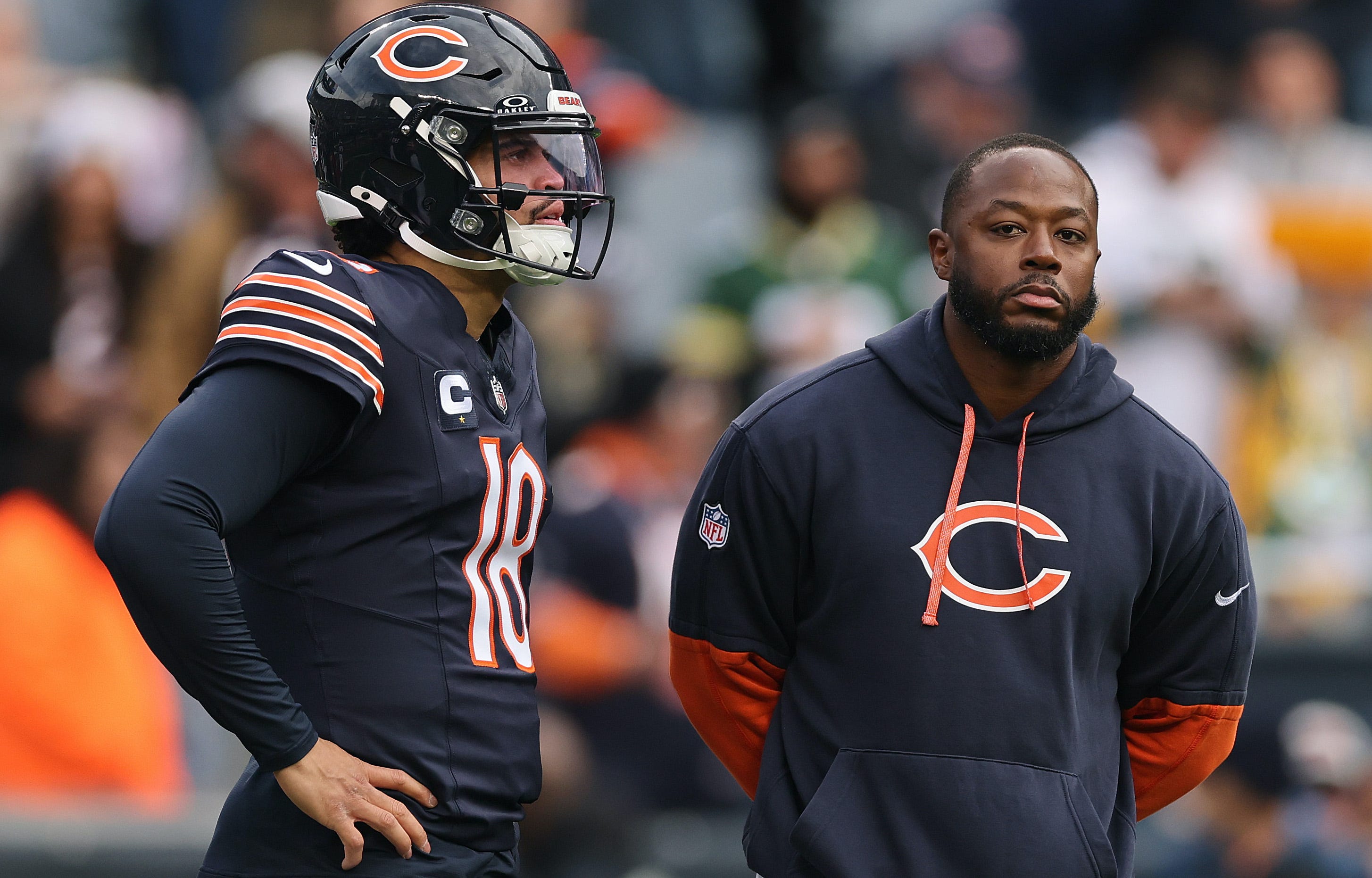
“When it changed,” one coach in that team meeting recalls, “everybody was like, ‘Oh, good. Now he’s going to be a little bit stricter. That’s what we need.’ Until he was strict on Caleb, and then Caleb didn’t want any part of it. He didn’t want to deal with Thomas. Every team meeting, Thomas was on everybody’s ass. He wasn’t putting up with anybody’s shit. Your typical hardnosed coach: ‘Now, we’re going to be physical. We’re going to whoop their ass. No fucking excuses. I don’t want to hear anything.’ Just how you think it would be — until guys started feeling like, ‘Oh, now he's picking on me.’”
It was a valiant effort.
It was all too little, too late.
The same issues chafed. During one routine walkthrough the night before Chicago’s rematch with Detroit, inside the team hotel, Williams flubbed four of the first eight play calls. The formation was backwards. Or he forgot to motion a player. Or he botched a shift. (“We were like, ‘Oh my gosh, we still can’t get this shit right,’” one coach recalls.)
Against the Lions’ decimated defense, Williams still managed to complete 26 of 40 passes for 334 yards and two TDs in a 34-17 loss. Not even the staunchest skeptics can deny Williams’ arm talent and Houdini escapability. Earlier this offseason, Go Long chatted at length with his private coach who illustrated a “perfect storm” brewing with the team’s new head coach. Will Hewlett has worked with Williams for years and defended his QB’s work ethic. “Caleb’s the type of guy you have to be like, ‘Dude, stop. We’re done. Get off the field.’ And then toughness, that dude is a tough son of a gun. … There’s never been a moment or a thought of ‘Is this kid going to be able to handle this?’”
That’s what’s so maddening. He can be wildly entertaining. He can create magic.
Despite everything, he threw 354 straight passes without an interception — a rookie record. It’s not as if the league’s MVP, Josh Allen, set defenses aflame as a rookie in 2018. He completed a meager 52 percent of his passes. Patrick Mahomes played all of 62 snaps. Joe Burrow went 2-7-1 and tore his ACL. Lions OC Ben Johnson saw enough in Williams that day at Solider Field to warm up to the Bears’ job and later raved about the quarterback’s electrifying skillset at his introductory press conference.
If only Johnson could’ve then heard what Bears coaches did on the headset four days later when the Bears hosted the Seattle Seahawks on TNF.
Those on the sideline will never forget the calm, cool ‘n collected Brown losing it on Williams during that slopfest.
Their aforementioned exchange was so heated that sources are surprised it was never leaked.
That same game also hinted at an underlying condition ailing the Bears all season. Not once, not twice, but three times, the Bears rehearsed their first offensive play the night before. Williams trots onto the field, play-by-play man Al Michaels praises the rookie’s 4:1 TD-to-INT ratio and you can see the quarterback closely reading the play call off his wristband. As he walks to the line, he stares at the wristband again, sticks his mouthpiece in and completely forgets to motion tight end Cole Kmet over to the right side.
Running back D’Andre Swift rams into a swarm of white jerseys for a two-yard gain.
“Caleb looks over to the sideline at Thomas,” one coach says, “like it’s Thomas’ fault.”
Sadly enough, this play on Dec. 26 gave a few coaches flashbacks to the first week of April. Back when Williams flew to Chicago on his only pre-draft visit. That early, coaches could sense that he’d struggle with basic huddle calls and forget to motion players. And it wasn’t until later — right around that second-to-last game of the season — that coaches say they learned their quarterback had a learning disability.
Multiple Bears sources tell Go Long they’ve seen evidence that Williams has dyslexia. They also believe that the GM, who has access to everything, was well aware of this condition before the Bears made the quarterback their first overall pick.
A learning disability does not have to be a deal-breaker, of course. Many highly successful pros are open about the condition. Packers pass rusher Rashan Gary owns it as his “My Cause My Cleats” initiative. Frank Gore rushed for 16,000 yards, the third-most in NFL history. Savants such as Albert Einstein, Pablo Picasso and Magic Johnson revolutionized their respective fields with dyslexia. Yet rather than do what a normal NFL team would with such a gigantic decision — meticulously chart a plan — the Bears, coaches and scouts tell Go Long, either suppressed this information or overlooked it. At worst, it’s a cover up. At best, gross negligence.
Either way, the offensive coaches had zero clue.
Not during OTAs. Not during training camp. Not even as the losses mounted and pink slips flew.
Understandably, they were incensed.
One source says Brown confronted Poles late in the season to point out that this information would’ve been helpful months prior. Go Long was not able to contact Eberflus for this series, but assistants and scouts alike believe the head coach was kept in the dark. “There’s no way (Eberflus) wouldn’t tell Shane and those guys,” one coach says. “He doesn’t operate like that. He’s not going to risk getting fired not to tell Shane a big secret. What are we talking about? There’s no way.” Adds one source in the front office: “Poles is still running the organization. He should be in communication with the coordinators.”
The person in charge of handling such matters is the team clinician, one source says, and the team clinician (Carla Suber) determines how a player then works with coaches and teammates to function at an optimal level.
“We would’ve fucking coached him differently,” says one former offensive assistant, who believes Poles knew. “This is criminal. Withholding this shit? They should have been fired. They knew. The GM and them knew.”
Poles and Williams were not made available by the Bears for this series.
Coaches tried a million different things from May to January. But if everyone was on the same page, one coach posits they would’ve used pictures instead of a wristband. One says the teaching methods for everyone would’ve been different, right down to how they ask questions. Another coach notes that there’s more to dyslexia than simply “reinventing” the back part of a sentence. He cites cognitive and attention elements and different communication approaches. (“So that definitely would’ve been helpful to know before the draft.”) One ex-Bears coach says he worked for a dyslexic coordinator once who simply spelled out “left hash” and “right hash” on his call sheet, instead of trying to visually flip the call.
It's not hard to see how this could theoretically slip through the scouting cracks.
Williams was the first known prospect to ever skip medical evaluations at the NFL Combine, and then only visited one team: the Bears. Back then, nobody had a clue if Williams even wanted to play for the Bears. His camp was exploring ways to circumvent the draft itself. Several team sources we spoke to believe Poles protected this intel so he wouldn’t spook the quarterback. Silence that no doubt contributed to a 5-12 record.
And yet, when I ask each coach point-blank if they believe a learning disability or work habits affected Williams most, nobody hesitates.
“How big of an impact the disability has,” one coach says, “it’s hard to quantify that until everything else has been X’d out as far as preparing yourself the right way and working to put yourself in a position to be successful. Until the work ethic and the process is solidified it’s hard to say anything is worse than that.”
Another coach interpreted Williams staring at the wrong page of a gameplan during meetings as laziness. Not confusion.
“Everybody’s locked in on one thing,” he says, “and you’re sitting back looking at a completely different part. It’s hard to sit back and say, ‘Oh yeah, I was tuned in and those guys weren’t coaching me.’”
Adds one front-office source: “The learning disability, that’s not his fault. But he’s not putting in the work, either. He’s lazy.”
He didn’t loaf to JaMarcus Russell proportions, but he wasn’t exactly gathering receivers together for routes post-practice like the quarterback he replaced: Justin Fields. Backyard football, he learned, does not fly against professionals. And to coaches, Williams’ attitude through the spring and summer makes perfect sense. He’s the first collegiate superstar of the NIL era. He earned $10 million via partnerships with the likes of Dr. Pepper, Nissan, Wendy’s and United before playing one pro down. From the night Williams won the Heisman Trophy as an underclassman on, he was universally dubbed the slam-dunk, can’t-miss, Midas-Touch future No. 1 overall pick.
Red flags were uncovered along the way. But red flags were treated as minor annoyances, not topics worthy of vibrant debate because — by then? — the Bears were in full-fledged recruiting mode. The aim was to stay in the quarterback’s good graces.
“Everybody was kissing his ass to get him here,” says one coach. “So he’s thinking, ‘I ain’t got to listen to any of these guys. You should be kissing my ass.’ Because we were! Why would he change?”
This coach dubs Williams the the poster boy for everything wrong in today’s NIL world. Hate it. Love it. This is the new world order in college sports. Athletes should’ve been compensated for their services a long time ago but the wild-west nature of college football and the transfer portal has made it much more difficult to find players wired for the crucible that is professional football. These days, the best of the very best are surrounded by agents and yes-men early as 14 and 15 years old. Coaches know if they criticize one of their 5-stars — or, God forbid, bench him — they run the risk of that 5-star transferring.
In the NFL, there is no escape hatch. No cakewalk games.
Hardship is a guarantee.
College coaches are almost always less than honest when you hunt for the truth. Even then, the Bears coaches detected smoke when it comes to Williams’ relationships with teammates — one cites the “We a team!” video. USC players appeared to bond when their star quarterback skipped the bowl game. Further, how Williams put up those gaudy numbers was also concerning.
“You’re making miraculous plays,” says one coach, “but it’s unnecessary because you skipped three reads and had to spin around in a circle twice and juke some cat who you’re better than and you made a miraculous throw. That’s phenomenal. But in this league — more times than not — you’re going to get body-slammed. You’re not going to juke that dude who plays defensive end. He’s bigger, faster, stronger than you and doesn’t care about you being Caleb Williams.
“There were enough red flags and signs. We just didn’t address it early on. And the best time to fix the problem is right now. And the longer you allow it to fester, the harder it becomes to change.”
All while Williams walks down fashion runways, attends Louis Vuitton shows and poses in a slew of different outfits for an Esquire photoshoot. He paints his nails. He was voted GQ’s most stylish athlete. Quarterbacks need a life outside of X’s and O’s. Quarterbacks don’t need to eat avocado ice cream, wear recovery pajamas and obsess over the sport to a Tom Brady extreme.
Win games, and nobody will care. All eccentricities will be celebrated.
Lose games, and one Bears coach who got to know Williams closely believes this fashionista side could become “a point of contention and distraction.”
Even though Williams was held accountable inside Halas Hall those final five weeks, the national narrative outside the building sped 100 mph the other direction: Williams was “overcoming” coaching and “overcoming” the O-Line while getting sacked 68 times, the third-most in NFL history. Coaches have a sinking feeling the QB bought into everything he was hearing on ESPN. As Chicago limped to the finish line, they didn’t sense any sincere soul searching. Brown tried. One source in the building shares that Brown flatly told Williams that this 2024 season — in the public’s mind — was on the coaches. The coaches aren’t good enough for you. But next year? Once a new staff is hired? It’ll be on you, Caleb. One hundred percent.
Everyone loves a redemption story. Caleb Williams is salvageable.
If, coaches add, Williams admits what worked in college will not work in the pros. He says everything right at the podium, but now must back up the rhetoric with action.
As in, a total self-audit.
“He’s always blaming everybody — this dude’s a coach killer man,” one of his offensive coaches from ‘24 says. “I know how he treated other people, and that’s what makes me sick.”
Oddly enough, in D.C., nobody speaks about Jayden Daniels in such terms. Or Drake Maye in New England, Bo Nix in Denver, J.J. McCarthy in Minnesota and Michael Penix Jr. in Atlanta.
These Chicago Bears had their pick of any quarterback they desired in a loaded class.
Take a seat inside these draft meetings.
But, please. Don’t speak up.
If you’re not interested in Caleb Williams being the No. 1 pick, your opinion is not welcomed.

This article series is why I smile when my Go Long subscription renews each year. I can’t wait to support your excellent, can’t get elsewhere work, Ty. Thanks!
This is damn good stuff. I hope this shifts the narrative on Caleb! Good luck to Ben Johnson and his crew, my goodness...