

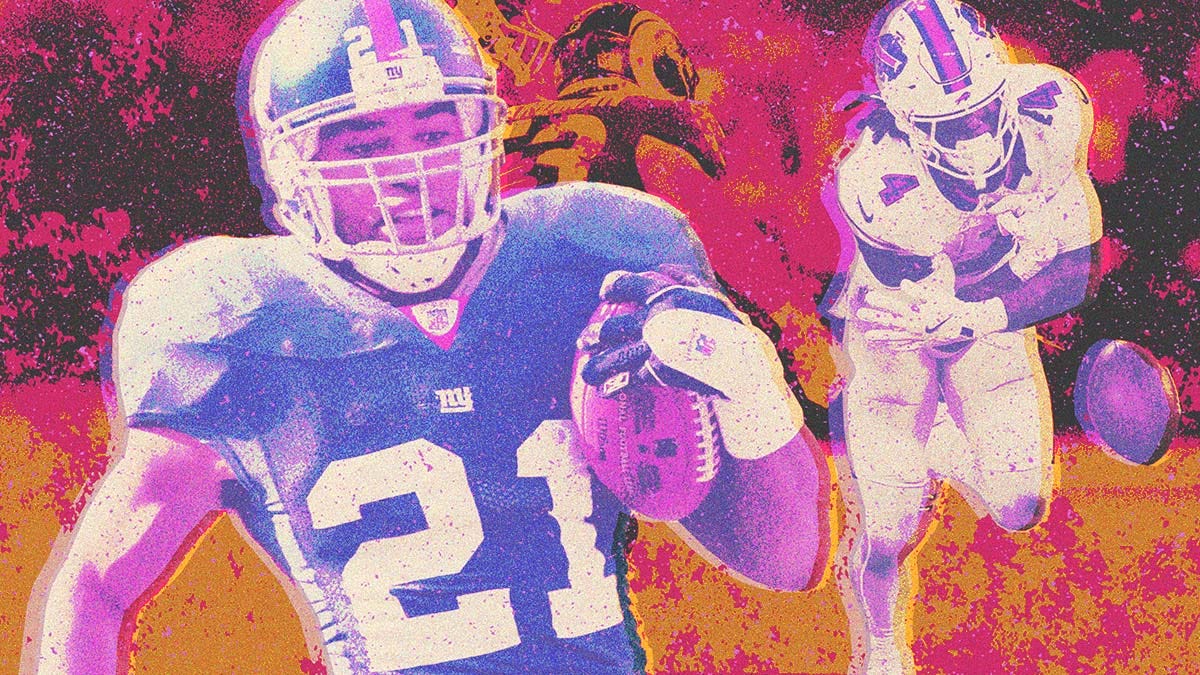
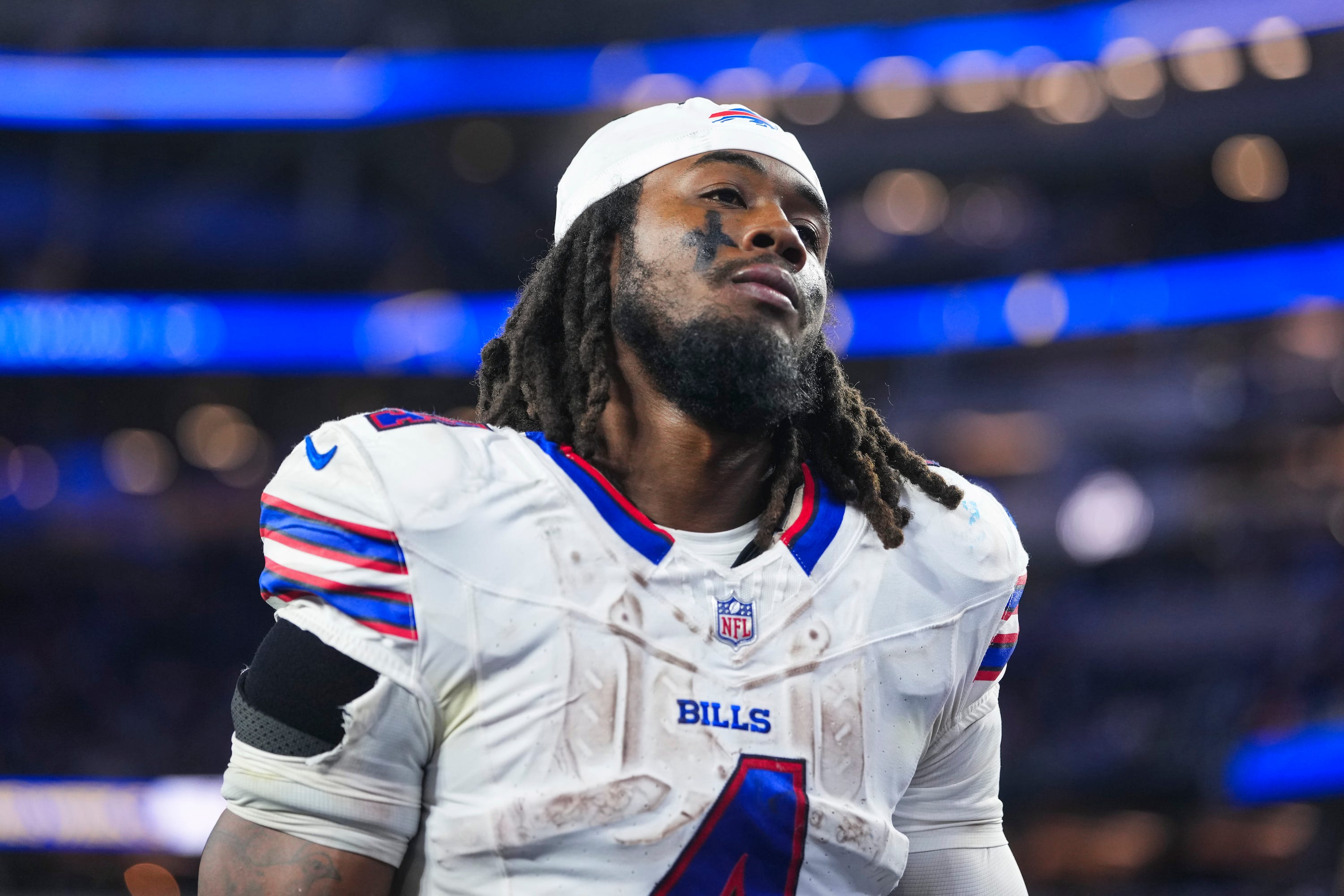
At this point, James Cook may be wondering if he’s been sucked into the vortex of a paranormal horror movie this Halloween season. Another game, another fumble. And this overtime giveaway vs. the Los Angeles Rams nearly cost his Buffalo Bills the game.
He’s the reigning NFL rushing champ. He’s an exceptional talent. It’s hard to keep this player on the sideline. Yet even first-year head coach Joe Brady — a man who’s made his pro-player stance abundantly clear — said this week there will be “consequences” for further turnovers.
A conundrum that got me thinking of another running back this week.
Tiki Barber.
He, too, was one of the best in the NFL.
He, too, struggled with fumbles. (Thirty-five in a four-year span to be exact.)
Tom Coughlin was then hired in 2004 and was quite blunt with arguably his most talented player. Unless Barber fixed this issue, he was finished.
With that, Barber spent the offseason changing the way he carried the football.
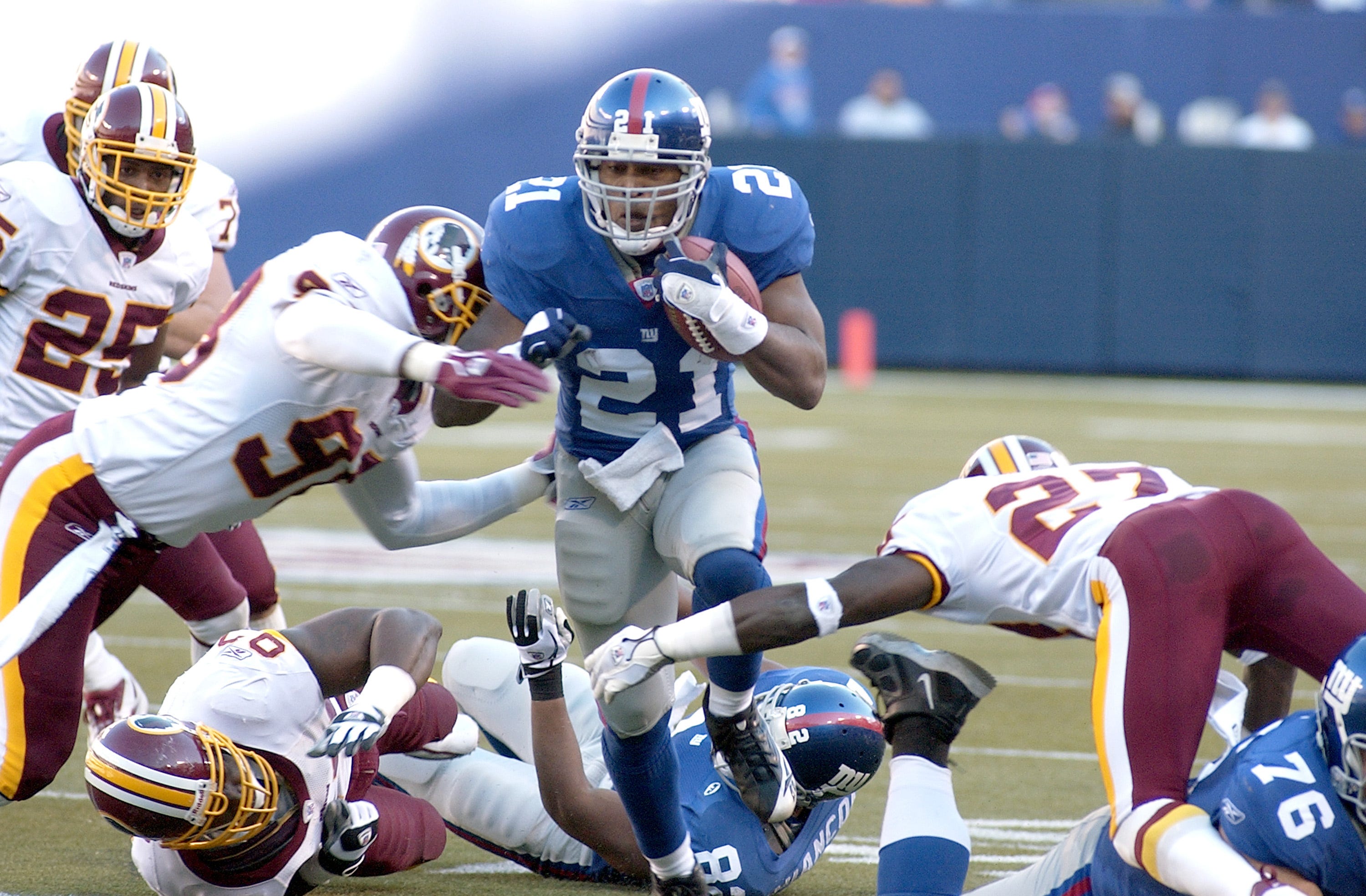
Making such fixes on the fly may be difficult for Cook, but the New York Giants’ all-time leading rusher has answers. We discussed in full.
Also, Barber offers his analysis of these 3-1-1 Jameis Winston-led Giants and the running back he loves watching above all else: Bijan Robinson. Be sure to catch Barber today on WFAN Sports Radio in New York. We’ve caught up with Barber before. First, in ‘23, to detail his own unique rise in the sport. Then again in ‘25.
Here’s our Q&A below.
Let’s start with your Giants. First place, lost their quarterback. Myself, most people are thinking, “Oh, they’re done. There’s no reason to really care about the New York Giants.” Why should we? What’s still in front of this team this season?
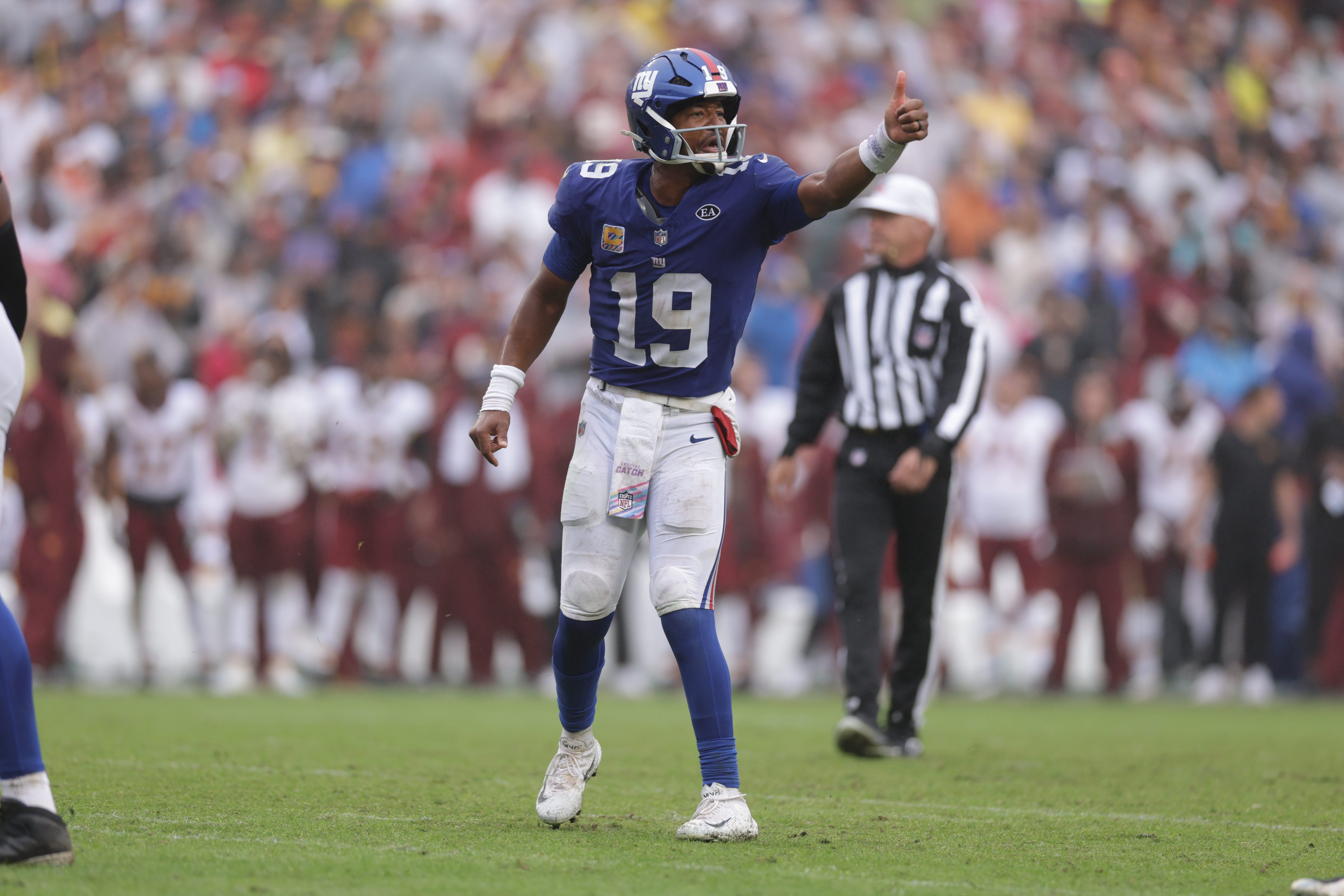
Barber: Yeah, I think the biggest thing is Jameis Winston is playing unbelievably when he has to. He’s not challenging for the MVP. He’s not going to lead the league in passing. None of that stuff. But when he’s been put behind the eight ball — some of it his own doing — he doesn’t flinch. He’s like a really good golfer who duffs a tee shot and then hits a three wood five inches from the hole. These second halves these last two games, against Arizona and Washington, it’s been elite football. Last weekend, every drive, he put them in scoring position and the only reason they didn’t win it in overtime is because we missed a kick or Cam Skattebo fumbled. So I think we all panicked. I didn’t. Because it was too early in the season. But most Giant fans panicked when Jaxson Dart tore his MCL and meniscus against the Rams thinking, “What do we have to look forward to?” But I think Jameis can be a bridge. It’s what he was brought here to do. Not play this many games, but he’s a good bridge for you. That’s why they signed him to an extension and he’s a fantastic leader. Everybody loves him.
That game had all the highs and lows where — at one point — you’re thinking, “Holy hell, how can they start this guy. It’s the same old shit.” And then lo and behold, you look up and Jameis Winston has thrown for 300 yards and three touchdowns and you’re in position to win.
Barber: I know. It’s the Jameis Winston Experience and, as crazy as it is, he’s been this way his entire career. His entire professional career, this is who he is. Sometimes you’re like, “This is the best quarterback on the field.” Other times you’re like, “Dude, who’s the backup?” So you’ve got to live with it. And this is where coaching matters. I think it’s been one of the narratives of this Giant season. Coaching has been unbelievably good, both from time management decisions, playcalling. Defensively, Denard Wilson has been so variable. Sometimes he’ll sit back and play a lot of zone. Other times he’ll bring the house over and over and over again and force you into mistakes like we saw against Arizona when ‘Te Banks took the pick-six to the house. So they have a really well-coached team and some players that are stepping up and becoming playmakers.
Coaching does matter. We’ve talked so much about Brian Daboll and all the good that came with him and teaching the quarterback position, his offensive mind, all of that. But they’re swinging toward somebody who’s done it for 18 years and has a Super Bowl ring and is bringing stability and knows how he wants things done.
Barber: We always cliche how a team “takes on the personality of their coach.” So now think about Dabes. He was super emotional. He wore it on his sleeve. He was screaming and yelling. That was his M.O. and the team was up and down with that emotion. John Harbaugh is perfectly cerebral the whole time. Yeah, maybe he’ll express facially some displeasure, but he’s always calm. So no matter what the circumstances are, he’s thinking rationally. And similarly, the team plays that way. When things go really bad, they don’t panic. They don’t get pissed off. They just say: “Let’s get back to doing our job.”
That’s a real thing too, isn’t it? Players are a direct reflection of their coach and all that, but you played at the highest level, you’re one of the best to ever do. How else does it manifest itself for good and for bad?
Barber: The good is that these guys always know what to do. And the perfect example is a guy like Arvell Reese, who early in the season as a rookie, he was struggling in zone coverage. He knew where he was kind of supposed to be, but he was cheating with his eyes and so he’s reading the quarterback. And quarterbacks are going to manipulate you. So if you’re trying to follow what the quarterback’s going to do, you’re going to get taken advantage of. And a couple of running back swings out of the backfield resulted in touchdowns in those first couple of games. Since then, he hasn’t made that mistake. And so I think this growth and learning and cerebral nature while still playing with aggression is who he is.
I think the bad is that (Harbaugh) also wants to be forgiving. Like, “I got you. I got your back.” And so the biggest damning stat for the Giants in the first five games of the season is that the running backs have fumbled six times. Now, Tyrone Tracy, he fumbled and then he basically has had five touches since then. Najee Harris, he’s not a fumbler. That was just a good defensive play. But Cam Skattebo’s getting the majority of the carries and he’s had a fumble in each of the last four games. And so they’re going to keep riding him because they want him to be that grinding, “I want to get every extra yard I can,” but sometimes it could be detrimental.
I wanted to get into James Cook here in Buffalo because you lived it. Where is that line? You don’t want to immediately throw a talented player into the doghouse, keep him stuffed in there for an eternity and kill his confidence. You’ve got to trust a talent like James Cook. But at the same time, he’s fumbling too much. It is a problem.
Barber: It’s interesting with the Giants because they’re doing it by committee. There are options. If Cam Skattebo has another fumble, you know what? Tyrone, it’s now your opportunity. Or “Motor” Singletary, you’ve been inactive for the last three games. It’s your turn. They’re doing it by committee. The Bills have paid James Cook. James Cook is The Man. He is a top-five running back in the league. And in some ways, he reminds me of my journey with Jim Fassel because when I was going through my fumbling issues, I was one of the best players, one of the best offensive players on the team, and there wasn’t an option. So Jim Fassel was like, “All right, you got us where we’re going. I’m going to depend on you. I’m going to trust you to figure it out.” And I think James is going to get that leeway with Buffalo.
But what he needs to do is mechanical. It’s how he carries the football. Because that second fumble in overtime last weekend, he had the ball wrapped up. He just had it wrapped up incorrectly. Nate Landman punched it out. It was the same play basically as the first fumble. Nate Landman — getting blocked — just sticks his hand in there and knocks the ball out. And it’s the challenge as a runner when you’re going through traffic. Because look at Nate. He is blocked by a lineman, right? He’s blocked. You’re not worried about him tackling you, but you know that he’s going to contact you. And so when you start to go through those contact points, the ball’s got to be vertical to your body, so high and tight with your elbows in and your off ball hand across your on-ball wrist. And even if he punches it, it’s not going to go anywhere.
So it’s a mechanical, physical learning thing that he needs to spend time on. It’s just hard to do it in-season.
How can you really fix this on the fly and what was your fundamental change? Was that really what you were able to switch up?
Barber: Think about when you were a kid and you played football. Remember how they taught you how to carry the ball? You get the handoff in a pocket and the ball is perpendicular to your body, parallel to the ground, and you wrap one hand underneath and one hand on top and go through contact like that and it’ll protect you. But the problem is when you’re moving at such high paces, that bottom hand often slides to the front of the ball as opposed to underneath the ball. And as soon as someone hits it, it’s going to go straight to the ground because you don’t have firm control over it — even though it feels and looks like it’s safe.
So you need to have the ball perpendicular to the ground. Straight up and down, across your body, centered to your chest with your elbows tucked in so that protects the ball from going down. And most of those fumbles happen when you’re getting tackled because you start to lean and your body naturally wants to brace itself. So if you fell without a football — you just fell walking down the street — you’re putting your hands out. The same thing happens when you start to get tackled. You want to put your arms down and away from yourself and it’s getting used to falling with your arms at your body and not bracing yourself. So it takes reps. It takes a lot of mental reminding of yourself: “I’ve got to go to the ground with the ball centered and protected. Centered and protected. Centered and protected.” And if you don’t do it enough, you’re still going to just naturally react how your body wants to.
What’s interesting, too, is I’m watching this game and I’m like, “Man, that’s a hell of a punch-out. Nate Landman is basically someone getting into a fist fight. The guy throwing the punches is going to hurt his hand, too. He’s punching and punching all game.
Barber: No doubt. But you know what? The reason he can do that is because he can see the ball. When you center the ball and you put your elbows down to your sides, he can’t really hit the ball. And so if you give him somewhere to hit? He’s going to hit it. He’s going to strike it. It’s like he’s a boxer.
So, there is a skill there for the oppposition. What I’m getting at with James Cook, there’s a tendency to think it could be mental. Does he have the yips?
Barber: It’s not mental at all. It’s all physical. It’s all mechanical. It’s physics. It’s basic physics. So he needs to figure that out. And as soon as he does, it won’t be a problem anymore.
Your fumbles never really got to your head? You’re not worrying about the next one… and the next one… and the next one?
Barber: No, I didn’t know how to carry the ball correctly. You have to be taught. Coaching is teaching and the best coaches are great teachers. And I had a really great teacher in (RBs coach) Jerald Ingram. The X’s and O’s of the game are notwithstanding because I became such a good player understanding what was happening in front of me. But he taught me how to carry the ball correctly. And I had my best three years because of it.
When did you make these fixes exactly?
Barber: It was ’04. Tom Coughlin’s first year. And the other thing was Coach Coughlin challenged me. He basically said to me, “I don’t care how good of a player you are for us. If you’re going to be a liability, you’re not playing.” I was a consistent 1,000-yard rusher. I was doing what I needed to do to help the team win — at least I thought. He said, “It doesn’t matter. If you’re a liability, you’re not playing.” And so I was forced to fix it because I was told by a new head coach that my past didn’t matter. My past actions were inaccessible to him and he only knew that I needed to be better in the future.
I’ve sat down with Joe Brady at length and his big thing is empowering players, believing in players, speaking positivity. And all of that…
Barber: But you also got to teach it. Because if you don’t teach it, it’s not going to happen. Rutgers isn’t really worth watching because they stink, but Coach Schiano has been teaching this since he left Rutgers the first time. So everywhere he goes — if you watch a Rutgers game — every ball-carrier has the ball awkwardly high and tight like I used to carry it. So it’s taught.
Seeing you carrying it, it did look radically different when you made the changes.
Barber: But I didn’t fumble anymore.
And you didn’t lose any of your athleticism, agility, speed, none of that?
Barber: No, no. It made me actually tighter, more compact, so that I was more explosive because I was never extended. Sometimes if you’re running and you get your legs too far spread apart or your arms are away from your body, it’s hard to get yourself back on track. I actually became more powerful and more explosive by being more compact.
Before Coughlin got there, Fassel never pulled you into the office and said, “Hey, one more and your ass is on the bench?”
Barber: No, no. In fact, against the Eagles in ’02 or so, we had to win the game to make the playoffs, and I fumbled three times in the regular time. Three fumbles! I rushed for 200 yards in the game, but I fumbled three times in the game. And it was the only reason the Eagles had a chance to win it. And it goes into overtime because their kicker misses a field goal. And in overtime, I got the ball five out of six plays. And Coach Fassel was asked afterwards, “Why’d you keep going to Tiki?” He was like, “He’s our best player. He got us to where we’re going. I had to give it to him.”
Adrian Peterson had fumbling issues, too. Think of the NFC Championship Game. He kept putting it down.
Barber: 100%. It’s hard not to go to your best player.
And Joe Brady is trying to straddle that line. He has emphasized how important it is to believe in his guys many times. Then, yesterday, he said there will be “consequences.” So he’s threatening to bench him. But he also knows they won that game because of James Cook. The difference here is you worked on your stuff during the offseason. He can’t make these changes right now, can he?
Barber: You still got to teach it. You’ve got to constantly teach it. Teach it, drill it, drill it, drill it, drill it, drill it.
Is there another running back you’ve watched this first month of the season that has you hitting rewind repeatedly?
Barber: Oh, Bijan. Bijan Robinson is fucking unbelievable. One of those primetime games, they were running an outside zone and the safety had him dead to rights at the line of scrimmage. Basically about to kiss him. And he just shit on him so badly. And I was like, “Oh my God!” He didn’t even touch him. I’m like, “How the hell did he make that guy miss?” So watching his explosiveness? There’s no dead play. He’s the new-vogue Barry Sanders because of how shifty he is and how quickly he accelerates. His acceleration is so much superior to Barry Sanders. Barry, you just couldn’t touch him ever. But he has this shiftiness and acceleration. He’s a marvel.
He gets 0-to-60 faster than anybody and it’s not even close.
Barber: No doubt.
How does a running back get to that point? What’s the key?
Barber: I think it’s training. I think it’s his build, his physical structure, his musculature. And he’s not afraid of contact. He goes into contact expecting you to bounce off of him: “You’re not going to wrap me up enough that you’re going to stalemate me. So I’m going to see the contact. I’m going to acknowledge it, but I know I’m running through it.” He’s just so good. And he’s a great receiver out of the backfield. He’s my favorite back in the league right now.
So do you just catch yourself going back and watching his highlights, watching his games?
Barber: Oh yeah. Oh yeah. They’re not doing anything special. The first year that I had a breakout season with Sean Payton as offensive coordinator in 2000, we were doing special shit. It was like bunch right, Y motion, Y rewind, toss right scissors. So we’re tossing the ball out, but the guard is actually pulling back the other side. Coach Pope used to call him “dick ‘em plays.”
He’s like, “We’re going to fuck with their heads thinking this is going here, but the ball is going somewhere completely different.” Every indication is going to go one way, but we’re going someplace else. And so I was able to make hay by just popping out of nowhere and they’re like, “Dude, what the hell? How’d he get over here?” That’s not what Atlanta’s doing. Atlanta’s just running straight outside zone, inside zone, a couple of gap plays here, and he’s just really patient and explosive.
There’s really no defense for it then. If they stay healthy with that offensive line and obviously you want Penix to stay in there.
Barber: They need Penix because Tua is Tua.