


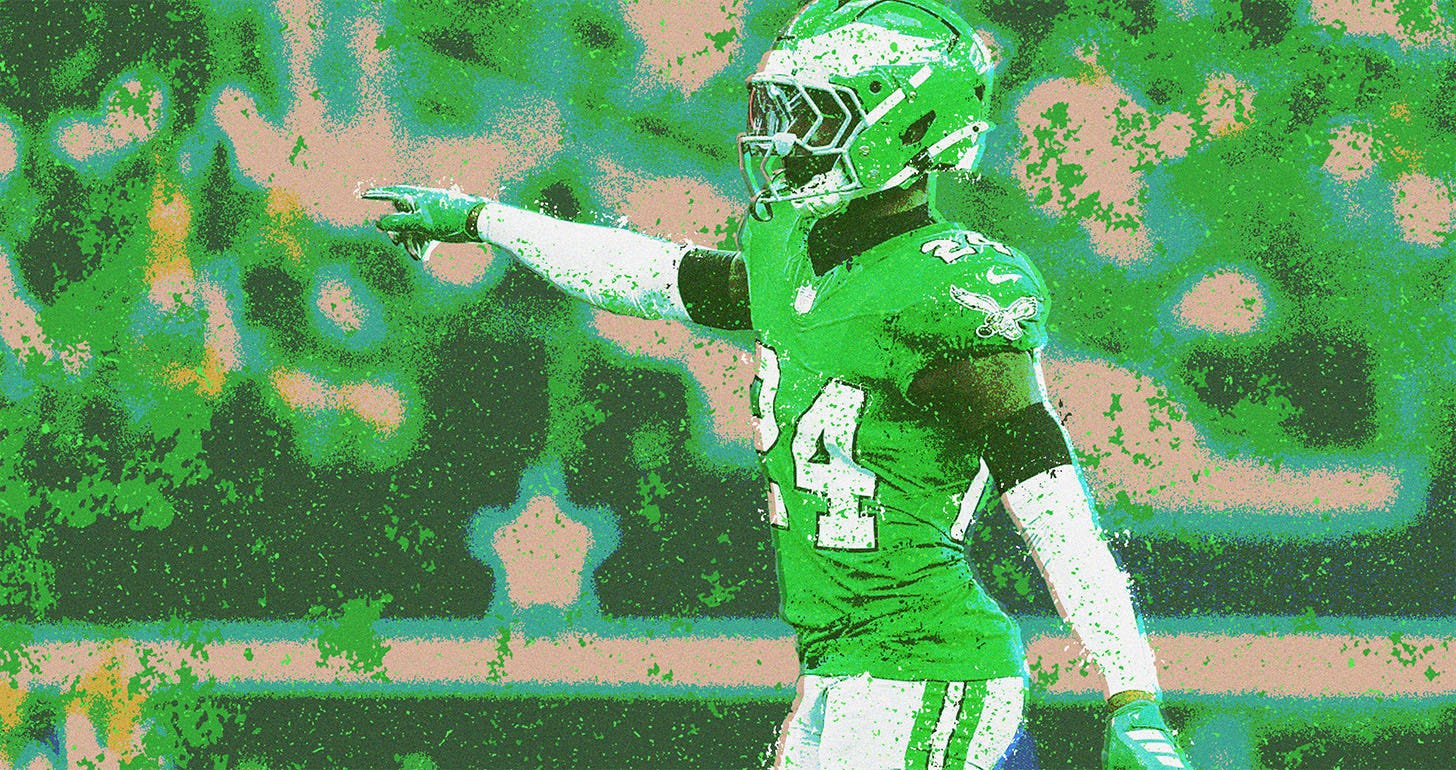
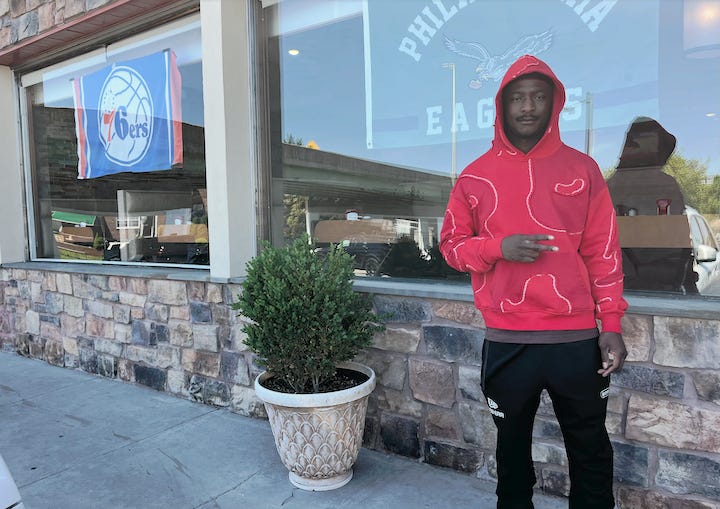
PHILADELPHIA — Here, if he wants water, all Drew Mukuba must do is make eye contact with the waitress across the diner and ask for a glass. She’s pretty rough around the edges — mid-70s, raspy voice, a tooth (or two) missing — but refers to all male patrons as “baby.” Best guess is that he’d receive water in three minutes tops. The clanking of plates and glassware synchronizes with Classix Philly 107.9 on the FM dial above. Flyers, Phillies and Eagles banners hang on the window. Life is good.
As a kid, growing up on the other side of the world, the process of acquiring one of life’s most basic essentials was painstaking. He lived in Zimbabwe up to the age of nine.
The nearest water pump to their refugee camp was approximately three miles away.
“I ain’t going to lie to you,” says Mukuba. “It was a walk.”
He’d trudge all the way to that pump, fill his bucket to the top and — by the time he returned home? — that bucket was only half full. No matter how hard he tried, it was impossible not to spill. There was no choice but to make three round trips at a time because the Mukubas needed water to cook, bathe, drink. Mom and Dad had six kids with a seventh in the future.
Everyone in their community made the same long walk.
Nobody viewed the exercise as perilous. Rather, protocol.
“This is life. This is my normal,” Mukuba says. “It’s the norm to me. It seemed normal looking around. But looking back? It’s insane.”
All memories remain vivid. Especially one burning desire to get to America.
All roads naturally steered Mukuba to the country’s birthplace: Philadelphia, Pa.
A perfect fit considering NFL life deemed normal here is insane everywhere else. This league’s ripe with fan bases that’d sacrifice their liver on the black market for just one championship and the desperate Bird Gang just might’ve boasted the most potential donors before triumphing over the New England Patriots in 2017. The coach was eventually fired. A new coach was hired. Philly clawed their way right back to another Super Bowl in 2022, lost by a field goal, then thoroughly flogged Patrick Mahomes and the Kansas City Chiefs in Super Bowl LIX.
Two rounds of confetti buy most franchises a lifetime of goodwill.
Not here. The 2025 season was consumed more like a brain-rot reality show on Netflix. Its content equal parts addictive and disturbing.
All shine glistening off the two Lombardis gave way to internal strife, the egging of an offensive coordinator’s home, wild Reddit theories and one report that the Super Bowl MVP quarterback was uncoachable. GM Howie Roseman went Full Howie, again, replenishing the roster with fresh blood. All chess moves help. A paradigm shift is now required beyond those transactions. Buffalo must learn how to attack on pure instinct, so Joe Brady is the new head coach. Green Bay seeks a killer instinct, and Javon Bullard is much obliged. Meanwhile, inside MetLife Stadium, Calvin Austin III is aiming to administer electroshock therapy to the New York Giants.
Spoiler alert: Expect more turmoil in Philly. More boos. The pressure ratchets up too high.
Mukuba digs the college atmosphere — how emotions swing violently both directions. “How they talk shit?” he adds, “it’s deeper than just football to them.”
Mukuba also knows the team itself cannot ride the same tidal wave as its constituents.
Calm is required. A deeper level of “appreciation.” For football, for the team-provided meal in the cafeteria, for everything.
“If I would say something to the team — or anybody — it’s to be thankful,” Mukuba says. “Because there’s a lot of people that don’t get to experience this. There’s a lot of people dying to get to the NFL. I know there’s somebody right now that would die to be in my position. Looking at how I grew up, what I was around, who I was being around, guys that didn’t make it? I’m a professional athlete. It doesn’t get any better than that. My job is to play football, something that I love to do. I couldn’t ask for more.
“A level of appreciation will take you a long way.”
The concept of dysfunction inside a locker room doesn’t register to someone growing up in such a primitive land.
His words are prescient for a club that resides in deafening, demanding terrain.
“Despite everything going on, you’re your own person,” he says. “You still have to go out there and do your job or you’re putting yourself in jeopardy. I like that mindset for everybody. In the NFL, you’re on your own. You’ve got to survive on your own. If you don’t take care of your own business — if you don’t do what you’re supposed to do? — it’ll get you gone.”
He doesn’t believe any inner-squabbling created distractions.
But even if it did? Even an issue arises this year? He jumps in.
“It’s none of your business. Do your job.”
Every defensive back is bound to face-plant in front of millions of viewers and every defensive player whose boss is named Vic Fangio is bound to experience the old-school coach’s rage. These film sessions are straight out of the 90s with humiliation in high supply. At one point last season, his voice bellowed Mukuba’s name with damning disdain.
It was at that exact moment Mukuba needed to make a choice.
Go Long is your forever home for longform.
We travel the country to sit down with the players who bring this sport to life.
Subscribers can access this story, and all stories, in full.
As the Second Congo War raged, an African conflict that resulted in an estimated 5.4 million deaths, Mom and Dad knew they needed to flee, to give their growing family a fighting chance at survival. Roughly 1,500 miles south, they settled into a Zimbabwe refugee camp. The goal? Gain asylum to the United States.
Three years in, Andrew (he prefers “Drew”) Mukuba was born. He spent the first nine years of his life right there in Harare, Zimbabwe.
“The hard times?” he begins. “You can’t forget the hard times. … At one point, I barely had anything.”
It was obviously safer than the Congo. But don’t conflate safe with easy. Survival still mandated all children take on specific tasks: sweeping the yard, doing dishes and, yes, those long walks to the water pump. Seven kids jammed into a one-bedroom house by Tetris’ing mattresses across all available floor space. Kids slept, woke up, thought nothing of it. “We never complained,” Mukuba says. “In the moment, it was just normal.”
Normal also included electricity shutting off without warning.
Thirty minutes. A day. A week. Three weeks straight. Nobody ever knew when it’d turn back on. The family resorted to using candles until those candles burnt out. Many days, the Mukubas lived in pitch black. A memory that reminds Drew of one favorite pastime. Instead of playing video games, his fun consisted of somehow creating light from an old DVD, wires and a battery. He tapped into parts of the brain kids in more developed country certainly did not.
All while temps climbed into the 90s. Forget AC units like the one booming above our table at Penrose Diner, two miles from The Linc. Zimbabwe was extremely dry with no bodies of water in sight. All the Mukubas could do was crack a door, leave a window open and hope for a breeze.
All while food was often scarce. He ate rice and beans on repeat.
Soccer was a go-to source of recreation. He’d play all day with other kids in the camp, with a dash of basketball and track. Cut off from the rest of the world, Mukuba had no clue the NFL existed. Mukuba didn’t even know football existed. Their television could only play DVDs. Unless you were in just the right area of town and tilted the antennae at just the right angle, channels were not an option.
So, no. He didn’t harbor any fantasies of playing pro sports. Simply emigrating to the United States was the dream. His parents spoke about this country as a land of opportunity. Both traveled Zimbabwe to work, save up money and, finally, they got the opportunity to fly west in 2012. Those early years in Austin, Texas, Mukuba’s mind was blown by the number of cartoons at his disposal on PBS Kids and CBS. Still, the states presented new challenges. He couldn’t speak a lick of English, which made it tough to find new friends. Whenever kids herded out to the playground, he couldn’t communicate. He was bullied.
Then, Mukuba was introduced to football. The shape of the ball made zero sense to him.
“Something shaped like an egg seemed weird,” he says.
It was love at first sight.
Drew and his brother started by buckling on bike helmets and crashing into each other at home — Drew playing on his knees since he was much taller. He didn’t know the rules. Nor was he on an official team of any capacity because Mom wasn’t sure how to sign him up. All Mukuba knew was that the objective of the sport was to get to the end zone as fast as you possibly could. The more familiar he got with the language, the more he could communicate during those elementary recess games. And one day, in fifth grade, Mukuba scored TD after TD after TD. Chickens, dogs, pigs, goats, elephants. His best guess is that he acquired this speed living amongst so many wild animals in Zimbabwe.
Watching on, the school’s gym teacher couldn’t believe his eyes. Shannon Crenshaw pulled Mukuba aside and asked if he’d want to play for his little league team.
“Shit,” Mukuba says, “the rest is history.”
Mukuba started playing and Crenshaw became a mentor for life.
By his freshman year of high school, he was taking football very seriously. He never complained about anything. Not when he saw his mother, Tshala Bilolo, getting up at 5 a.m. each day to work as a housekeeper at the Omni Hotel in downtown Austin to support her kids. His parents divorced in the states and she shouldered the load.
He’d soon receive his first college scholarship before playing one down of varsity football. After tearing his meniscus and transferring schools, he couldn’t play by Texas high school rules. It didn’t matter. At one camp that summer before his sophomore year, by his count, he allowed zero receptions on 13 passes thrown his way. Arizona special teams coordinator Jeremy Springer walked right up to him and offered on the spot. Mukuba’s mind was blown. Two days later, Arkansas called with an offer. Three days, Tulsa joined the party.
And when Mukuba got his chance to star at Lyndon B. Johnson High School, all powerhouses were in: Alabama, Tennessee, Ole Miss, Texas, etc.
Football inherently demands sacrifice. There’s an understanding that your body will ache (severely) the morning after. Mukuba felt a gravitational pull toward all pain, all hard work. He wasn’t fazed by practicing in triple-digit temps when there were full water bottles on the sideline. His best qualities represented the sport itself.
“The game of football,” he says, “is more than just football. It teaches you life lessons. It installs discipline. It installs teamwork. A lot comes with football. But for me? I’ve already had a lot of that stuff installed in me. I had discipline because of how I was raised. My culture. That’s something we harp on. That put me ahead of the football players because I already had those things in me. I naturally apply it to football.
“I was set to win. I was set to overcome whatever is in my way. Because I’ve dealt with a lot of difficult times, difficult moments in my life. Seeing what I’ve seen, what I went through, nobody was thinking what I was thinking at my age.”
A four-star recruit, he didn’t want to attend school close to home. This nixed Texas and Texas A&M. He didn’t believe LSU’s position coach one bit when he said Mukuba could start Day 1. (“Feeding me a whole bunch of bullshit.”) Clemson promised the chance to compete for a starting spot in the secondary. He liked that honesty. He also liked the idea of moving 15 hours away, even if it meant not visiting the campus until he moved in. Mukuba never had a chance to travel to Clemson during COVID restrictions his senior year. A “leap of faith,” he calls it.
Success was instant. Not only was Mukuba the first player Dabo Swinney ever signed without meeting face to face. He became the first freshman to start at the school since records were first kept in 1972, earning a slew of accolades: Freshman All-American, ACC defensive rookie of the year, third team All-ACC.
Then, his football world came crashing down.
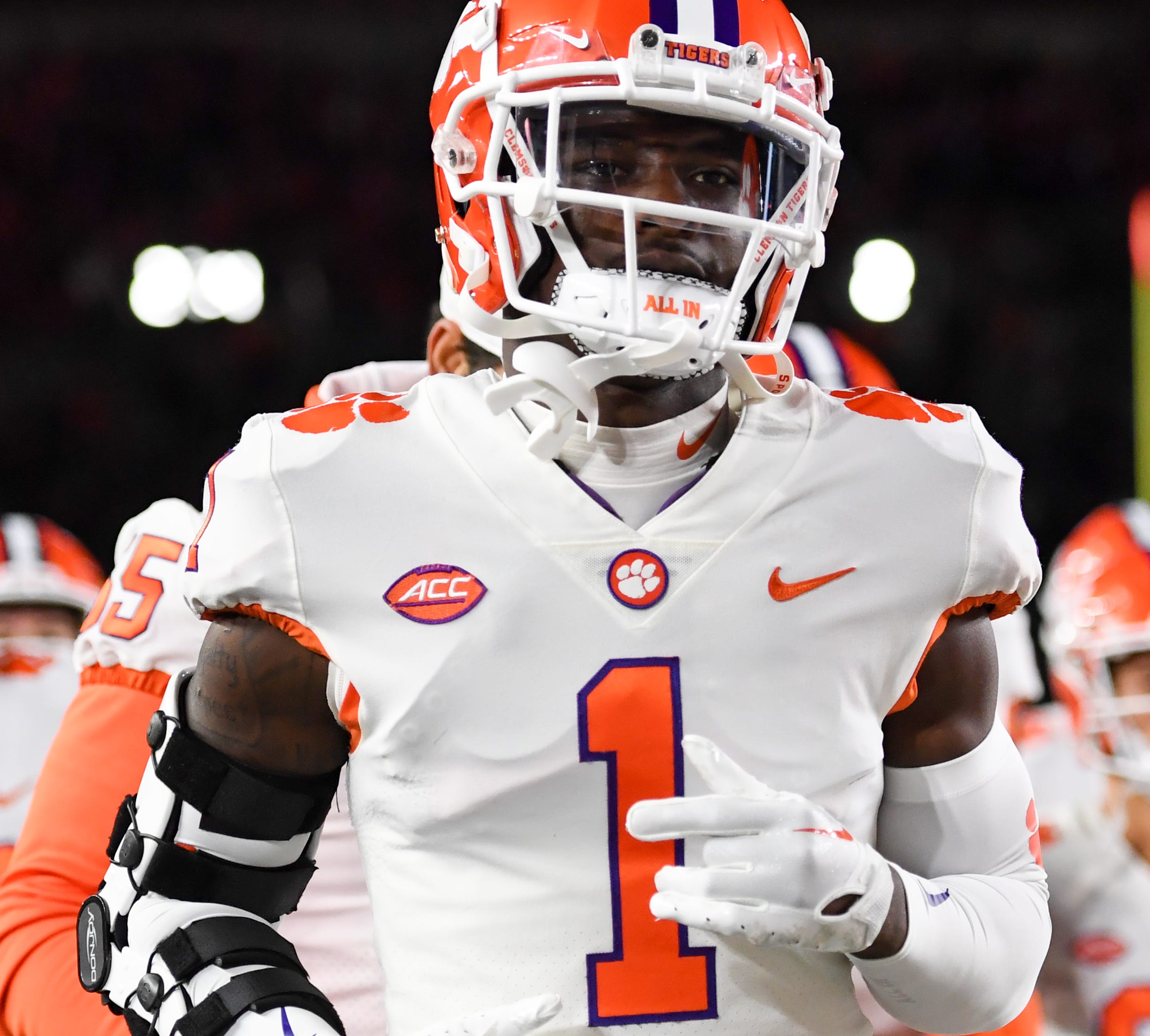
Injuries compounded. He had a brace fashioned around a dislocated elbow. His meniscus, torn in high school, often throbbed. He sprained his ankle. The worst pain of all was a sprained MCL. Head to toe, Mukuba was a shell of himself as a sophomore at Clemson.
But he was on the field, so nobody cared. Nobody gives a damn about the fine print to a 72-yard touchdown against South Carolina.
On the field, he was overthinking everything. Off it, his social media accounts were bombarded. Unlike life in Zimbabwe, technology is unavoidable here. He read all the hate. Even Swinney, an eternal optimist, was ragging on him. “They don’t make Sophomore All-Americans!” Mukuba remembers him crowing. Living 1,000+ miles from home didn’t seem like such a great idea anymore.
“I fell into a dark hole,” Mukuba admits, “because I wasn’t playing my best football. Injuries were fucking me up. I was getting bombed on. I was getting my ass torn up on the Internet. It was crazy. I played some of my worst football.”
Mukuba, an introvert, was in no rush to spill his guts to either of his roommates.
Both, however, helped him realize he needs a life outside of football.
In America, he swiftly realized that the hero can became the goat and then the hero again at warp speed. Those who weather the storm are at a distinct advantage. Any defensive back is bound to get beat. Now that he plays for the Philadelphia Eagles? Yeah, he’s thankful for this turbulent 2022. After bouncing back in ‘23, he then opted for a change of scenery to reset “and start from ground zero” back in Texas. It was the best decision of his football life. In ‘24, Mukuba totaled 69 tackles (41 solo), five interceptions, a forced fumble and played hero for the Longhorns in the Peach Bowl. His interception in double overtime sealed a win over Arizona State.
“Every time I’ve had a setback,” he adds, “something good always came out of it.”
Such as the birth of his son through that Clemson roller-coaster. Right after a 31-24 OT loss to Florida State, he went for a walk with his girlfriend and… she said it was time. They rushed to the hospital, they became parents and Mukuba shrugs off those early witching hours. He was already operating on three hours of sleep with early lifting sessions. All three live together here in Philly.
His perspective — much like Josh Allen — changed with this new arrival.
“Now, you can’t be selfish. Now, decision-wise, you’ve got to be a lot wiser than you were before,” Mukuba says. “You don’t think for yourself. Now, I think twice before I do certain things that I know I feel iffy about — because I know it’s not just going to affect me.”
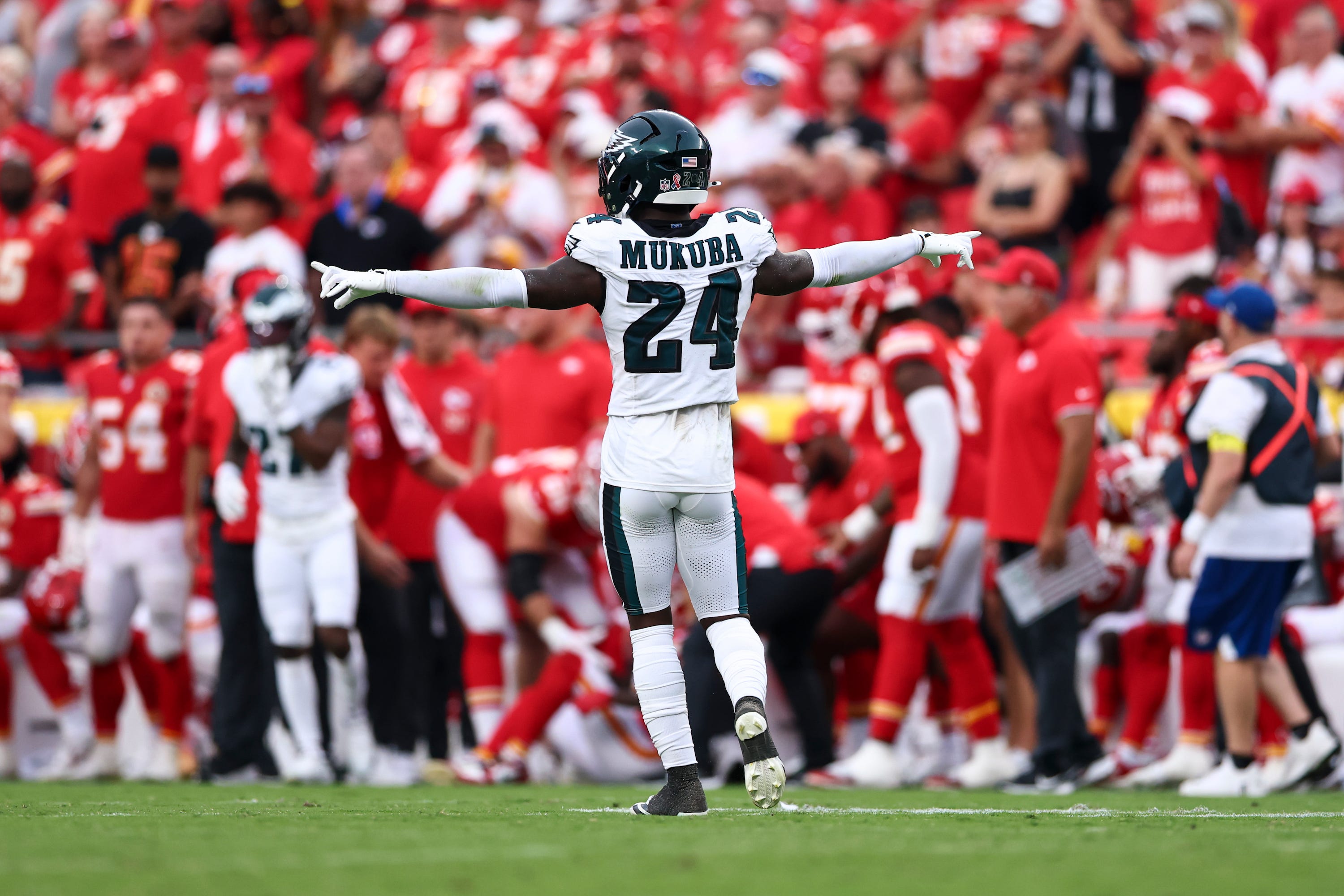
Philadelphia selected him in the second round and, in a Clemson repeat, Mukuba wasted no time introducing himself. In Week 2, the Eagles traveled to Kansas City for a Super Bowl rematch.
Like most ‘25 Eagles games, this was a grimy, low-scoring affair. On the sideline, Hurts pined for his D to create a turnover. Facing second and goal at the 6-yard line, the Chiefs were poised to take a lead in the fourth quarter. Seated here, Mukuba smiles wide and replays it all again. The Eagles prepared for this exact play during practice, he explains. They knew that when the running back looped around Mahomes in motion, the ball was going to tight end Travis Kelce. This is who Mahomes wanted in the red zone.
In truth, Mukuba admits he should’ve broken on the ball earlier. If Old Man Kelce simply catches the ball and falls down, it’s a touchdown. He dropped it. Mukuba cradled the interception, sprinted 41 yards the other direction and the Eagles scored a touchdown to go up 20-10. Inside the locker room, his phone buzzed nonstop with so many messages that it froze. None of the apps would even load. Mukuba needed to stay off his phone for several minutes before reading the several hundred texts and DMs.
Eagles players visited an elementary school that following week and kids went nuts at the sight of him.
“Man, you would have thought they saw Michael Jackson out there,” Mukuba says. “People just started looking at me different. A lot of opportunities outside of football started presenting themselves. Everything changed. People know who I am off of that one play. It was life-changing.”
On cue, our waitress opens up the blinds and a light shines directly on Mukuba. The NFL’s best can all pinpoint one specific moment their lives changed. Take the last two MVPs. Allen, in Year 2, on Thanksgiving Day, monster-trucked through the Dallas Cowboys defense for a fourth-down conversion that asserted both he and the Bills were for real. Matthew Stafford, as a rookie, famously threw a game-winning touchdown after suffering a separated and dislocated shoulder vs. Cleveland. One tipping point can launch a career.
Of course, this league can also KO you to the canvas at a moment’s notice. It’s a remarkably humble profession.
Mukuba learned this the hard way.
Every defensive player is destined to experience the Wrath of Vic. That’s how Zack Baun termed it during Super Bowl Week in New Orleans. One mistake. That’s it. One mistake and Vic Fangio, 68 in August, will magnify the error up on the big screen for maximum embarrassment. His respect must be earned. Mukuba says Fangio didn’t even talk to him his first two months with the team. That KC pick helped. But four weeks later, one nightmare performance against the New York Giants on Thursday Night Football put Mukuba squarely in Fangio’s crosshairs.
In a 34-17 loss to the Giants, Mukuba whiffed badly trying to tackle Wan’Dale Robinson near the sideline on the receiver’s 35-yard score, surrendered a catch on a key third down and had multiple coverage busts when the ball wasn’t thrown his way.
It was his turn.
“I fucked up that game,” he begins. “After that game? Vic was on my ass, man, for a whole three weeks straight until I got right. He was on my ass. … Vic didn’t like me that game.
“He’s just old school. He’s honest with you. He doesn’t care. He’ll tell you the God’s honest truth in front of everybody. Whoever. It doesn’t matter. He will speak his mind. And that goes back to that old-school coaching and old-school mindset he’s got. You might not want to hear it. You’re not going to want to hear it. But you’ve got to take it. You’re a grown man. You’re a professional athlete.”
Fangio didn’t gently pull him aside to discuss those plays. All gaffes were broadcast for all to see.
“It was really hard because it was in front of everybody,” Mukuba says. “But I took it as a challenge.”
This was Mukuba’s next gut-check moment.
He easily could’ve recoiled as Fangio barked in his ear those ensuing three weeks. Turned into a robot terrified of making a mistake. So many 21- and 22-year-olds are not strong enough mentally to handle harsh coaching. Especially today. College coaches are increasingly hesitant to criticize their own players in fear of losing them to the transfer portal. Piss off a five-star and he’ll kindly take his talents elsewhere. (“You don’t want to lose your best players in college,” Mukuba adds, “because you’ll lose your job.”) Fangio, conversely, isn’t distracted by such sensitivities.
Mukuba embraced his roasting. He didn’t try to split the atom overnight. After that horror show in East Rutherford, he instead targeted a specific aspect of his game each week with safeties coach Joe Kasper. Eye discipline. Body positioning. Studying receiver releases. Formation recognition. And one of his favorite fixes: Block destruction. At his size (5 foot 11, 186 pounds), Mukuba needed to find new ways to shed receivers. Power or speed alone wasn’t working, so he started taking better angles.
The better the rookie played, the stronger Philly’s entire D became. Fangio even gave him flowers publicly.
It’s no surprise the same coaching tact is deployed by DeMeco Ryans in Houston and Mike Macdonald in Seattle. Players hate you now, love you later and the net result is one of the best defenses in the league.
“A lot of guys respect Vic,” Mukuba says, “and believe in what he’s saying and trust what he says.”
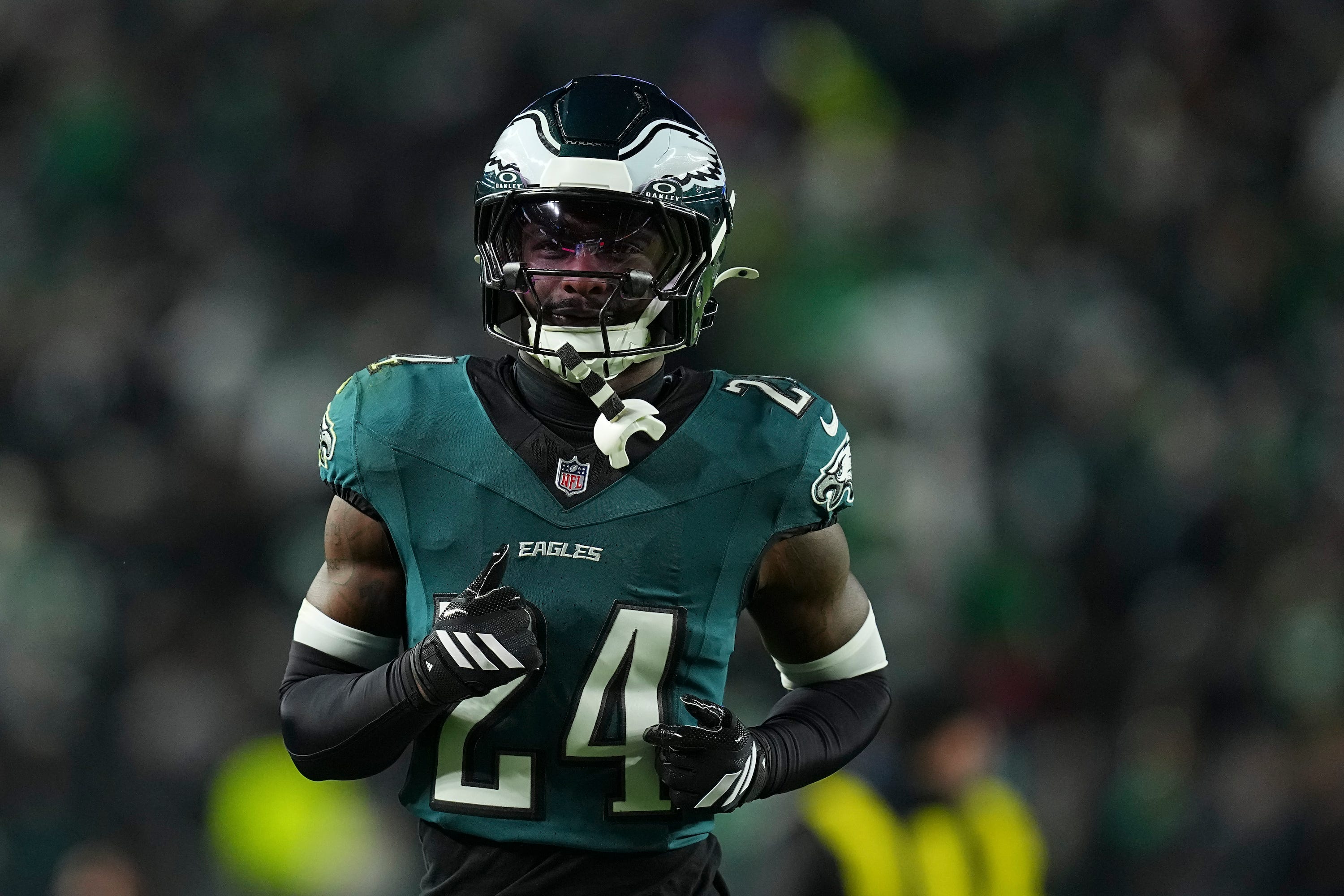
Everything came to a screeching halt, of course. Mukuba broke his ankle in Week 12 against the Cowboys when a teammate’s body weight crashed on the outside of his leg. Adrenaline pumping, he walked off the field on his own. Ten minutes later, the safety couldn’t walk at all. His rookie season officially wiped out, Mukuba made a point to stick around the team as much as possible. Stay positive. He didn’t want to fall into another Clemson-like pit of depression. Instead, he turned himself into a student of the sport and started seeing a completely different game. The Eagles lost to San Francisco in the wild-card round of the playoffs, safety Reed Blankenship signed with the Texans and, now, Roseman is betting big on Mukuba’s ascent. A lot rides on his ability to take the next step.
And in 2026, he wants all the smoke. He wants everything Fangio has to offer because he knows it’s all designed to help him.
One NFL dynamic does surprise him. Mukuba can tell other young players get starstruck and act like fans. “Oh shit, that’s Jalen Hurts,” he says imitating them. “Oh shit, AJ Brown.” These are players you might’ve idolized but they’re not deities. They’ve got a job to do. Fall into a trance for a half-second, mesmerized by the talent across the line of scrimmage, and you’ll get beat for a touchdown. He refuses to put anyone in the NFL on a pedestal.
“Be you. You’ve got to be you,” Mukuba says. “You’re your own person too. You’ve got to respect the game and respect the person across from you. But shit, at this level? You’re here to do the same thing they’re here to do. Do your job, they do their job.
“You need a free mind to just play.”
Playing in I-95 traffic was a more enjoyable endeavor than watching the Eagles attempt to play offense much of last season. Out is Kevin Patullo, in is Sean Mannion as OC. Out is AJ Brown, in is Makai Lemon, Dontayvion Wicks and Hollywood Brown at wide receiver. Defensively, on paper, it’s hard to nitpick a weakness. Jonathan Greenard is one of the league’s most underrated edge rushers. A player we got to know in 2024. The core remains rock solid.
Mukuba believes the Eagles have all ammo required to get back to the Super Bowl.
Everyone must contribute, he notes, from the team nutritionist to the front office. “If one thing is off,” he adds, “a lot will be off.” No wonder he sees Roseman constantly. The GM is involved with everything to make sure there is no such leakage. Other scouts might’ve viewed Mukuba as a third- or fourth-round pick after his pedestrian 40 time. The Eagles fully understood what’s ticking inside and valued what they saw on tape. Ex-DBs coach Christian Parker, now the Cowboys’ DC, was a major advocate. (“He’s definitely going to hear it when we play them.”)
Until training camp begins, Drew Mukuba will spend time with his 2-year-old. He’s trying to get into fishing and golfing. He’s been loving all invites to all sporting events. Mukuba attended the first hockey game of his life when the Flyers made the playoffs and is planning on checking out World Cup games at The Linc. Unimaginable back at age 8. Mukuba knows there are droves of kids back in his home country still walking miles for water. That’s why he launched a nonprofit two months ago. Mukuba plans on flying back to Zimbabwe to pay it forward.
Their hard times will pay off. He’s proof.
“Since I was young, I’ve always had a different mindset,” Mukuba says. “It gives me an advantage over a lot of people.”
Ask what’s so different about the way he thinks and he points to his childhood. He was forced to grow up a decade earlier than kids in more developed countries.
“It helps me prepare,” he continues, “for whatever’s coming next.”
This spring day feels something like the calm before a storm. Nobody inside this diner recognizes the second-year safety, but they all will at some point this 2026 season. For better, for worse. That’s how life works for all teams that call this city home.
Turbulence is a guarantee.
He’s thankful for it.
ICYMI:

Calvin Austin III is the firestarter

CLIFTON, N.J. — His eyes squint toward the wall to his right. There’s nothing but a busboy over there tidying up dishes. Dim lighting. No foot traffic. But staring that direction, Calvin Austin III slips into a time machine. We’re not inside a restaurant anymore. We’ve transported to the Memphis Tigers weight room. It’s 2017…