

This is the 42nd year, and the fifth year at Go Long, that Bob McGinn has written a position-by-position series previewing the NFL draft. Previously, it appeared in the Green Bay Press-Gazette (1985-’91), the Milwaukee Journal Sentinel (1992-2017), BobMcGinnFootball.com (2018-’19) and The Athletic (2020-’21). Until 2014, many personnel people were quoted by name. The series reluctantly adopted an all-anonymous format in 2015 at the request of many scouts. Listed times in the 40-yard dash reflect the average of hand-held clockings from the combine and pro days. Electronic times from the combine aren’t compatible with most pro days and thus weren’t utilized.
Second of 12 parts: tight ends.
By Bob McGinn
The recent proliferation of tight ends on NFL playing fields carried over to their unprecedented participation at the scouting combine earlier this year.
Not too many years ago tight ends were few and far between as the 330-some combine invitees went through their paces in Indianapolis. That changed dramatically in February when 27 tight ends, six more than ever before, drew invitations to appear at Lucas Oil Stadium.
The increase wasn’t the result of this being an exceptional crop of tight ends. It’s just an average group.
Instead, National Football Scouting, the combine that administers the event for the NFL, probably reacted after watching more and more teams using more and more tight ends.
“This position is exploding, without a doubt,” an executive in personnel said. “The number of multiple tight ends on Power 4 teams is incredible. They’re being used with three, four, five per team getting significant playing time. They play on an edge, at a wing, as a fullback.”
Besides the 27 tight ends, the total of 319 participants included 46 wide receivers and just 21 running backs. Contrast that to 2005, when there were 41 wide receivers, 35 running backs and merely 14 tight ends.
Seven of those running backs 20 years ago were categorized as fullbacks. That position no longer carries a specific designation by NFS largely because few teams carry a fullback.
For years, the base offensive set in the NFL consisted of two backs, one tight end and two wide receivers. It shifted to one back, one tight end and three wideouts, which remains the most frequently used today. But now, with the run game moving back into vogue, the so-called “12” personnel with one back, two tight ends and two wideouts has become all the rage. Even “13” personnel, with three tight ends, has gained traction due in large part to the Rams’ success with it.
“You need two and teams have got three and four on their 53 and two on practice squad,” the scout said. “It’s just how the game is being played now. They’re trying to create mismatches and force you into whatever defensive personnel they want to get you into with all these extra tight ends.”
The number of tight ends drafted has remained fairly steady. The total of 75 that were selected in the last five years compares to the 66 drafted from 2016-’20.
Tight ends in the first round have remained consistent since the position came into its own in the 1960s. The record for tight ends in the first round is three, which happened five times; there have been 19 years when none were selected in Round 1.
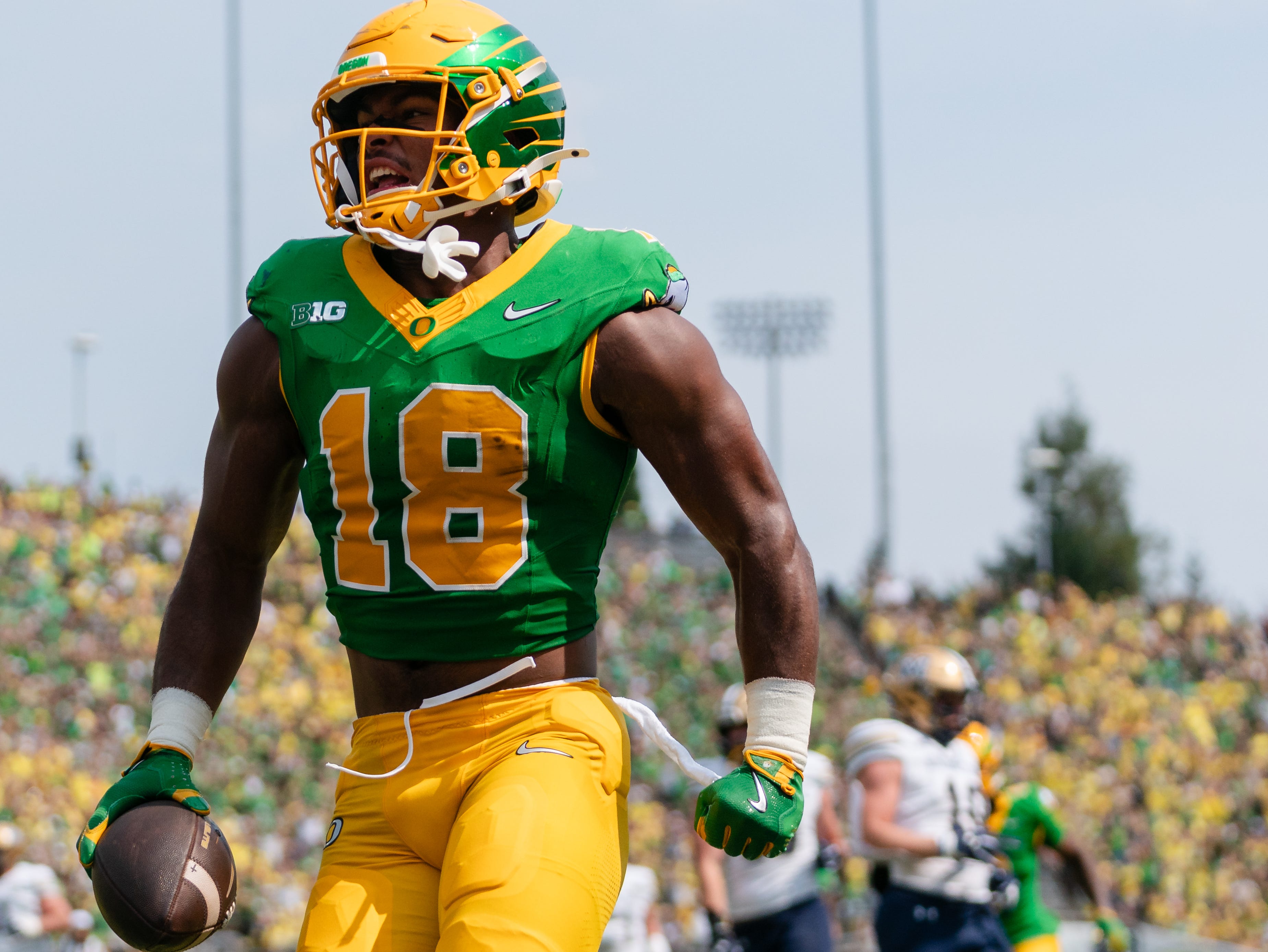
Oregon’s Kenyon Sadiq, whose 4.32 hand-held clocking at the combine was one of the fastest ever by a tight end in the 40-yard dash, leads the way.
“It’s not quite as strong this year,” said one executive. “Last year there were two drafted in the first round, three in the second and one in the third. This year you’ll have maybe one in the first, possibly one in the second and maybe one or two in the third. But there’s a lot of players.”
Go Long paid subscribers can see what scouts have to say about all of the top tight ends in this year’s draft below.
Rankings are below with full analysis.
We are completely fueled by you. Thank you for growing our community.
TIGHT ENDS
1. KENYON SADIQ, Oregon (6-3, 243, 4.32, 1-2): Third-year junior. “I would take him wherever … in the top 15,” said one scout.