

By Bob McGinn
In 2025, the Lions never recovered from the loss of center Frank Ragnow to retirement. It was the single most important factor in the team’s fall from first to worst in the NFC North Division.
Then, in March, the Bears were shocked when center Drew Dalman announced his retirement. It came just two months after they took advantage of the Lions’ collapse and rose from last to first in the division.
Ragnow, in 2024, and Dalman last season were voted the starting center for the NFC in the Pro Bowl. Not only were they hailed for their consistent blocking but also for their outstanding ability to call out blocking assignments at the line of scrimmage.
The Lions got it worse than the Bears because Ragnow abruptly called it quits six weeks after the draft. Their only reasonable response was to shift veteran Graham Glasgow from guard back to center, and as hard as Glasgow tried his 10th season probably turned out to be his worst and he’s currently on the street.
Given time to maneuver, the Lions in March shored up their most prominent void by signing unrestricted free agent Cade Mays (three years, $25 million) and trading for another veteran center, Juice Scruggs.
The damage caused by Dalman’s leave in Chicago led to a pair of moves that should shore up the center position but of course also left other positions without reinforcement.
Last month, the Bears traded a fifth-round draft choice in 2027 to New England for Garrett Bradbury, the Patriots’ center during their Super Bowl run and the Vikings’ undersized starter from 2019-’24. On the surface, the Bears seemingly were prepared to defend their title with Bradbury.
“To me, he’s a low-end starter,” an executive in personnel for an NFL team said this week. “Veteran kind of guy. He’s smart, played a lot of football. But he has limitations. Definitely a step down from Dalman. Pass protection is going to be an issue as well as any power-gap scheme runs. They addressed it on a short-term basis. I expect them to draft one at some point in the middle rounds probably. Dalman was a loss.”
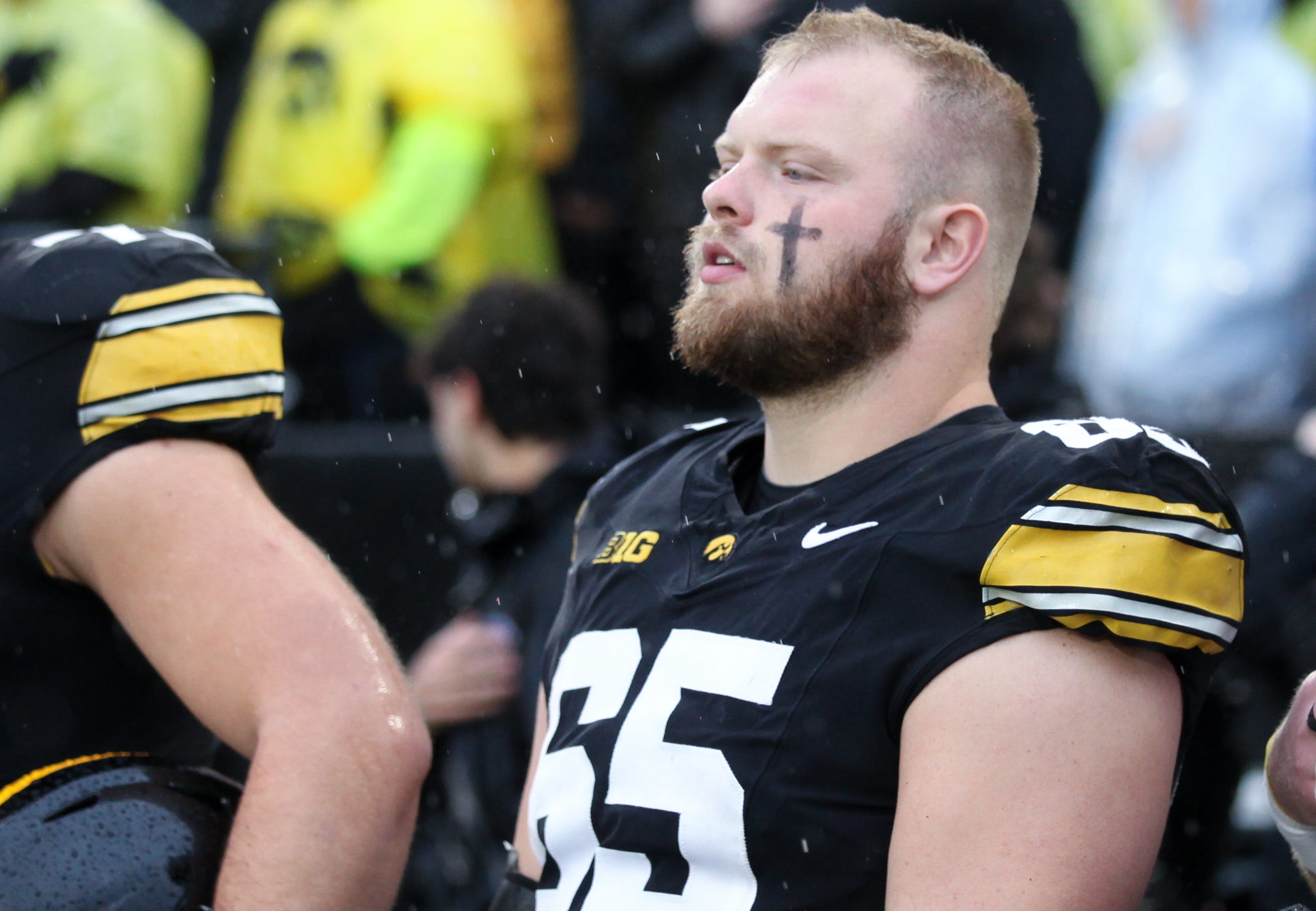
Already out of a mid-round pick in the draft next year, the Bears still felt compelled to draft a center in the second round Friday night. He was Iowa’s Logan Jones, a six-year collegian who started 51 games in the Big Ten.
More than likely it will be Jones, who will be 25 in October, starting on opening day if he’s not the main man on Day 1 of training camp. Bradbury has a $4.7 million base salary and can’t play another position. His departure, either via trade or waivers, appears likely.
“Captain, leader, grown man, pro-ready habits,” said Trey Koziol, the Bears’ director of player personnel. “Mature, composed. The football intelligence really stood out.”
With Dalman, who would be entering his sixth season at age 27, the Bears could have used that second-round draft choice (No. 57) on a much-needed defensive tackle or on a better wide receiver than speedster Zavion Thomas, who became their selection at No. 89. But barring injury, Jones should provide the interior stability that is critical for the development of Caleb Williams. The Lions could only have been that fortunate.
CHICAGO BEARS (11-6, 1-1)
2/52. LOGAN JONES, C, Iowa (6-3, 300, 4.91)
3/69. SAM ROUSH, TE, Stanford (6-6, 266, 4.77)
3/89. ZAVION THOMAS, WR, LSU (5-10 ½, 192, 4.26)
When the Titans decided to trade up in the second round and take linebacker Anthony Hill, the Bears agreed to move down with them from No. 60 to No. 69 while adding a fifth-round selection. Before Chicago picked at No. 69 tight end Max Klare and defensive tackle Tyler Onyedim had just gone off the board.
Despite having Colston Loveland and Cole Kmet, the Bears decided to add another tight end in Roush, who will assume the No. 3 berth left vacant by the free-agent departure of Durham Smythe. Roush was productive and tested well athletically, but his 40 time was among the slowest at the position and his arm length (30 5/8 inches) was the shortest.
If another tight end seemed like a luxury pick in the third round, perhaps it was. Among the 19 players that went before the Bears selected again were defensive tackles Chris McClellan (Packers), Albert Regis and Domonique Orange (Vikings).
Koziol described Roush as one of the few tight ends with the ability to play all over the formation and both catch and block effectively. “He definitely looks the part,” he said.
With D.J. Moore having been traded to Buffalo, the Bears expect Luther Burden to move into the starting role opposite Rome Odunze. Kalif Raymond, the gutsy former Lion who took a one-year, $3.5 million deal from Chicago, probably is more of a No. 4 receiver than a No. 3.
So the Bears tried with Thomas, who is a little bigger than Raymond and even faster.
“Good little player,” one scout said this month. “He’s actually put together a lot better than you’d think when you get up on him. He’s 190 pounds compared to some of these guys that are in the 160s, 170s. He kind of looks like a running back, to be honest. His whole thing has been production. He’s never really found a defined role but he’s extremely fast, athletic, versatile. He’ll be a returner immediately for somebody. He’s run the ball out of the backfield. He does a lot of things pretty good, but nothing elite. But 4.29 is 4.29.”
Thomas was the 15th of 16 wide receivers taken in the top 100 picks. Raymond, who has returned punts reliably for a decade, gives the Bears remarkable depth in the kicking game.
DETROIT LIONS (9-8)
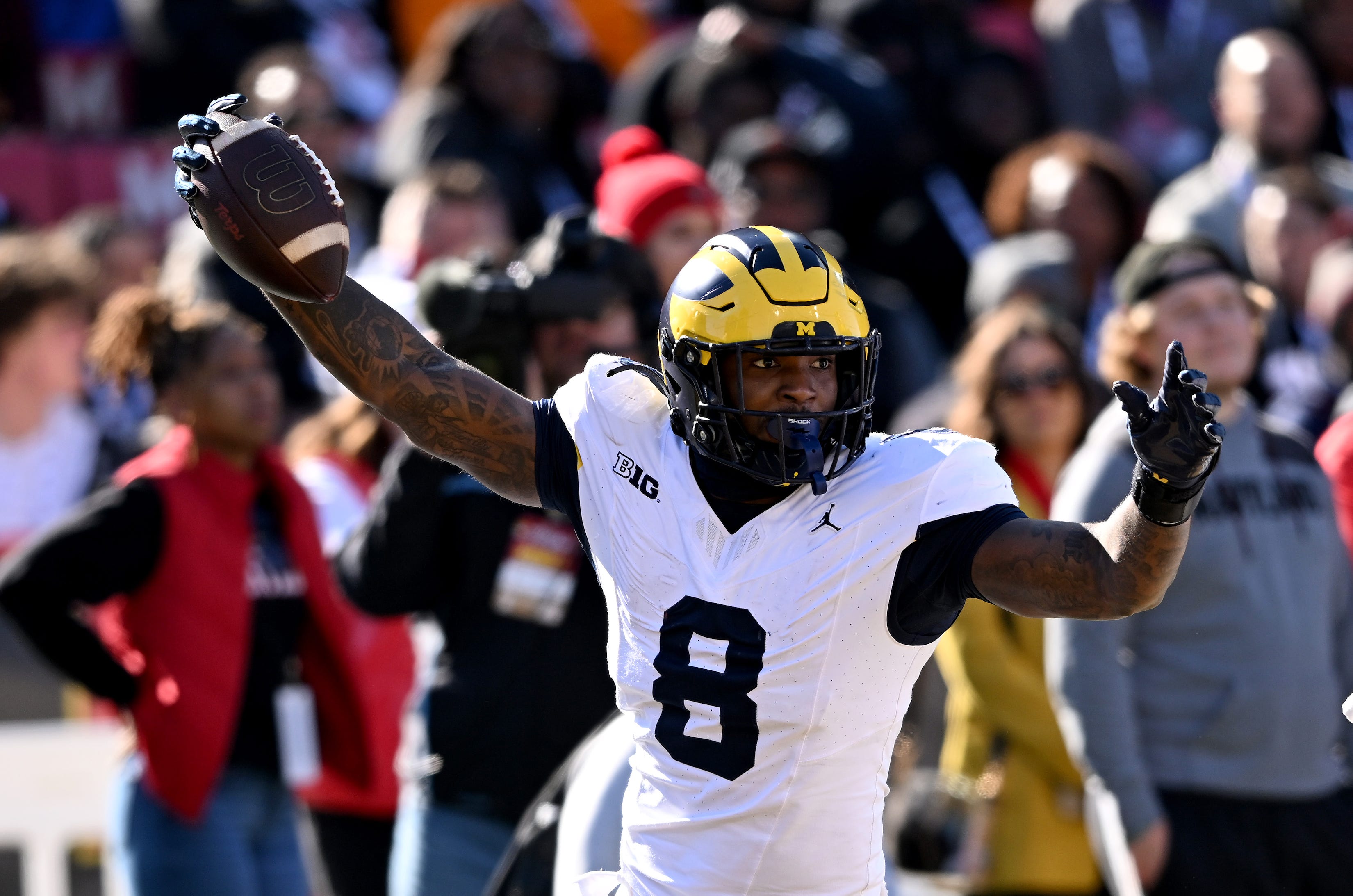
2/44. DERRICK MOORE, Edge, Michigan (6-4, 256, no 40)
Moore didn’t work out at the combine, citing a hamstring injury. Three weeks later at pro day, he performed poorly in the jumps (vertical of 30 inches, broad jump of 9-7) but didn’t run the 40 or shuttles. NFL teams will never really know how fast he is.
His arm length (33 3/8) compared favorably at the position but his hands were among the smallest at 9 1/8. Having started 24 of 53 games, his production (21 ½ sacks, 95 tackles, 24 ½ tackles for loss) was average to slightly above.
Nevertheless, GM Brad Holmes grew antsy watching as edge rushers went 35th, 40th and 41st early in the second round. Finally, he traded up with the Jets, parting with a fourth-round pick in order to move from No. 50 to No. 44 and take Moore, who thus became the ninth player at the position drafted. Missouri’s Zion Young went next to the Ravens.
“It’s hard to find guys — I’m not going to say we’re picky — but we just have a certain type that we like and he fits those boxes,” said Holmes. “Right in that area, there were multiple edge rushers that were flying off. That’s the fascination of the draft: you don’t know. Derrick might have been our No. 3 or No. 4 edge rusher, whatever it is, but today he was our No. 1 for what was available. For other teams, he could have been their No. 7 or No. 8. You can’t worry about that. You’ve just got to get the guy that you want.”
Moore became just the third edge rusher that Holmes has taken in the six drafts he has directed. He will compete with veteran D.J. Wonnum, retread Payton Turner and eager second-year man Ahmed Hassanein for playing time opposite Aidan Hutchinson, another former Michigan player.
In my pre-draft interviews with half a dozen scouts, Moore drew his highest marks for overall strength and toughness. There were undercurrents of overachievement in the assessments. “There’s been some better defensive ends that have come out the last few years at Michigan,” one evaluator said. “He power rushes all the time. He gets into what I call personal battles and gets fighting the guy and not getting off the block.”
After taking Moore, the Lions were done for the night because their third-round pick had been dealt to Jacksonville a year ago in a draft-day deal that brought wide receiver Isaac TeSlaa to Detroit.
The charge forward to land Moore was the 12th time in Holmes’ tenure that he was unable to wait patiently in his slot and instead parted with draft capital. Three of those deals turned out favorably (for wide receiver Jameson Williams, safety Brian Branch, guard Tate Ratledge). Three turned out poorly (for nose tackle Brodric Martin, defensive tackle Mekhi Wingo, tackle Gio Manu). One broke even (for linebacker Derrick Barnes). And it could be said that the jury’s out on four others (for cornerback Terrion Arnold, running back Sione Vaki, guard Miles Frazier and TeSlaa).
On Saturday, the Lions have six selections to address needs at linebacker and in the secondary.
GREEN BAY PACKERS (9-7-1, 0-1)
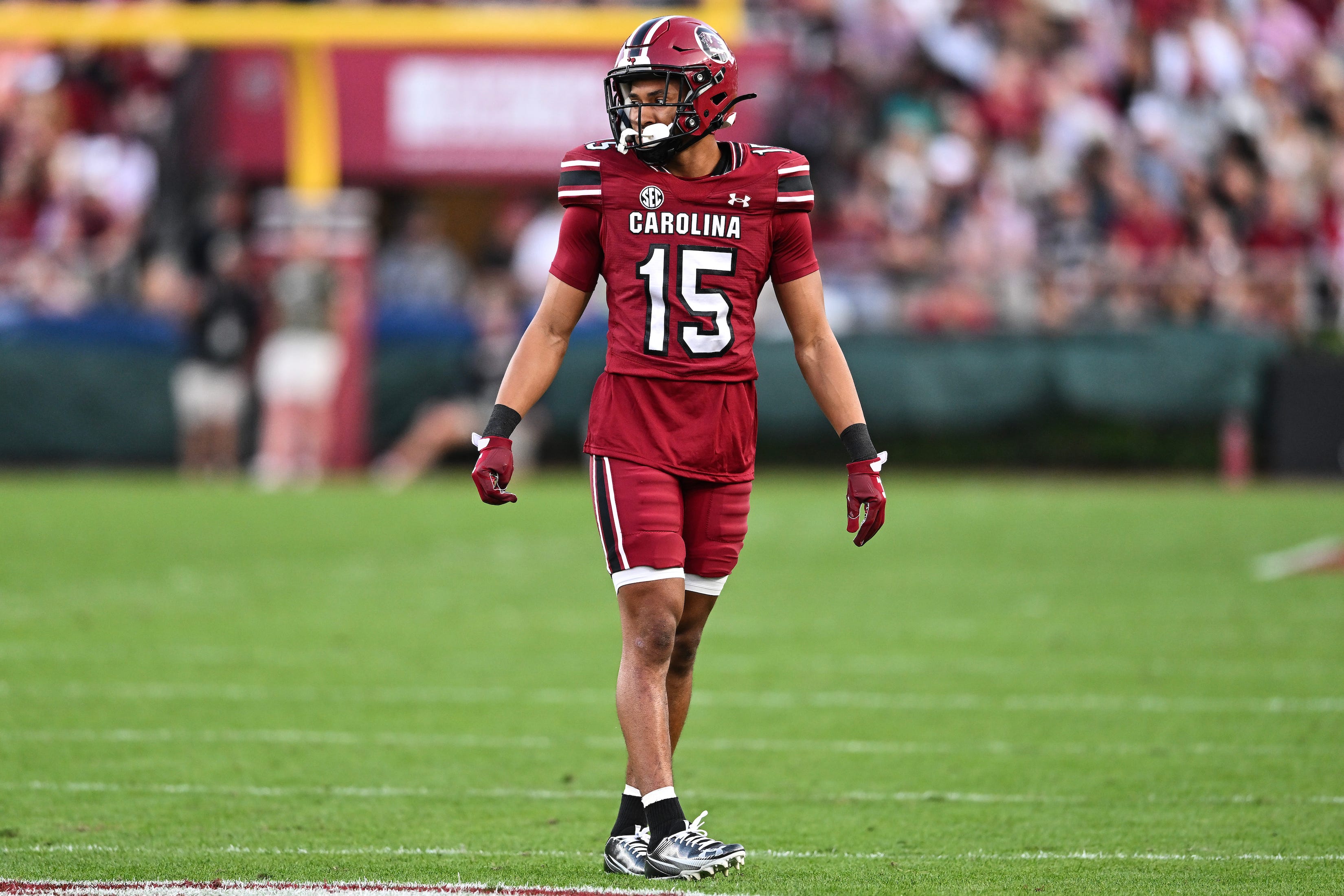
2/52. BRANDON CISSE, CB, South Carolina (5-11 ½, 189, 4.46)
3/77. CHRIS McCLELLAN, DT, Missouri (6-3 ½, 313, 5.04)
Until Friday night, the Packers hadn’t drafted a cornerback in the first four rounds since Eric Stokes went in the first round in 2021.
Obviously with that in mind, an executive for another NFL team offered this pre-draft assessment of the depth chart at cornerback in Green Bay that consists of Keisean Nixon, Carrington Valentine, Benjamin St-Juste and Kamal Hadden.
“I keep saying they need to draft a corner but they haven’t done it,” said the personnel man. “Maybe this is the year. Nixon and Valentine are free agents after this year and they don’t have a lot of depth. St-Juste had an OK year last year for the Chargers but he was really bad two years ago with the Commanders. But if they continue to play a lot of zone defense, which they should under (Jonathan) Gannon because that’s what he did (at Arizona), he might be OK. But he’s just a backup.”
GM Brian Gutekunst’s only early-round corners include Jaire Alexander (first round) and Josh Jackson (second round) in 2018, and Stokes three years later. What made the selection of Cisse interesting was the same flaw that both he and Stokes brought into the NFL.
Of the 15 scouts that I discussed Stokes with five years ago, four remarked that his hands were a huge negative. “He can’t catch a ball but he can run fast,” said one.
Stokes (6-0 ½, 194, 4.31) didn’t have an interception in 22 games at Georgia from 2018-’19. He picked four in 2020, but one scout said several of them were poorly thrown and labeled them as “gifts.”
As a rookie, Stokes started 14 of 16 games and had one interception. However, he dropped six others. That was one more than any player in Green Bay had since I began charting drops in 1998. The Packers let Stokes walk as a free agent in March 2025 and he went on to start for the Raiders. In 61 career games, he has one pick.
Five cornerbacks had been selected when the Packers drafted Cisse. The Packers indicated he was equally effective both in press-man and off-man coverage. Three of the personnel people that discussed Cisse with me before the draft mentioned that poor balls skills were a major factor why he finished with just two interceptions in 34 games (21 starts).
“He can’t catch at all,” said one scout. “Ball skills are terrible.”
Mike Owen, one of the Packers’ national scouts, said: “I thought he had good ball skills.”
After sending Kenny Clark to Dallas as part of the trade for Micah Parsons, the Packers had problems most of the season stopping the inside run. “They definitely need another run defender,” said one scout before the draft, adding that the departed Colby Wooden was a better run stopper than Devonte Wyatt, Karl Brooks and ex-Viking Javon Hargrave. Other holdovers include Warren Brinson, Nazir Stackhouse, Jonathan Ford and Jordon Riley.
Thus, the decision was made to trade up from No. 84 to No. 77 in the third round with Tampa Bay at the cost of a fifth-round pick and take McClellan, a backup for two seasons at Florida and a starter for two seasons at Missouri.
He has good arm length (34), massive hands (11) and excellent speed. Green Bay selected McClellan over other defensive tackles such as Domonique Orange, Albert Regis and Darrell Jackson.
“He can play the nose, he can play the three (technique) and some of our big end stuff as well,” said Milt Hendrickson, the club’s director of football operations. “He’s just one of those guys, even though he’s four years in college, he’s still scratching the surface a little bit. He’s a guy that can fit in a variety of different ways.”
MINNESOTA VIKINGS (9-8)
2/51. JAKE GOLDAY, Edge-LB, Cincinnati (6-4 ½, 237, 4.58)
3/82. DOMONIQUE ORANGE, DT, Iowa State (6-2 ½, 322, 5.17)
3/97. CALEB TIERNAN, T, Northwestern (6-7 ½, 323, no 40)
3/98. JAKOBE THOMAS, S, Miami (6-1, 214, 4.57)
While it’s true that Jonathan Greenard’s sack total dipped from 12 in 2024, his first season in Minnesota, to three in 2025, he still garnered respect from opponents.
“I know he didn’t have high sack numbers this year,” one scout said in January. “But when you watch the film he’s consistently disruptive.”
In my All-NFC North team for 2025 Greenard ranked third behind Micah Parsons and Aidan Hutchinson. The nice problem for the Vikings was that Andrew Van Ginkel ranked fourth and Dallas Turner was sixth. After a disappointing three-sack rookie season, Turner registered 6 ½ of his eight sacks in the final eight games.
“To win a game as a pass rusher, I’d take Turner,” said another scout after the season. “To win a game instinctively, I’d take Van Ginkel. To win it overall, Greenard is probably that guy.”
Minus a salary cap, the Vikings of course would have retained all three and employed them in a dynamic rotational arrangement. But with Greenard angling for a raise from his $19 million salary for 2026 the Vikings traded him to the Eagles in the middle of the proceedings Friday night.
The Eagles added Greenard to their edge rusher mix that is without Jaelan Phillips, who signed with Carolina. They signed Greenard to a four-year extension worth $100 million with $50 million guaranteed, according to ESPN.
In return, the Vikings got the second of the Eagles’ two third-round picks (No. 98, not No. 68) and a third-round pick in 2027. They reportedly also trimmed $12.5 million from their salary cap.
“What you see is a relentless player with physical tools,” Eagles GM Howie Roseman said in reference to Greenard. “He can win in multiple ways. He is hard to block. I know when we play Minnesota, we are worried about where he is at all times.”
Golday played a multitude of positions during a five-year career at FCS Central Arkansas and Cincinnati. The Vikings return Eric Wilson, Blake Cashman and Ivan Pace at linebacker. Look for Golday, an effective rusher from various locales, to become a useful weapon under defensive coordinator Brian Flores on passing downs.
“Most teams saw me playing off the ball (linebacker),” said Golday. “Some saw me doing a little bit of everything. What makes me special is my versatility. I played mike and then sam, which basically was a nickel and I was in coverage a lot.”
Orange is a hulking run stuffer. Along with Caleb Banks, the first-round pick, the Vikings’ front figures to take on a dramatically different look from recent seasons in terms of bulk.
Tiernan walks in as the No. 4 tackle but with the athleticism one day to take over for either Christian Darrisaw or Brian O’Neill.
Thomas had an up-and-down career but couldn’t be in a better spot. Whether Harrison Smith comes back or not, the Vikings have openings at safety.
ICYMI:

Now that day 3 has wrapped, I'm still a bit stunned the Bears didn't address the edge at all. It makes me wonder if they will pursue a trade as it was one of their highest needs.
Great commentary and insight on the new additions to the NFC North. Time to find some Day 3 diamonds in the rough! Go Lions!