



CLIFTON, N.J. — His eyes squint toward the wall to his right. There’s nothing but a busboy over there tidying up dishes. Dim lighting. No foot traffic. But staring that direction, Calvin Austin III slips into a time machine. We’re not inside a restaurant anymore. We’ve transported to the Memphis Tigers weight room. It’s 2017. Austin, the local kid, is a walk-on.
In the middle of the room, players could make smoothies and protein drinks. There were a few offices. And whenever the food arrived, only those on scholarship were permitted to proceed. It could be sandwiches from Lennys Grill & Subs or Sonic burgers. They got first dibs.
Walk-ons? Austin points at that wall. They’d patiently wait right there for their turn.
“Once they got their stuff,” Austin says, “then we could get our stuff.”
Usually, there was enough food. But this emasculating exercise established a clear caste system that crystallized exactly where Austin, the runt of the freshman class, stood in the program. Reality checks were supplied outside the building, too. From the line at Cook Out, Austin sent his sister a request for $6 on Cash App because that’s how much it cost for a burger, tenders, fries and a milkshake. She’d always send it right away. His pockets were bare.
One workout, Austin smoked the competition in sprints. The last rep, Austin “hit another gear” and coasted 10+ yards ahead of everyone else. A jarring expedition of pure speed that compelled one of the Tigers’ strength coaches to break tradition. He let the walk-on eat first with the scholarship players. Here, a rush of euphoria visibly fills Austin. In countless ways, he’s forever stuck in 2017 because nothing beat this literal hunger to succeed. Most NFL veterans understandably lament the fact that they missed out on NIL money. Not Austin. He’ll pass on $200K, the going rate for No. 3 and No. 4 receivers at Power 4 schools, for one Sonic burger. That satisfied his appetite back then.
“I’m so thankful to have missed out on prime NIL,” he says, “because I don’t know what my mindset would’ve become. I truly found myself.”
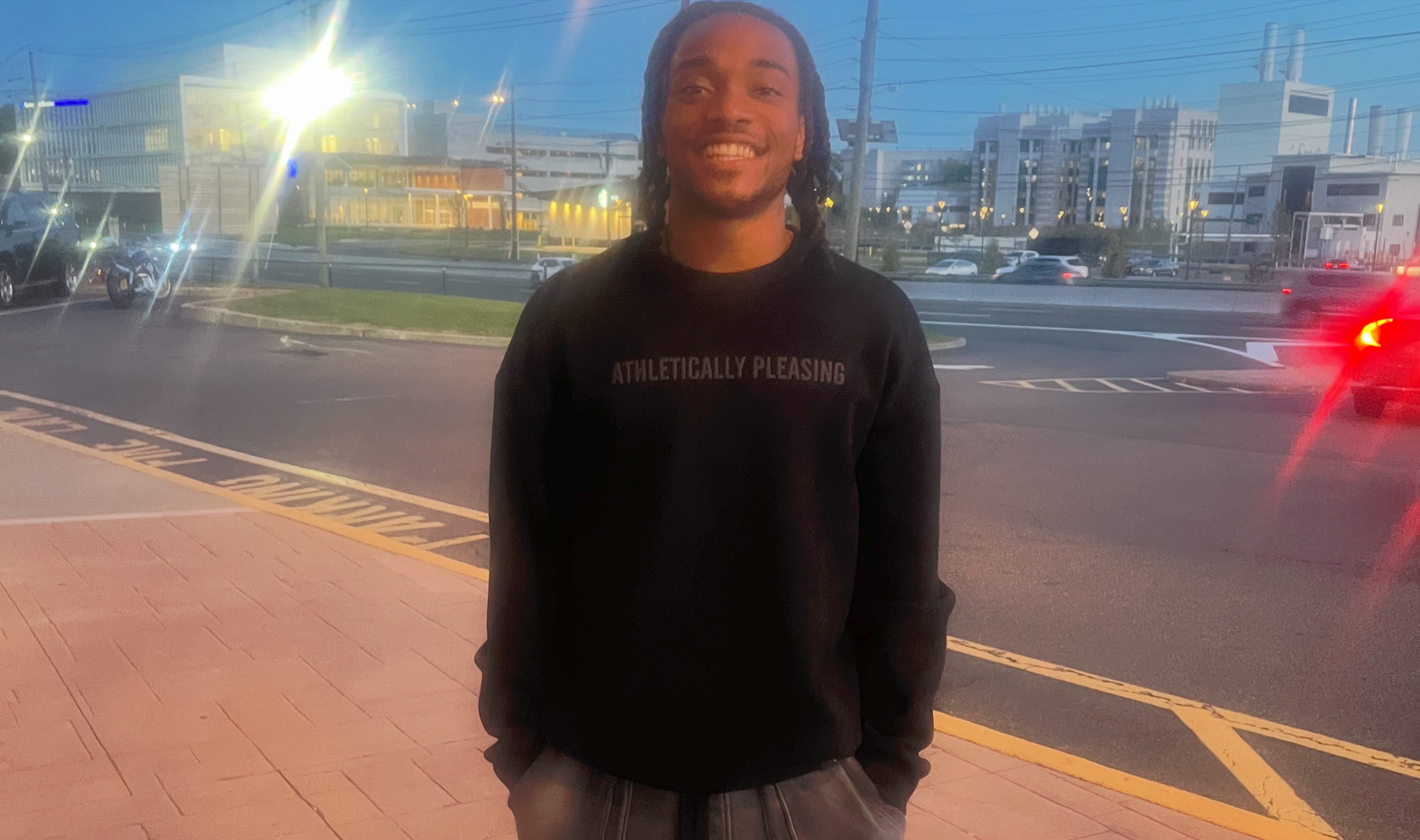
He’s 5 feet 7 3/4 inches tall and 165 pounds. One of the smallest players in the entire NFL. At Tommy’s Tavern + Tap, there’s no distinguishing this patron in a leather booth from anyone else. Austin sports a black crew with the words “Athletically Speaking” inscribed across the chest. Dreads droop to his shoulders. As he speaks, he thumbs the paper wrapping from his straw into a ball and speaks… fast. One story zips to the next at one high-octane pace. All with maximum enthusiasm. There’s a contagious vigor to Austin’s personality that represents the diametric opposite of everything produced inside of his new home.
Six miles away, MetLife Stadium has been more $1.6 billion penitentiary than palooza. Soul-sucking. Insipid. Being a bad football team is one thing — and these Giants are 74-129-1 since 2013 — but bad and boring creates entirely new depths of torture for all inhabitants. One of the NFL’s proudest franchises has been about as digestible as a shot of tabasco sauce.
Hope, however, is now renewed. The fusion of a Super Bowl-winning coach (John Harbaugh) who’s tallied 193 victories through his career, a swaggering young quarterback (Jaxson Dart) and a roster flush with promising young talent has vaulted the New York Giants into offseason darlings territory. After the draft, they were the most-bet NFC team to reach the Super Bowl. This could all combust, of course.
What these Giants need is a shock to the system. A signature Big Bang moment. A player who’ll bring life to MetLife.
They need Calvin Austin III.
He knows his football life has been a steady build toward this 2026 NFL season.
Go Long is your forever home for longform in pro football.
We are committed to bringing you real, raw storytelling.
Thank you for growing our community.
A stunning New York City skyline is visible across the Hudson River. This is the big time. Austin will consciously sustain and weaponize his walk-on mentality because he’s forever the forgotten one. He’s the high school kid who rifled off 400 emails nationwide for one shot, only to receive hardly any replies online and utter garbage in-person. One D-I coach’s condescending voice still plays in his head. He’s the college kid humiliated in one of his first drills who learned how to morph what everyone deemed a fatal flaw — his size — into a “superpower.”
A superpower that changed the course of multiple NFL franchises in a millisecond.
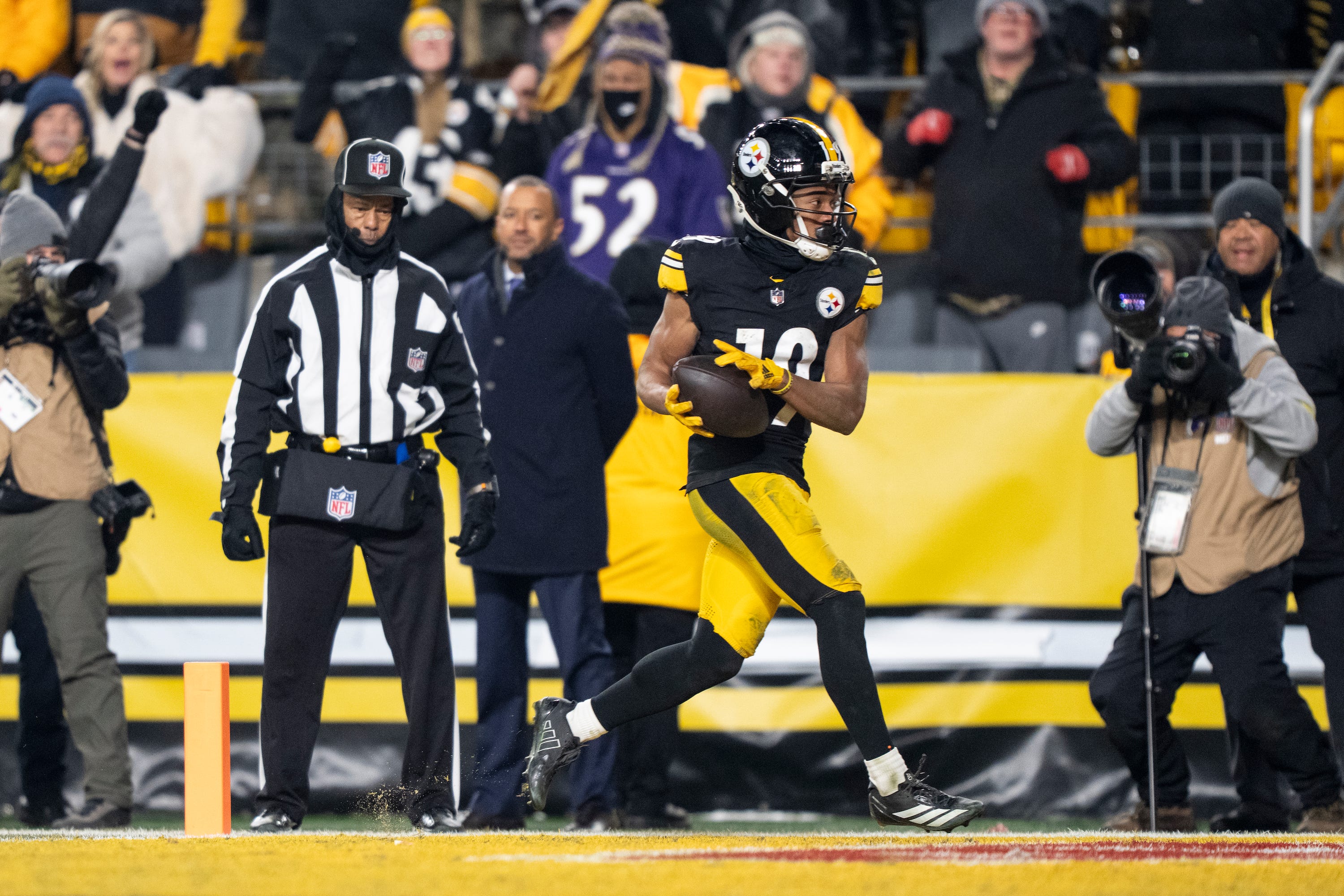
Just like that, he transports again. It’s now Jan. 4, 2026 and the AFC title is on the line at Acrisure Stadium. All of 2 minutes and 20 seconds remain for his Pittsburgh Steelers to save their season against Baltimore. Austin wonders if this will be the last game for Aaron Rodgers and Mike Tomlin. As the kickoff sails into the end zone for a touchback, Rodgers plots with OC Arthur Smith with the receiver within earshot. He hears them ask each other how they can get Calvin Austin the ball and wants to pinch himself. (“Nobody can take that from me. They’re talking about me. Getting me the ball the first play of the drive.”)
The Steelers line up with three receiving options to the left and Rodgers knifes a slant to Austin on the backside for 16 yards.
Soon, it’s now third and 10 with 55 seconds left from the Ravens 26-yard line. I pull up the theatrics on my phone. We watch it together.
“You’re in the moment,” Austin recalls. “You understand the stakes. This is do or die. It’s now or never. The season is on the line.”
Pittsburgh again wants to work Austin as the lone receiver on the backside. Inside the huddle, Rodgers asks what route he wants to run. In his head, Austin’s thoughts race. If the Ravens play zone, he’d prefer to run a slant and nestle into a window. But if they go man, he can get vertical. The play clock ticks. Tension builds. No timeouts remain. A decision is needed, ASAP, and one Steelers offensive lineman cries out: “Just cook him!” Rodgers instructs Austin to run a stutter-go.
As Austin jogs to the line of scrimmage, he cannot tell if its Cover 3 or man. Rodgers barks an elongated “Green Nineteeeeeeen,” before a snappy “GreenNineteenSetHut,” and the second Austin explodes out of his stance he notices that cornerback Chidobe Awuzie’s eyes are glued to him. Fresh. Meat. “Respect him,” he says. “But I think we all knew what time it was.” Austin slammed his brakes on a stutter at the 21-yard line, Awuzie slipped to all fours, and off he accelerated for a touchdown. (The NFL later anointed this route of the year.)
Cradling the game-winning ball, Austin lounges in Row 1 with the fans and Pittsburgh hangs on to win, 26-24. Baltimore’s Harbaugh is fired and — two months later — there’s the coach calling Austin to say how nice it’ll be to share the same sideline in New York.
“I got him fired,” Austin quips, “so we could come together.”
One of the best coaches in the sport believes. For ages, there was only one person.
Harbaugh can shred him to pieces in front of the entire team. Roger Goodell can issue an indefinite suspension. NYC tabloids can splatter his face in clown’s makeup. Their scorn will never bother him because, to this day, the only person he strives to please is his father. Once he’s finished reliving his rise in vibrant detail, Austin walks along a sidewalk outside the restaurant.
I ask him for his father’s phone number. He lights up.
“Ask him why he believed in me? I honestly have no clue why.”
The plan
When Giants receivers were asked to submit photos for a slideshow introducing themselves to teammates, his decision was easy. Calvin Austin III chose the jersey that was comically large. His flowing No. 84 Memphis Tigers mesh could’ve doubled as a kite. It was 2XL. The last player to wear this was a tight end.
But when the walk-on first stared at the name plate and saw “Austin III,” he beamed.
“You couldn’t tell me nothing,” Austin says. “Nobody could tell me nothing. At that point? I had almost made it.”
In truth, he didn’t mind waiting forever for a sandwich that year.
His mere presence inside the Memphis Tigers weight room was the realization of a dream.
Since age 8, the Memphis native imagined himself putting on this jersey.
He’d listen to Tigers games on 92.9 FM with his Dad both in the car and home. They attended games via $5 Kroger tickets. The names he rattles off no doubt sound like made-up television characters. To Austin, they’re heroes. One time, he met Duke Calhoun at a gas station. (“I was like, ‘Boy, that’s Duke Calhoun! I listened to him on the radio!’”) Calhoun earned an opportunity with the Giants in 2010 but was beat out by a fellow UDFA that spring named Victor Cruz. He raves about Carlos Singleton as more of a Paul Bunyan figure. (“Many people don’t know this. He was 6-8!”)
Of course, there was one other small detail. Through Austin’s entire childhood, ’06 to ’13, the Tigers were steaming garbage. They won four games or less six times. One shellacking, East Carolina’s Chris Johnson ran roughshod for 301 yards through the Memphis D. Austin sat exceptionally close to all carnage. So close he could see beads of sweat trickling down the players’ foreheads, hear what players were saying, truly feel everyone’s pain. Fans in attendance understood to head to the parking lots by halftime. Lest they do irreparable damage to their retinas.
As Austin trudged back to his vehicle, at Dad’s side, he repeatedly looked into the future.
“My whole mindset was, ‘You know what? I’m going to be a five-star recruit. I’m going to have all the offers — Alabama, Oregon — and I’m going to stay home and go to Memphis, change the whole program around,” Austin says. “Have the whole city saying, ‘Wow, he’s a hometown hero.’ Like DeAngelo Williams did.
“I was a real deal Memphis Tigers football fan.”
He pounds a fist into his hand.
Turning dream to reality was another story. This mission should’ve been aborted many times over.
Athletic gifts were obvious… early. As in, age 5. When everyone was in town for the baby shower of Calvin III’s younger sister, Dad orchestrated a pickup game at a local high school. Calvin II was the youngest of 11 siblings, which meant this particular field was full of nephews a decade older than Calvin III. In the huddle, he instructed his son to follow his lead block. But when Dad pitched the ball back, a funny thing happened. Son saw a gleam of daylight and instinctively cut back against the grain.
None of those teenagers could catch him. Everyone started calling him “Mr. Cutback.”
Soon after, Calvin III started studying the greats. Right down to how Deion Sanders covered receivers out of breaks.
The ensuing summer, Austin got into track where he soon starred in the 100, 200, 400 and long jump. At age 9, his jump of 16-4 took gold at the Junior Olympics. He realized his speed rivaled peers across the country.
He was also pint-sized.
He also attended Harding Academy, a small private Christian school with coaches who had no clue how to use him.
Austin played both ways through high school and got the ball on funky jet sweeps, pitchouts, screens, runs, even the Wildcat. He scored on kick returns and pick-sixes. But as a senior, he estimates only 12 or 13 of his receptions came as a traditional receiver. He never grasped the idea of passing concepts, never ran actual routes. After games, opposing coaches would tell Dad that the greatest defense against his son were his own coaches. Nor had the general idea of the “slot receiver” evolved much beyond White New England Patriot. College coaches weren’t giving much thought to how an electric talent like this could be unleashed.
Austin smiles and reaches for his phone. The screen is so spiderweb-cracked I can hardly make out what he’s trying to show me. But it’s his email inbox.
Thumbing along, he shows off a long, long, long list of emails sent to college coaches from 2015 and 2016. Austin reached out to every single school he could. He’d type “4.38 Nike Verified 40” in the subject headline, figuring the time would convince a coach to at least click open the email instead of rendering it spam. Inside, he included a link to his Hudl highlight reel. In all, Austin estimates that he sent approximately 400 emails. Most coaches completely ignored him. Some politely wrote back that they’re going to pass. Other times, he received an automated reply. No genuine emails from the heart come to mind.
He later texts me this video to illustrate:
The goal never wavered: rack up D-I offers from the best of the best and stay in Memphis. But it didn’t matter when he got to meet these same coaches in-person. He’d run a sizzling 40 as a DB or WR at a school’s camp, open some eyes and interest quickly died off.
Missouri once invited him on an informal visit because of an old Memphis connection. Austin knew they were merely pacifying him. Interest wasn’t legit. The summer of his junior year, he tore up the Memphis Tigers’ camp at receiver and even recalls head coach Mike Norvell using him as an example in front of everyone. Norvell praised his performance and applauded his academics. All words, all niceties. No offer was extended.
Generosity always cloaked doubt. He was friend-zoned at every turn.
On this car ride home, Calvin III was heartbroken. To him, it was an indisputable fact that he was the best athlete in the entire city. Why wouldn’t Memphis want one of their own? Dad told son to keep chopping wood, to stay upbeat, when he was equally incredulous in the back of his head. Why did they not offer him?! he thought. Eventually, Calvin II said it’d be smart to consider a Plan B in case Memphis never came around.
Yet camp to camp to camp — showcases for high school prospects — his son had every reason to lose hope in playing college football anywhere.
There was the camp at Middle Tennessee State in Murfreesboro, 239 miles away, the summer before his senior year. Longtime head coach Rick Stockstill asked Austin and two others to stay and catch passes from his son, Brent, the school’s starting QB the year before. It went so well that Dad remembers the coach telling them to cancel all plans to attend all future camps — they were scheduled to head 549 miles to Marshall the following week. They held tight. Anticipation bubbled. They expected an offer.
Crickets. They never even received a phone call.
Ivy League schools expressed interest. He flew to New York to participate at Columbia’s camp, then rented a car with his father to drive out to Boston for Harvard’s camp. That’s where he picked off eight passes at DB, set a broad jump record and still didn’t get an offer. He considered the University of Penn because of their strong track program. Tiny Holy Cross sold the fact that they helped get diminutive wide receiver Kalif Raymond to the pros. (We profiled Raymond here, icymi.)
One problem with those Ivy schools is that they weren’t full rides. Even if he received a technical “offer,” financial aid was required. The other problem was that they weren’t Memphis.
Still, he charged on. He attended another local camp that featured a bunch of small schools across the state of Tennessee at Dad’s urging. Dad convinced him that it only takes one set of eyes to somehow domino his dream into motion. At receiver, Austin smoked DBs in 1 on 1’s, produced another blistering 40 and, to his delight, recruiting coordinator Julius McNair asked to chat. He felt butterflies. Hope rushed through his body. OK, this wasn’t ‘Bama or Georgia. But Austin could sense his first real scholarship offer coming. UT-Martin’s McNair praised his route running, his speed and what he said next struck Austin with the warmth of a haymaker to the chin. This was the most cruel insult of ‘em all.
McNair recommended a Division III school, Rhodes College, eight miles down Sam Cooper Boulevard. Told him this would be a perfect fit because he was too small for D-I.
Austin held it together for the handshake and said goodbye. As soon as McNair left, he called his Dad from the field. And sobbed.
“I’m crying,” Austin says. “I’m hurt.”
Both felt helpless. Everyone believed he was too small to compete. At his size, he’d forever receive zero benefit of the doubt.
That’s why Calvin II leaned into a go-to slogan: “Let ‘em know who you are.” Dad implored son to force his hand, to “destroy perception” by killing the cornerback’s will. This was the darkest day… but it didn’t permanently crush Austin, it didn’t compel him to lower the bar. Part of this is innate. Calvin II insists his son was born with rare mental fortitude. Dad was a police officer for 27 years in Memphis. The final eight, he worked for the Internal Affairs Security Squad where his job was to read people. Calvin III, he’s convinced, was hungry to be something special since he took that cutback the distance as a 5-year-old. But nurture was also at work. He was armored for all slights, all disrespect because of a different sport.
Whereas football was subjective — and he was penalized for his size — track and field was certifiably objective. Your time is your time.
Track sharpened his mind and thickened his skin. He thinks back to when nerves first paralyzed him at a meet. He was 10. It was the Shelby Youth Sports track league and, by God, he loathed the 400-meter run. As his one all-out sprint around the track closed in, the anxiety was crippling. Calvin III told Calvin II he was sick, a total lie to escape the event. Dad let son sit in the car to calm down, compose himself and get ready for the 200.
Over time, son learned to face those fears. Track hardened him.
“When you’re out on that line, it’s just you,” Austin says. “And you know the result is however you practiced.”
No sport holds up a mirror into your soul like track. Coast in training? It’ll show. “When you get out there on that line on meet day? That result is you,” Austin continues. “There is no hiding.” On meet day, you’re waiting… waiting… waiting… until, finally, a voice over the speaker announces that your event is on deck. Nerves spike. Cottonmouth sets in. Your body knows damn well its about to get pushed to the point of collapse. Want to avoid this pain? That’s fine. Nobody in the stands will know if you only gave 80 percent. But you’ll be forced to live with that shame.
“If you can do track and have character and continue to push through your nerves,” Austin says, “you’re going to be well-prepared for life.”
In high school, Austin won nine state titles. Confidence grew. The Memphis track and field coach, Miles Smith, obviously wanted this nationally decorated athlete to stay in-state. Austin made it clear he wanted to participate in track and football and Smith got Norvell to agree to a “preferred walk-on” roster spot.
All along, there was only one person who believed he’d play at Memphis and, one day, the NFL.
His father.
“Nobody else,” Austin says. “He’s the one who always speaks life into me.”
This wasn’t an “I love you”-type of relationship early on. Son simply didn’t hear those words. Nor did he need to. On the police force, Calvin II often worked the night shift to coach his son in everything possible during the day. Soccer, basketball, flag football. Calvin III isn’t even sure when his father slept. “So love?” he says. “Maybe you don’t say it, but sacrificing sleep, waking up to coach little kids? That’s love.” Son was consumed by earning Dad’s respect. Discipline was common from a father who worked in law enforcement. Son didn’t do anything crazy at home. “But,” Calvin III adds, “the Bible says do not spare the rod. He didn’t spare the rod.”
Whenever he heard a rumble from his parents’ closet, he knew the belt was coming. A parenting method not exactly championed in literature today. If Austin has kids of his own one day, he jokes that he’ll have them do wall squats as punishment.
He also wouldn’t change a thing. Father and son grew exceptionally close. He can still picture Dad on his high school sidelines with a bucket hat on his head and a jar of pickle juice in his right hand to help him fight through cramps. Bill Belichick and/or Jerry Rice could declare Calvin Austin III the best player ever and it wouldn’t mean a thing if he let his father down. “To the point now,” Austin says, “where I have so much admiration and respect for that discipline. If something happens, yeah, call Coach Harbaugh. Call Roger Goodell. Don’t call my dad. Don’t call my Dad.”
The inverse is also true. If the entire world declared him trash — but Dad offered a hug? — he’d be just fine.
“My Dad is everything to me. Everything.”
His mind races back to another vivid memory. He’s 14. He’s about to race in the finals of club championships and anxiety returns. Tears start to well up and his father extends a hand. “Son,” he tells him, “I’m proud of you. Regardless of what the result is, I love you.” It’s the first time Calvin III recalls hearing those words.
His Gmail was a ghost town through 49 TDs, 3,492 all-purpose yards, that official 4.38 and numerous camps set ablaze.
Austin was undeterred. His foot was in the Memphis door and that was enough.
“Once I get there,” he told Dad, “I’m going to show ‘em who I am.”
Dream realized
He had the jersey, albeit baggy. He had a sandwich, albeit delayed. Calvin Austin III was a Memphis Tiger. All the walk-on needed to do now was learn how to play wide receiver. Tricky considering he knew nothing about the position beyond Iverson’ing fools at the line of scrimmage. Austin studied tutorials on YouTube, but humiliation was inevitable.
He mutters the words “Skills and Drills” in scarring dread. This was when receivers ran routes vs. air. No defense. Easy enough.
On his curl route, Austin dropped not one, not two, but three passes in a row. Finally, the coaches had enough and ordered him to the back of the line to keep the drill moving. The fundamental act of catching an in-breaking route felt unnatural — the ball came out fast. This was the first time Austin ever caught a football from a quarterback with a real arm. Buried on the depth chart throughout his 2017 freshman year, Austin’s football future appeared grim. Most of the Memphis staff viewed Austin as scout-team filler, a small track guy.
Then, a second person started to believe.
A young quality control coach felt a gravitational pull toward him.
The closer David Glidden watched Austin, the more he realized the freshman’s sonic speed was accompanied by something else: desire. Glidden taught him the meticulous nuances of the craft: a “fastball” release, a speed release, a 1-2 curveball, a 1-2-3 changeup. He showed him how one move set up the next, and the next to create a pattern. He detailed how the linebacker, corner, safety created a “triangle” composition to read pre-snap.
Even while overseeing 100+ players, Norvell couldn’t help but notice this apprenticeship. Inside an offensive meeting, the head coach gave Glidden the floor. “You like Calvin?” he asked.
Glidden, as a GA, didn’t even have a seat at the table. His chair was pushed up against a side wall. With those three words, he knew his own reputation was on the line. So, he told the truth. He announced to the entire room that he believes Austin would become “a big-time player” at Memphis.
Other coaches in the room audibly laughed.
Norvell nodded his head, stored that intel away and moved onto the next order of business.
What made Glidden believe? What did he see that nobody else could? For starters, he was a 5-8 wide receiver himself at Oklahoma State from ’11 to ’15. He wasn’t nearly as gifted, as fast, as twitchy but Glidden recognized an inner flame dying for kindling when he saw one. Austin’s natural release off the line was also “extremely, extremely rare,” the coach says, and Austin possessed a “Gumby”-like ability to bend his body in ways impossible for larger receivers. A lot of kids understand what you’re saying, but can’t apply it. Teaching Austin the position was something like inputting data into a machine.
Glidden tapped into his own experience with Kasey Dunn at Oklahoma State, an OC he considers a receiver guru. Dunn’s style was straight to the point. Which fit Austin’s Point A-to-Point B explosion perfectly. To this day, Glidden instructs his players to study Austin’s releases on YouTube because there’s no fluff, no nonsense. “It’s quick, it’s sudden,” Glidden says. “He knows the quarterback doesn’t have all day to sit back there.”
He viewed Calvin Austin III through a refractor hundreds of other college coaches could not comprehend. Negatives were viewed as positives. To Glidden, there was immense value in both his size and a blank slate. Too often, coaches inherit players with horrid habits impossible to break. Austin had none. Austin was a freak athlete who could be molded.
“A thing that’s beautiful,” Glidden says. “You can’t ask for more as a coach when they’re talented, they’re willing to work and they’re coachable and you don’t have to break a bunch of bad habits to create new ones.
“It’s a thing of beauty. It’s the best-case scenario.”
Residing in scout-team purgatory, unaware of that meeting, Austin considered reshuffling his priority list.
After Year 1, Calvin III told Calvin II that he wanted to do full-time track in the spring. Maybe it was time to embrace the 100 and 200 and see how far this sport could take him. “Because in track,” Austin reasoned, “I’m that guy.” He certainly was not in football. Commit full-time to track and maybe he’d make nationals. Dad intervened. Dad thought back to those Mr. Cutback days and stated, point blank, that God put him on earth to play football.
Football would be No. 1. Track, No. 2.
Austin decided only to join the latter during the winter indoor season.
If Glidden was the first at Memphis to believe, Norvell awakened an animal inside.
One day, during his indoor track season, Austin was training at the facility. The Tigers football coach bumped into him, pleasantries were exchanged and Norvell asked how many passes he caught on the JUGS machine. Austin stammered. “Uhh… none.” Norvell didn’t cuss him out. He simply said “OK” and walked away.
“I understood everything he said,” Austin recalls, “by just shaking his head.”
That day forward, Austin religiously worked at the JUGS machine. Next time Norvell asked him this question, Austin answered the next breath: “200.” Without this nudge, no way he’s in the NFL. It’s why he calls Norvell one of the best coaches in the country.
Austin sniffed the field a little in 2018, taking one jet sweep 83 yards to the house in a 66-14 blowout over Mercer. His No. 84 jersey blew in the wind.
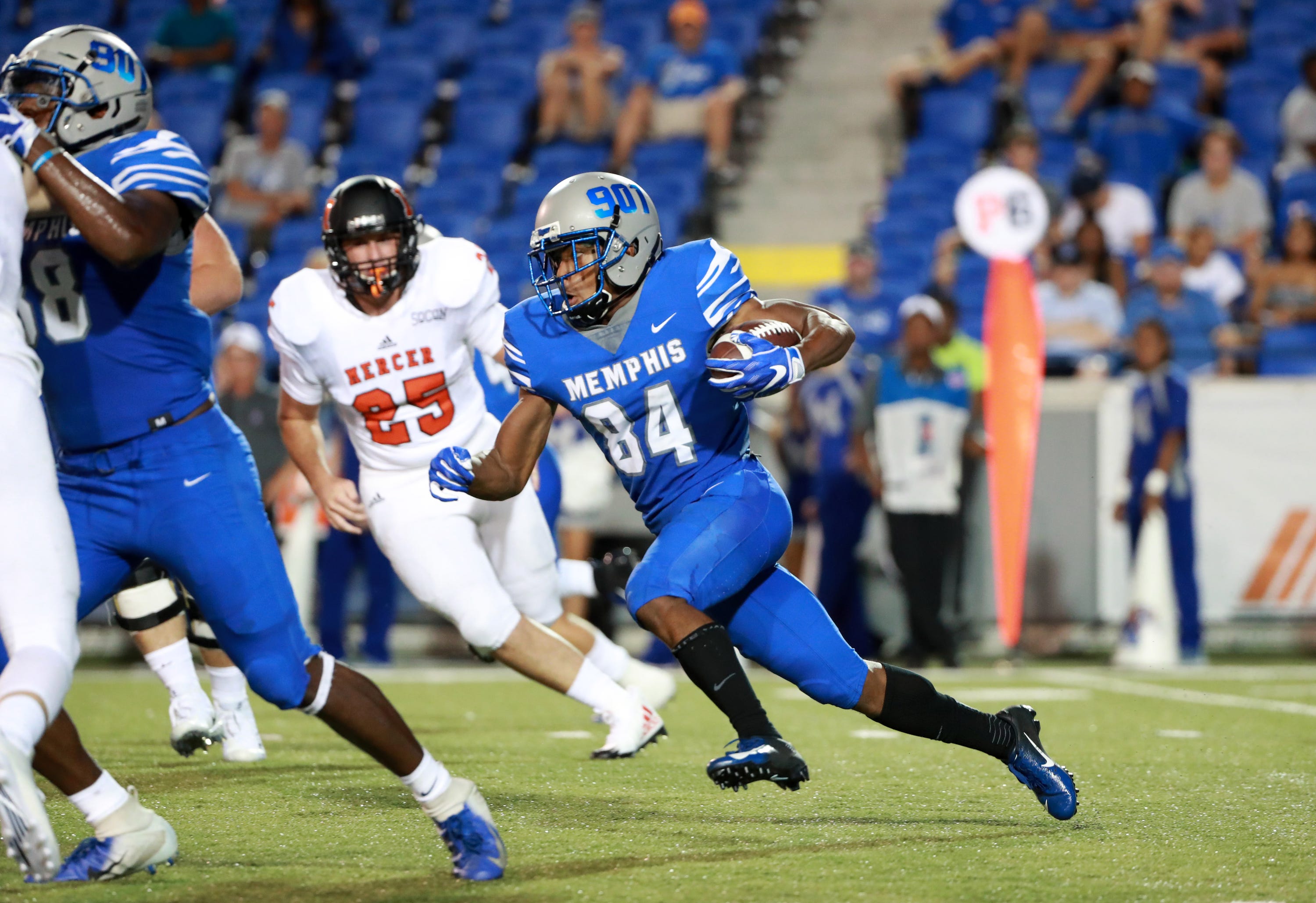
Into 2019, Year 3, Austin caught 17 balls for 315 yards with three TDs and no coaches on the Memphis staff were laughing anymore. He gives love to wide receivers coach John Simon for building on what Glidden started. “He really taught me how to be a football player,” Austin says. “How to be a receiver, how to catch, how to read the nose of the ball, how to get in the stance, how to break down with your arm, how to snap down, how to run routes.” Good timing. The NFL was concurrently reimagining small wide receivers as Tyreek Hill torched defenses from all contours of the gridiron.
At Memphis, Norvell gave credit where credit’s due. During one meeting, he pointed out that Glidden was the one who had conviction from Day 1. And, finally, Austin earned that coveted scholarship.
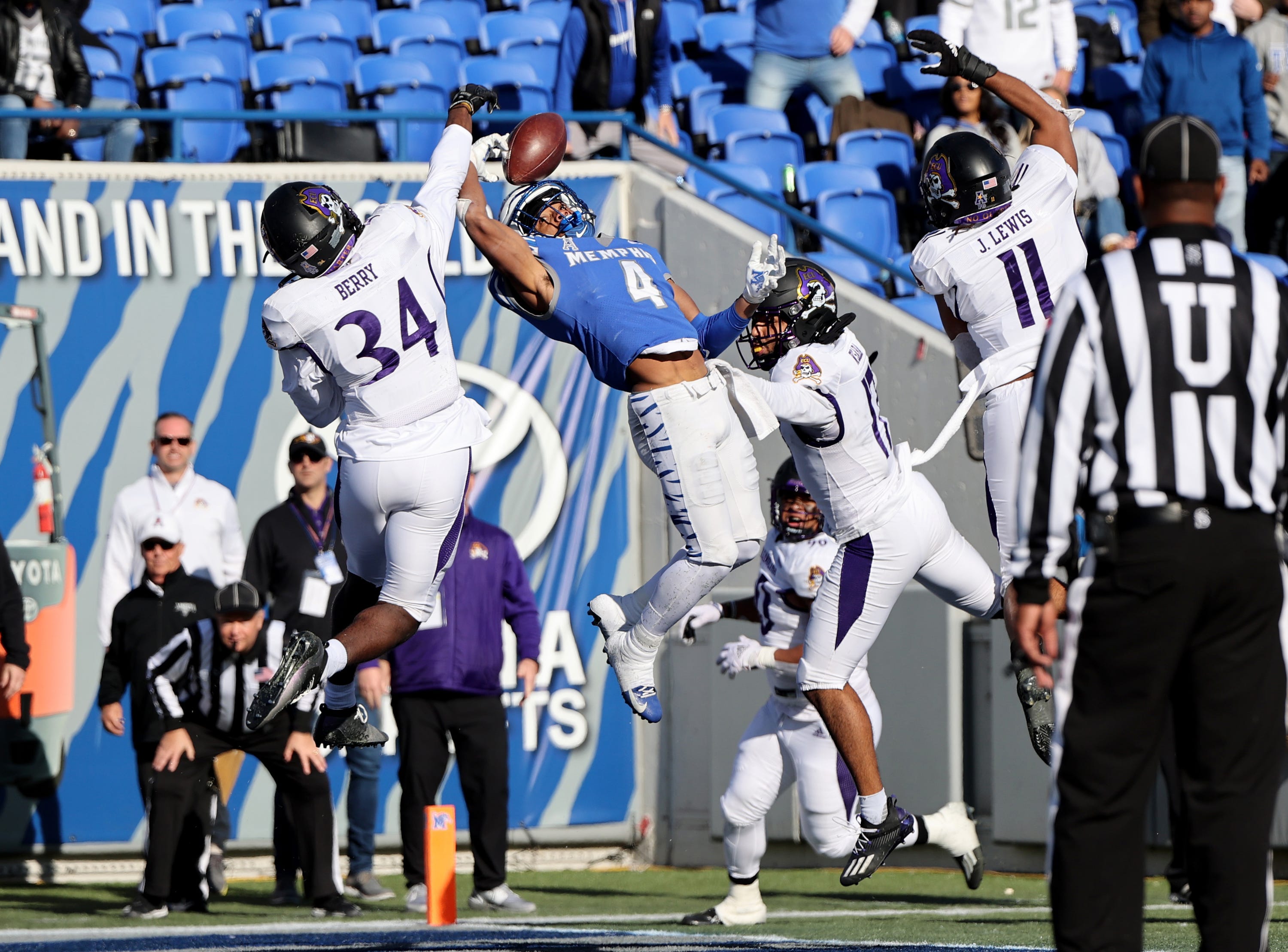
The next fall, the infamous COVID season, he detonated for a conference-best 1,053 yards and 11 touchdowns. No smokescreens, no gimmicks. Austin rarely ever took a handoff. Austin lined up as the X receiver on the boundary and cooked. His lack of size was no impediment. Scouts considered Austin a potential sixth-round pick — declaring early felt like a good idea to Dad. Especially with the injury risk. This time, son put his foot down. He needed to stay for one more season to play in front of the fans. That was the dream, right? He knew there were undersized kids up in those same stands he once occupied.
Before hitting publish on a post announcing his return, however, Austin heard from Dan Lanning at Georgia. The assistant coach said he talked to Kirby Smart and the Bulldogs had a spot on their roster for him. Further, Norvell was now at Florida State. They wanted him, too. Once upon a time, Calvin Austin III was dying for a flippin’ UT-Martin Skyhawks coach to want him. Now this? He didn’t consider either destination for one second. Instead, he said two words to his Dad: “I won.” The fact that the nation’s top programs were actively recruiting him was victory in itself.
“I’m Memphis ‘til the day I die,” Austin adds. “Nick Saban could have called me and said, ‘Calvin, please come to Alabama.’ I would have said ‘no.’”
On July 1, 2021 of his senior season, college athletes were officially allowed to profit on their Name, Image and Likeness (NIL).
Austin read the news and took the exact opposite opinion of 99.9 percent of his peers.
He told his Dad he didn’t want a dime. He didn’t even want to think about making money yet.
Memphis fans weren’t bailing at halftime anymore. Austin eclipsed 1,000 yards again that 2021 season. And when he pitched his game to NFL scouts, Austin bluntly stated that he eclipsed 1K in back-to-back seasons as a novice. He was still learning the position. After registering a 4.32 in the 40 at the NFL Combine and a broad jump twice his height (11 feet, 3 inches), Austin was drafted in the fourth round.
All along, his relationship with Dad only strengthened. If he was ever feeling “discombobulated” at halftime, Austin retrieved his cell phone right in the locker room and called him. Other times, Dad would even hurry down from the stands for a quick pep talk. Calvin II didn’t play college ball. But just hearing his voice — “Use your speed! Kill ‘em!” — got Calvin III back on track. Every time. “Because,” he adds, “that’s the voice I’ve always heard.”
Now, he’s a pro.
Calvin III may or may not still tap open his phone to check in with Dad during halftime of games.
After his shining moment — that Steelers TD to beat Baltimore — Austin couldn’t wait to connect. Hundreds upon hundreds of texts lit up the screen. All of those friends and family members could wait. Calvin III called Calvin II.
They screamed. They cried.
These tears were different.
“What can they say now?!” son sniped. “What can they say now?! They can’t say nothing!”
Superpower
Nobody’s holding his hand and talking to him in a kindergarten teacher’s tone about attending a Division III school down the road anymore. It’s time to redefine the New York Giants. Calvin Austin casts a gentile disposition. He’s the man you’d want your daughter to marry. But that doesn’t mean he’ll meekly accept a crammed middle seat in Row 34. He’s dreaming big. Again.
“One thing I’ve come to realize,” he says, “is that my skillset is unique. And my speed? A lot of guys have speed or quickness. I have both.”
He has no worries about touches. If any offensive coordinator wants to win, he continues, you find a way to use your talent. He trusts Matt Nagy will find a way.
Austin has trained with some of the best wideouts in the sport.
“And my speed?” says Austin. “There isn’t anybody who has the speed I do. That’s no disrespect to anyone. It’s confidence. I have gas. And it’s not just vertical speed. I’ve got speed and can decel. I’ve got change of direction. I’ve got a release package. Yeah, we have a ton of receivers. Where do I fit in? I can play inside. I can play outside. And that’s something that people will see.”
Striking clarity for a man who had never run a real route before he could vote.
All adversaries at the line of scrimmage are nameless, faceless. There’s no cornerback Austin doesn’t believe he’ll… “kill,” he jumps in, finishing my sentence. He doesn’t care that his salary’s a few burgers north of the vet’s minimum. Through a four-year career, he’s seen peers in this league overlooked by players drafted higher or paid more money. Harbaugh is known as a coach who does not play politics. Subjectivity will no longer stunt his growth because nobody can declare Austin is incapable of wasting a taller cornerback when there’s 20 clips of him doing exactly that in practice.
What everyone but Dad declared a fatal flaw — his size — is now a superpower.
Take a Steelers-Eagles brawl in 2024. Darnell Washington, Pittsburgh’s woolly mammoth of a tight end, bench-pressed cornerback Darius Slay through the back of the end zone. And after the whistle, from the other side of the field, Austin saw three Eagles players surround one of his best friends. Instincts kicked in. He sprinted over. (“I wasn’t trying to play peacemaker.”) With one jolting two-hand shove he uprooted cornerback Quinyon Mitchell into the back wall and heard one of his favorite sounds in the sport. An audible gasp.
All aggression he traces back to childhood. Calvin III was batted around in all sports by cousins a decade older.
This spring, he compelled new Giants wide receivers coach Chad Hall to rewatch his blocking vs. the New York Jets. He cracked back on both middle linebackers and safeties. (“Stonewalling them!”) His voice speeds up. If anybody wants to understand this whole superpower thing, he advises we watch the All-22.
“I never feel my size,” Austin says. “My Dad cultivated my mindset. I say it’s a superpower because other people underestimate it.
“I’m bringing the force to them! When I get to crack back on a linebacker, that’s when I show my character. People see this. That’s what I feel my superpower is. I get to show my character with my size. ‘OK, watch. Yeah, I’m finna run full speed and not stop and put my shoulder and head into this guy’s chest.’ A lot of guys don’t have that mindset. That’s who I am. It’s my superpower because people wouldn’t expect of me to be the way I am.”
He lists off three fellow bantams: New England’s Pop Douglas, Houston’s Tank Dell and Baltimore’s Zay Flowers. Pound for pound, Austin contends he’s the NFL’s toughest wide receiver. After winning the Ed Block Courage award in Pittsburgh, ex-coach Mike Tomlin praised his grit to the entire team.
Right here, the longtime Steelers coach decreed, is a player who’ll sprint headfirst into a fire.
Austin reminisces fondly at those Steelers days, name-dropping vets who took his game to another level. Diontae Johnson stressed the need to run every route at 100 mph because corners will then live in fear of his speed humiliating them deep, thus opening up routes underneath. He has no clue how the Steelers WR room would’ve even breathed without the leadership of Allen Robinson, whom he calls one of the best receivers of this generation. A foot injury shelved Austin as a rookie. Into ’23, for whatever reason, ex-OC Matt Canada tried to pigeonhole him as a gadget guy. In ’24 and ’25, used as a legit wideout, Austin caught 67 balls for 920 yards with seven touchdowns.
Now, he’s a Giant. Watching Jaxson Dart from afar, Austin told himself he’d love to play with a QB like that. (“I like my quarterback to be cocky, popping it. Let’s go to war with him.”) He’s only getting started with Dart. But the two threw together in Cali before OTAs and Austin already notices a massive shift in personality at quarterback. Rodgers is 42; Dart just turned 23. An age difference this vast manifests on the field. Rodgers is one of the smartest humans, period, he’s ever met. (“He’s too smart almost.”)
Two-way communication with Dart is refreshing.
“With Aaron, he’s a Hall of Famer. You’re going to have to do things how he wants,” Austin says. “With Jaxson, you can put your own little sauce on it. He puts his own little sauce on it. And you can come together to create something. That’s a big thing. I’ll be like, ‘Hey Jax, this dude right here, listen, if he’s on me? I don’t care what they say, throw it to me.’ Or Jax will say, ‘Hey Cal…’”
This is the most dynamic quarterback he’s ever caught passes from, a playmaker capable of hanging in the pocket to let routes develop downfield. Quite the departure from a pair of Canton-bound relics (Rodgers, Russell Wilson) and Kenny Pickett.
A Giants roster that’s been so rotten for so many years is now infused with a quarterback (Dart) who flawlessly executed the Flawda, Rakai and Thriller dances in the end zone after touchdowns, a running back (Cam Skattebo) who’d smash into light poles as kid, an absurdly talented wideout (Malik Nabers) who’s the first Giant to wear No. 1 since Ray Flaherty in 1935 and a defense teeming with pass rushers. One (Brian Burns) is known as “Spiderman.” One (Abdul Carter) had the audacity to request Lawrence Taylor’s No. 56. One (Arvell Reese) is described by ex-pro Chris Simms as a “psycho” who looks at dumbbells and grows muscles. Don’t forget about Kayvon Thibodeaux, either.
Austin — at receiver, at returner — can light the match.
First up, Dallas.
The scriptwriters were kind. Calvin II and Calvin III grew up diehards. When he was 7 years old, Austin recalls the Cowboys playing their best whenever he did chores around the house. So for the team’s wild card game against Seattle that ‘06 season, he helped Dad paint the entire bathroom. All game, they painted. And watched. Painted. And watched. Painted and… oh no. There’s Tony Romo fumbling the hold of a chip-shot field goal with 1:19 remaining. Calvin III owned Jason Witten and Troy Aikman jerseys, knew the team’s full depth chart like the back of his hand and even submitted a question to the mailbag of the team’s website once. There was a player in the arena league that Austin was convinced Dallas should sign.
Now, he can serve as a Cowboy Killer and signal a new era in the NFC East.
Juke a cornerback into the dirt for a touchdown in front of 82,500 fans inside MetLife and everything will change inside this spiritually dilapidated stadium.
“Quick,” he says, nodding. “Quick. … I’m excited. Obviously I played there against Jets, but I mean, who really want to go to the Jets game? I’m ready to go to a Giants game, man. Giants game.”
Truer words have never been spoken.
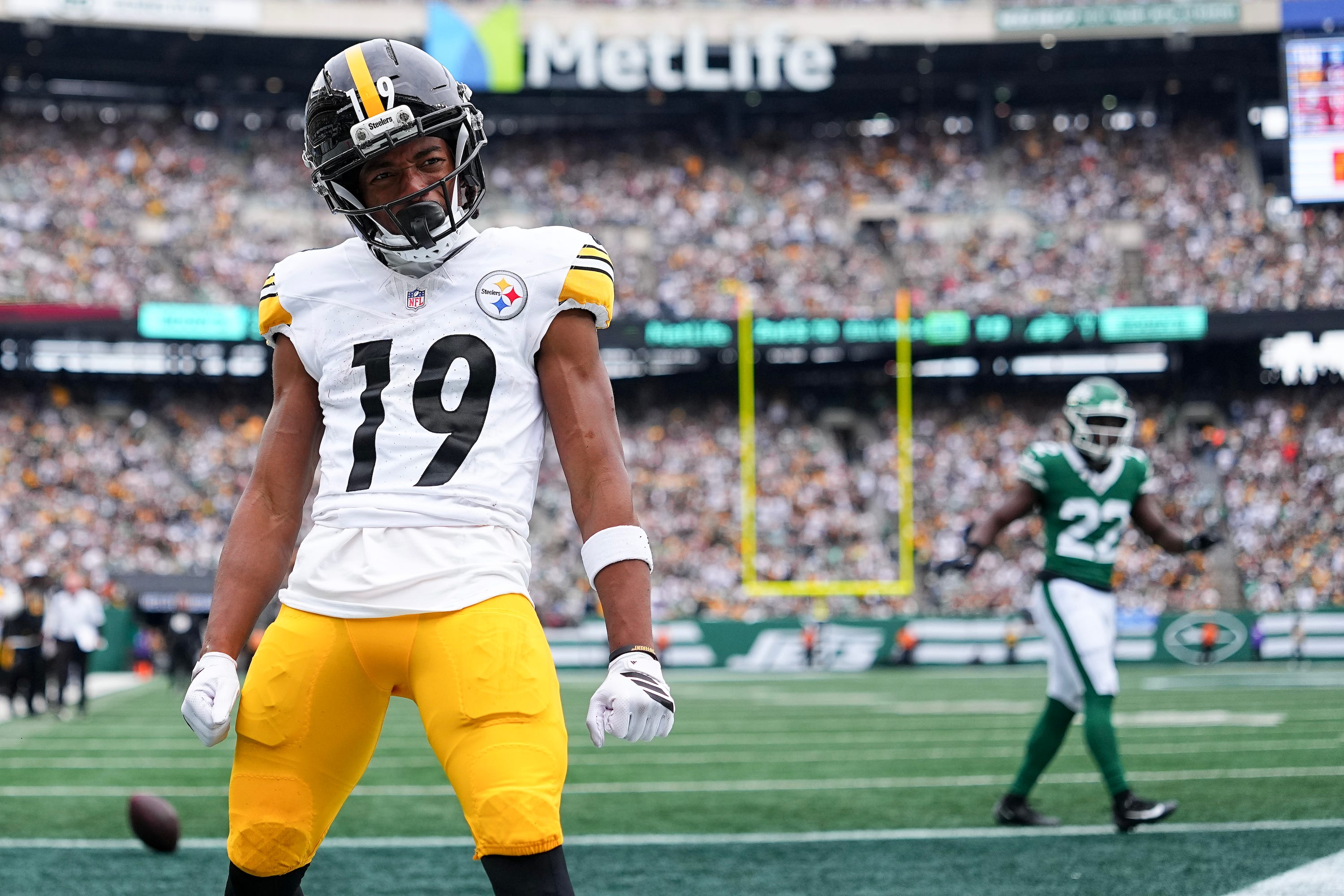
Life outside of football is basic. He’s got three American Bullies. He’ll fish occasionally. He’s into nature — Calvin III and his girlfriend love going on walks. This week, he was texting the family group chat that he wants everyone to live on their own compound someday. He’d love to settle down in the country with a ton of land and animals. For now, he cannot wait to immerse himself in NYC and New Jersey. Kids tend to stare at Austin’s stature in astonishment, unable to comprehend how an adult barely taller than themselves can get clobbered on a football field and bounce back up. When Austin posted a goodbye to the city of Pittsburgh on IG, the post received more than 80K likes and 3K comments. It blew his mind. He bonds with fans at a deeper level because he’s so accessible. Austin responds to at least half of his direct messages from total strangers.
Now that he’s in the Big Apple, Austin plans on staying visible. He’ll volunteer any chance he gets. Not the stuff mandated by the team, either. He gives back when no cameras are present.
“I’m not too big or mighty,” Austin says. “That’s what I’m looking to bring to here. Be one with the people. Be one with the fans. I know it gets crazy here and stuff. But we’re all humans. I don’t take nothing to heart. It’s a fan being a fan. If I see that fan, I’ll make them a fan of maybe not as a player, but me as a person.”
The fastest route to the heart of Gotham sports fans is quite simple.
Win.
Pose a simple question — How great can you be? — and Austin refuses to make lavish proclamations because doing so would be a deviation from all sweat and tears that got him here. In his brain, he’s still a walk-on waiting for a sandwich. All he envisions is running crisper routes, catching the ball with more authority, improving. This day, he’s fresh off an extra workout with Troy Pelletier, the man who has trained Saquon Barkley because it never feels right if he doesn’t do something extra. That’s what led to the most significant touchdown of his life.
Once again, he thinks back to that night in January. And Dad.
“Those moments, you can’t replace them,” Austin says. “This was our dream. … If somebody told him, ‘Hey, your son one day, you’re going to be watching him on TV like this and he’s going to have a game-winning touchdown.’ He would have said, ‘Man, get out of here.’”
Austin pauses. Reconsiders.
“Honestly, he probably would have believed it, knowing him.”
That’s why he’d like an outsider to pose that question to his father. Calvin II knew something that hundreds of coaches across the country did not… but what? I ask Dad.
“What they didn’t see in Calvin,” he says, “is his hunger. He’s so hungry. He wants to show the world his talent and that he can do it. Give him an opportunity.”
A few more stray stories from those old football and track days are rattled off. Like his son, Calvin II barely catches his breath.
He bursts with pride.
He sounds like a man who knows precisely what happens next in this story.
“This year, the sky’s the limit for him,” Calvin II says. “I’m telling you, he’s been showing everywhere he’s went.
“He’s going to show in New York, too.”
ICYMI:
Why this feels real for the New York Giants

Quarterback conviction is the most valuable sixth sense anyone in this sport can possess.
Nice Cookout reference. Cookout an underrated benefit of going south. Great burgers, fries, shakes and other menu items at 1990s prices.
Great story and a great young man.